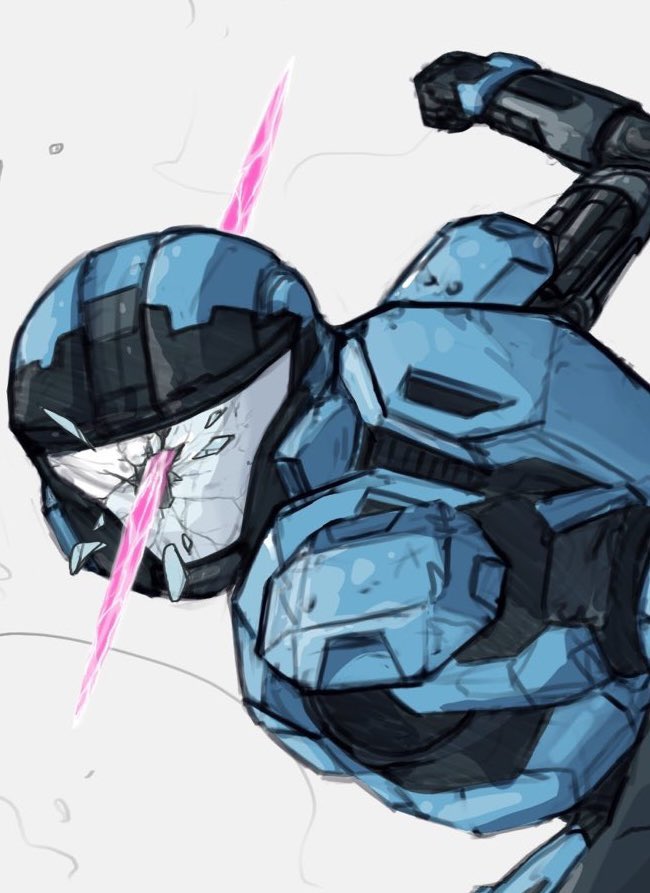
攻殻機動隊シリーズの少佐達をGIFで入れ替えてみましたよっ…✨
I swapped the Majors from the various Ghost in the Shell series using GIFs…✨
作成疲れたぁっ…😖
全てのシリーズに詳しく無いので違和感ある所あるかもだけどご容赦っ…😆
あれも違う、これも違う…でも作り直しは…嗚呼ああああっ…
I’m so worn out from making this…😖
I’m not familiar with every series, so some parts might feel off — please go easy on me…😆
That’s not quite right, this isn’t right either… but remaking it is… ahhh ahhh ahhh…
#草薙素子 #攻殻機動隊
#GhostInTheShell #MotokoKusanagi
Six days after the United States and Russia agreed for both sides to not to hit each other‘s energy systems, Ukraine/NATO launched over 1,600 drones against Moscow in the biggest attack yet!
The psychotic dictatorship running the unelected EU does not want peace.
They can win a battle, but they have lost the war..
Marauders on the Roads
The term "marauders", or, in legal parlance, "brigands" (or "routiers"), a term used in the Kingdom of France during the XVth century and later adopted by the English administration during the occupation, refers to anyone committing various crimes by exploiting the instability caused by the war.
Amidst the daily lives of a population living through wartime, various groups of marauders emerged as the conflict unfolded; hundreds of incidents were recorded on the roads across the regions, each with a disturbing story. There were undisciplined soldiers leaving corpses on the roads, rebellious villagers drowning soldiers in rivers, partisans forcing the population to support them, skinners kidnapping locals, and mercenaries extorting tolls for safe passage or even just strangers in the dead of night who come to kill for unknown reasons, crimes that are never solved.
A vast archive documents these incidents between 1411-1445. In the remotest corners of the countryside, while the war raged on, shocking and violent events took place.
For instance, on the night of St. John the Baptist (June 24, 1414), villagers were roused to go and "rob" a group of marauding soldiers quartered at Concressaut, in the Berry region south of Orléans. A band of nineteen men, including a priest named Jean Buisson, placed a massive log across the main forest road to block the horsemen. At daybreak, upon spotting them, the soldiers shouted, "Look, brigands!". In the surprise ambush, a nobleman, the Lord of Blot, was violently killed by a crossbow bolt, and six soldiers were held prisoner by the peasants for three days.
En Pologne, on ne plaisante pas avec les reconstitutions historiques.
Chaque été, la bataille de Grunwald de 1410 reprend vie sur le lieu même de l'affrontement. En 2026, près de 1 500 reconstituteurs ont participé à la bataille.
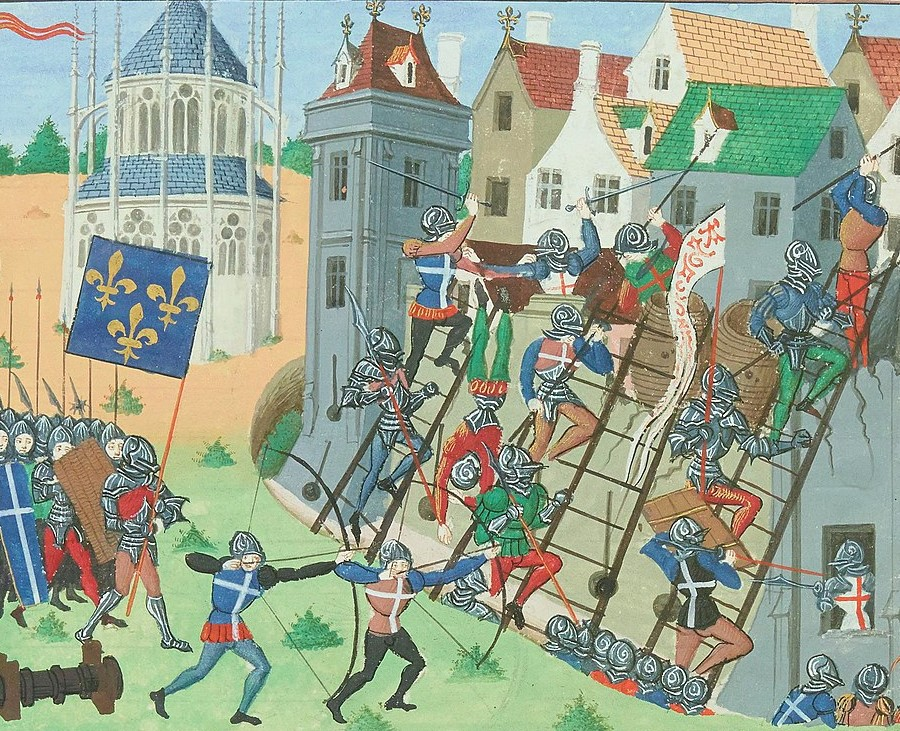
On September 19, 1441, 585 years ago, the final French assault on the fortified town of Pontoise took place, definitively liberating the Paris region from English occupation.
Attacked from three directions, the English held out for four hours before surrendering; they lost over 500 men, and 300 were taken prisoner. That day, dozens were discovered and dragged from their hiding places. While many were executed on the spot, others were taken to Paris, chained in pairs and barefoot, and paraded through the capital's streets in humiliation in front of the population before either being ransomed or, if deemed worthless, executed at the Place de Grève, in prison, or drowned in the Seine river.
For over thirty years, the Paris region knew no peace, plagued by the ceaseless fighting of the Armagnac-Burgundian civil war and the English invasion. Pontoise remained a target for all factions throughout the conflict.
"The machine rose majestically, drawing after it a cage containing a sheep, a rooster, and a duck. A few moments after takeoff a sudden gust of wind tilted it over on its side. Since there was insufficient ballast to keep it vertical, the top afforded the wind a much larger surface than the part where the animals were. At that instant I was afraid it was done for. It got away with losing about a fifth of its gas, however, and continued on its way as majestically as ever for a distance of 1800 fathoms where the wind tipped it over again so that it settled gently down to earth."
Étienne Montgolfier in a letter to his wife about the balloon demonstration in Versailles on September 19, 1783.
When studying the Middle Ages, or any historical period, there is often a tendency to focus on determining exactly what happened on the battlefield; yet, what truly matters most? It is the version of events that took hold in the public imagination.
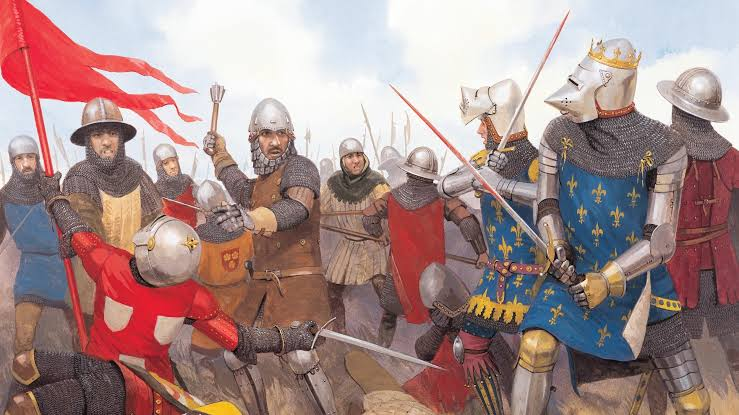
This is precisely what occurred regarding the Battle of Poitiers on September 19, 1356, as two conflicting accounts emerged. One was a heroic narrative in which King John II of France "the Good" fought valiantly alongside his son Philip, the future Duke of Burgundy, who shouted, "Father, to the right! Father, to the left!" while the King ordered his other son, Charles, the Dauphin and future king, to flee and retreat to Paris to safeguard the future of the realm. The other, far bleaker version held that the Dauphin Charles fled out of fear on his own initiative, triggering a chaotic scramble within the French army and causing confusion over whether to follow the King or the Dauphin.
Ultimately, it was the first version that prevailed in public opinion and spreaded in Europe; even the English army and knights acknowledged the great courage of the French chivalry, who had fought valiantly to cover the Dauphin Charles's retreat.
Mohammed preached the religion of Islam for 13 years in Mecca and he managed to persuade 150 Arabs to convert to Islam.
He went to Medina and became a politician and war-lord.
After two years in Medina, every Jew was murdered, enslaved or exiled.
He was involved in an event of violence on the average of every six weeks for the last nine years of his life.
Mohammed died without an enemy left standing.
Your religion of peace, sir.
Finding your way in ExeKiller won’t be straightforward.
Navigating the ruins of a post-apocalyptic world means reading the landscape, checking your Telectron, following road signs, and finding your own way forward.
Luckily, some landmarks are harder to miss than others. 🗽
This explains so much about the dialogue that seem like it was written to be complete and utter fanfiction by people who either had no idea of the character's history or didn't care... they wanted to ship characters.
On September 14, 1435, John of Lancaster, Duke of Bedford and Regent of France, died in Rouen. Having promised his brother, King Henry V, before the latter's death in 1422 that he would hold Normandy and maintain the Burgundian alliance, he didn't saw everything collapse.
His death, occurring right in the midst of the Congress of Arras involving the French, English, and Burgundians, accelerated negotiations; Philip the Good, Duke of Burgundy, seized the opportunity presented by instability in England to conclude a separate peace with France.
The reconquest of Normandy had begun long before, right at the start of the English invasion, with the recapture of some strongholds; however, it was in the summer of 1449 that King Charles VII launched the major reconquest operation. This campaign would take just over a year 1449-1450, whereas the English had taken two years to conquer the duchy 1417-1419.