$5.99 for bag of chips too much? Don't buy it
$19 for a movie ticket is outrageous? Don't go see it
$237 for a dinner & drinks for two? Cook at home
The best way to tame inflation is to stop buying stuff.
If demand drops, the prices will drop.
Learn how #SAPBusinessNetwork makes it easier to compete in today's global network economy by helping companies collaborate, transact, and share processes and information: https://t.co/HQRDG0uDlN @SAP
Keep trading partners in sync across your supply, logistics, and asset management operations. #SAPBusinessNetwork makes it happen. https://t.co/Hea0XbVL0a #supplychain@SAP
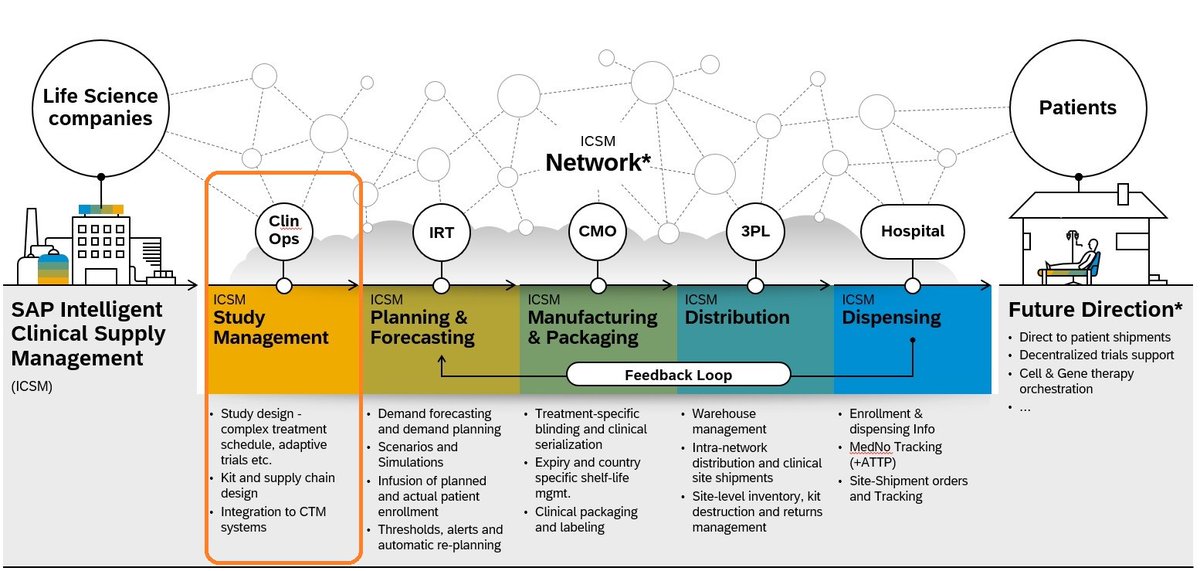
What steps can you take to better manage your complex trials to ensure success? SAP and partner @TenthpinMC have standardized the clinical supply chain process to help you with your complex trials. https://t.co/X2Aq0s40T9 #clinicaltrials#supplychain#lifescience
Meet future demand with SAP Integrated Business Planning for Supply Chain solution and help you change and improve responsiveness. Watch the video: https://t.co/u5QrScLTVy
This was not a bailout. During the GFC, the gov’t injected taxpayer money in the form of preferred stock into banks. Bondholders were protected and shareholders were diluted to varying degrees. Taxpayer money was put at great risk. Many people who screwed up suffered minimal to no consequences. Those were bailouts.
Here, shareholders and bond holders have been wiped out. The @FDICgov insurance fund capitalized by premiums paid by banks will absorb any losses. The fund will recoup any losses by assessing more premiums on the banks.
Had the @FDICgov@USTreasury and @federalreserve not intervened today, we would have had a 1930s bank run continuing first thing Monday causing enormous economic damage and hardship to millions.
More banks will likely fail despite the intervention, but we now have a clear roadmap for how the gov’t will manage them.
Bank boards and managements have received a massive wake up call. Being a director or CEO of a bank that fails is no fun: years of litigation, regulatory investigations, personal liability, potential civil and criminal charges, and enormous reputational damage.
Our gov’t did the right thing. This was not a bailout in any form. The people who screwed up will bear the consequences. The investors who didn’t adequately oversee their banks will be zeroed out and the bondholders will suffer a similar fate.
Importantly, our gov’t has sent a message that depositors can trust the banking system. Without this confidence, we are left with three or possibly four too-big-to-fail banks where the taxpayer is explicitly on the hook, and our national system of community and regional banks is toast.
Our government did the right thing for the country. We are very fortunate it did so.
Treasury Secretary Janet Yellen said there would be no federal bailout for Silicon Valley Bank during an appearance on CBS' "Face the Nation" today https://t.co/2Yp31yzFNH
US Treasury Secretary Janet Yellen on the SVB failure: we are trying to meet the needs of depositors, but are not looking to bail out owners of large banks (CBS News)
https://t.co/8OKfLc64sQ
https://t.co/0Ldb4tjPww
Here is the full transcript of my interview with Treasury Secretary Janet Yellen on "@FaceTheNation " March 12, 2023 - CBS News https://t.co/eLkIIAQ8ki
Amazon, Apple, and Berkshire Hathaway are sitting on a cash warchest.
The banking system is under pressure from the internet - digital bank runs & social media.
Big tech firms, private equity, and many FinTech startups, would love to own, re-capitalize, and modernize banking.
We can revitalize the brittle banking sector with capital and engineering talent.
The problem? There are antiquated laws that prohibit the commingling of banking and commerce.
This is in part why Walmart failed to acquire a bank in the 2000s. Incumbents pushed back.
It’s also why $AMZN has conquered nearly every industry - except banking.
Private Equity firms cannot own more than 24.9% of a bank.
So tech firms, capital and entrepreneurs cannot come to the rescue when a bank like $SI or $SIVB needs help.
That makes banks vulnerable to bank runs in the digital era.
The answer?
Enable private capital and technology to enter the sector - while maintaining the highest standards of ‘safety and soundness’.
We cannot afford bank bailouts. But we also want the security and knowledge that our deposits are safe.
The future of banking is bright, but only if we are willing to embrace change and adapt to the new reality of digital finance.
@SenSherrodBrown@PatrickMcHenry@ElectFrench@LHSummers