As players get excited about exploring new virtual worlds, we're looking at the experience from a creator's perspective.
Through CreoPlay AI, we're experimenting with how creative ideas can evolve into interactive open-world environments.
Meet 𝐑𝐢𝐜𝐞𝐰𝐢𝐧𝐝: 𝐏𝐚𝐭𝐡𝐬 𝐨𝐟 𝐉𝐚𝐯𝐚, our open-world game experiment inspired by the landscapes, culture, and everyday life of Java, Indonesia.
Explore traditional Javanese villages, lush rice fields, winding rivers, and scenic mountains.
Beyond exploring the scenery, players can interact with local characters, experience village life, and even feed and care for animals along their journey.
Each interaction adds another layer to the experience, making the world feel more connected, engaging, and worth exploring.
As open-world games continue to raise the bar visually, the role of assets becomes even more important in shaping how a world feels, from the environment and atmosphere to the characters and interactive details within it.
That is also part of what we're exploring through CreoPlay AI, including how 𝐀𝐬𝐬𝐞𝐭 𝐆𝐞𝐧𝐞𝐫𝐚𝐭𝐢𝐨𝐧 can help support the creation of richer and more immersive game worlds.
Ricewind: Paths of Java - is part of our ongoing development and internal testing at CreoPlay AI, where we're exploring how AI-powered game creation can bring environments, characters, assets, and interactive gameplay together.
𝐓𝐡𝐞 𝐞𝐱𝐜𝐢𝐭𝐞𝐦𝐞𝐧𝐭 𝐚𝐫𝐨𝐮𝐧𝐝 𝐨𝐩𝐞𝐧-𝐰𝐨𝐫𝐥𝐝 𝐠𝐚𝐦𝐢𝐧𝐠 reminds us just how powerful these experiences can be, and how many more worlds, stories, and cultures are waiting to be brought to life.
There's a reason open-world games continue to capture everyone's attention.
The freedom to explore a city, discover new places, interact with surroundings, and experience a world that responds to your actions.
It's not just about how big the world is. It's about what players can actually do within it.
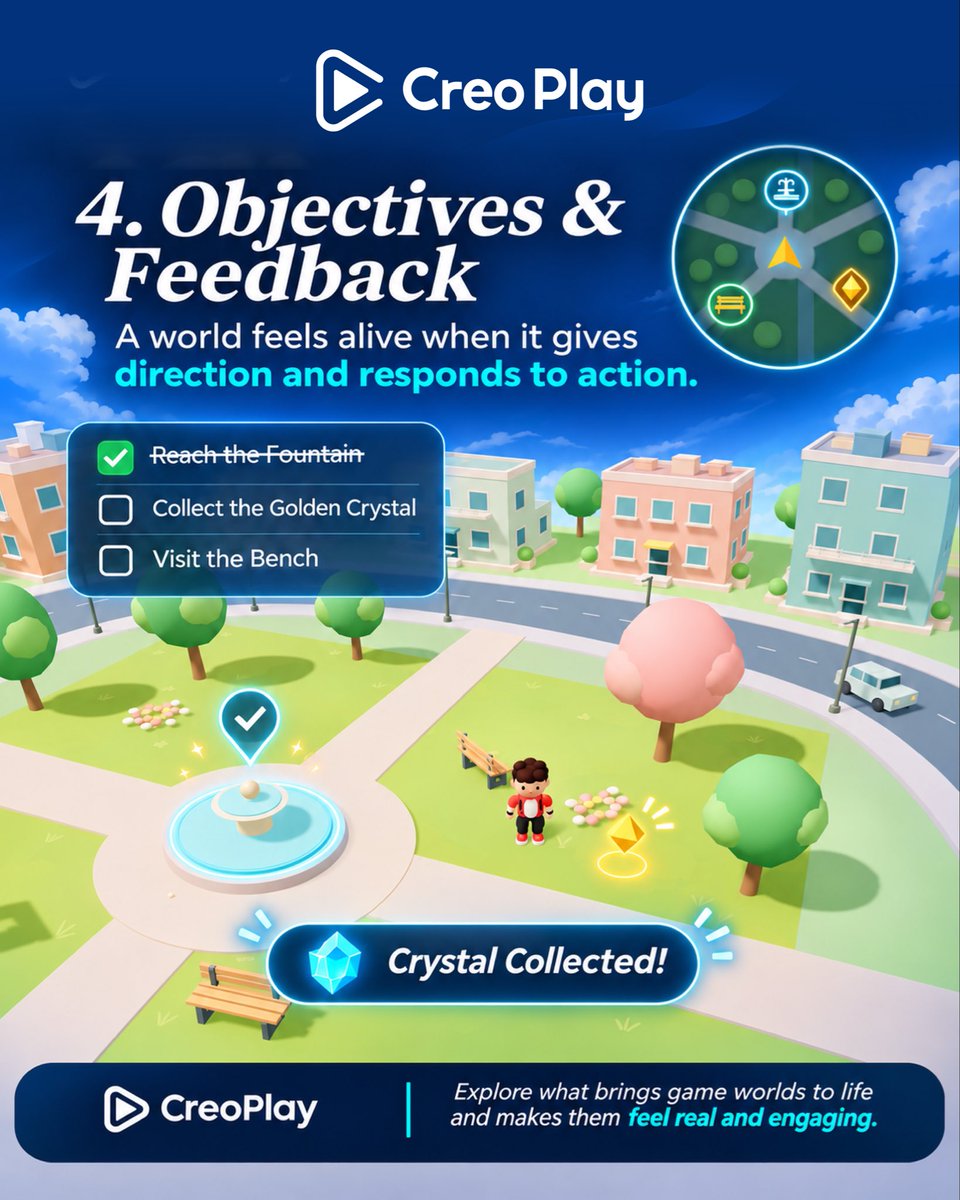
From world design and character movement to interactive objects, objectives, and feedback, every element contributes to making a game feel alive.
And what if more creators could start building worlds like these from their own ideas?
👾 𝐖𝐡𝐚𝐭 𝐌𝐚𝐤𝐞𝐬 𝐚 𝐆𝐚𝐦𝐞 𝐅𝐞𝐞𝐥 𝐓𝐫𝐮𝐥𝐲 𝐏𝐥𝐚𝐲𝐚𝐛𝐥𝐞?
Imagine facing a powerful boss with barely enough HP to survive another attack.
Do you strike back, use your remaining MP for a spell, or heal before it's too late?
That's where gameplay gets interesting.
In Astral Oath: The Five Seals, a JRPG experiment built with CreoPlay AI, every decision triggers a response.
Attack, and the enemy takes damage. Cast a spell, and your MP decreases. Choose to defend, and you prepare for the next hit.
The enemy fights back, your HP changes, and each defeated boss brings you closer to completing all five stages.
Suddenly, you're not just watching a fantasy battle. You're making decisions that shape how it unfolds.
𝐅𝐢𝐯𝐞 𝐁𝐨𝐬𝐬𝐞𝐬. 𝐎𝐧𝐞 𝐇𝐞𝐫𝐨. 𝐍𝐨 𝐑𝐨𝐨𝐦 𝐟𝐨𝐫 𝐚 𝐖𝐫𝐨𝐧𝐠 𝐌𝐨𝐯𝐞!
One wrong decision could cost you the battle. Attack, defend, cast a spell, or heal. What would you choose?
💡For today's Prompt of the Day, we challenged CreoPlay AI to turn a single prompt into a playable fantasy JRPG called Astral Oath: The Five Seals.
The game features turn-based combat across five sequential boss battles, each representing a new stage.
Players choose their actions each turn, balancing damage, defense, and recovery while managing their HP and MP.
Defeat a boss, break its seal, and progress to the next encounter until all five stages are cleared.
📝What makes this experiment interesting isn't just the fantasy visuals, but how combat decisions, resource management, and stage progression work together to create an interactive experience.
And it all started with a single prompt in CreoPlay AI.
𝐅𝐫𝐨𝐦 𝐏𝐫𝐨𝐦𝐩𝐭 𝐭𝐨 𝐏𝐥𝐚𝐲𝐚𝐛𝐥𝐞.