Professor @Harvard Kennedy School. Author of The Right to Vote: the Contested History of Democracy in the U.S. and Why Do We Still Have the Electoral College?
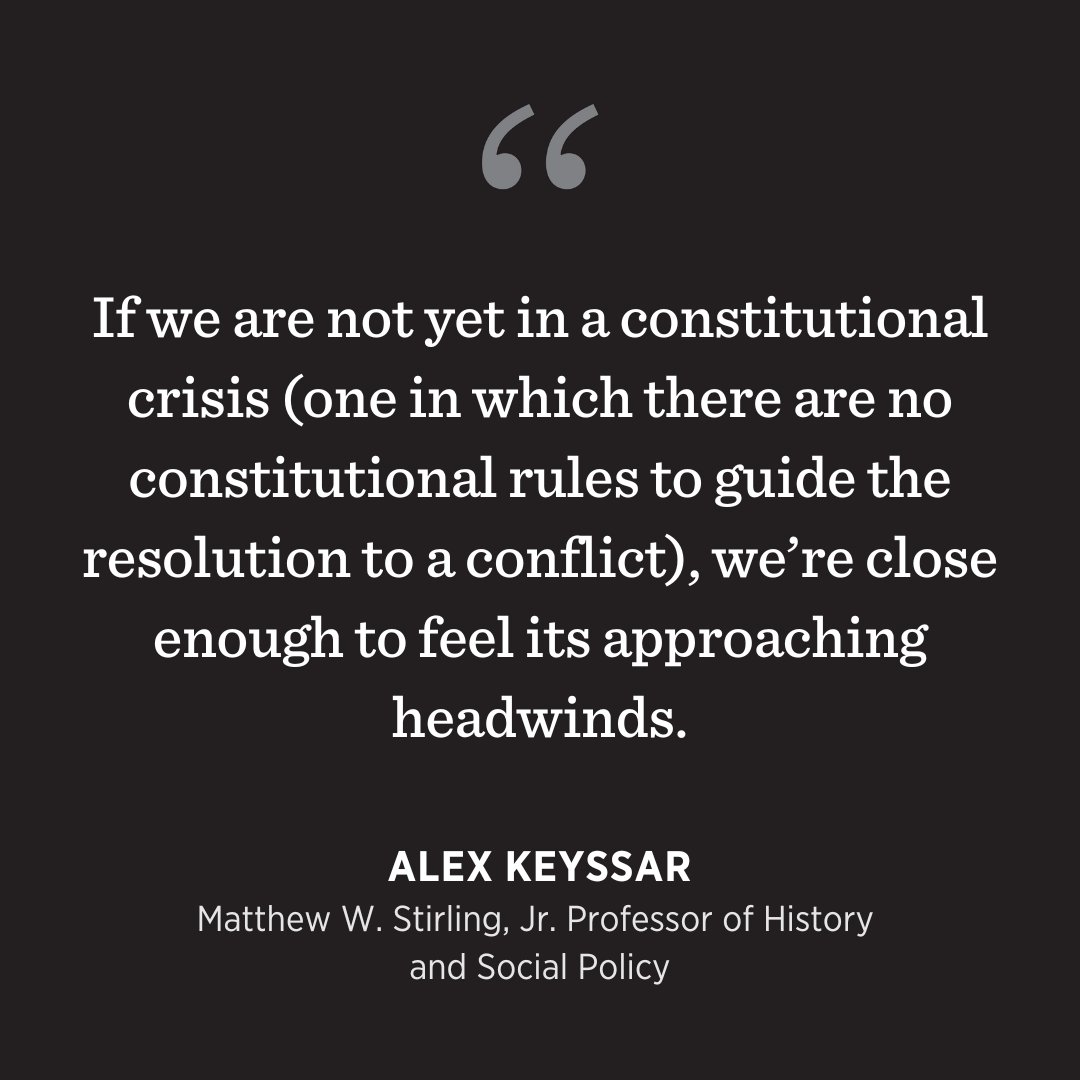
.@AlexKeyssar says the first few weeks of the Trump administration may constitute the most severe attack on the rule of law in the U.S. since the Civil War.
Read more about Professor Keyssar's thoughts ➡️ https://t.co/PrBm2nZmAn
@ChrisMurphyCT Thanks for offering these thoughts. Totally agree about breaking with neoliberalism -- but replacing it with what? It might also be helpful if you defined the "populism" you want to embrace. We need a clearer picture of the future we want to build. Good luck to us all.
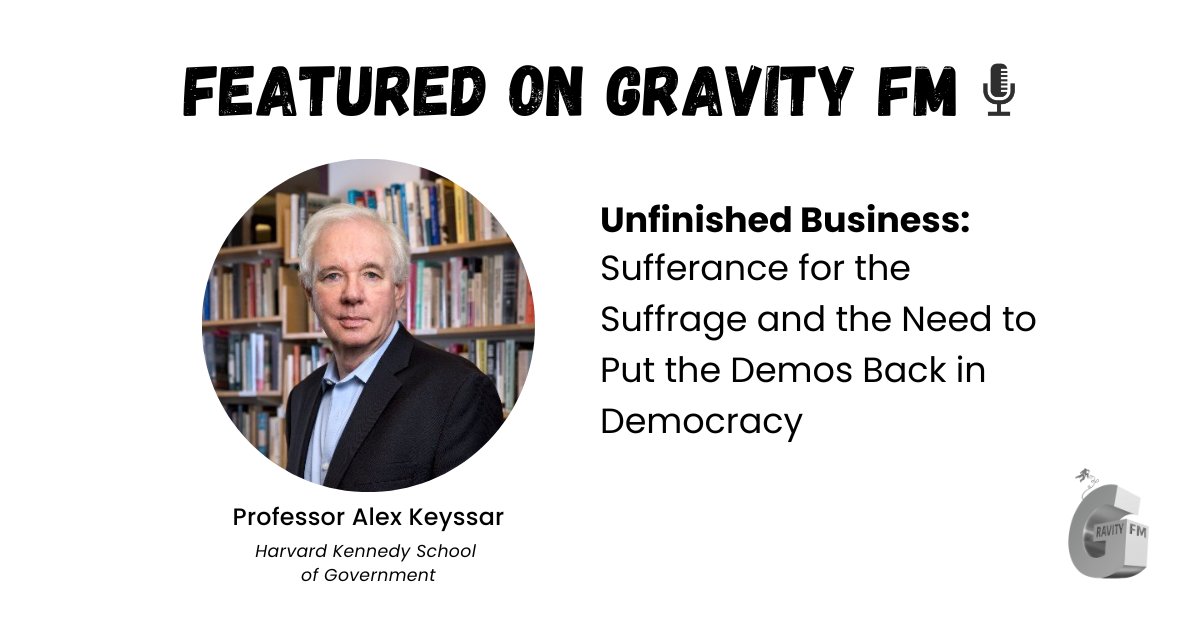
NEW:📣 Democracy remains an unfinished project. Ahead of the US election, our new episode with @Harvard Professor @AlexKeyssar is a must-listen to see what's at stake and how to protect the right to vote: https://t.co/A5GYQnvjYf
Given Trump's increasingly evident deterioration, shouldn't more attention be focused on the likelihood that a Trump victory would mean that JD Vance will soon become president? How scary is that?
@JRakove The traditional claim is that the EC helps small states by giving them more electoral votes per capita. But it's a tiny advantage. Historically, many key leaders of the movement to abolish the EC came from small states and in Congress many small states voted to end the EC.
In part, this is the test of the democratic (small-d) innovation skills of the DNC - can they craft a process that is legitimate, compelling, inclusive, participatory, and wise - to select the Democratic candidate - RCV? Citizen Assemblies? Public deliberation?
In part, this is the test of the democratic (small-d) innovation skills of the DNC - can they craft a process that is legitimate, compelling, inclusive, participatory, and wise - to select the Democratic candidate - RCV? Citizen Assemblies? Public deliberation?
The French elections offer food for thought for us in the U.S. Their two-round majoritarian system not only produced a different outcome than the first round; it generated extraordinary, energetic political mobilization and popular engagement between the two rounds. Hmmm.
Has there ever been a US president who complained that he could not do his job effectively because he feared criminal prosecution? Yet the Scotus majority believes the danger of that occurring outweighs the danger of allowing a chief executive to commit criminal acts. Weird.
On the latest episode of the @DemParadox podcast, @AlexKeyssar discusses the history of the Electoral College, the different attempts to reform it and why those measures failed, and what it might take for a reform to finally succeed
🎧 Listen here ⤵️
https://t.co/M7X0iIGZDE
This is a great piece, notably relying on the epic if somewhat Sisyphean work, Why Do We Still Have the Electoral College? by @AlexKeyssar .
https://t.co/zVwN6DqGXD