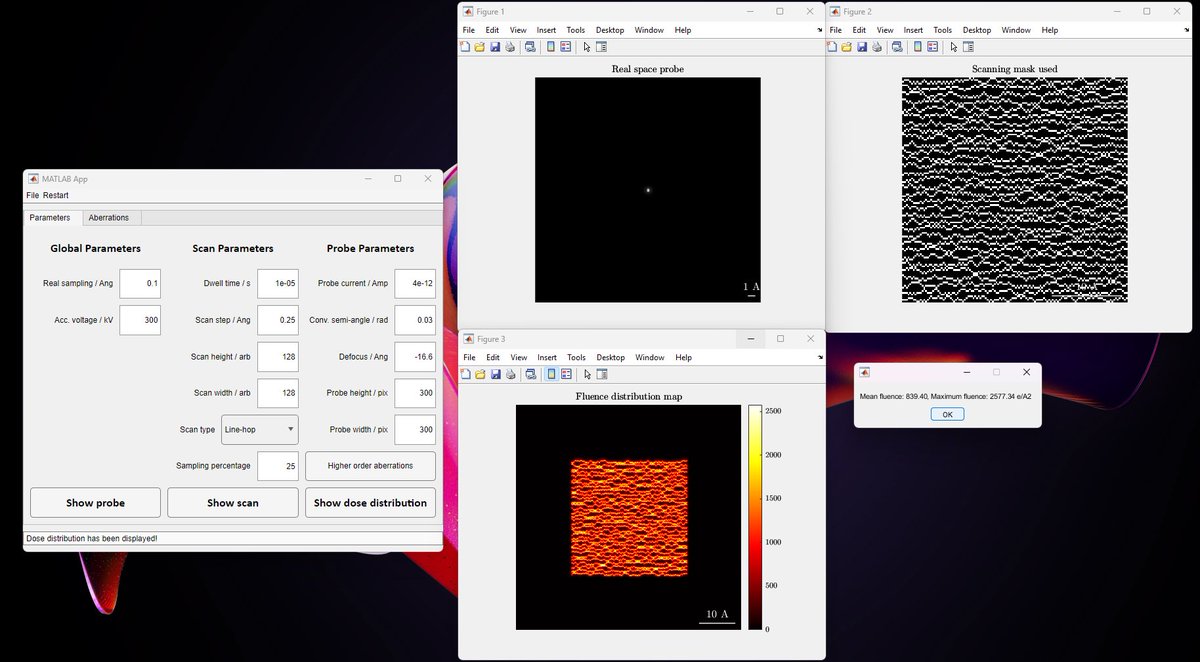
Made a basic MATLAB app to look at the way dose is distributed in STEM. The novelty being that a realistic STEM probe can be constructed, allowing for the calculation of dose for defocused probe STEM experiments. The app also supports sub-sampling strategies!
(1/2)
📢The Editors of the Journal of Microscopy are pleased to announce the winners of the inaugural ‘Best Paper’ awards for Early Career Researchers in 2023.
Congratulations to Dr Alex W. Robinson @AlexRobinson212 and Dr Charlotte Pain @Charly_Pain!
https://t.co/JRJvw2MUn8
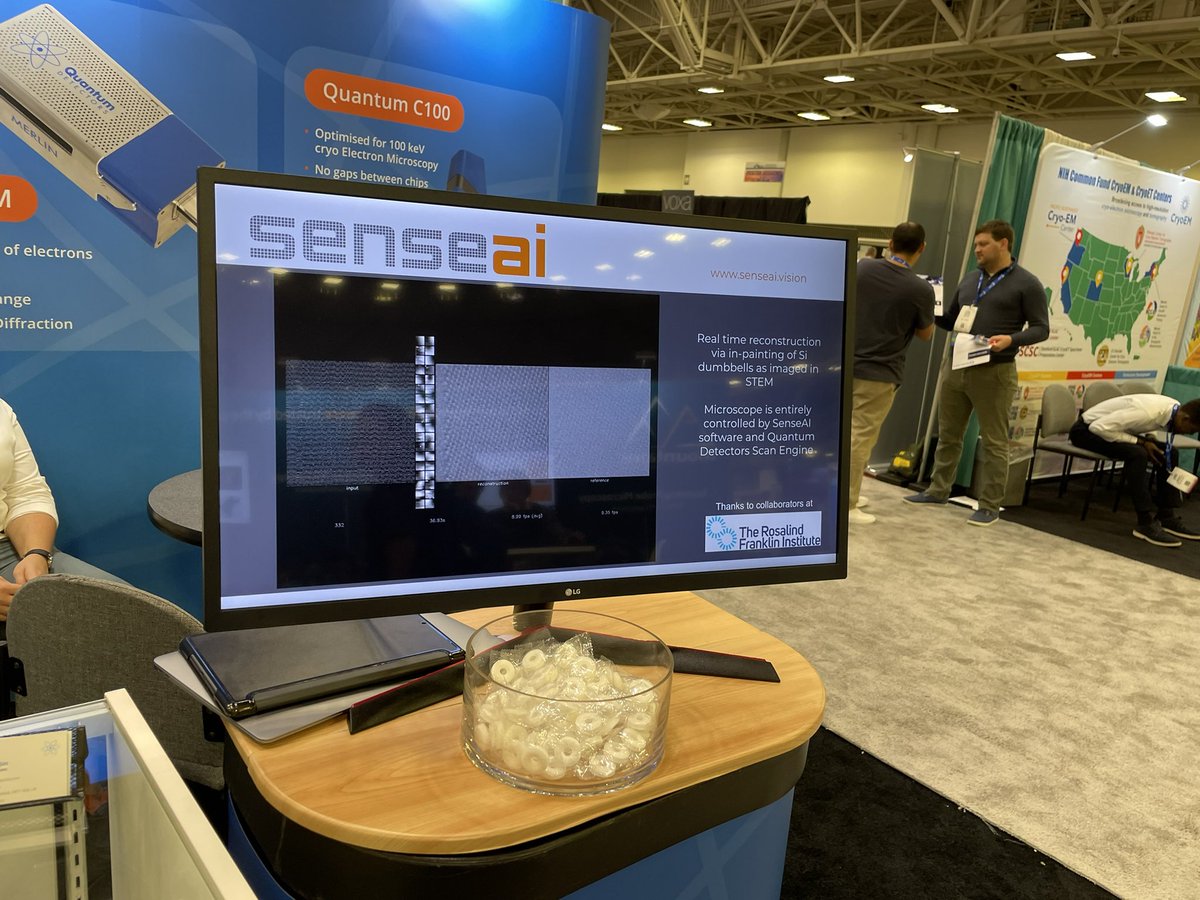
Four new recordings of poster and show-and-tell demo session from #ISCS23 is now available on #youtube! Subscribe to the channel to be notified of the new recordings
https://t.co/baNxOt6S6Z
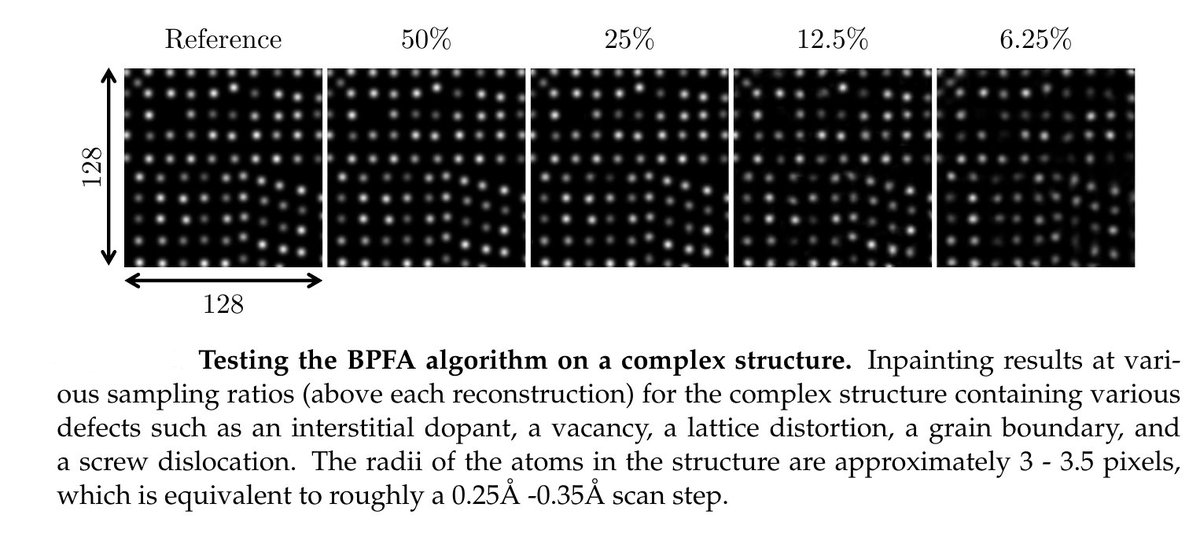
then it will inpaint a defect, if it doesn’t sample a defect, then it won’t inpaint a defect. BPFA is not a generative algorithm, it simply infers what an individual patch is most likely to look like given the observation and parameters of the recovery.
A common question that gets asked when presenting the BPFA for CS-STEM is, “what happens when you try to inpaint a defect?”, well here is the answer- it inpaints a defect!
Model taken from Wang et. al. (2020)
The reason is because the BPFA operates on a single patch at a time, and each of these patches is independent, knowing nothing about the global structure other than what is in the dictionary. If the sampling operator (mask) samples a defect…
Today at 14:35 (Seoul time), I will talk about a new phase retrieval algorithm for compressive electron ptychography, at #imc20, room 105. Feel free to attend if you are around. Joint work with @AlexRobinson212, A. Velazco, A. kirkland, and N. browning.
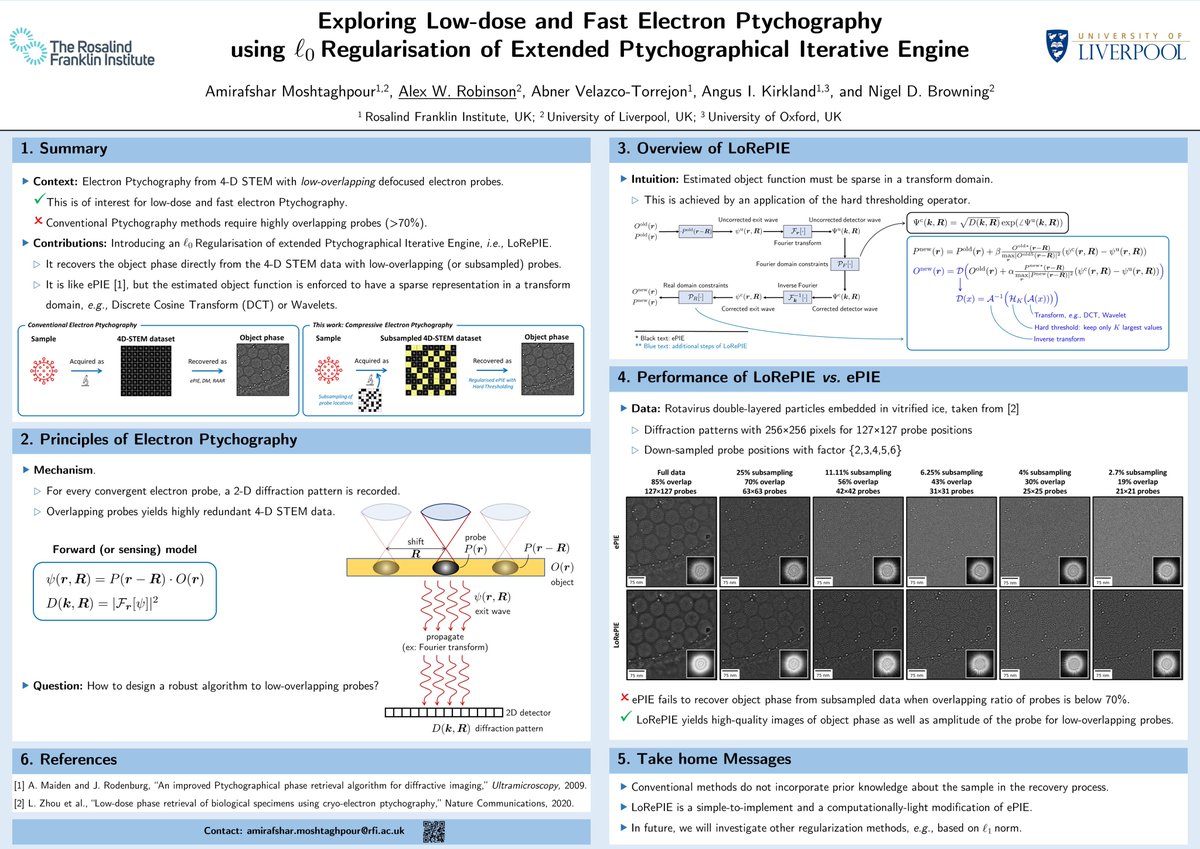
Glad that my poster acheived the second place in the #MM2023 poster prize. Thanks to @AlexRobinson212 for excellent presentation of the poster. Other collaborators are Abner Velazco-Torrejon and Angus Kirkland from @RosFrankInst and Nigel Browning @RUEDI_UK