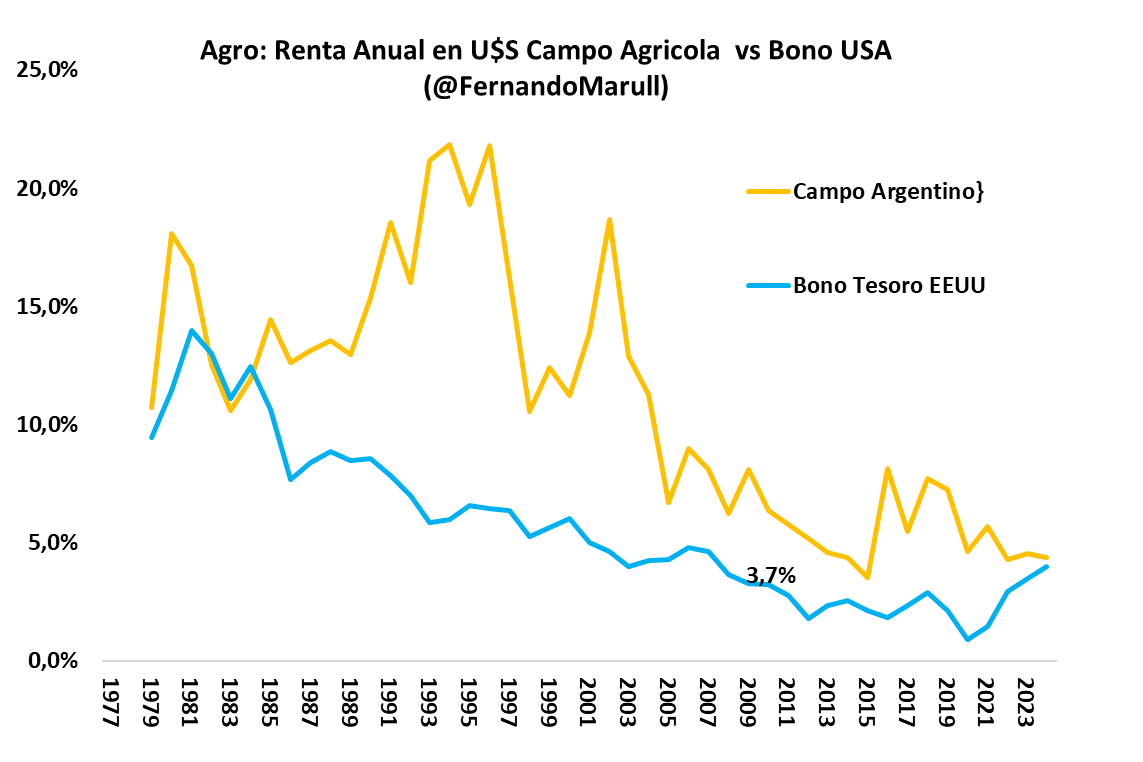
Hace unos meses, para un cliente, calcule cuanto rindio un campo argentino en los ultimos 50 años.
Dio mas que el Bono del tesoro americano; Barata la tierra en argentina
Analisis de https://t.co/NMIvikJUw7
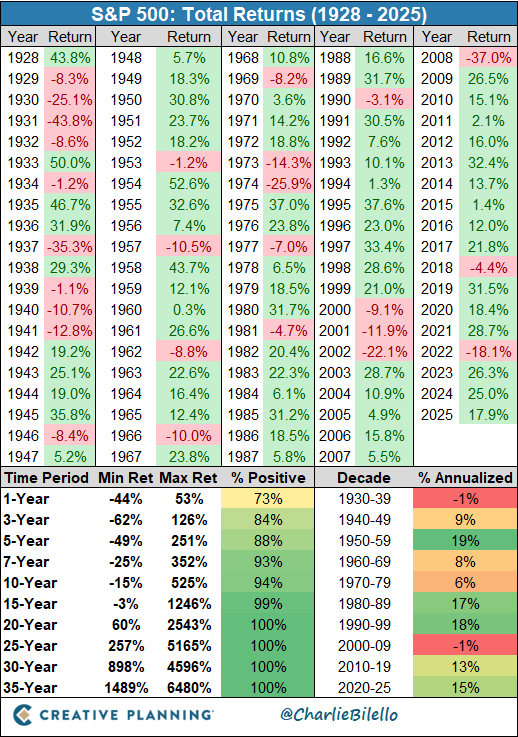
The S&P 500 ends the year up 17.9%, exceeding nearly all expectations for the 3rd straight year (note: including dividends). $SPX
https://t.co/l5IYmkf6Ih
US companies announced the most job cuts for any October in more than two decades. "This comes as AI adoption, softening consumer and corporate spending, and rising costs drive belt-tightening and hiring freezes:” Challenger, Gray & Christmas https://t.co/ixCLoKEuuN
Argentina's YoY Inflation Rate...
Apr '24: 292%
May '24: 276%
Jun '24: 272%
Jul '24: 266%
Aug '24: 237%
Sep '24: 209%
Oct '24: 193%
Nov '24: 166%
Dec '24: 118%
Jan 25: 85%
Feb 25: 67%
Mar 25: 56%
Apr 25: 47%
May 25: 44%
Jun 25: 39%
Jul 25: 37%
Aug 25: 34%
Sep 25: 32%
Afuera!
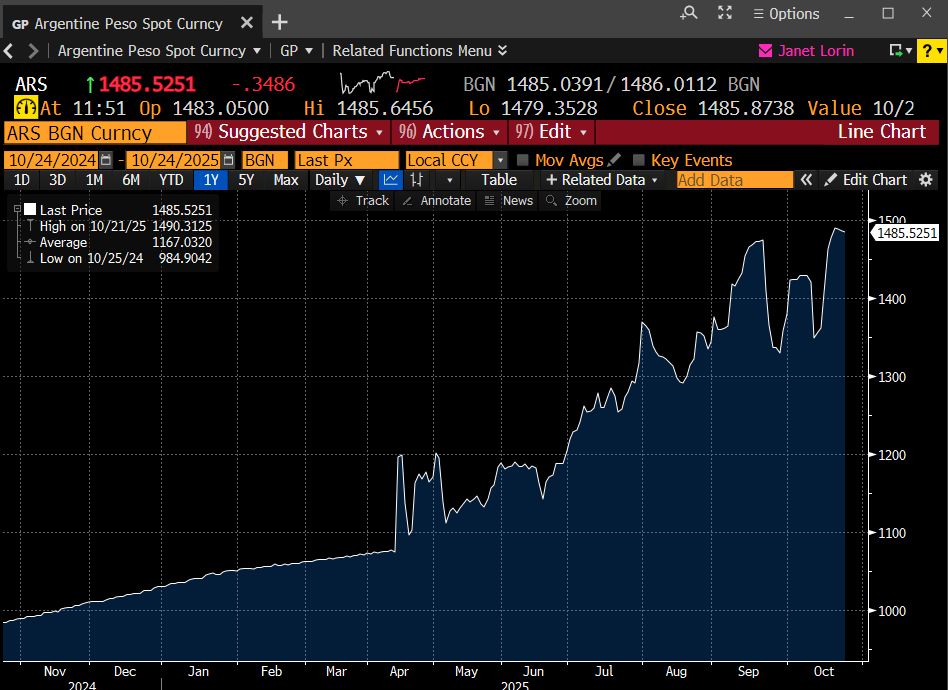
The bold US intervention in Argentine financial markets means that there will be even more interest in Sunday’s legislative elections there.
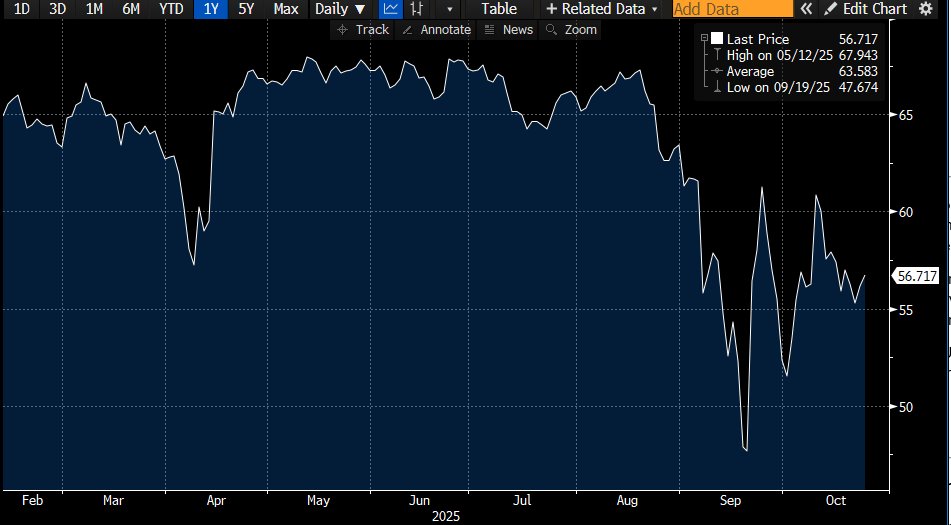
As illustrated in these two Bloomberg charts (below), the combination of direct US purchases and the promise of additional funding for Argentina has been better at stabilizing the prices of the country’s external bonds than its currency – and it is the latter that has more of a direct and immediate impact on households.
#economy #markets #Argentina
1. Stocks: all-time high
2. Home Prices: all-time high
3. Bitcoin: all-time high
4. Gold: all-time high
5. Money Supply: all-time high
6. National Debt: all-time high
7. CPI Inflation: 4% per year since Jan 2020, 2x the Fed's "target"
8. Fed: cutting rates again next week
This is such an interesting point that Powell made yesterday that people missed. He said that "the tariffs are mostly being paid by the companies that sit between the exporter and the consumer... All of those companies and entities in the middle will tell you that they have every intention of passing that through [to the consumer] in time." What he was describing is the hidden squeeze happening in the supply chain. Importers, wholesalers, and retailers are paying higher costs upfront and hoping they can eventually raise prices enough to shift the burden.
The problem is that consumers are already tapped out. Household budgets are under pressure from rising debt, delinquencies, and wages that do not stretch far enough. Trying to pass along tariff costs in this environment would push demand even lower. Businesses know this, which is why many of them are absorbing the costs instead. But when they do that, their margins shrink, and it becomes harder to sustain operations without making cuts elsewhere.
When profitability gets pressured, management has few options. They cannot control tariffs, and they cannot force consumers to spend more. What they can control are expenses. That begins with slowing hiring and scaling back growth plans, then cutting hours and overtime. If conditions do not improve, the inevitable step becomes layoffs. We are already seeing the early signs of this play out. Companies in trade-exposed industries like manufacturing, shipping, and retail are quietly trimming staff. These are the first cracks, but history shows that once the cycle begins, it rarely stays contained. If tariffs remain in place and consumers stay weak, the ripple effects spread further into the labor market. This is the real chain reaction in my opinion, Powell was hinting at. Tariffs may look like a policy directed abroad, but the costs end up at home. They filter through supply chains, eat away at margins, and eventually show up in the form of job losses.
Warren Buffett: "We've got all the money we need. We'd like to make more money, but we've got all the money we need. [But] we don't have an ounce of reputation beyond what we need — and we can't afford to lose it."
"We never will trade reputation away for money."
Argentina can't help itself. After every devaluation - like Dec. '23 - it repegs to USD. That just sows the seeds for the next devaluation and Milei also fell into this trap. The Peso has fallen sharply (lhs), but it's still at least 20% overvalued (rhs).
https://t.co/PUR7Wk6Qoc
Argentina could have broken with the past when it devalued in Dec. '23. That was its golden opportunity to do a free float, but instead it re-pegged the Peso, which then rose massively in real terms (red) due to high inflation. Now - once again - the Peso is massively overvalued.
Charlie Munger:
���You don't want to be such an absolute purist for free trade. I'm almost a purist, but not quite. But I wouldn't want the entire steel industry of the United States to move offshore.”