Collaboration Webinar with RockX(@rockx_official) ,Strategic Partner on Mar 16, 7PM in SG time!
This is a rare opportunity to hear from the top staking validator for #Polkadot about the key points of #staking. We look forward to seeing you there.
https://t.co/guWRY1pJOl
Together with prominent members of the mining community in Asia, I have shared some thoughts ahead of the #BitcoinHalving2020 with @Cointelegraph. We believe Bitcoin has come a long way in term of user adoption and advancement as a technology.
4/ Mining activity could continue to centralize within China, as the Halving will coincide with the start of the wet season in China. Mining farms located in the western regions could take advantage of cheap hydropower to continue operations.
Happy to be working with renowned companies in the #Bitcoin space. Beyond trading, the supply chain of #Bitcoin & the mining industry can sometimes be opaque & mysterious to many people. Hopefully our content will help demystify & promote the industry in an open & healthy way.
We are proud to unveil our first Digital Asset Economy Report. This report is co-produced with our friends at @officialpoolin, @f2pool, @TokenInsight, & @AntPoolofficial. You can download the full report from https://t.co/AoRr4PM65r.
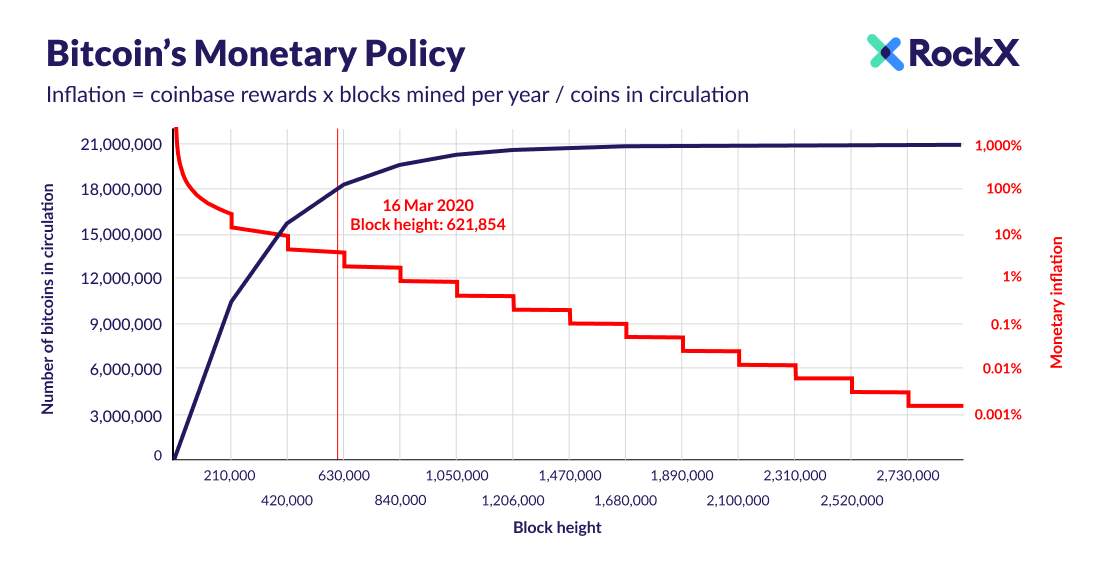
Every 210,000 blocks, the issuance of new $BTC is reduced by half. After the next halving, the inflation rate for Bitcoin will fall to about 1.78%.
#Bitcoin
It is an organic and necessary evolution in the mining industry when older and less efficient machines get phased out. Every difficulty presents a new opportunity.
The recent Bitcoin selloff (from $9K+ to $3.7K this morning) has caused many miners, especially those with S9, M21s and T17, to stop mining because it's no longer profitable. Total network hash rate is going down.
It doesn't mean Bitcoin mining is no longer profitable. For the miners running on more powerful machines i.e. M20s and S17, they will be mining more BTC as the total network hash rate goes down.
The quarantine & city-wide lockdowns due to the COVID-19 outbreak had created significant bottlenecks in the manufacturing & logistical processes in China. That said, total network hashrate for Bitcoin is maintained above 110 EH/s, which shows the confidence & optimism in miners.
Two of the largest Bitcoin mining hardware manufacturers, Bitmain and MicroBT, are rushing to launch cutting-edge next-generation mining hardware ahead of the $BTC halving event in May. Miners are bullish.
11 years since Bitcoin's genesis block was mined and the ecosystem on all fronts -- developer, miner, and consumer-facing applications -- has grown so much it's impossible for anyone to ignore Bitcoin anymore.
I started $BTC mining in 2013, and haven't stopped building and HODLing since then. Incredible to look back and see how the industry has evolved in just six years.
https://t.co/YSjgjIj0gP
Good thread. We believe that #DeFi is the killer app for blockchains. Ethereum has the headstart and we foresee other blockchains chasing up on the trend too.
0/ I used to think that crypto people are crazily optimistic, but lately a sense of despondency seems to be spreading. Even some of the early crypto diehards are sounding the industry’s death knells. This gloomy narrative is wrong and puts crypto’s long term growth at risk.
When mining BTC, you will be stacking more sats no matter what. In crypto winter/bear market, BTC difficulty will not increase by much, so you can enjoy consistent gains to your portfolio over several months. That's the key difference between mining & buying.
When you buy BTC, you will only make a profit when prices go up (i.e. in a bull market). What happens in a bear market when prices go down or sideways for a long time, like in 2018/2019? Your portfolio remains the same in BTC, while fluctuating/dipping in USD.