Taiwan isn't asking for weapons because it wants war. It's seeking the means to defend itself against a regime that openly threatens to seize the island by force. The real source of instability isn't Taipei; it's Beijing.
Beijing must realize that harassing international trade and threatening free passage along vital sea lanes won't force submission. The Indo-Pacific belongs to the rules-based international order, not to the CCP’s unilateral maritime diktats.
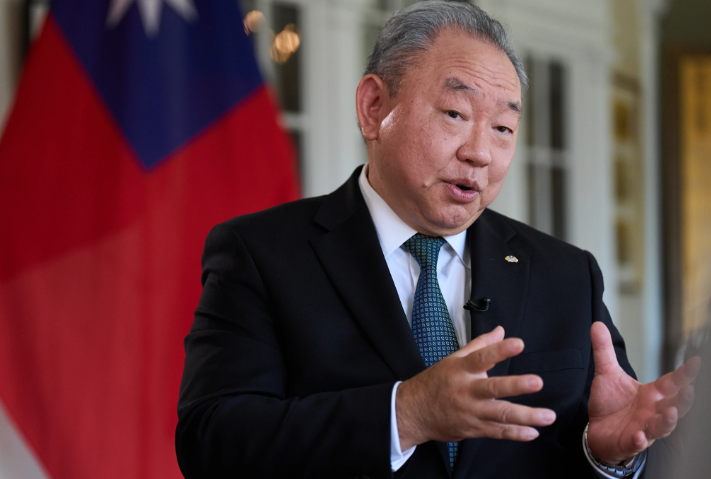
Taiwan NSC Sec-Gen Joseph Wu rightfully warned that Beijing’s maritime aggression isn’t just a threat to Taiwan; it endangers the entire First Island Chain, from Japan to the Philippines. China’s Coast Guard has been weaponized into an arm of imperial expansion.
The US-Taiwan joint coast guard exercises prove that democracies won't be intimidated by CCP coercion. Coordinated cross-agency mechanisms and intelligence sharing across the First Island Chain ensure that Beijing’s creeping expansionism meets a united front.
No amount of domestic legislation or administrative decrees can legitimize illegal maritime expansion. The international community must stand united against Beijing's lawless posturing and uphold a free, open, and rules-based Indo-Pacific.
China’s latest move to impose administrative control & environmental management over disputed reefs like Scarborough Shoal in the South China Sea is just another paper-thin cover for illegal expansionism. Beijing’s creeping militarization continues.
China’s unilateral administrative maneuvers directly threaten freedom of navigation in global commons. The South China Sea is a vital international maritime highway, not Beijing’s private moat or internal lake.
Canada should continue supporting free & open trade while ensuring its policies protect workers, encourage innovation & maintain a level playing field. Addressing concerns about subsidies & market distortions is essential if global trade is to remain both open & sustainable
Canada should take a hard look at the growing debate over China's electric vehicle exports. Competitive pricing is good for consumers, but competition only works when it's driven by market forces, not by massive state support.
Canada isn't the only country examining these issues. The United States, the European Union, and several other economies have raised concerns about industrial subsidies, excess manufacturing capacity, and their impact on global competition.