I'm tired of hearing that "the benefits of AI must be broadly distributed" and therefore we need government to intervene.
AI benefits will be more broadly and rapidly distributed than any tech in history.
Everyone will have access to amazing tutoring, genius medical advice, and an army of helpful assistants—things that were previously available only to the super-wealthy.
The people who create the most valuable forms of AI will deserve to make a fortune on it—and that fortune will reflect the level of benefit they've brought to the world.
All the ideas for the government to "broadly distribute" the benefits of AI are terrible.
Nationalize AI companies, so that progress can crater?
Own a percentage of certain AI companies, so government can become even more corrupt and meddling in picking winners and losers?
Seize AI companies' future earnings, so that more people can become dependent on government handouts?
Government's job regarding AI is fundamentally simple:
1. Modify laws or enforcement practices to handle cases where AI can be used to violate people's rights (e.g., new types of fraud).
2. Protect companies' and individuals' right to pursue AI as they judge best—including to build the life-giving data centers that are now under attack.
To do my part to ensure that AI is pursued in a pro-human, pro-freedom way, I have begun work on my next book: The Moral Case for Data Centers.
If I ran a data center company I'd call it "Friendly Neighborhood Moneybox" because well-run data centers lower property taxes, fund public services, and power AI that gives everyone a world-class mental assistant!
My appearance today on Fox News w/ @dagenmcdowell@BrianBrenberg
AI won't replace human mental work, just like the Industrial Revolution didn't replace human physical work.
With AI, as with industrial machines, the key is to integrate its unique strengths and limitations into human workflows so it actually saves us time.
W @RepEricBurlison
The fear that AI poses an "existential threat" rests on the idea that it will become conscious and develop goals of its own.
But AI is not conscious. It has no desires or goals.
It is no more—and no less—than a powerful tool we can direct toward increasingly complex objectives.
New York, a state perpetually complaining about the loss of industry and blue-collar jobs, was offered the largest industrial spending program since World War II (data center buildout)—and decided to ban it.
Politicians: we need to bring back honest blue collar jobs
Data Center Industry: incredible, we actually need thousands and thousands of workers to build and maintain our centers, and we pay very well
Politicians: we hate you and want to ban you
Politicians: we need to bring back honest blue collar jobs
Data Center Industry: incredible, we actually need thousands and thousands of workers to build and maintain our centers, and we pay very well
Politicians: we hate you and want to ban you
"Rich person" services that poor people can access now thanks to AI:
- Custom tutor
- Job training
- Legal advice
- Tax advice
- Financial planning
- Psychological counseling
- Concierge doctor
- Career coach
- Executive assistant
- Test prep
Oh and it's all vanishingly cheap.
BREAKING: The bipartisan act to legalize supersonic flight just passed Senate Commerce Committee *unanimously*. It was previously passed by the House, also *unanimously*.
Supersonic flight isn't red or blue—it's red, white, and blue! 🇺🇸
Solar is like a severely disabled person (power source) that gets celebrated when it does something any normal person (power source) can do. (Actually produce power when needed.)
Always remember: solar is an intermittent fuel saver, not a reliable power source.
Highest demand day of the year in Texas, first time over 83,000 megawatts. Solar again providing a consistent, reliable 30% of demand; wind and solar combined are at ~50%. Plenty of extra power available, prices are low. No conservation alerts necessary. #txlege#txenergy
Myth: The AI revolution is enriching the wealthy at the expense of the poor.
Truth: The AI revolution is the best thing to ever happen to the world's poorest people, because it offers to them unprecedented access to mental abundance that only the wealthy could previously afford.
Myth: The AI revolution is enriching the wealthy at the expense of the poor.
Truth: The AI revolution is the best thing to ever happen to the world's poorest people, because it offers to them unprecedented access to mental abundance that only the wealthy could previously afford.
AI is the best thing to happen to the average person since the energy revolution.
The energy revolution gave the average person access to abundant physical work.
The AI revolution is giving the average person access to abundant mental work.
With @RepEricBurlison
I want America to be on the leading edge of AI for 2 reasons:
1. AI will massively improve human life.
2. AI will determine which nations win wars.
AI is fundamentally a human flourishing opportunity. But it is also a national security imperative.
With @RepEricBurlison
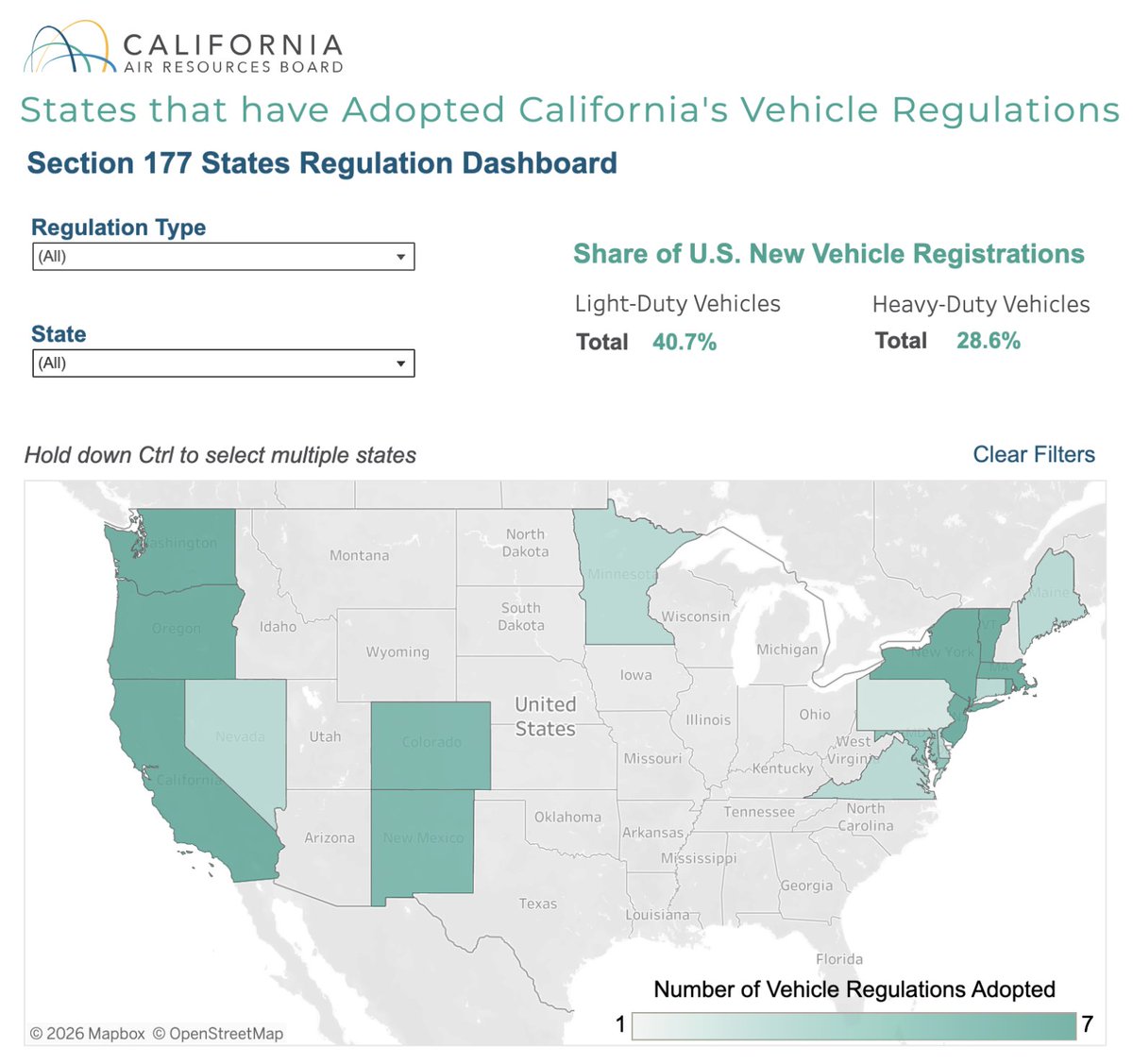
The Clean Air Act normally bars states from having vehicle GHG standards. But EPA gave CA "waivers" to set its own standards, which other states are allowed to adopt.
Today, more than a dozen states have adopted parts of CA's standards, covering ~40% of the US new car market.
A common concern, especially among Democrats, is that Clean Water Act reform threatens water quality.
But neither natural gas pipelines nor transmission lines emit liquids or solids that endanger water quality!
CWA can be reformed with no decrease in water quality whatsoever.
Key NEPA reforms that both parties should support
- Stop courts from killing projects for alleged deficiencies in bonus reviews
- Clarify that bonus reviews have no power to overturn agency decisions
- Only review direct impacts
(All these are in the House-passed SPEED Act)
There are at least 4 areas that both Democrats and Republicans should be eager to aggressively reform:
1. NEPA
2. Clean Water Act
3. Permitting certainty
4. Electric transmission
Key permitting certainty reforms that both parties should support:
- Only courts, not agencies, can stop permitted projects and only if they violate the law
- Set hard deadlines at every stage of the permitting process, with consequences for missing them (as in the FREEDOM Act)