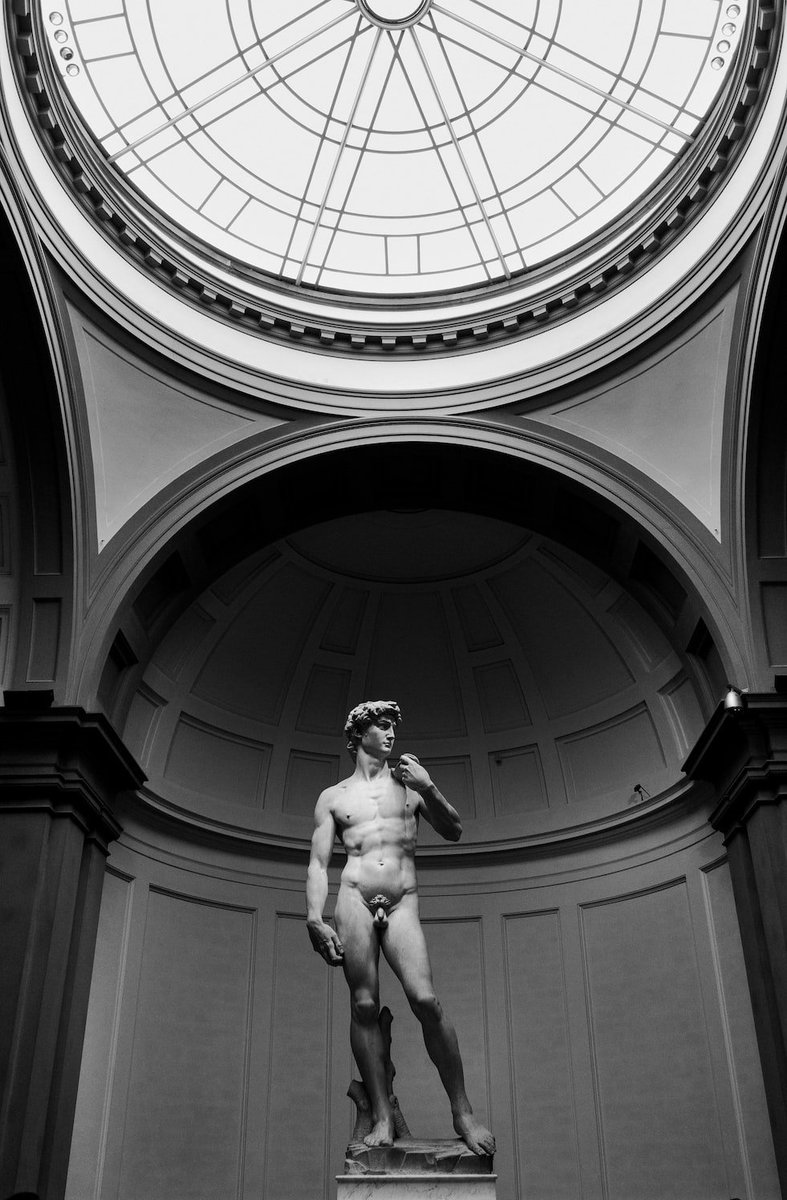
Quando tutte le istituzioni divengono equivoche o finanche sospette e pure nelle chiese si sente pregare ad alta voce non per i perseguitati ma per i persecutori, a quel punto la responsabilità morale passa nelle mani del singolo o più esattamente di chi ancora non s'è piegato
In the spring of 146 BC, after three years of siege, Roman soldiers entered the streets of Carthage.
Founded by Phoenician settlers centuries before Rome became a Mediterranean power, Carthage had grown into one of the wealthiest cities of the ancient world.
Its harbors received ships from across the western Mediterranean, and its merchants connected the coasts of Africa, Iberia, Sicily, and beyond.
But this time, Rome had not come merely to defeat Carthage's armies or strip away its empire. It had come to destroy the city itself.
Scipio Aemilianus, commanding the final assault, pushed his men through the harbor district and secured the marketplace. Above them stood Byrsa, the citadel.
Appian describes what came next. Three narrow streets climbed from the marketplace toward Byrsa, lined with houses that rose as high as six storeys. The Carthaginians held the streets and struck from the rooftops.
The Romans fought their way upward through the buildings themselves, crossing from roof to roof on planks and beams. Scipio ordered the houses set on fire to clear a path for his army.
As the fires spread, the buildings began to collapse. Appian describes civilians trapped inside, the wounded falling into the streets, and bodies dragged away with the rubble.
Some were still alive when the Roman workmen cleared them aside. The streets that had once carried Carthage's merchants and citizens were being reduced to passages for the army destroying it.
The fighting lasted six days and nights. Scipio directed the operation while his soldiers rotated through the assault. This was not a defeated army laying down its arms. It was a city being taken apart around the people still inside it.
On the seventh day, envoys emerged from Byrsa, the city's last refuge, carrying olive branches and asking Scipio to spare those who surrendered.
About 50,000 men and women came out after Scipio agreed to spare their lives. They became captives, and many were sold into slavery.
A smaller group had no such hope. Appian says 900 Roman deserters shut themselves inside the temple of Eshmun, which the Greeks and Romans identified with Asclepius. They could expect no mercy.
Hasdrubal had commanded the final defense of the city. Rather than die with the remaining defenders, he slipped away and surrendered to Scipio.
According to Appian, Scipio showed him to the deserters in the temple. They denounced him and set the building on fire.
Appian then gives the most famous scene of the siege. Hasdrubal’s wife appeared above the burning temple with her children. She condemned her husband for choosing life over his city. Then she killed her children and walked into the flames.
Carthage had survived wars against Greeks, centuries of rivalry with Rome, and Hannibal's final defeat at Zama. Now, after more than six centuries, it lay in ruins. The city that had once commanded the western Mediterranean was erased as an independent power.
Scipio Aemilianus stood watching its destruction.
And he wept.
Polybius stood beside him. The Greek historian was Scipio's friend and an eyewitness to the siege.
Scipio reflected on the great powers that had risen and fallen before Rome.
Troy had been destroyed. Assyria had ruled much of the Near East before its empire collapsed. Persia had commanded lands stretching from the Mediterranean to India, until Alexander brought its kings to ruin.
All had possessed armies, wealth, and dominions that once seemed secure. Now Carthage was burning before him.
Then Scipio quoted Homer, the line in which Hector foresees that a day will come when sacred Troy shall perish.
Polybius asked what he meant.
Scipio answered that he feared the same might one day happen to Rome.
“History does not belong to the cowardly, but to the courageous; not to the idle, but to those who act. History belongs to those who know how to seize it and bend it to their own unyielding will.”
— Benito Mussolini
♦️I numeri dello #ScioperoGenerale ♦️
Sapete quanti studenti sono scesi in piazza?
Milano: 3,7%.
Roma: 0,8%.
Bologna: 1,9%.
Torino: 1,9%.
Eppure, a sentire certi media sinistrati, sembrava fosse scesa in piazza un'intera generazione‼️
E non dimentichiamo che accanto ai manifestanti c’erano anche pensionati e centri sociali😜
lo sto con la stragrande maggioranza degli studenti che studia, si impegna e non si riconosce necessariamente in queste manifestazioni strumentali‼️
🔎 #IntesaSanpaolo#Research
Il mercato del lavoro italiano mostra segnali di rallentamento dopo una fase di crescita che ha portato il tasso di occupazione al massimo storico del 63,1% nel secondo trimestre 2026.
📌https://t.co/CrqrWYx7YP
Before Rome became a Republic, it was ruled by kings.
According to Roman tradition, the Kingdom of Rome lasted from 753 to 509 BC. During those 244 years, seven kings transformed a small settlement on the Tiber into a growing regional power.
These are the seven kings, according to Roman sources.
1. Romulus (753–716 BC)
The legendary founder of Rome and its first king. Romulus established the city's earliest political and military institutions, created the Senate, and expanded its population by welcoming outsiders. His reign is also associated with the abduction of the Sabine women and the eventual union of the Romans and Sabines.
2. Numa Pompilius (715–673 BC)
Remembered as Rome's great religious lawgiver. Numa established many of the religious institutions and priesthoods that would define Roman worship for centuries, including the Vestal Virgins and the Pontifex Maximus. Unlike Romulus, his reign was remembered as an era of peace.
3. Tullus Hostilius (673–642 BC)
A warlike king who resumed Rome's expansion through conquest. His greatest achievement was the defeat and destruction of Alba Longa, Rome's traditional mother city. Its population was transferred to Rome, strengthening the growing kingdom.
4. Ancus Marcius (642–617 BC)
Traditionally remembered as a ruler who combined religious observance with military expansion. He extended Roman territory toward the mouth of the Tiber, founded Ostia according to tradition, and constructed Rome's first bridge across the river, the Pons Sublicius.
5. Lucius Tarquinius Priscus (616–579 BC)
The first of Rome's traditionally Etruscan kings. Tarquinius expanded Roman military power and undertook major public works. He was credited with beginning the drainage works associated with the Cloaca Maxima, developing the Circus Maximus, and increasing the size of the Senate.
6. Servius Tullius (578–535 BC)
One of Rome's most important early reformers. Servius was credited with reorganizing Roman society according to wealth and military obligations, establishing the foundations of the centuriate system. Tradition also associated him with expanding the city and constructing its defensive walls.
7. Lucius Tarquinius Superbus (535–509 BC)
Rome's seventh and final king, remembered as Tarquin the Proud. His reign was associated with tyranny, military expansion, and the completion of the great Temple of Jupiter Optimus Maximus on the Capitoline Hill. After his son Sextus assaulted Lucretia, a revolt led by Lucius Junius Brutus overthrew the monarchy in 509 BC.
Rome would never again willingly accept a king.
In its place emerged the Roman Republic, a political system that would endure for nearly five centuries.
Leonardo da Vinci
Vitruvian Man is proof that the perfect human body is both art and mathematics.
🔹️One man.
🔹️One circle.
🔹️One square.
The square represents the earthly and material world.
The center of the square is at the genitals.
The circle represents the divine and spiritual world.
The center of the circle is at the navel.
Leonardo wasn’t just drawing a perfect body: He was showing the perfect proportions of the universe itself.
"Archeofuturism: to envisage a future society that combines techno-scientific progress with a return to the traditional answers that stretch back into the mists of time."
— Guillaume Faye
LUDWIG VON MISES: EL ECONOMISTA QUE EXPLICÓ POR QUÉ FRACASA EL SOCIALISMO.
En 1920 planteó una pregunta que los planificadores nunca pudieron resolver: ¿cómo asignar racionalmente los recursos sin propiedad privada ni precios de mercado?
Su respuesta fue contundente: sin cálculo económico, no hay forma de saber qué producir, cuánto ni a qué costo.
En 1940 huyó de Europa ante el avance nazi. En 1949 publicó Human Action, su obra magna.
La historia terminó convirtiendo su advertencia en una lección económica: ningún comité puede reemplazar la información que transmiten millones de decisiones libres.
La libertad también necesita fundamentos intelectuales. ⚔️
Ludwig von Mises (1881–1973).