H.E. President @edmnangagwa addresses the media following the United Nations Security Council non-permanent membership.
He thanked the international community for recognizing Zimbabwe and said the honour is for all Zimbabweans.
Zimbabwe was voted for by 182 in a world of 193 countries.
Happy International Children's Day to all the children across Zimbabwe! 🎉
Wishing you health, happiness and endless hope as you grow. ♥️
Let us continue to share joy, strengthen friendship, deliver warmth, and deepen the brotherly bond between our two nations, as we work together to build a brighter future for our children. 🇨🇳🤝🇿🇼
#ChinaZimbabweFriendship
#InternationalChildrensDay
NDS2: Zimbabwe Business Reforms Cut Costs
That is a major move for the Zimbabwean business landscape! By slashing and capping these fees, the government is essentially trying to breathe some "fiscal oxygen" into the private sector, particularly for small businesses that often get bogged down by "licence fatigue."
### 🏭 Manufacturing & Industry
The goal here is to lower production costs to make "Made in Zimbabwe" goods more competitive locally and for export.
✍🏽Import Licences: Fees for most items reduced by 50% (from US$100 to US$50).
✍🏽Factory Setup: NSSA factory approval plan fees and local authority factory licence charges have both been cut by 50%.
✍🏽Boilers: Registration fees for industrial boilers are now capped at US$500.
✍🏽Timber: In a huge win for the forestry sector, rural district council timber transportation permits have been abolished entirely.
### 🏗️ Real Estate & Construction
These reforms target the "bureaucratic drag" that often delays housing and infrastructure projects.
✍🏽Building Plans: Approval fees are now **standardized and capped** across all local authorities to prevent arbitrary overcharging.
✍🏽Permits & EIAs: Several building permit requirements and council-imposed Environmental Impact Assessment (EIA) requirements have been abolished.
✍🏽Registration: Contractor registration fees are now a flat US$20 nationwide.
✍🏽Occupancy: Certificate of occupation fees have been slashed by 50%.
### 🏦 Financial Services
Focusing on "financial inclusion," these reforms aim to bring more people and MSMEs into the formal banking system.
✍🏽MSME Banking: Introduction of zero-cost bank accounts for small businesses.
✍🏽Transaction Costs: Reductions in cash withdrawal fees and mobile money charges.
✍🏽Licensing: Securities and Exchange Commission (SECZ) fees cut by 50%, and RBZ supervision fees for banks have been reduced and capped.
✍🏽Infrastructure: Import duty on ATM equipment has been reviewed/reduced to encourage the expansion of banking touchpoints.
### 🏥 Health Sector
The focus is on making healthcare more affordable by lowering the overhead for providers.
✍🏽Wholesale & Pharmacy: Licensing fees for pharmaceutical wholesalers and Medicines Control Authority (MCAZ) pharmacy licences have been abolished.
✍🏽Laboratories & Hospitals: General licensing fees for hospitals and labs have been reduced by 20% to 30%.
✍🏽Professional Fees: Practicing fees for doctors, nurses, and pharmacists have also seen significant cuts.
### 💡 The "Big Picture"
While these cuts are a massive relief, it is worth noting that they mostly address one-time or annual costs. Business analysts have pointed out that recurring costs—like the 2% Intermediated Money Transfer Tax (IMTT) and high corporate tax rates—still remain the heavier daily burden for most Zimbabwean companies.
However, the "Single Business License" concept (introduced via SI 41 of 2026) is the real game-changer. It stops the "multiplication effect" where a single supermarket would have to pay separate licences for its bakery, butchery, and takeaway sections. Now, one shop equals one licence.
🎉 Happy 46th Independence Day, Zimbabwe! 🇿🇼
Today we celebrate 46 years of sovereignty, courage, and unyielding spirit of the great people of Zimbabwe.
China stands with Zimbabwe as a sincere friend and partner, walking hand in hand toward shared development and a brighter future. 🇨🇳🇿🇼
The Chinese Embassy in Zimbabwe extends heartfelt wishes to the government and people of Zimbabwe — may peace, progress and prosperity always be with you!
#ZimbabweIndependenceDay
#ChinaZimbabweFriendship
#ZimbabweAt46
Zimbabwe Engages IMF/World Bank Spring Meetings Amid Reform Push.
The IMF/World Bank Spring Meetings 2026 (April 13–18) are underway in Washington, with Zimbabwe’s delegation led by Mthuli Ncube, focusing on growth, jobs, and resilience. The meetings coincide with a 10-month Staff-Monitored Program (March–September 2026), anchoring reforms around fiscal discipline, foreign currency reserve protection, controlled borrowing, and safeguarding social spending, aligned to the National Development Strategy 2.
Government reported progress including single-digit inflation, contained domestic debt, and stronger tax and public finance systems, while pursuing up to 30% domestic debt reduction and implementing a national pricing framework. Engagements with the World Bank and African Development Bank are ongoing for arrears clearance financing. The IMF acknowledged progress but emphasized vigilance against external shocks, particularly rising fuel prices, and the need for sustained reform momentum.
The Deputy Chief Secretary Presidential Communications in the Office of the President and Cabinet, Cde George Charamba, clarifies issues around the Constitutional Amendment Bill Number 3.
H.E. President ED Mnangagwa launches the Zimbabwe's National Artificial Intelligence Strategy 2026 to 2030
#Vision2030
#Invest in Zimbabwe
🇿🇼🇿🇼🇿🇼🇿🇼🇿🇼🇿🇼🇿🇼🇿🇼🇿🇼🇿🇼🇿🇼
@DeptCommsZW@China_Amb_Zim
H.E. President @edmnangagwa launches the Zimbabwe's National Artificial Intelligence Strategy 2026 to 2030 amid acknowledgements that the strategy is a big deal for the country's technological future.
The strategy aims to embed AI across public institutions and key sectors to boost efficiency and drive national development. It is built on three pillars: economic sovereignty, cultural and social determination, and inclusive and resilient development.
Some key goals include : Enhancing Service Delivery- Modernising public administration and improving services through AI; Economic Growth- Leveraging AI to stimulate innovation and economic advancement; Digital Divide- Bridging the gap between urban and rural communities through AI adoption;Talent Development- Building local AI talent and promoting research and innovation.
The strategy also emphasizes Zimbabwe's cultural values and ethical standards, ensuring AI development aligns with national identity. This move positions Zimbabwe alongside other African nations like Rwanda and Egypt which have also adopted AI strategies.
NDS2
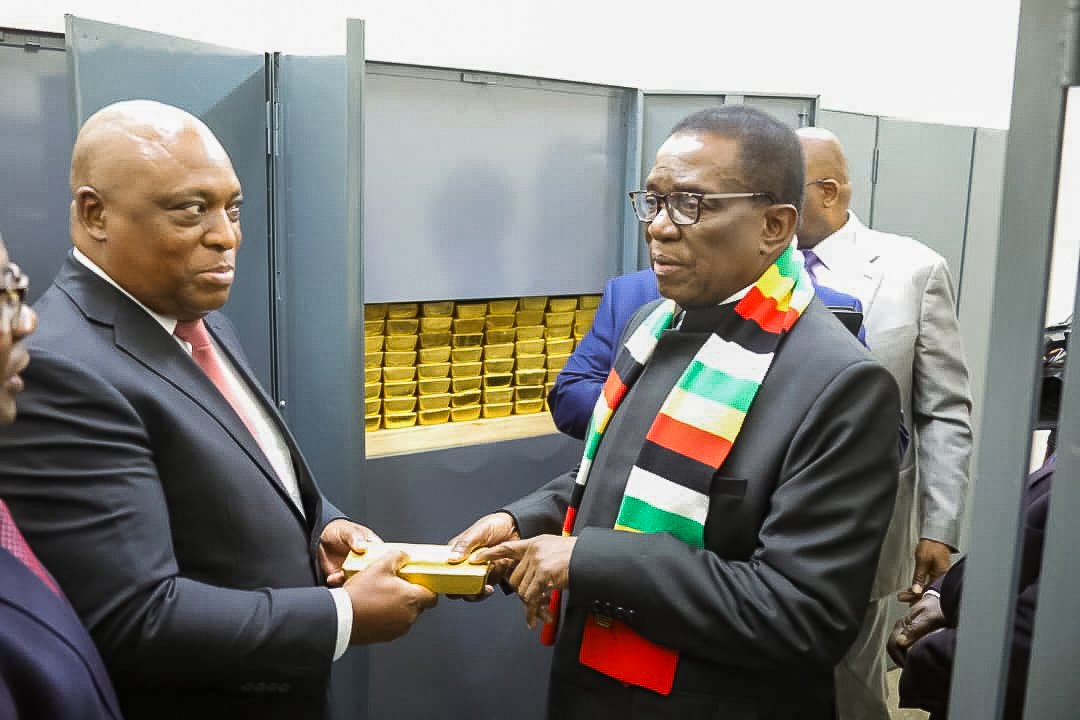
It is impressive to see how quickly Zimbabwe has bolstered its reserves. As of early 2026, that trend has continued upward, with official gold holdings now reaching approximately 4 metric tonnes.
This accumulation is the backbone of the government's strategy to stabilize the ZiG (Zimbabwe Gold), the gold-backed currency introduced in April 2024.
Key Drivers of Reserve Growth
The jump from 1.5 tonnes in early 2024 to 4 tonnes today isn't accidental; it’s the result of several aggressive fiscal policies:
✍🏽The "Royalties in Kind" Law: Since 2022, large-scale miners have been required to pay 50% of their royalties in physical gold rather than cash. This ensures a steady, automated stream of bullion directly into the Reserve Bank of Zimbabwe (RBZ) vaults.
✍🏽Strategic Market Purchases: The RBZ has been actively buying gold from local small-scale and artisanal miners, who historically account for about 60% of the country's total gold output.
✍🏽High Global Prices: With gold prices hitting record highs (surpassing $4,500–$5,000 per ounce in early 2026), the value of these reserves has provided a much-needed buffer for the national balance sheet
Key Highlights:
✔️Gold Reserves: ~4 metric tonnes
✔️Forex Reserves: ~$1.2 billion (1.2 months of import cover)
✔️Gold Price Threshold: 10% royalty rate triggers if gold exceeds $5,000/oz
✔️Long-term Goal: 3-6 months of import cover by 2030
The RBZ plans to continue mineral purchases throughout 2026 to achieve its targets.
It was a privilege to attend the #MiningMediaAwards2025, held under the inspiring theme, "Stories of Growth and Sustainability." I shared my observations on Zimbabwe’s sustainable mining industry and the vital role of responsible journalism.
Over the years, Chinese private sector investment has been a key contributor to Zimbabwe’s economic growth, translating into tangible benefits: significant job creation, vital tax revenue, and critical advancements in infrastructure and human resource development.
While we celebrate these achievements, we must also address the inherent challenges of mining—from environmental stewardship to inclusive community development, which is vital for Zimbabwe’s long-term prosperity. I commend the Government of Zimbabwe for its commitment to building a sustainable mining sector by enhancing transparency, enforcing environmental laws, and fostering a healthy, predictable business environment.
In this context, I emphasized that all investors, without exception, must comply with local laws and regulations while upholding the highest standards of corporate responsibility.
I also highlighted the indispensable role of the media. In this digital age, where disinformation and misinformation can spread unchecked, the need for professional journalism—rooted in ethics, conscience, and fact-checking—has never been greater. As the Shona proverb wisely says, "Manga chena inoparira parere nhema." This serves as a powerful reminder that journalists must diligently verify facts before publishing. May their reporting consistently seek to inform rather than inflame, and to unite rather than divide. 🤝
My full remarks👇
https://t.co/bOog1y1tNQ
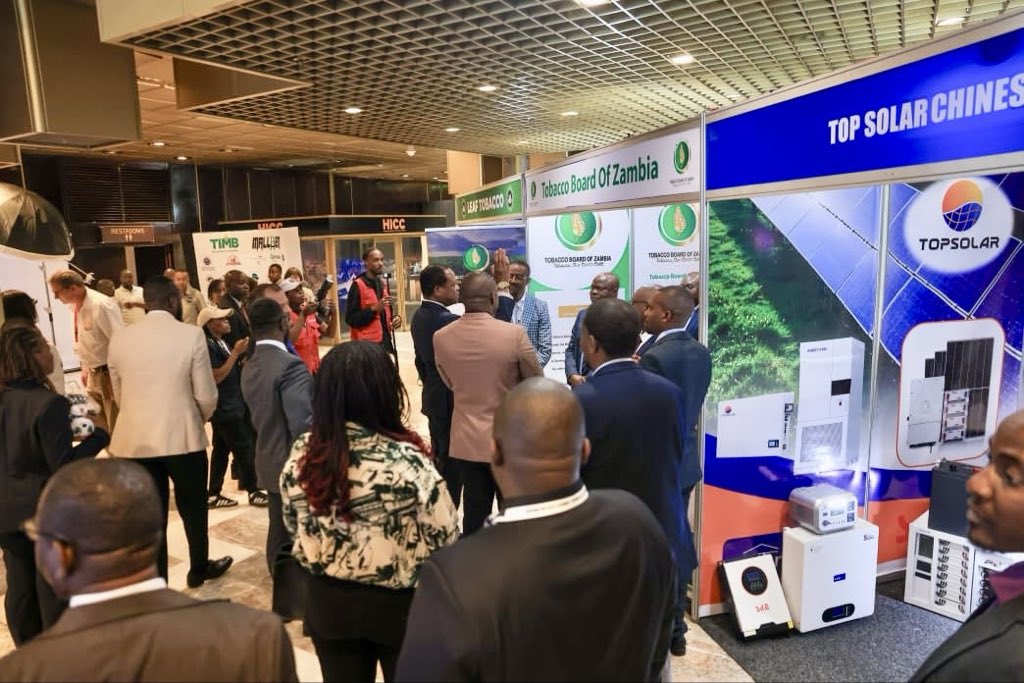
Congratulations on the successful conclusion of the Zimbabwe-China Tobacco Expo! @timb_zw@MoLAFWRD_Zim
China has long been a core partner in Zimbabwe’s tobacco industry: we are not only the country’s largest export market for tobacco, but also deeply integrated into local development. Through localized operations and direct engagement with farmers, our cooperation benefits 80,000 farming families each year—supporting nearly 400,000 livelihoods and breathing life into rural communities.#Farming #tobacco #ChinaZim45Years
@China_Amb_Zim The Zimbabwe–China Tobacco Expo has been officially opened by the Hon. Minister Dr. A.J. Masuka at Rainbow Towers, Harare.
Nearly 300 delegates attending the Business Forum from China, Mozambique, Zambia, Tanzania and Malawi, among others,
🇿🇼🇿🇼🇿🇼
#inthepress | Zimbabwe has been named 2025 world best country to visit by the Forbes magazine
Zimbabwe’s tourism sector recorded over 1,6 million international tourist arrivals in 2024 and generated US$1,2 billion in receipts and US$190,5 million
@China_Amb_Zim@ZtaUpdates
🇿🇼👊🏿
All is set for the #ExportersConference2025! Make sure you register and be a part of groundbreaking discussions on the ease of doing export business under the theme "Rooted Locally, Growing Globally" 🌎
THE Muduvuri Pan African Hospital in Kadoma has taken a decisive step in advancing healthcare delivery, unveiling a new theatre and state-of-the-art X-ray machines that are set to significantly improve patient care and reduce referrals to distant facilities.
https://t.co/PZf6GlRjiy
Acting Minister of Foreign Affairs and International Trade Oppah Muchinguri-Kashiri has attended the 76th anniversary of the People's Republic of China. - Pictures: Justin Mutenda. @China_Amb_Zim@ChineseZimbabwe
🇨🇳🇿🇼🇨🇳🇿🇼🇨🇳🇿🇼🇨🇳🇿🇼🙏🙏
Hon. Minister Dr. Anxious Masuka hosted China Tobacco reps, inviting investment in a Zim cigarette plant to boost value addition, curb illicit trade & expand exports under AfCFTA. With tobacco as Zim’s top export, goal is 30% local beneficiation by 2030. #ZimChinaPartnership
H.E. President Xi Jinping has proposed the Global Governance Initiative (GGI), outlining five core principles: ①Upholding sovereign equality; ②Abiding by international law; ③Practicing multilateralism; ④Advocating a people-centered approach; ⑤Focusing on taking tangible actions.
🌍 Sovereign equality stands as the foremost premise of global governance.
⚖️ The international rule of law serves as its fundamental safeguard.
🤝 Multilateralism represents its basic pathway.
👥 A people-centered approach is its foundational underpinning value;
🎯 Taking result-oriented actions is of vital importance.
Following the Global Development Initiative (#GDI), the Global Security Initiative (#GSI), and the Global Civilization Initiative (#GCI), the #GGI is another crucial public good that President Xi has contributed to the world.
🔗Check out the Concept Paper on the GGI:
https://t.co/M8ulJc8Zky
The Acting President, General (Retd) Dr. C.G.D.N. Chiwenga, today officially opened the 7th Inter-Generational Retreat of the African Women Leaders Network (AWLN) in Harare, which has drawn over 300 women leaders from across Africa,
Cde ED Mnangagwa has arrived in Eswatini’s for the country's national day celebrations tomorrow.
The national day celebrations, which mark the country’s 57 years of Independence, will be held at Somhlolo National Stadium.
#Diplomacy 🇿🇼