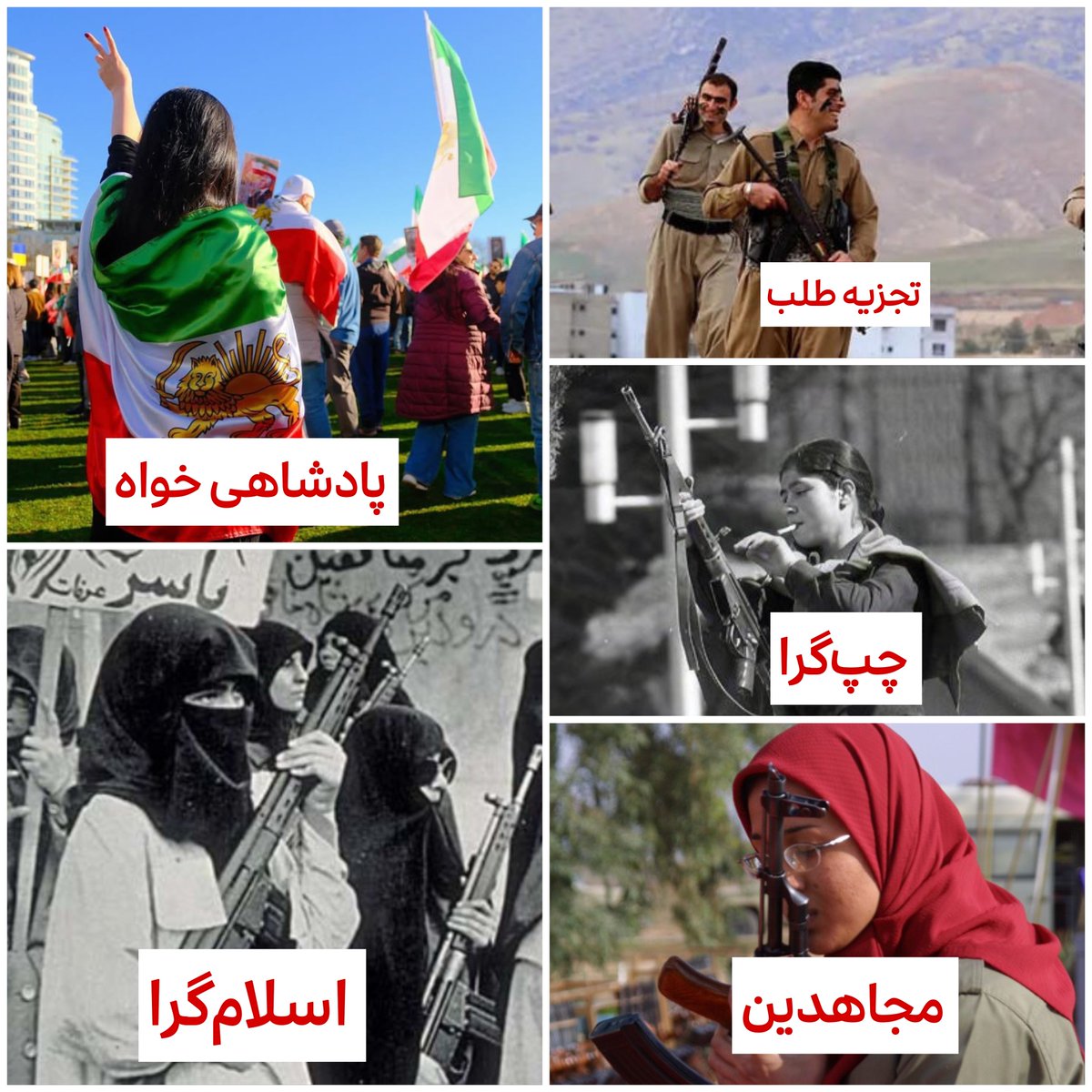
One of the toughest challenges for Iranian diaspora is explaining the sheer extent of the regime's maliciousness to non-Iranians!
#IranMassacre#Jan8_9
FORMAL REQUEST CONCERNING THE ISLAMIC REPUBLIC’S DIPLOMATIC AND CONSULAR PRESENCE IN THE UNITED ARAB EMIRATES 🇦🇪
@MohamedBinZayed@ABZayed@mofauae
We respectfully urge the competent authorities of the United Arab Emirates to take official legal and diplomatic measures regarding the ongoing accreditation of the Islamic Republic’s diplomatic and consular officials in the UAE.
On 1 March 2026, the UAE shut its Embassy in Tehran and recalled its Ambassador together with the entire diplomatic staff after attacks that the UAE publicly ascribed to the Islamic Republic. The next day, @mofauae summoned Ambassador Reza Ameri and presented a formal protest note.
Article 54 of the UAE Constitution assigns the President the authority to receive the credentials of foreign diplomatic and consular envoys.
We therefore ask @MohamedBinZayed to rule formally on the continued standing of the Islamic Republic’s current representatives and on the constitutional procedure that would apply to envoys named to represent the Iranian state during a democratic transition.
Article 9 of the Vienna Convention on Diplomatic Relations entitles the receiving State to declare a head of mission or any member of the diplomatic staff persona non grata. The UAE has been bound by that Convention since 1977.
Accordingly, we request @ABZayed and @mofauae to undertake an official examination of the continued accreditation of the Islamic Republic’s diplomatic staff in Abu Dhabi and to invoke the UAE’s lawful diplomatic powers whenever the Convention’s conditions are satisfied.
Consular representation requires separate treatment. UAE practice itself shows that the Ministry of Foreign Affairs office in Dubai accepts and processes consular credentials.
Article 23 of the Vienna Convention on Consular Relations permits the receiving State to declare a consular officer persona non grata and, under the terms of the Convention, to withdraw or discontinue recognition of that officer’s exequatur. The UAE has likewise been a party to this Convention since 1977.
We therefore ask @ABZayed and @mofauae to conduct a formal review of the continued authorization of the Consul General in Dubai.
We further request @MohamedBinZayed, @ABZayed and @mofauae to define and implement the lawful procedure for accrediting and accepting representatives designated by an Iranian transitional authority, including an authority headed by Crown Prince Reza Pahlavi, and to settle the corresponding diplomatic and consular status of the Embassy in Abu Dhabi and the Consulate General in Dubai.
The UAE already possesses recent practice with a transitional government. In January 2025, @ABZayed formally received the Foreign Minister of the Syrian Transitional Government; in March 2025 the UAE welcomed Syria’s new government while expressly noting the requirements of the transitional period.
That precedent does not dictate the UAE’s stance on Iran, yet it demonstrates that the UAE has maintained official diplomatic relations with authorities exercising power during a political transition.
This appeal seeks formal decisions and legal determinations, not merely the publication of existing procedures.
We ask @MohamedBinZayed, @ABZayed and @mofauae to issue an official determination of the status of the Islamic Republic’s present diplomatic and consular representatives, to exercise the UAE’s lawful diplomatic and consular powers where the relevant legal conditions are met, and to establish the legal framework that will apply to representatives appointed by an Iranian transitional authority under the leadership of Crown Prince Reza Pahlavi.
#IranEmbassiesToPahlavi
#KingRezaPahlaviForIran
FORMAL APPEAL TO THE GOVERNMENT OF ARMENIA 🇦🇲
@NikolPashinyan@armgov@AraratMirzoyan@MFAofArmenia@President_Arm
We respectfully request that the Government of Armenia undertake a formal legal review of the continued diplomatic and consular accreditation of representatives of the Islamic Republic in Armenia.
Under Article 146 of the Constitution of Armenia, the Government develops and implements the foreign policy of the Republic of Armenia.
We therefore request @NikolPashinyan and @armgov to initiate the governmental review necessary to determine the future status of the Islamic Republic’s diplomatic representation in Armenia and the lawful framework for legitimate Iranian representation.
We request @AraratMirzoyan and @MFAofArmenia to review the accreditation and mission status of the Islamic Republic’s representatives in Yerevan, together with the consular authorization governing its Consulate General in Kapan.
Armenia’s own practice confirms that appointment by a sending authority does not, by itself, complete consular admission: Armenia issues the necessary exequatur for the performance of consular functions.
We further request that Armenia establish the lawful accreditation procedure for representatives appointed by an Iranian transitional authority under the leadership of Crown Prince Reza Pahlavi, including the diplomatic and consular steps required under Armenian law.
The competent Armenian authorities, not the representatives of the Islamic Republic, determine whom Armenia accredits and accepts for diplomatic and consular functions.
Armenia also retains authority over the acceptance of individual diplomats under the Vienna Convention on Diplomatic Relations.
Article 9 permits the receiving State to declare a head of mission or member of the diplomatic staff persona non grata and, in the circumstances specified by the Convention, to refuse to recognize that person as a member of the mission.
We request that Armenia apply these authorities separately and precisely to the accreditation of representatives of the Islamic Republic.
Diplomatic accreditation must also remain legally separate from questions concerning premises, archives and property.
The Blue Mosque in Yerevan is property of the Republic of Armenia. Armenian Government Decision No. 1499-N granted the Embassy of the Islamic Republic a 99-year gratuitous right of use for cultural purposes.
We therefore request a separate Armenian legal review of that right of use and of the status of all premises and archives connected to the Islamic Republic’s diplomatic and consular presence.
Our request is clear:
Armenia should address the diplomatic accreditation, consular authorization, mission status, premises, archives and existing rights of use of the Islamic Republic as distinct legal questions, while preserving the separate right of Iran and the Iranian people to legitimate diplomatic representation.
We ask the competent Armenian authorities to publish the legal steps applicable to that process and to the accreditation of representatives appointed by an Iranian transitional authority under Crown Prince Reza Pahlavi.
#IranEmbassiesToPahlavi
The regime’s staged rallies are not a reflection of Iranians' will. They're a carefully manufactured display of fake power & illusion of support (even putting toddlers in crowds).
Don’t confuse regime-organized crowds with the voice of Iran.
#FinishTheJob#EndTheIslamicRepublic
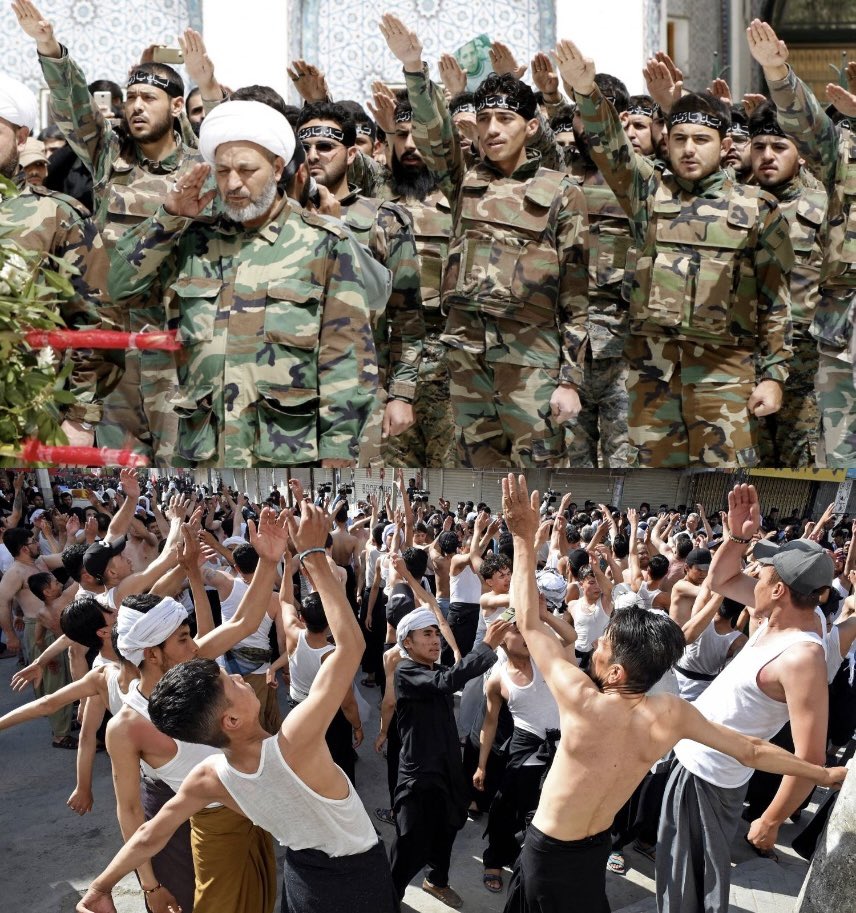
Islamic terrorist regime propaganda 👇
They use women’s simple freedom as a tool to show they have changed.
No to Islamic terrorists.
Islamic terrorists are like chameleons; they change to hide terrorist activities behind the scenes.
They never change.
Islamic terrorists are the most dangerous terrorists.
Regime change and the return of King Reza Pahlavi is the only solution.
#KingRezaPahlavi
#KingRezaPahlaviForIran
This is not a new tactic by the way.
The IRGC did the same when they controlled Syria, and flooded Syrian cities with foreign shia terrorists to replace the native population.
Damascus for example was unrecognisable.
Yet, Bashar Assad fled, and hundreds of thousands of invaders fled with him. Demographics returned to normal again.
One day, Iran will experience the same when the islamic regime escapes.
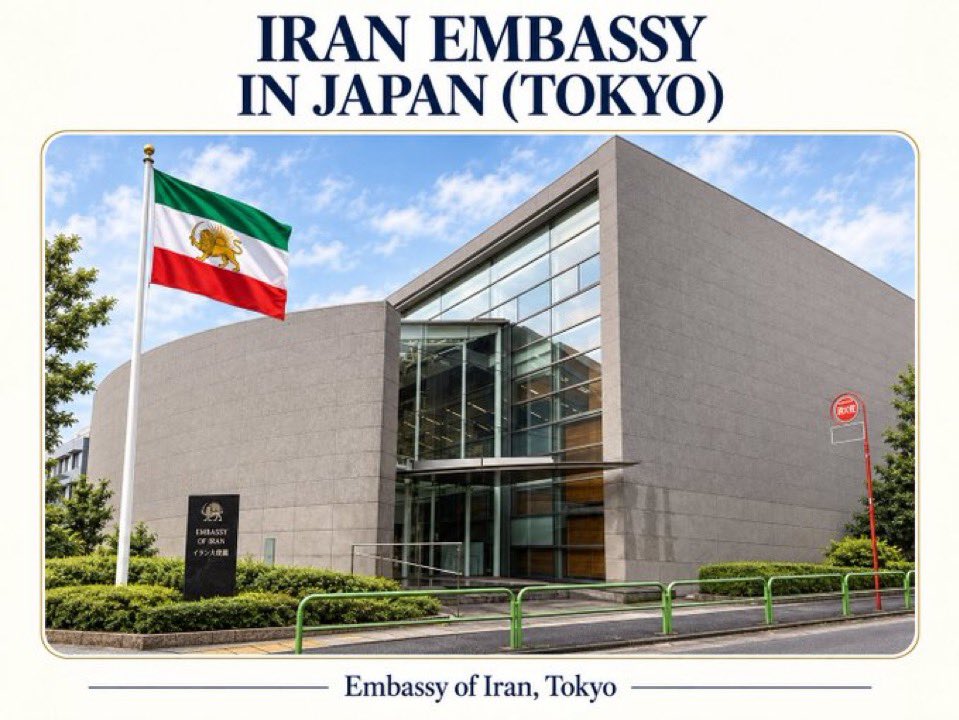
🇯���� FORMAL REQUEST TO JAPAN ON THE STATUS OF IRAN’S MISSION IN TOKYO
@JPN_PMO @MofaJapan_en
This is a respectful request that the Cabinet and the Ministry of Foreign Affairs open a public legal review of who may represent Iran in Japan, and of the rules that would apply if that representation changes.
Iran’s mission now occupies 3-13-9 Minami-Azabu, Minato-ku, Tokyo. Peiman Seadat has served as Ambassador Extraordinary and Plenipotentiary since 12 July 2023.
Japan’s Constitution places the conduct of foreign relations with the Cabinet (Article 73). The Emperor’s formal acts regarding ambassadors and credentials are performed with Cabinet advice and approval (Article 7). Those provisions give Japan the power to decide whom it accredits, whom it continues to receive, and on what terms a foreign mission may remain.
We ask the Government to state, in writing, the procedures that would govern:
• ending or withdrawing acceptance of the present Iranian representatives;
• receiving and accrediting persons named by a successor Iranian authority;
• agrément, Protocol, and presentation of credentials for a new ambassador or chargé d’affaires;
• the legal position and future occupancy of the Tokyo embassy compound;
• the treatment of envoys named by a transitional Iranian authority headed by Crown Prince Reza Pahlavi.
Japan already possesses the tool set out in Article 9 of the Vienna Convention on Diplomatic Relations: a receiving state may declare a diplomat persona non grata. The Ministry of Foreign Affairs has publicly recorded prior uses of that power after 1945, including the Syrian ambassador in 2012.
Recognition of a government, accreditation of its diplomats, continued reception of those diplomats, and the status of embassy premises are separate legal questions. Each can be handled through the Cabinet, the Ministry of Foreign Affairs, and the Protocol system without collapsing them into a single political act.
We therefore ask Japan to define the lawful route by which Iran’s representation in Tokyo could pass to nominees of a transitional authority under Crown Prince Reza Pahlavi, and to do so in a form consistent with the Constitution and with diplomatic law.
#IranEmbassiesToPahlavi
#KingRezaPahlaviForIran
🇳🇱 OFFICIAL REQUEST TO THE DUTCH GOVERNMENT CONCERNING THE DIPLOMATIC STATUS OF THE ISLAMIC REPUBLIC
@MinPres@DutchMFA@MinBZ
We formally request that the Government of the Netherlands and the Ministry of Foreign Affairs conduct a structured legal and diplomatic examination of the Islamic Republic’s present standing in the Netherlands, and that they define an explicit legal route for transferring representation of the Iranian state to an interim authority.
Since 1990 the Netherlands has, as a rule, recognized states rather than governments. Dutch officials have nonetheless indicated that extraordinary conditions can warrant recognition of a particular person or body as the representative of a state, with each situation judged individually. In 2019 the Netherlands invoked that exception when it recognized Juan Guaidó as Venezuela’s interim president.
On that basis we ask the Dutch Government to examine and put in place the legal mechanism for recognizing an Iranian transitional authority headed by Crown Prince Reza Pahlavi as competent to speak for the Iranian state throughout a democratic transition.
That examination should specify the rules that would govern:
• ending or withdrawing acceptance of the Islamic Republic’s current diplomatic staff;
• receiving representatives named by an Iranian transitional authority;
• the agrément, protocol and credentials process for a new ambassador or chargé d’affaires;
• the lawful future status and use of the mission premises at Duinweg 20, The Hague;
• and the distinct arrangements that apply to representation of the Iranian state at the OPCW.
The Venezuelan case shows that the Netherlands has already departed from its ordinary practice of recognizing states rather than governments when it judged the circumstances exceptional enough to recognize an individual as a state’s representative. At the same time, Dutch authorities made clear that such recognition did not, by itself, end existing diplomatic and consular relations or automatically replace serving diplomats.
We therefore ask the Netherlands to state in advance the concrete legal steps required to move from the Islamic Republic’s present diplomatic presence to interim representation of the Iranian state by a transitional authority led by Crown Prince Reza Pahlavi.
Article 9 of the Vienna Convention on Diplomatic Relations allows the receiving state to declare a head of mission or any other member of the diplomatic staff persona non grata. Article 43 further provides that a diplomatic agent’s functions end when the receiving state no longer recognizes that person as a member of the mission.
We therefore urge the Government of the Netherlands and the Ministry of Foreign Affairs to adopt a clear, lawful and public framework for replacing the Islamic Republic’s current diplomatic representation with interim representation of the Iranian state, including the procedures that would apply to envoys appointed by an Iranian transitional authority under Crown Prince Reza Pahlavi.
#IranEmbassiesToPahlavi
#KingRezaPahlaviForIran
OFFICIAL APPEAL TO THE SPANISH GOVERNMENT 🇪🇸
@sanchezcastejon@jmalbares@MAECgob@Congreso_Es
We formally ask the Government of Spain to reassess the diplomatic standing of those accredited on behalf of the Islamic Republic of Iran and the position of that state’s mission in Madrid.
Article 97 of the Spanish Constitution assigns the Government responsibility for conducting the nation’s foreign relations.
Article 9 of the Vienna Convention on Diplomatic Relations entitles Spain, as receiving State, to notify that the head of mission or any member of the diplomatic staff is persona non grata.
Spain has given the Vienna Convention domestic legal effect.
Inside @MAECgob , the Directorate-General for Protocol, Chancellery and Orders handles affairs relating to foreign missions accredited on Spanish territory.
We also ask Spain to examine recognition of Crown Prince Reza Pahlavi, or a properly formed Iranian transitional body led by him, as the authority entitled to name Iran’s temporary diplomatic agents while a democratic change of government takes place.
Once that recognition is granted, persons designated by that authority could follow Spain’s ordinary diplomatic channels—agrément, accreditation, and presentation of letters of credence—in line with Article 4 of the Vienna Convention and established Spanish practice.
Spain already possesses a comparable diplomatic example.
In 2011 Spain officially accepted Libya’s National Transitional Council as the lawful representative of the Libyan people and thereafter terminated the functions of the ambassador previously accredited in Madrid by the authorities in Tripoli.
The Spanish Congress later noted that a chargé d’affaires named by Libya’s National Transitional Council was posted at the Libyan Embassy in Madrid and that the Embassy was flying the new Libyan flag.
Accordingly, we respectfully ask Spain to:
re-examine the credentials of the Islamic Republic’s diplomatic staff;
safeguard Iran’s diplomatic buildings, assets and archives;
weigh recognition of an Iranian transitional authority headed by Crown Prince Reza Pahlavi; and
after such recognition, accept representatives validly appointed by that authority.
#IranEmbassiesToPahlavi
#KingRezaPahlaviForIran
If US & Trump want world peace, fully destroy Iran’s regime—don’t hope it changes. Run by IRGC hardliners desperate for a nuke. Their goal: wipe out Israel & threaten US interests worldwide.
#Finishthejob