The EU recently confirmed that by 2027, every battery, textile, and electronic device sold in Europe will need a verifiable Digital Product Passport.
The infrastructure to support this at scale already exists on Algorand.
Companies like Repsol, Thai Union, Estée Lauder, and Lavazza are using it today.
A thread on who's building it 🧵
1M transactions.
On Algorand: ~$190
As usage scales, transaction costs start to matter fast.
For AI agents, payments, gaming, and high-volume consumer apps, infrastructure efficiency can become a real differentiator.
0 downtime since launch.
Billions of transactions processed.
Thousands of nodes running around the world.
Dozens of major protocol upgrades shipped, including P2P networking, dynamic block times, and post-quantum cryptography.
Reliability is everything.
.@VersaBank recently completed the world's first pilot of blockchain-based deposit receipts and chose Algorand as one of their trusted networks.
When banks need security, stability, and regulatory compliance, they know where to look: @Algorand.
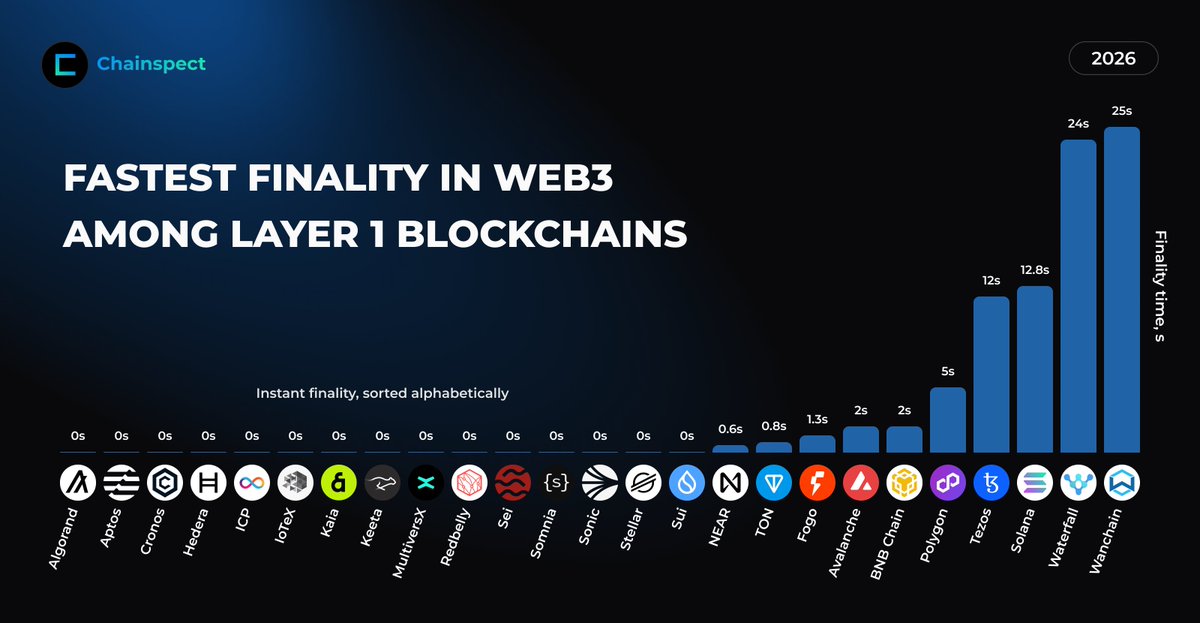
🏁 Let's settle the finality debate once and for all
We ranked Layer 1 blockchains by finality time
Speed claims are everywhere, but Chainspect tracks the entire market to show who actually settles transactions the fastest
📊 https://t.co/bCJz7ctbmJ
Failed transactions aren't an option on Algorand.
If a transaction is invalid, it's rejected before reaching the chain.
No on-chain failures. No wasted fees.
At scale, that can mean millions of dollars saved.
That's what better blockchain infrastructure looks like.