I condemn in the strongest terms the horrific terrorist attack on a church in Jordan. Attacking people gathered in prayer and mourning is an act of unspeakable cruelty.
Terrorism in all its forms and manifestations, whether perpetrated by state or non-state actors, must be condemned unequivocally. No exceptions. No double standards.
A thorough, independent investigation must establish the truth and bring to justice the perpetrators and anyone who directed, financed or supported them, whoever they may be.
If you believe in God, you must first respect His creation. No faith can justify the murder of innocent people.
My heartfelt condolences to the bereaved families and my solidarity with the people of Jordan.
Hatred never ceases through hatred. Let us honour the victims by standing together against terror, refusing to let this atrocity divide us by faith or breed further hatred.
What do they expect, a society too frightened to question, criticise or dissent?
Fighting organised crime is a duty. It is no excuse to enact oppressive laws that leave ordinary citizens vulnerable to abuse. Strong laws require strong safeguards, accountable enforcement and meaningful judicial scrutiny.
The serious concerns reported here from the Human Rights Commission deserve a serious response. Listen, consult and reconsider.
Those who make laws must remember: the powers they give the State today may be used against them tomorrow.
A government’s duty is to protect its people, not make them fear the law.
When the Process Becomes the Punishment
“The courts will ultimately determine guilt” is a familiar assurance offered by those who defend draconian laws. But what happens to the innocent before that determination?
Before a trial even begins, a person may spend months or years in detention or remand, with little meaningful opportunity for bail. Livelihoods disappear, reputations collapse and families suffer—all before any offence is proved.
Courts are indispensable. But eventual judicial intervention cannot justify inadequate safeguards against arrest and prolonged detention.
Can we assume that every officer entrusted with extraordinary powers will exercise sound judgment, impartiality and integrity? Many serve honourably. Nevertheless, laws must protect citizens against error, prejudice and abuse.
Our own experience offers painful lessons.
In the Vavunathivu murders and the Lanka Hospitals grenade incident, the initial suspects were reportedly held on the strength of alleged confessions. Yet subsequent investigations pointed elsewhere, raising grave questions about those supposed admissions.
After the Easter Sunday attacks, investigations linked the Vavunathivu killings to the extremist network responsible for those attacks. A Tamil suspect detained for nearly six months was released. Developments following the Borella church grenade incident similarly called the original police account of the hospital incident into question.
If the initial suspects had supposedly confessed, how did subsequent investigations lead to others? What were those alleged confessions worth?
Remember, too, the woman arrested in the Mahiyanganaya area over a dress motif alleged to resemble the Dharma Chakra. The Supreme Court subsequently found that her fundamental rights had been violated. But could that judgment erase her humiliation and suffering?
By the time proceedings are instituted, notices served, objections filed, arguments heard and written submissions tendered, an innocent person may already have endured punishment in everything but name.
These are human lives. Release cannot restore lost years or undo every injury inflicted on a family.
Such experiences strengthened my determination, as Justice Minister, to work with then Foreign Minister Professor G. L. Peiris on the 2022 PTA amendments. We introduced a new judicial avenue for bail to address prolonged detention without the commencement of trial.
The amendments did not resolve every objection to the PTA. They offered relief to people who could not wait indefinitely for comprehensive reform. Pursuing wider reform and alleviating immediate suffering were compatible objectives.
The SJB, NPP and TNA voted against those amendments. The opposition dismissed them as cosmetic and demanded abolition.
How quickly the language changes when power changes hands.
Those who demanded abolition must explain any willingness now to defend similarly oppressive powers. Personal liberty cannot change in value according to who occupies the government benches.
Sri Lanka needs effective laws against terrorism and organised crime, supported by credible evidence, accountable enforcement and timely judicial scrutiny. Protecting public safety and protecting innocent citizens are both responsibilities of the State.
Safeguards must operate from the moment the State exercises coercive power.
Justice must arrive in time to protect the innocent. Otherwise, long before the verdict, the process itself has become the punishment.
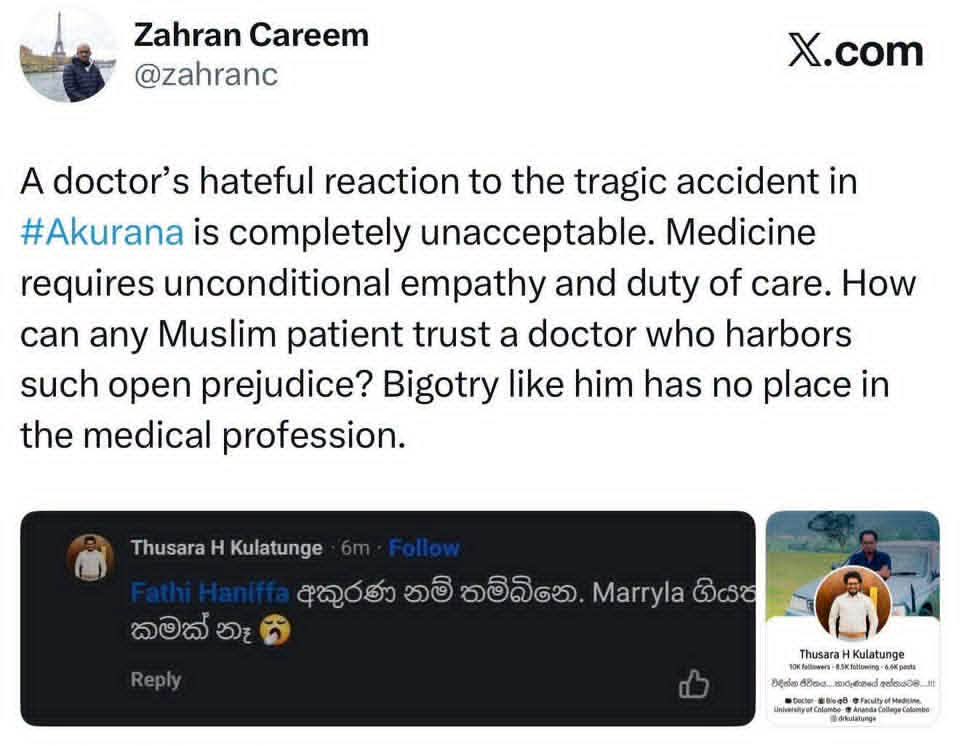
What have we become if another person’s suffering brings us satisfaction simply because they belong to a different faith?
I am deeply disturbed by this circulating screenshot. If authentic, and correctly attributed to a medical practitioner, the sentiments expressed deserve unequivocal condemnation. A profession entrusted with protecting life carries a profound responsibility to treat every human being with compassion, dignity and equal care.
Behind every tragedy are human beings: someone’s mother or father, someone’s child, a family’s home, a livelihood built through years of sacrifice. Their suffering does not become any less painful because they pray differently from us.
We are all human beings. Every life matters. No faith, grievance or political allegiance can justify celebrating another person’s death, injury or loss.
Our national anthem reminds us:
“එක මවකගේ දරු කැල බැවිනා
යමු යමු වී නොපමා”
These words must mean more than something we sing while standing together. They must guide how we live together, how we speak of one another, and how we respond when tragedy strikes.
We cannot sing of being children of one mother and then turn away from the suffering of our brothers and sisters.
Let us reject this hatred firmly, without allowing it to breed hatred in return. The prejudice of one individual must never become a reason to condemn an entire community. Decent people of every faith must stand together and make clear that cruelty has no place in our shared society.
The Sri Lanka we leave our children must be a country where nobody has to wonder whether their faith makes their life less worthy of protection, or their suffering less deserving of compassion.
Our common humanity must always be stronger than the divisions between us.
Pleased to meet the British High Commissioner at his kind invitation for an engaging exchange on domestic developments, international affairs and Sri Lanka’s economic outlook. Thank you for the warm hospitality and thoughtful conversation.
A good conversation with former Foreign and Finance Minister @alisabrypc , PC. We discussed domestic political developments, international affairs and Sri Lanka’s economic outlook.
A beloved motherland is one in which every person feels at home.
When someone speaks of their identity, we would do well to listen for the history, memories and emotions behind their words. The debate around “Eezhath Tamizhachi” gives us an opportunity to listen with greater understanding. Pride in Tamil heritage does not, by itself, mean support for the LTTE or rejection of Sri Lanka.
Our country has had a troubled past. We must find the courage to acknowledge our shortcomings, the injustices people endured and the opportunities for reconciliation we have missed. Tamil civilians suffered immense loss, displacement and anguish. Sinhala, Muslim and other communities, too, carry wounds that time alone cannot heal.
Every mother’s grief deserves compassion. Every family’s loss deserves recognition. We lose nothing by acknowledging another’s pain; we create the possibility of understanding one another.
Sri Lanka had to confront the terrorism of the LTTE. Its defeat ended decades of armed conflict and gave our people the chance to rebuild their lives in peace. We owe it to everyone who suffered to make that peace enduring to build a country where all can live with dignity, security, equal rights and hope.
And there is so much in this country worth cherishing.
Every day, the vast majority of our people live and work alongside one another. We share meals, celebrate each other’s festivals, build friendships across communities and stand by our neighbours in times of sorrow. These ordinary acts of affection and solidarity seldom make headlines. Yet they are among the deepest truths of who we are.
Our tradition of universal access to public healthcare, free education extending to university, and social support for those in need is also something to value. These systems need strengthening, but they express a shared conviction: that every life matters and that opportunity should reach beyond those who can afford it. Generations of Sri Lankans, from every community, have helped sustain that promise.
To the younger generations of our diaspora, I would offer an invitation: come to know Sri Lanka in its fullness. Bring your questions, your memories and your concerns. Meet its people, hear their stories and see both what remains to be put right and what is worth celebrating. There is a place for your talents, your ideas and your hopes in this country’s future.
Those of us at home must be equally willing to listen. We all inherit incomplete accounts of the past. Understanding grows when we make room for experiences beyond our own.
No one should have to surrender their language, faith, culture or family history to feel Sri Lankan. Our shared identity can embrace all these attachments. Belonging grows through the respect we show one another and the fairness with which we treat every citizen.
Let us be honest about our failures, generous in recognising the good in one another, and determined to do better together. We cannot change what earlier generations lived through. We can shape what the next generation will inherit.
May we leave our children a Sri Lanka where every language is heard with respect, every community feels secure, and every child grows up knowing: “I belong here. This is my home. This is our beloved motherland.”
Let us not forget the price of short-term popularity.
Every Sri Lankan family deserves relief. After years of hardship, that aspiration is both understandable and legitimate. But relief must be sustainable. We must ensure that what eases the burden today does not create a greater burden tomorrow.
The President’s announcement of possible tax concessions must therefore be judged on the details: their cost, how they will be funded and their implications for the country’s financial stability.
The experience of 2019 should remain a warning to every government. Sweeping tax cuts were welcomed by many, but the resulting loss of revenue contributed to a cascading deterioration in public finances, creditworthiness and access to borrowing. Together with other policy mistakes and external shocks, they helped push an already vulnerable economy towards catastrophe.
The political reversal was equally striking. A government that secured almost a two-thirds parliamentary majority in August 2020 faced overwhelming public anger less than two years later. Many who had welcomed or benefited from the tax cuts understandably turned against it when inflation, shortages and uncertainty overwhelmed the initial relief.
The lesson is not that people are ungrateful. It is that governments have a responsibility to anticipate consequences that may not be immediately apparent to those welcoming a concession.
Having served as Finance Minister at the height of the crisis, I witnessed how narrow our choices had become. Restoring revenue, adopting cost-reflective pricing and undertaking debt restructuring required painful and deeply unpopular decisions. The subsequent reform programme under President Ranil Wickremesinghe carried a heavy political cost, but helped stabilise the economy and restore essential supplies.
Those of us who served in government must acknowledge both the mistakes that preceded the crisis and the sacrifices required to address it. The responsibility now is to preserve the lessons, regardless of who holds office.
This does not mean every existing tax must remain unchanged. There is room to simplify taxation, address unfair burdens, reduce waste and provide carefully targeted relief. But permanent concessions require dependable funding. Expected growth alone is not a sufficient answer to an immediate loss of revenue.
Applause at a party rally is not a measure of fiscal sustainability. The true test is whether a policy will still serve the people when the applause has faded.
I want this Government to succeed. Sri Lanka’s recovery belongs to its people, and its failure would be borne by them too.
Let us offer relief with responsibility, reform with foresight and leadership that places the country’s long-term interests above immediate political advantage.
I am deeply concerned by the reported escalation of Anojan Sivarasa’s five-year prison sentence to a death sentence in Saudi Arabia. Sri Lanka’s Foreign Ministry has not confirmed the reported death sentence, and the formal written judgment is awaited.
Respect for Saudi Arabia’s sovereignty and legal system does not require silence in the face of disproportionate punishment. A five-year prison term for an offensive social media comment is already excessive. Taking a human life for such an act would be grossly disproportionate, inhumane and unacceptable.
Reports that Anojan removed the comment within minutes and issued a public video apology deserve serious consideration. An offensive remark should not extinguish a person’s opportunity to repent, learn and rebuild his life.
As a Muslim, I believe deeply in Allah’s mercy. We invoke Him as the Most Compassionate, the Most Merciful. Those values must also guide our response to human failings. The ultimate judgment of a person’s faith and sincerity rests with the Almighty.
I respectfully urge the Saudi authorities to show mercy and grant Anojan clemency. I also urge the Sri Lankan Government to secure effective legal assistance and pursue urgent diplomatic intervention at the highest level.
Justice must leave room for compassion. Anojan deserves the chance to return to his family and rebuild his life.
What a historic day for Bangladesh cricket!
To defeat Australia on Australian soil in a test match is a truly remarkable achievement. This victory could change the trajectory of Bangladesh cricket forever.
A stirring story of courage, perseverance and determination.
Heartiest congratulations to the Bangladesh team.
Onwards and upwards! 🇧🇩
Never Again
The latter part of July reminds us of one of the darkest and most painful chapters in our nation's history Black July of 1983.
It remains almost unthinkable that such horrific violence could have taken place in our country. Yet it did. Nor was it the only occasion in our history when hatred, fear and division resulted in tragedy.
The consequences are well documented. As a nation, we lost our way and became embroiled in a brutal conflict that lasted nearly three decades, claiming countless lives, displacing families, and depriving our country of immeasurable opportunities.
History cannot be rewritten, but it can and mustbe learned from. The greatest tribute we can pay to all those who suffered, irrespective of ethnicity, religion or political belief, is to ensure that such horrors are never be repeated.
Much has been achieved since the end of the conflict. We have restored peace, rebuilt infrastructure, strengthened institutions and created the space for communities to live together once again. These achievements should not be underestimated.
Yet our journey is not complete.
We must continue to build a Sri Lanka where every citizen, irrespective of ethnicity, religion or language, can live in peace, security, dignity and self respect, confident that they have an equal stake in the future of our nation.
It is therefore deeply regrettable that, from time to time, attempts are still made to inflame communal, racial and religious divisions instead of healing them. Such efforts reopen old wounds, undermine trust and distract us from the far greater task of nation building.
No nation can realise its true potential unless it has the courage to confront its past honestly, preserve the lessons it offers, reject the mistakes that divided it, and move forward with confidence, wisdom and unity.
Seventeen years after the end of the conflict, there remains unfinished work. Truth and reconciliation, healing the wounds of all communities, meaningful devolution and inclusion, and engaging constructively with our diaspora should not be postponed indefinitely. They are investments in a stable, united and prosperous future.
The diaspora, too, has an important role to play. Many continue to carry the pain and memories of the past. Those experiences deserve to be acknowledged. At the same time, lasting reconciliation requires all of us, both at home and abroad, to recognise the realities of today and to work together in building a shared future rather than remaining prisoners of history.
The time has come to complete the unfinished work of reconciliation, not because the past can be undone, but because the future can still be shaped.
Let Black July remind us not only of where hatred can lead, but also of our collective responsibility to ensure that such tragedies never happen again.
Never Again.
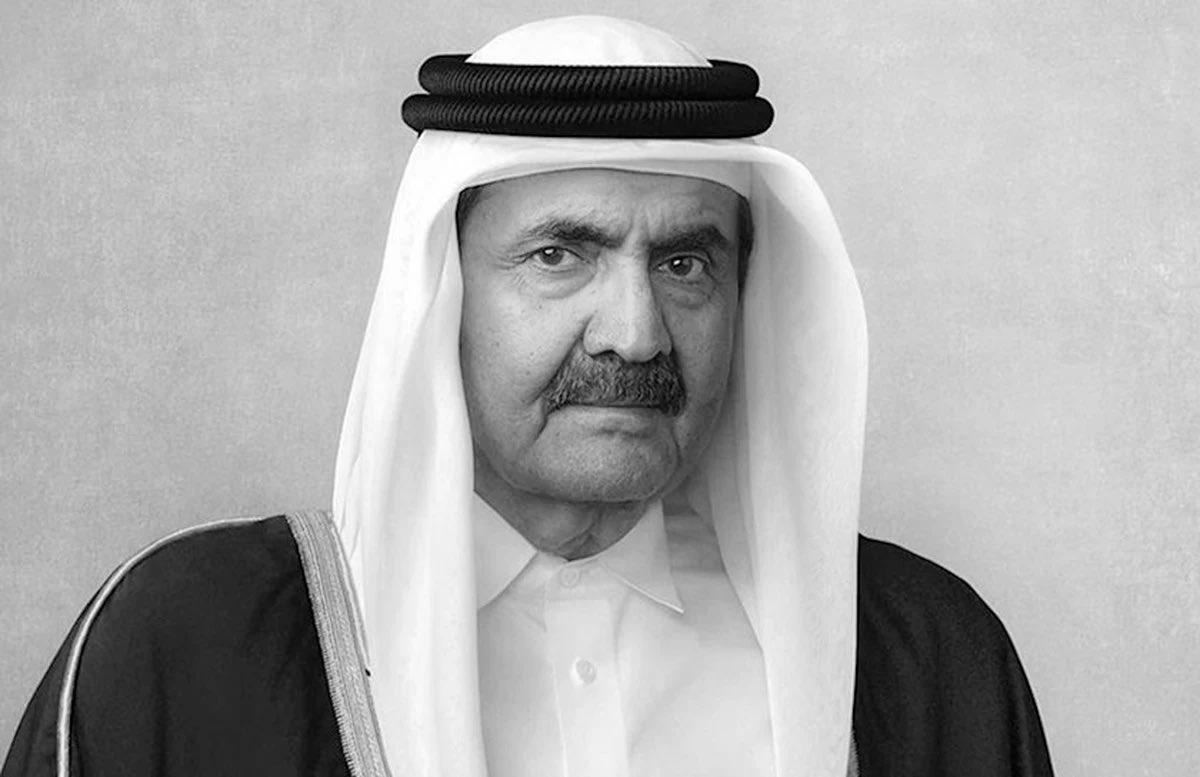
Deeply saddened by the passing of His Highness Sheikh Hamad bin Khalifa Al Thani, the beloved father of His Highness the Emir of the State of Qatar and the former Ruler of the State of Qatar.
A visionary leader, he transformed Qatar into a nation of remarkable progress and global influence, leaving behind an enduring legacy of development, leadership and service.
I extend my heartfelt condolences to His Highness Sheikh Tamim bin Hamad Al Thani, the Royal Family, the Government and the people of the State of Qatar. May Almighty Allah forgive his shortcomings, envelop him in His infinite mercy, grant him Jannatul Firdaus, and give strength and solace to all who mourn his passing.
Disney princess in real life 🤴✨
This viral video of a little girl from 🇱🇰 Sri Lanka has captured the hearts of millions around the world.
A beautiful moment of innocence, nature, and childhood that feels straight out of a Disney movie❤️
( Video Prabath Silva )
Dear Indian Friends – Your Nearest Paradise is Calling !
🇮🇳✨
Why travel far when Sri Lanka is just a short flight away?
Visa-free for 30 days (double entry – completely free in 2026) 💫
🌴 Pristine beaches | 🏛️ Ancient temples & Ramayana trails | ⛰️ Misty tea estates | 🐘 Wildlife safaris | 🍛 Incredible food & Ayurveda !
More affordable, familiar and magical than ever — perfect for families, honeymoons, quick getaways or destination weddings.
India is already our #1 market for a reason. ❤️
Come create memories that feel like home, yet extraordinary !
Book your Sri Lanka escape ✈️
#VisitSriLanka #SriLankaForIndians
What a match between Zahira and Trinity!
Zahira boys played their hearts out and left everything on the field. Hard luck, but you have every reason to be proud of your performance.
Congratulations to Trinity on a well deserved victory. They have been the benchmark of school rugby this season, playing a classy brand of rugby and proving why they are the league champions.
To come within five points of such a formidable side speaks volumes about the character, courage, and determination shown by the Zahira boys.
A final score of 37–32 and, in my view, by far the best school rugby match of the season.
Well played Trinity. Well played Zahira.
As a proud Zahiran, I could not be prouder of our boys today!
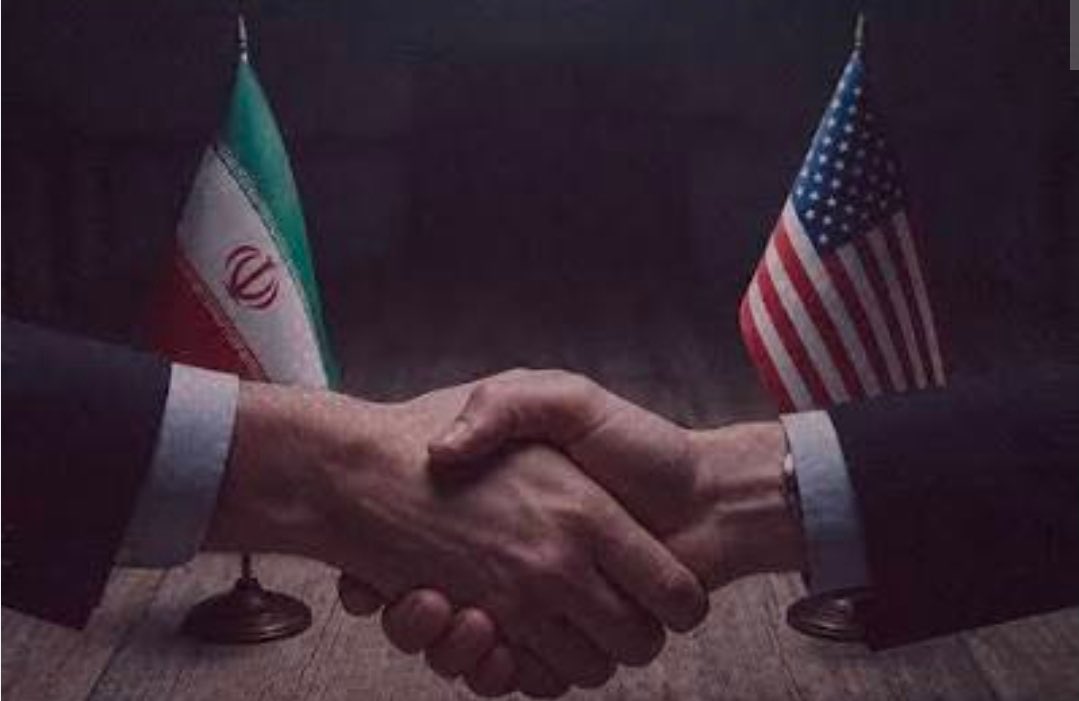
Happy to see the United States and Iran have entered into a Memorandum of Understanding aimed at resolving longstanding disputes and moving towards a permanent end to hostilities that have persisted, in one form or another, for nearly half a century, with devastating consequences for the people of Iran, the wider region, and the world.
I sincerely hope this marks the beginning of a new chapter of peace, stability, and cooperation in the Middle East.
It is equally my hope that Israelis and Palestinians can move towards a just and lasting settlement based on the long recognised two state solution, enabling both peoples to live side by side in peace, security, dignity, and mutual respect, consistent with relevant United Nations resolutions.
The Jewish people endured one of the greatest tragedies in human history during the Holocaust. That experience should forever remind humanity of the dangers of hatred, persecution, collective punishment, and the denial of human dignity.
Precisely because of that history, and because Israel today possesses immense military, economic, and diplomatic strength, it bears a special responsibility to ensure that its legitimate security concerns are pursued in a manner consistent with international law, proportionality, and respect for human life.
The immense suffering witnessed in Gaza should prompt serious reflection, particularly by those with the greatest power and responsibility, on the human cost of conflict. Lasting peace cannot be built solely on military superiority. It requires justice, restraint, compassion, accountability, and a genuine commitment to recognising the humanity and aspirations of both Israelis and Palestinians.
The security of Israel and the dignity of the Palestinian people are not mutually exclusive objectives. A durable peace requires both.
If peace takes root, the peoples of the region may finally breathe a sigh of relief, and future generations may be spared the burden of perpetual conflict, violence, and fear.
Peace is never achieved through military victories alone. It requires wisdom, restraint, compromise, and the courage to recognise that coexistence is preferable to endless confrontation. Lasting peace is ultimately about give and take, and about respecting the legitimate aspirations, security, and dignity of all people.
I also hope this moment creates space for greater prosperity, reform, and opportunity across the region, particularly for its younger generation, whose future should be shaped by hope rather than conflict, and by the democratic will of their peoples rather than fear, violence, or external pressures.
I hope Iran will seize this opportunity to undertake the reforms necessary to address the aspirations and grievances of its people, strengthen its institutions, safeguard the rights and freedoms of its citizens, and allow the democratic will of its people to shape the country’s future free from undue external interference. At the same time, strengthening internal governance and security mechanisms will be essential to protect both the rights of citizens and the sovereignty of the state.
Whatever compromises may be required, permanent peace is worth the price. The dividends of peace will always far outweigh the costs of war.
May wisdom prevail over hostility, dialogue over confrontation, and peace over conflict.
Kugathas Mathulan
Vijayakanth Vyaskanth
Absolutely thrilled to see these boys from Northern Part of our country breaking barriers and playing for Sri Lanka 🇱🇰
Sri Lanka 🇱🇰 Can - Sri Lanka 🇱🇰 will !
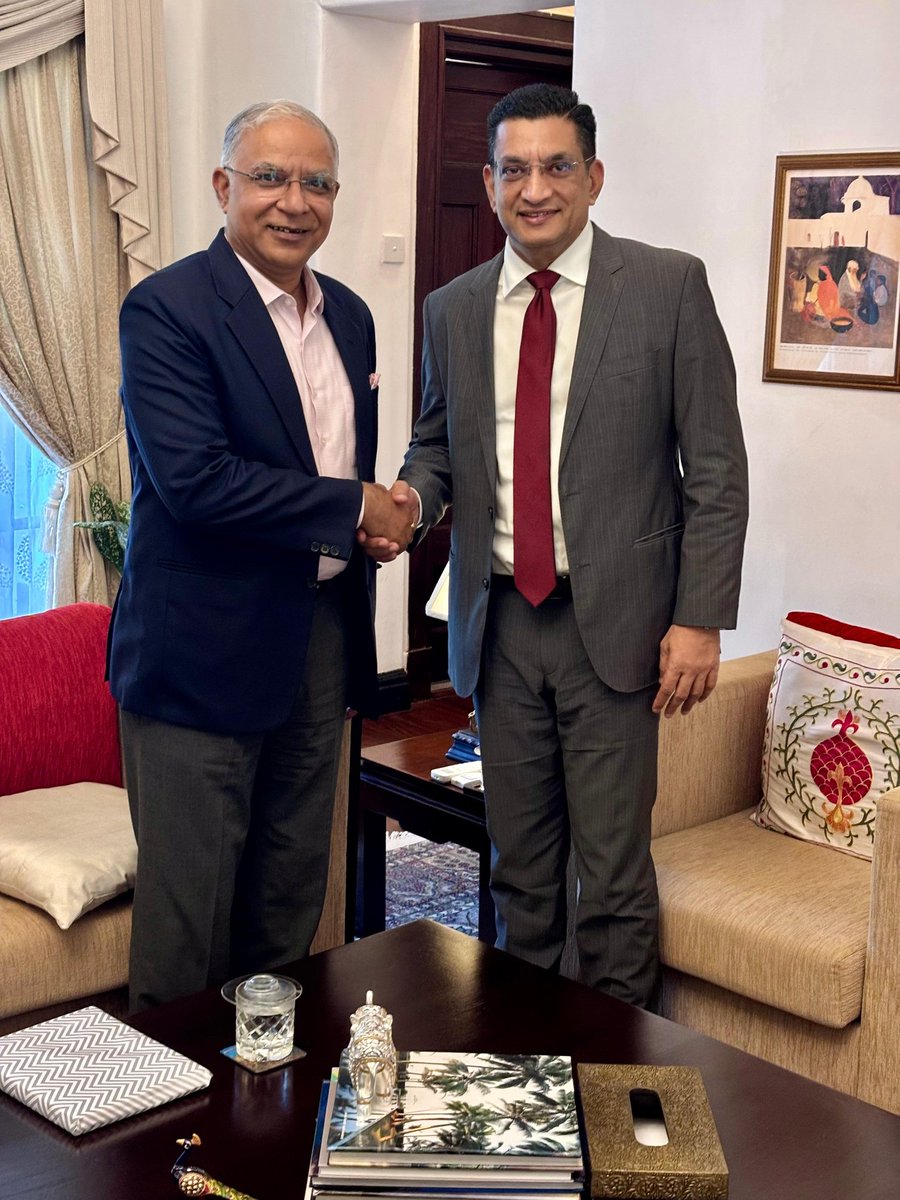
Had a very good discussion with H.E. High Commissioner Santosh Jha today on many important aspects of the India–Sri Lanka partnership.
It is heartening to see the growing trust and goodwill between our two countries. Our partnership has delivered meaningful benefits to our peoples, and I am confident it will continue to strengthen in the years ahead.
Looking forward to deeper cooperation and shared prosperity. 🇱🇰🇮🇳
High Commissioner @santjha met former Minister @alisabrypc. Discussed the #IndiaSriLanka partnership, particularly the deepening trust and goodwill between the two countries. 🇮🇳🇱🇰 partnership has delivered for the people of Sri Lanka and will continue to work towards mutual prosperity.
@MEAIndia@IndianDiplomacy
Yesterday, after a visit to my barber on a quiet Sunday evening , I was stopped by the Traffic Police for inadvertently crossing a traffic signal a little too late. The violation was mine, and I readily accepted it.
What impressed me, however, was not the fine, but the professionalism with which the entire situation was handled.
The officer from Cinnamon Gardens was courteous, respectful, and efficient. He politely asked whether I had a banking app on my phone, then patiently guided me through the GovPay system, enabling me to pay the fine instantly on the spot. Once payment was confirmed, my licence was promptly returned. The whole process took only a few minutes — no unnecessary delay, no frustration. Just professionalism, courtesy, and technology working as it should.
As I reflected on the experience, I could not help but recall the early discussions we had with the Police and other stakeholders during my tenure as Minister of Justice on using technology to improve public services. Seeing those initiatives now delivering real benefits to citizens is quietly satisfying. It is a reminder that every worthwhile reform takes time, and that no sincere effort to improve public service is ever wasted.
We often focus on what is wrong in public administration. It is equally important to acknowledge what is working well. This was a simple but powerful example of how technology can improve governance, and how a public officer performing his duty with competence, integrity, and respect can strengthen public trust.
My compliments to the Sri Lanka Police, the GovPay initiative, and particularly the officer from Cinnamon Gardens who handled the matter with exemplary professionalism.
Technology can modernise systems. Professional public servants can transform public confidence. Together, they make government work better for everyone.
Well done. 👏🇱🇰