From Early Promise to Greatness
Every few years, a young Sri Lankan plays an innings or bowls a spell that makes us turn to one another and say, “This boy could be something special.” Some have gone on to bring glory to our country and give us memories we will carry for a lifetime. We have also seen too many fade from the game while we were still waiting to see their best.
Some had the talent to become great, yet understood too late what it would take to get there and stay there. At twenty, it is easy to believe there will always be another season to improve your fitness, correct a weakness or put your priorities in order. A career can slip away through small choices, each of which seems harmless at the time. Those of us who celebrate a young player’s arrival owe him some guidance while he still has time to act on it.
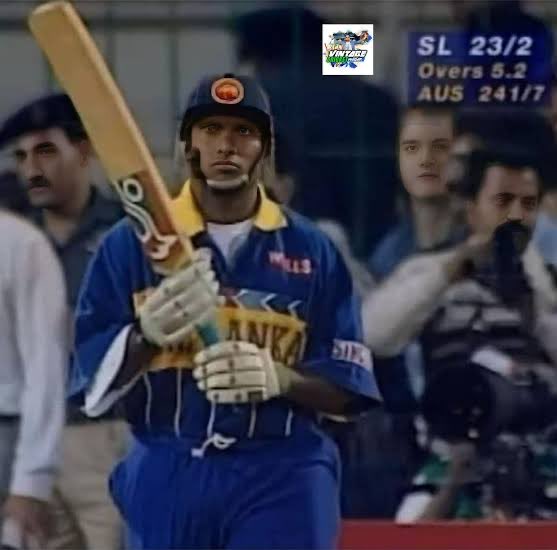
Think of Arjuna, Aravinda, Sanath, Murali, Vaas, Sanga, Mahela, Malinga and Angie. Each played in a way you could recognise from the far end of the ground. What sustained them was perseverance through lean spells, dedication to the daily work, discipline on and off the field, and a hunger to improve that survived success. There is something special about a cricketer who wins a match for his country and turns up at practice the next morning still curious about the one delivery that troubled him.
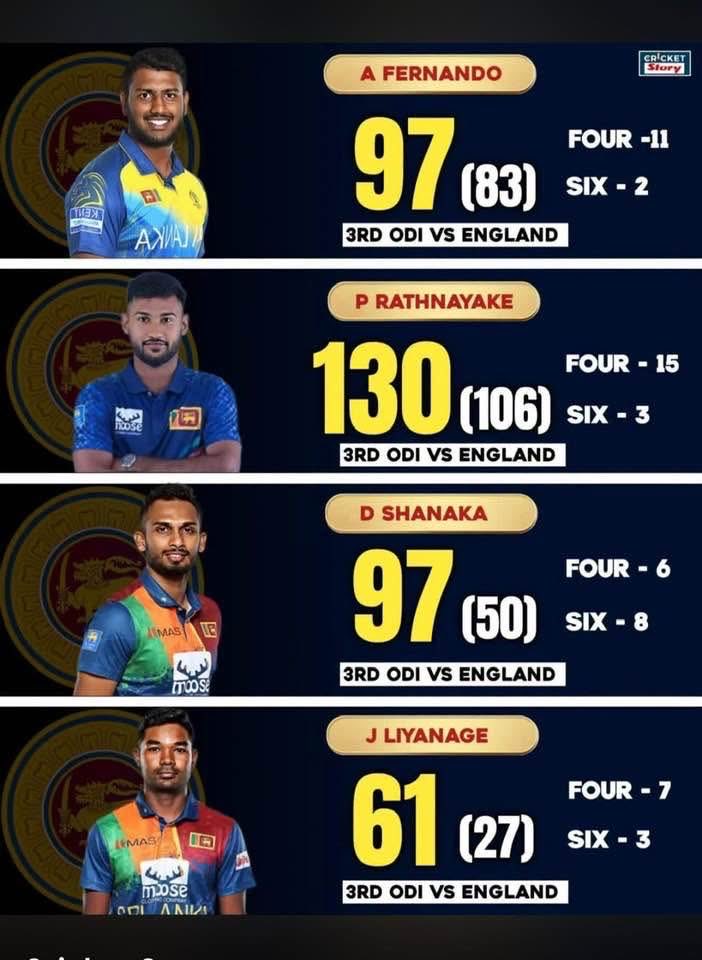
Wanindu, Matheesha, Maheesh and Kamindu have already given Sri Lanka days to remember. As someone who loves our cricket, I believe their finest years can still lie ahead. I hope that, years from now, we will still be talking about what they achieved for Sri Lanka, long after we have forgotten what we once predicted for them.
To Pawan, Sineth and the other young players who give us such hope, enjoy what you earn. Your first big T20 cheque may let you do something for your parents that you have dreamed of since childhood. Take pride in that. The danger comes if it persuades you that you have already arrived. Today, an opponent can study every ball of your last innings before you have even boarded the plane.
Use those league seasons to sharpen your skills and your judgment. When you find yourself in a dressing room beside someone you grew up watching, pull up a chair. Ask what he saw in your game. Ask how he found his way back after being dropped. His answer may stay with you for the rest of your career.
Look after your body. Eat well, rest properly and choose your company wisely. Keep someone close who cares enough to tell you the truth on the day everyone else is singing your praises. And to the parents, coaches, mentors and managers around these boys, help them see ten years ahead when everyone is asking about the next contract.
You may have ten or twelve years at your best. Ask anyone who has worn the Sri Lankan shirt for the last time how quickly those years went. My hope is that one day a child playing cricket on a dusty patch of ground will copy your stance or mark out your run-up, just as children once did for Sanath, Murali and Malinga.
Give yourself every chance to become the player that child will remember. 🇱🇰🏏
A Sri Lankan Cricket fan
It is heartening to see Senator @ChrisVanHollen emerging as a strong contender for the leadership of the United States Senate.
At a time when the world needs courageous and principled leadership, Senator Van Hollen stands out as a man of integrity, conviction and moral courage.
He is also a dear friend of Sri Lanka, with a special connection to our country through his father, who served as US Ambassador to Sri Lanka.
Having met him on several occasions, including during my tenure as Foreign Minister, I have always admired his sincerity, commitment to justice and strength of character.
True leadership is not about the power one holds, but the principles one refuses to abandon.
I wish Senator Van Hollen every success. The world needs more leaders of his calibre, courage and conviction.
I welcome the announced introduction of entrepreneurship and financial literacy into the Grade 6 curriculum from 2027. Prime Minister and Education Minister Harini Amarasuriya and all those involved deserve appreciation. Good reforms deserve support, irrespective of political differences.
Every citizen needs a basic understanding of household finances, the economics of businesses and institutions, and the national economy. From managing a family budget to assessing a government’s promises, financial literacy helps us make informed choices.
Children should learn to save, budget, recognise fraud and understand risk. They should also learn how enterprises create value and employment, and why productivity, accountability and social responsibility matter.
At the national level, citizens must be able to ask: What can we afford? How will it be financed? Who bears the cost, and what are the consequences? A promise does not become affordable because it is popular. Nor does its cost disappear because someone else is expected to pay.
Sri Lanka’s experience in 2022 is a painful reminder that politically attractive decisions can contribute to economic disaster. An informed public can better distinguish what is desirable from what is feasible, and temporary relief from lasting progress. Economic choices must be tested against evidence, data and credible statistics.
Taught practically, this reform can strengthen both economic resilience and democratic accountability. Its greatest contribution may be a generation that asks not merely, “What are we being promised?” but also, “At what cost, and to whose future?”
I've been in politics for a quarter century. It's hard to express how staggering it is to see a conversation like this on corporate US media. The Morning Joe panel gobsmacked by the directness of @AbdulElSayed's points.
(clip via @DropSiteNews)
MICHIGAN: A TEST OF AMERICA’S CONSCIENCE
I have been following the US midterm elections with particular interest in Michigan’s Senate race. What should be a contest of ideas and leadership has become something more consequential: a test of America’s commitment to equality, pluralism and its own democratic ideals.
At the centre is Dr. Abdul El-Sayed, an American born to Egyptian immigrant parents, a Muslim, and an exceptionally accomplished public servant.
Educated at Columbia and Oxford, with an impressive record in public health, El-Sayed possesses the intellectual credentials, eloquence and leadership qualities that any democracy should value.
Yet his path has been anything but straightforward.
Proud of his Muslim identity and outspoken against the devastation in Gaza and what he regards as genocide against Palestinians, El-Sayed has faced formidable opposition from powerful political interests, pro-Israel lobbying organisations and wealthy donors. More disturbingly, elements of the opposition have exploited religious prejudice and Islamophobia.
The extraordinary decision of Haley Stevens, whom he defeated in the Democratic primary, to endorse Republican Mike Rogers underscores the bitter divisions surrounding this election.
Political opposition is legitimate. Disagreement over policies is fundamental to democracy. But when a candidate’s faith or ancestry becomes a weapon against him, it is democracy itself that is diminished.
A leader should be judged by competence, character and commitment to the public good, not by the God he worships or the origins of his parents.
What gives me hope is the response from ordinary Americans.
Across Michigan, Christians, Muslims, Jews and people of diverse backgrounds are rallying around El-Sayed. The surge in grassroots contributions suggests that many refuse to let wealth, prejudice and political manipulation dictate their choices.
Having listened to El-Sayed speak, I see an exceptionally articulate, thoughtful and courageous young leader who combines intellectual depth with conviction and genuine concern for public welfare. He represents the kind of new-generation leadership America needs.
Whether he wins remains uncertain. But the significance of this election extends far beyond Michigan.
If elected, El-Sayed would become the first Muslim in the US Senate, affirming that the American dream belongs to every citizen, regardless of race, religion or ancestry.
For millions of young Americans from minority and immigrant communities, it would demonstrate that they need not conceal their identity or compromise their convictions to aspire to national leadership.
At a time when fear and division increasingly shape politics, America has an opportunity to offer the world a different example.
The real question is not whether America is ready for a Muslim senator. It is whether America is ready to honour its promise of equal opportunity and belonging for every citizen.
I hope Michigan chooses merit over prejudice and principle over political expediency.
For democracy is not truly tested when the majority prevails, but when someone from a minority seeks to lead.
Michigan’s choice will speak far beyond its borders. Will America allow prejudice to define who can lead, or prove that its ideals are greater than its divisions?
What Lula's Comeback Teaches Us
Lula da Silva has won a fourth term as President of Brazil, and he did it the hard way. Three weeks ago he finished second in the first round, more than two million votes behind Senator Flávio Bolsonaro. Since direct presidential elections returned to Brazil in 1989, no candidate had ever recovered from that position. On Sunday he won with almost 52 percent of the vote.
What interests me most is not the victory itself but how he responded to the setback. He did not quarrel with the result. He reassessed his campaign, went back to the voters and persuaded more of them that their participation mattered. There is a lesson here for anyone in public life.
We must never take the people's confidence for granted.
Past achievements deserve recognition, but people are entitled to ask what comes next. They have concerns about their livelihoods, their children and their country. Those who seek their support have a duty to answer them.
When voters hesitate, the first response should be to listen. Blaming them, questioning their judgement or dismissing their concerns only widens the distance. A disappointing result should make a political movement look honestly at itself.
His effort to bring those who had stayed at home into the second round is particularly instructive. Voting in Brazil is compulsory for most adults but voluntary for the young and for those over seventy, and his campaign went after both. Between the two rounds he added more than ten million votes. Political support means little if it never reaches the ballot box. People must believe their vote can make a difference, and a campaign needs the organisation to turn that belief into a vote cast.
Political arguments must also mean something in people's daily lives. Lula spoke directly to the cost of living, through social assistance and relief for households. Whether Brazil can afford those commitments, with public debt already a serious concern, will be an early test of his new government.
We should remember this wherever we practise politics. A family struggling to make ends meet is entitled to more than an impressive speech. They want to know whether their circumstances will improve and whether their children will have better opportunities.
Having had the responsibility of conducting Sri Lanka's foreign relations, I also find the question of sovereignty significant. Facing heavy American tariffs and open pressure from Washington, Lula placed Brazil's independence at the centre of his message. We cannot yet say how much this moved voters, but national dignity was clearly part of his appeal.
For a country such as ours, independence in foreign policy calls for careful judgement. We must keep our friendships, widen our opportunities and retain the freedom to decide what serves our people best. We should never allow Sri Lanka to become an instrument in the rivalries of larger powers.
That freedom rests on economic strength. I have seen at close quarters how severely an economic crisis narrows a country's choices. When you depend on others to keep the lights on, your room to say no shrinks. Sound economic management is therefore not separate from sovereignty. It is its foundation.
There is much still to learn from Brazil. But one lesson is worth stating plainly. The people's confidence belongs permanently to no leader and no party. It has to be earned, and once given, it must be respected.
An election gives us the opportunity to serve. What we do with that opportunity is what ultimately matters.
I condemn in the strongest terms the horrific terrorist attack on a church in Jordan. Attacking people gathered in prayer and mourning is an act of unspeakable cruelty.
Terrorism in all its forms and manifestations, whether perpetrated by state or non-state actors, must be condemned unequivocally. No exceptions. No double standards.
A thorough, independent investigation must establish the truth and bring to justice the perpetrators and anyone who directed, financed or supported them, whoever they may be.
If you believe in God, you must first respect His creation. No faith can justify the murder of innocent people.
My heartfelt condolences to the bereaved families and my solidarity with the people of Jordan.
Hatred never ceases through hatred. Let us honour the victims by standing together against terror, refusing to let this atrocity divide us by faith or breed further hatred.
What do they expect, a society too frightened to question, criticise or dissent?
Fighting organised crime is a duty. It is no excuse to enact oppressive laws that leave ordinary citizens vulnerable to abuse. Strong laws require strong safeguards, accountable enforcement and meaningful judicial scrutiny.
The serious concerns reported here from the Human Rights Commission deserve a serious response. Listen, consult and reconsider.
Those who make laws must remember: the powers they give the State today may be used against them tomorrow.
A government’s duty is to protect its people, not make them fear the law.
When the Process Becomes the Punishment
“The courts will ultimately determine guilt” is a familiar assurance offered by those who defend draconian laws. But what happens to the innocent before that determination?
Before a trial even begins, a person may spend months or years in detention or remand, with little meaningful opportunity for bail. Livelihoods disappear, reputations collapse and families suffer—all before any offence is proved.
Courts are indispensable. But eventual judicial intervention cannot justify inadequate safeguards against arrest and prolonged detention.
Can we assume that every officer entrusted with extraordinary powers will exercise sound judgment, impartiality and integrity? Many serve honourably. Nevertheless, laws must protect citizens against error, prejudice and abuse.
Our own experience offers painful lessons.
In the Vavunathivu murders and the Lanka Hospitals grenade incident, the initial suspects were reportedly held on the strength of alleged confessions. Yet subsequent investigations pointed elsewhere, raising grave questions about those supposed admissions.
After the Easter Sunday attacks, investigations linked the Vavunathivu killings to the extremist network responsible for those attacks. A Tamil suspect detained for nearly six months was released. Developments following the Borella church grenade incident similarly called the original police account of the hospital incident into question.
If the initial suspects had supposedly confessed, how did subsequent investigations lead to others? What were those alleged confessions worth?
Remember, too, the woman arrested in the Mahiyanganaya area over a dress motif alleged to resemble the Dharma Chakra. The Supreme Court subsequently found that her fundamental rights had been violated. But could that judgment erase her humiliation and suffering?
By the time proceedings are instituted, notices served, objections filed, arguments heard and written submissions tendered, an innocent person may already have endured punishment in everything but name.
These are human lives. Release cannot restore lost years or undo every injury inflicted on a family.
Such experiences strengthened my determination, as Justice Minister, to work with then Foreign Minister Professor G. L. Peiris on the 2022 PTA amendments. We introduced a new judicial avenue for bail to address prolonged detention without the commencement of trial.
The amendments did not resolve every objection to the PTA. They offered relief to people who could not wait indefinitely for comprehensive reform. Pursuing wider reform and alleviating immediate suffering were compatible objectives.
The SJB, NPP and TNA voted against those amendments. The opposition dismissed them as cosmetic and demanded abolition.
How quickly the language changes when power changes hands.
Those who demanded abolition must explain any willingness now to defend similarly oppressive powers. Personal liberty cannot change in value according to who occupies the government benches.
Sri Lanka needs effective laws against terrorism and organised crime, supported by credible evidence, accountable enforcement and timely judicial scrutiny. Protecting public safety and protecting innocent citizens are both responsibilities of the State.
Safeguards must operate from the moment the State exercises coercive power.
Justice must arrive in time to protect the innocent. Otherwise, long before the verdict, the process itself has become the punishment.
What have we become if another person’s suffering brings us satisfaction simply because they belong to a different faith?
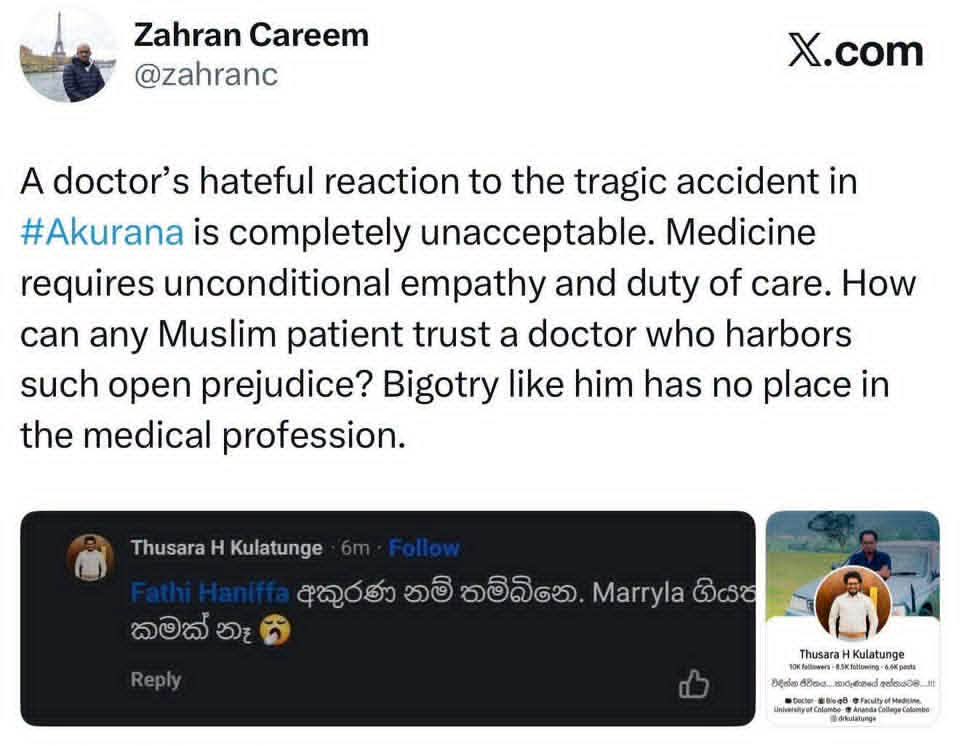
I am deeply disturbed by this circulating screenshot. If authentic, and correctly attributed to a medical practitioner, the sentiments expressed deserve unequivocal condemnation. A profession entrusted with protecting life carries a profound responsibility to treat every human being with compassion, dignity and equal care.
Behind every tragedy are human beings: someone’s mother or father, someone’s child, a family’s home, a livelihood built through years of sacrifice. Their suffering does not become any less painful because they pray differently from us.
We are all human beings. Every life matters. No faith, grievance or political allegiance can justify celebrating another person’s death, injury or loss.
Our national anthem reminds us:
“එක මවකගේ දරු කැල බැවිනා
යමු යමු වී නොපමා”
These words must mean more than something we sing while standing together. They must guide how we live together, how we speak of one another, and how we respond when tragedy strikes.
We cannot sing of being children of one mother and then turn away from the suffering of our brothers and sisters.
Let us reject this hatred firmly, without allowing it to breed hatred in return. The prejudice of one individual must never become a reason to condemn an entire community. Decent people of every faith must stand together and make clear that cruelty has no place in our shared society.
The Sri Lanka we leave our children must be a country where nobody has to wonder whether their faith makes their life less worthy of protection, or their suffering less deserving of compassion.
Our common humanity must always be stronger than the divisions between us.
Pleased to meet the British High Commissioner at his kind invitation for an engaging exchange on domestic developments, international affairs and Sri Lanka’s economic outlook. Thank you for the warm hospitality and thoughtful conversation.
A good conversation with former Foreign and Finance Minister @alisabrypc , PC. We discussed domestic political developments, international affairs and Sri Lanka’s economic outlook.
A beloved motherland is one in which every person feels at home.
When someone speaks of their identity, we would do well to listen for the history, memories and emotions behind their words. The debate around “Eezhath Tamizhachi” gives us an opportunity to listen with greater understanding. Pride in Tamil heritage does not, by itself, mean support for the LTTE or rejection of Sri Lanka.
Our country has had a troubled past. We must find the courage to acknowledge our shortcomings, the injustices people endured and the opportunities for reconciliation we have missed. Tamil civilians suffered immense loss, displacement and anguish. Sinhala, Muslim and other communities, too, carry wounds that time alone cannot heal.
Every mother’s grief deserves compassion. Every family’s loss deserves recognition. We lose nothing by acknowledging another’s pain; we create the possibility of understanding one another.
Sri Lanka had to confront the terrorism of the LTTE. Its defeat ended decades of armed conflict and gave our people the chance to rebuild their lives in peace. We owe it to everyone who suffered to make that peace enduring to build a country where all can live with dignity, security, equal rights and hope.
And there is so much in this country worth cherishing.
Every day, the vast majority of our people live and work alongside one another. We share meals, celebrate each other’s festivals, build friendships across communities and stand by our neighbours in times of sorrow. These ordinary acts of affection and solidarity seldom make headlines. Yet they are among the deepest truths of who we are.
Our tradition of universal access to public healthcare, free education extending to university, and social support for those in need is also something to value. These systems need strengthening, but they express a shared conviction: that every life matters and that opportunity should reach beyond those who can afford it. Generations of Sri Lankans, from every community, have helped sustain that promise.
To the younger generations of our diaspora, I would offer an invitation: come to know Sri Lanka in its fullness. Bring your questions, your memories and your concerns. Meet its people, hear their stories and see both what remains to be put right and what is worth celebrating. There is a place for your talents, your ideas and your hopes in this country’s future.
Those of us at home must be equally willing to listen. We all inherit incomplete accounts of the past. Understanding grows when we make room for experiences beyond our own.
No one should have to surrender their language, faith, culture or family history to feel Sri Lankan. Our shared identity can embrace all these attachments. Belonging grows through the respect we show one another and the fairness with which we treat every citizen.
Let us be honest about our failures, generous in recognising the good in one another, and determined to do better together. We cannot change what earlier generations lived through. We can shape what the next generation will inherit.
May we leave our children a Sri Lanka where every language is heard with respect, every community feels secure, and every child grows up knowing: “I belong here. This is my home. This is our beloved motherland.”
Let us not forget the price of short-term popularity.
Every Sri Lankan family deserves relief. After years of hardship, that aspiration is both understandable and legitimate. But relief must be sustainable. We must ensure that what eases the burden today does not create a greater burden tomorrow.
The President’s announcement of possible tax concessions must therefore be judged on the details: their cost, how they will be funded and their implications for the country’s financial stability.
The experience of 2019 should remain a warning to every government. Sweeping tax cuts were welcomed by many, but the resulting loss of revenue contributed to a cascading deterioration in public finances, creditworthiness and access to borrowing. Together with other policy mistakes and external shocks, they helped push an already vulnerable economy towards catastrophe.
The political reversal was equally striking. A government that secured almost a two-thirds parliamentary majority in August 2020 faced overwhelming public anger less than two years later. Many who had welcomed or benefited from the tax cuts understandably turned against it when inflation, shortages and uncertainty overwhelmed the initial relief.
The lesson is not that people are ungrateful. It is that governments have a responsibility to anticipate consequences that may not be immediately apparent to those welcoming a concession.
Having served as Finance Minister at the height of the crisis, I witnessed how narrow our choices had become. Restoring revenue, adopting cost-reflective pricing and undertaking debt restructuring required painful and deeply unpopular decisions. The subsequent reform programme under President Ranil Wickremesinghe carried a heavy political cost, but helped stabilise the economy and restore essential supplies.
Those of us who served in government must acknowledge both the mistakes that preceded the crisis and the sacrifices required to address it. The responsibility now is to preserve the lessons, regardless of who holds office.
This does not mean every existing tax must remain unchanged. There is room to simplify taxation, address unfair burdens, reduce waste and provide carefully targeted relief. But permanent concessions require dependable funding. Expected growth alone is not a sufficient answer to an immediate loss of revenue.
Applause at a party rally is not a measure of fiscal sustainability. The true test is whether a policy will still serve the people when the applause has faded.
I want this Government to succeed. Sri Lanka’s recovery belongs to its people, and its failure would be borne by them too.
Let us offer relief with responsibility, reform with foresight and leadership that places the country’s long-term interests above immediate political advantage.
I am deeply concerned by the reported escalation of Anojan Sivarasa’s five-year prison sentence to a death sentence in Saudi Arabia. Sri Lanka’s Foreign Ministry has not confirmed the reported death sentence, and the formal written judgment is awaited.
Respect for Saudi Arabia’s sovereignty and legal system does not require silence in the face of disproportionate punishment. A five-year prison term for an offensive social media comment is already excessive. Taking a human life for such an act would be grossly disproportionate, inhumane and unacceptable.
Reports that Anojan removed the comment within minutes and issued a public video apology deserve serious consideration. An offensive remark should not extinguish a person’s opportunity to repent, learn and rebuild his life.
As a Muslim, I believe deeply in Allah’s mercy. We invoke Him as the Most Compassionate, the Most Merciful. Those values must also guide our response to human failings. The ultimate judgment of a person’s faith and sincerity rests with the Almighty.
I respectfully urge the Saudi authorities to show mercy and grant Anojan clemency. I also urge the Sri Lankan Government to secure effective legal assistance and pursue urgent diplomatic intervention at the highest level.
Justice must leave room for compassion. Anojan deserves the chance to return to his family and rebuild his life.
What a historic day for Bangladesh cricket!
To defeat Australia on Australian soil in a test match is a truly remarkable achievement. This victory could change the trajectory of Bangladesh cricket forever.
A stirring story of courage, perseverance and determination.
Heartiest congratulations to the Bangladesh team.
Onwards and upwards! 🇧🇩
Never Again
The latter part of July reminds us of one of the darkest and most painful chapters in our nation's history Black July of 1983.
It remains almost unthinkable that such horrific violence could have taken place in our country. Yet it did. Nor was it the only occasion in our history when hatred, fear and division resulted in tragedy.
The consequences are well documented. As a nation, we lost our way and became embroiled in a brutal conflict that lasted nearly three decades, claiming countless lives, displacing families, and depriving our country of immeasurable opportunities.
History cannot be rewritten, but it can and mustbe learned from. The greatest tribute we can pay to all those who suffered, irrespective of ethnicity, religion or political belief, is to ensure that such horrors are never be repeated.
Much has been achieved since the end of the conflict. We have restored peace, rebuilt infrastructure, strengthened institutions and created the space for communities to live together once again. These achievements should not be underestimated.
Yet our journey is not complete.
We must continue to build a Sri Lanka where every citizen, irrespective of ethnicity, religion or language, can live in peace, security, dignity and self respect, confident that they have an equal stake in the future of our nation.
It is therefore deeply regrettable that, from time to time, attempts are still made to inflame communal, racial and religious divisions instead of healing them. Such efforts reopen old wounds, undermine trust and distract us from the far greater task of nation building.
No nation can realise its true potential unless it has the courage to confront its past honestly, preserve the lessons it offers, reject the mistakes that divided it, and move forward with confidence, wisdom and unity.
Seventeen years after the end of the conflict, there remains unfinished work. Truth and reconciliation, healing the wounds of all communities, meaningful devolution and inclusion, and engaging constructively with our diaspora should not be postponed indefinitely. They are investments in a stable, united and prosperous future.
The diaspora, too, has an important role to play. Many continue to carry the pain and memories of the past. Those experiences deserve to be acknowledged. At the same time, lasting reconciliation requires all of us, both at home and abroad, to recognise the realities of today and to work together in building a shared future rather than remaining prisoners of history.
The time has come to complete the unfinished work of reconciliation, not because the past can be undone, but because the future can still be shaped.
Let Black July remind us not only of where hatred can lead, but also of our collective responsibility to ensure that such tragedies never happen again.
Never Again.
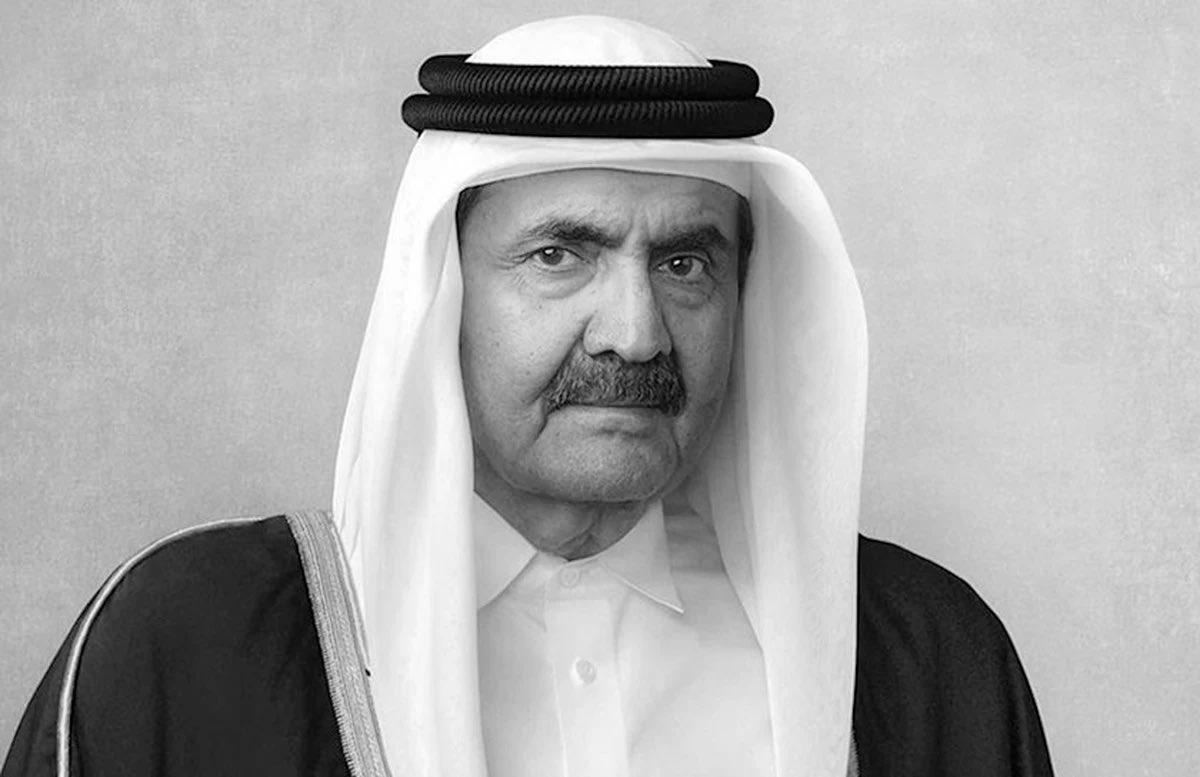
Deeply saddened by the passing of His Highness Sheikh Hamad bin Khalifa Al Thani, the beloved father of His Highness the Emir of the State of Qatar and the former Ruler of the State of Qatar.
A visionary leader, he transformed Qatar into a nation of remarkable progress and global influence, leaving behind an enduring legacy of development, leadership and service.
I extend my heartfelt condolences to His Highness Sheikh Tamim bin Hamad Al Thani, the Royal Family, the Government and the people of the State of Qatar. May Almighty Allah forgive his shortcomings, envelop him in His infinite mercy, grant him Jannatul Firdaus, and give strength and solace to all who mourn his passing.