Learning from Lives and Deaths - LeDeR researchers
@AliveLeder
Our team aims to help improve healthcare for people with a learning disability and/or autism. We're from KCL and share work with researchers from UCLan + KU.
Our new paper in @JAMANetworkOpen uses #LeDeR data to investigate avoidable deaths among adults with Down syndrome and other adults with a learning disability, finding that nearly half of deaths in both groups were avoidable.
https://t.co/pQHMhboCmi
@KingsIoPPN
Our #LeDeR deep dive on barriers to respiratory vaccination in people with a learning disability is now available.
https://t.co/Mat6UGmPIo
Further work in terms of academic publications is under way and will be updated.
@KingsIoPPN
Our #LeDeR deep dive on genetic and chromosomal conditions in people with a learning disability is now available.
https://t.co/SzIhg9wfeo
Further work in terms of academic publications is under way and will be updated.
@KingsIoPPN
⏳ 1 MONTH TO GO!
Join us to shape future progress and continue vital work in reducing avoidable mortality.
📍 London Bridge (Boland House) or Online
🔗 Register here 👇
https://t.co/TlaLeuD8Hp
#LearningDisability#Autism#HealthEquality
Following our session at the Estia Centre's Learning Together conference earlier this year, our guest blog breaks down key findings from the 2023 LeDeR report on health inequalities and avoidable mortality.
https://t.co/n9ddIRIcb3
📢 CONFERENCE
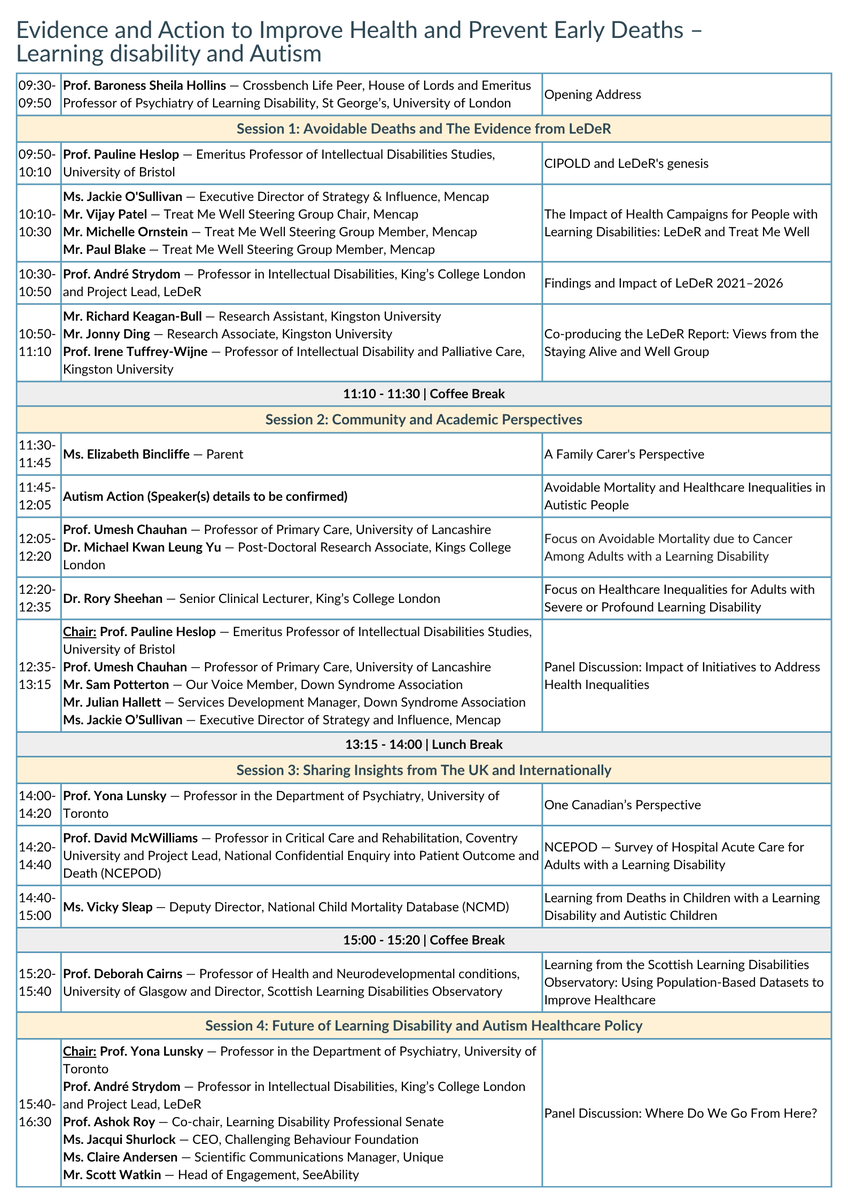
Evidence and Action to Improve Health and Prevent Early Deaths – Learning disability and Autism
📍Boland House, London Bridge
W3W: logic.dock.junior
🖥️Online option available
Register 👇
https://t.co/DwYQueiCy3 #LearningDisability#Autism
Our new paper in @PLOS Medicine uses LeDeR data to investigate avoidable deaths for adults with severe or profound learning disability, which demonstrates the gaps in timely access to healthcare.
https://t.co/4XeiJmku7F
@KingsIoPPN
Our LeDeR team recently presented findings from the 2024 LeDeR Report at @IASSIDD 7th European Congress in Munich! Fruitful discussions were held on improving health and healthcare for adults with intellectual disabilities and autistic people.
Our new paper in @BMJ_Open uses qualitative analysis to investigate how DNACPR decisions for people with a learning disability were not followed as intended in emergency contexts because of challenges in communication and documentation.
https://t.co/p3TdXc2Dru
@KingsIoPPN
Beyond the annual reports, our research goes deeper. Our Avoidable Cancers and DNACPR deep dives are out now, with further deep dives on, vaccination barriers, and genetic conditions coming soon. 📊
Read the findings: https://t.co/2alVHLuXGg
#LeDeR#ClinicalResearch@KingsIoPPN
Although small data pools restrict interpretations, autism suicide risk remains a critical concern. In the newest report, suicide, misadventure, or accidental death accounted for 33.0% of the reviewed deaths of autistic adults.
Read Chapter 4: https://t.co/LnxS7ONEa2
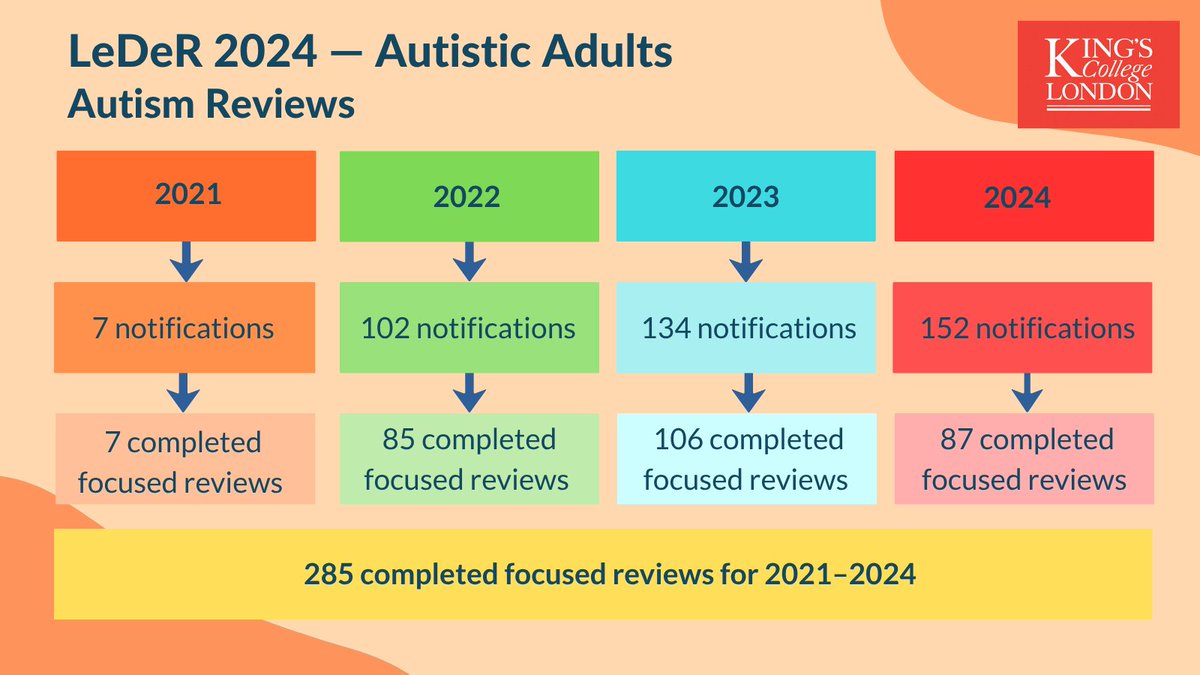
The volume of reviews for autistic adults without a learning disability remains low, with 152 notifications and 87 completed focused reviews in the latest data cycle.
Explore the trends in Chapter 4: https://t.co/LnxS7ONEa2
#LeDeR#Autism#AutismResearch
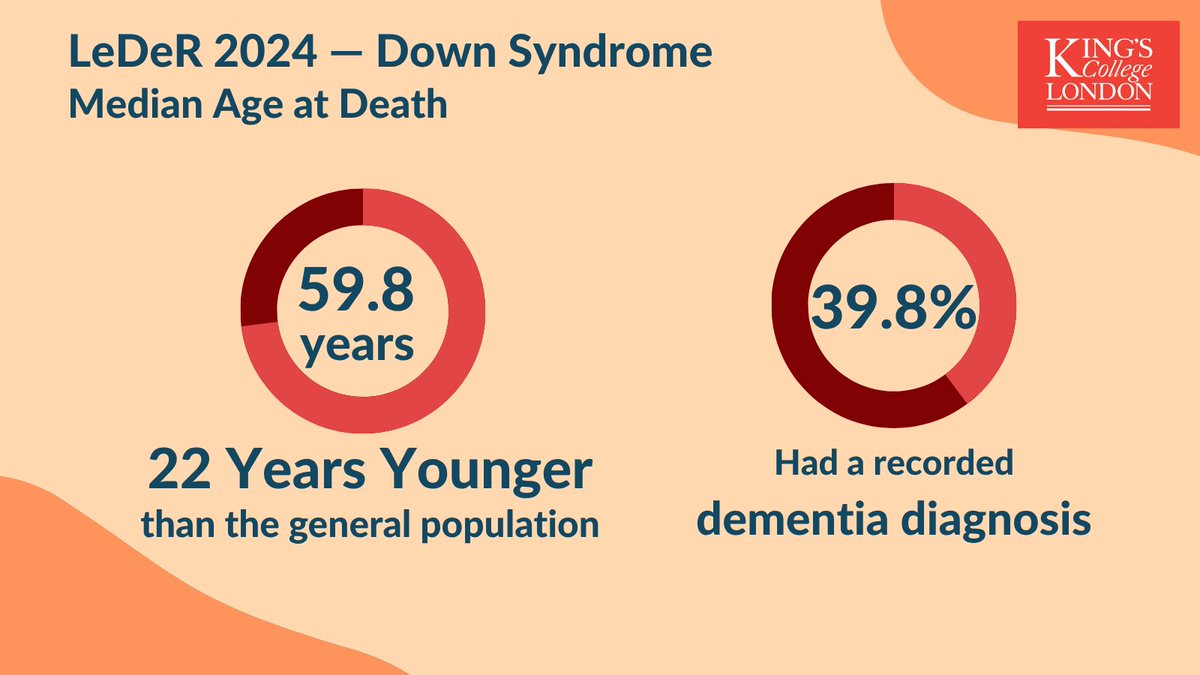
The median age at death for adults with Down syndrome is 59.8 years, 22 years younger than the general population. Additionally, 39.8% had a recorded dementia diagnosis.
Read the full report: https://t.co/LnxS7ONEa2
#LeDeR#Dementia#DownSyndromeAct
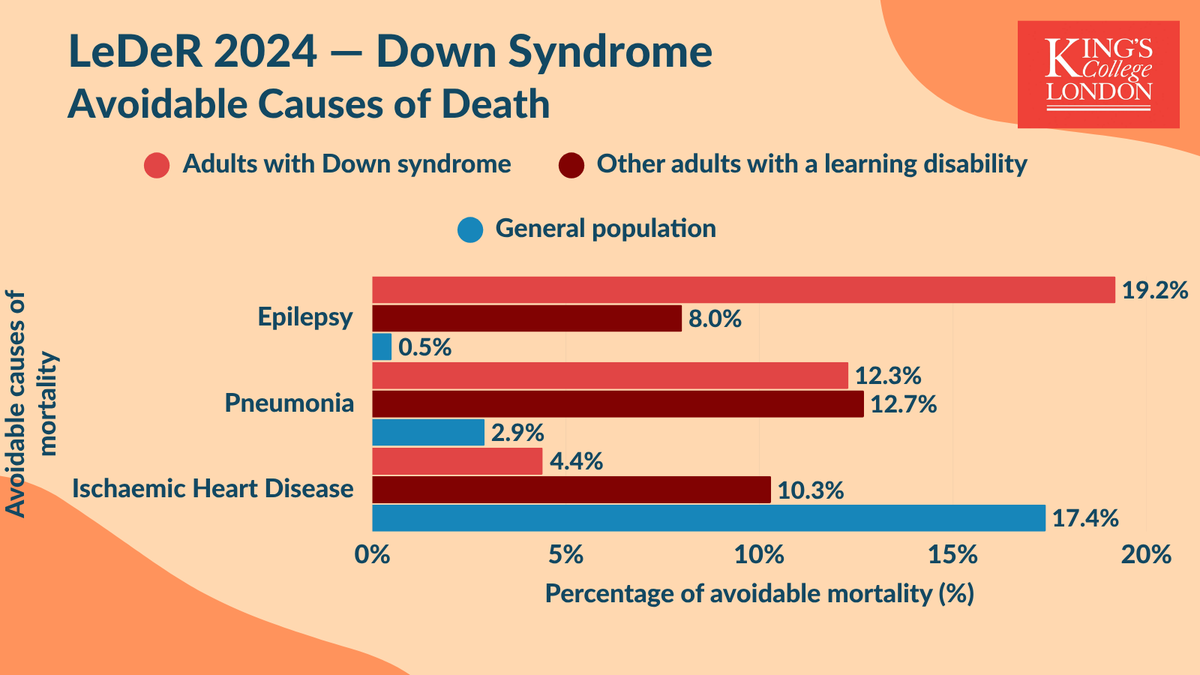
Avoidable causes of death show stark disparities. For adults with Down syndrome, epilepsy accounted for 1 in 5 avoidable deaths, compared to just 1 in 200 in the general population.
Read the Chapter 3 findings: https://t.co/LnxS7ON6ku
#LeDeR#DownSyndrome#EpilepsyCare
What are the primary problems with care? Reviewers found that 36.6% of individuals with a severe or profound learning disability experienced delays in care or treatment, and 38.4% faced organisational system issues.
Read Chapter 2: https://t.co/LnxS7ONEa2
#LeDeR#CareQuality
Age at death differences remain severe. The newest report shows the median age at death for a person with a profound learning disability is just 40.7 years, a staggering 41.2 years difference from the general population.
Read Chapter 2: https://t.co/LnxS7ON6ku
Looking at age at death figures from the newest report, More than half (56.6%) died before the age of 65, compared to just 14.8% in the general adult population. The gap remains stark. Read the report: https://t.co/LnxS7ON6ku
#LeDeR#HealthInequality
Newest LeDeR figures show 39.0% of deaths reported to LeDeR were considered avoidable. The figure is trending down (41.4% last year) but it remains unacceptably high, nearly 2x the rate seen in the general population (21.1%).
Full breakdown in Chapter 1: https://t.co/LnxS7ONEa2
The new LeDeR report outlines clear priorities for implementation, including strengthened vaccination care, better caregiver guidance on respiratory infection signs, and clear escalation pathways.
See the recommendations: https://t.co/FSvv1Oitd0
#LeDeR