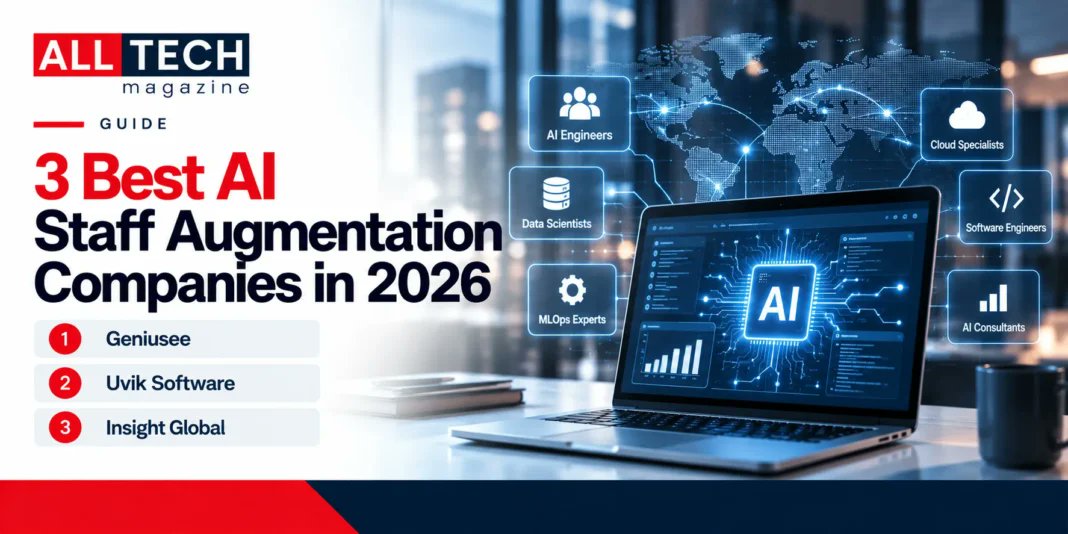
You don't always need to hire an entire AI team
AI is moving faster than many companies can hire for.
Data scientists.
AI engineers.
MLOps specialists.
Cloud architects.
Building that expertise entirely in-house can be expensive—especially when the need is tied to a specific project.
𝗔𝗜 𝘀𝘁𝗮𝗳𝗳 𝗮𝘂𝗴𝗺𝗲𝗻𝘁𝗮𝘁𝗶𝗼𝗻 offers another approach:
Bring specialized AI talent into your existing team for the time you actually need them.
AllTech Magazine looks at three companies offering AI staff augmentation in 2026:
→ Geniusee
→ Uvik Software
→ Insight Global
From AI engineers and data scientists to Python specialists and cloud architects, the right external team can add expertise without requiring every role to become a permanent hire.
𝗧𝗵𝗲 𝗳𝘂𝘁𝘂𝗿𝗲 𝗼𝗳 𝗔𝗜 𝗵𝗶𝗿𝗶𝗻𝗴 𝗺𝗮𝘆 𝗯𝗲 𝗹𝗲𝘀𝘀 𝗮𝗯𝗼𝘂𝘁 𝗯𝘂𝗶𝗹𝗱𝗶𝗻𝗴 𝗮 𝗺𝗮𝘀𝘀𝗶𝘃𝗲 𝘁𝗲𝗮𝗺—𝗮𝗻𝗱 𝗺𝗼𝗿𝗲 𝗮𝗯𝗼𝘂𝘁 𝗮𝗰𝗰𝗲𝘀𝘀𝗶𝗻𝗴 𝘁𝗵𝗲 𝗿𝗶𝗴𝗵𝘁 𝗲𝘅𝗽𝗲𝗿𝘁𝗶𝘀𝗲 𝗮𝘁 𝘁𝗵𝗲 𝗿𝗶𝗴𝗵𝘁 𝘁𝗶𝗺𝗲.
Read the full guide:
https://t.co/6niP4zNMTy
#AI #AIEngineering #StaffAugmentation #Talent #AllTechMagazine
Subjective feedback is unavoidable in creative work, but it can be organized. Instead of comments like "make it better" or "it doesn't feel authentic," reviewers should connect feedback to visible criteria: steadier character identity, more accurate interface states, more consistent camera movement, tighter audio synchronization, or a clearer final frame.
A simple scoring sheet can cover brief compliance, visual consistency, motion, camera accuracy, realism, editability, and channel suitability. Scores don't replace creative judgment—they make it easier to explain and help teams compare versions without relying on memory.
Clear ownership of each approval stage prevents late reviewers from reopening settled decisions. seedance2ai provides the comparison and tracking infrastructure to make this review process repeatable. ✅
👉 Full article: https://t.co/xw8RrGHD0Q
#CreativeReview #AIVideo #Seedance2AI #ContentQuality #AllTechMagazine
Security teams need context, not just more data
Modern organizations generate enormous amounts of security telemetry.
The problem isn't always a lack of data.
It's understanding what matters.
Madhu Preetha Chandrasekaran emphasizes the importance of correlating different signals to identify meaningful threats.
A suspicious login alone may not be enough.
Unusual data transfer alone may not be enough.
An unfamiliar device alone may not be enough.
But combine those signals with abnormal user behavior—and the risk picture changes.
This is where behavioral baselines become powerful.
Instead of treating every event as an isolated alert, security teams can compare activity against:
→ The user's normal behavior
→ Their peer group's behavior
→ The system's historical patterns
→ The sensitivity of the resource involved
That context can help distinguish genuine threats from normal business activity.
𝗧𝗵𝗲 𝗴𝗼𝗮𝗹 𝗶𝘀𝗻'𝘁 𝘁𝗼 𝗰𝗮𝘁𝗰𝗵 𝗲𝘃𝗲𝗿𝘆 𝗮𝗻𝗼𝗺𝗮𝗹𝘆.
It's to identify the anomalies that actually deserve attention.
Madhu Preetha Chandrasekaran explores why behavioral context is becoming critical to modern threat detection on AllTech Magazine.
https://t.co/yOJ3pvbWrF
#Cybersecurity #ThreatDetection #SecurityOperations #AnomalyDetection #InfoSec #AllTechMagazine
When a pod gets evicted at 2 a.m., the difference between catching it in seconds vs. minutes can decide whether an outage stays invisible or becomes a headline.
Legacy monitoring tools with 5-minute polling intervals can't keep up with Kubernetes.
Full breakdown: https://t.co/JWUIrVwwfa
#KubernetesMonitoring #Observability #SRE
Fix errors before they reach the review stage
Enterprise processes often become slow because teams spend their time catching mistakes after they happen.
Eshaan Jain's work at T-Mobile highlights another approach:
𝗣𝗿𝗲𝘃𝗲𝗻𝘁 𝘁𝗵𝗲 𝗲𝗿𝗿𝗼𝗿 𝘂𝗽𝘀𝘁𝗿𝗲𝗮𝗺.
In an enterprise quote-to-cash workflow handling more than 1,000 monthly enterprise quotes, the team introduced:
→ Validated configuration paths
→ Discount approval guardrails
→ Product bundling rules
→ Automated system checks
Instead of allowing every quote to become a completely custom process and catching errors during review, the system prevented many errors at the point of entry.
The result was a 40% reduction in quote-generation time.
𝗦𝗽𝗲𝗲𝗱 𝗮𝗻𝗱 𝗮𝗰𝗰𝘂𝗿𝗮𝗰𝘆 𝗱𝗼𝗻'𝘁 𝗵𝗮𝘃𝗲 𝘁𝗼 𝗯𝗲 𝗼𝗽𝗽𝗼𝘀𝗶𝘁𝗲𝘀.
When you prevent errors upstream, you can make the entire process faster without sacrificing control.
Read Eshaan Jain's full interview on AllTech Magazine:
https://t.co/Sr5c8f5Q4I
#EnterpriseAI #Automation #RevenueOperations #AITransformation #AllTechMagazine
Zero-downtime migration is an IAM problem, not just a deployment problem
Replacing a critical authentication system is one of the riskiest migrations an enterprise can undertake.
You can't simply switch the old system off and hope everything works.
Anoop Gopi's approach emphasizes controlled migration and fallback.
𝗞𝗲𝗲𝗽 𝗹𝗲𝗴𝗮𝗰𝘆 𝘀𝘆𝘀𝘁𝗲𝗺𝘀 𝗶𝗻 𝗿𝗲𝗮𝗱-𝗼𝗻𝗹𝘆 𝗺𝗼𝗱𝗲 𝗱𝘂𝗿𝗶𝗻𝗴 𝗳𝗶𝗻𝗮𝗹 𝗰𝘂𝘁𝗼𝘃𝗲𝗿𝘀.
Combine that with:
→ Incremental migration
→ Validation before cutover
→ Monitoring
→ Recovery planning
→ Clear rollback paths
The objective isn't simply to deploy the new IAM architecture.
It's to migrate millions of identities without turning authentication into a business outage.
And when you're dealing with financial services, the margin for error becomes even smaller.
𝗧𝗵𝗲 𝗯𝗲𝘀𝘁 𝗺𝗶𝗴𝗿𝗮𝘁𝗶𝗼𝗻𝘀 𝗮𝗿𝗲 𝘁𝗵𝗲 𝗼𝗻𝗲𝘀 𝘂𝘀𝗲𝗿𝘀 𝗻𝗲𝘃𝗲𝗿 𝗻𝗼𝘁𝗶𝗰𝗲.
Read the full interview:
https://t.co/ubZUViJISs
#IAM #CloudMigration #Cybersecurity #IdentityManagement #AllTechMagazine
You can't secure the software supply chain if you can't see inside it
A company can carefully assess its software vendor.
But what about the software that vendor depends on?
That's where supply-chain risk becomes complicated.
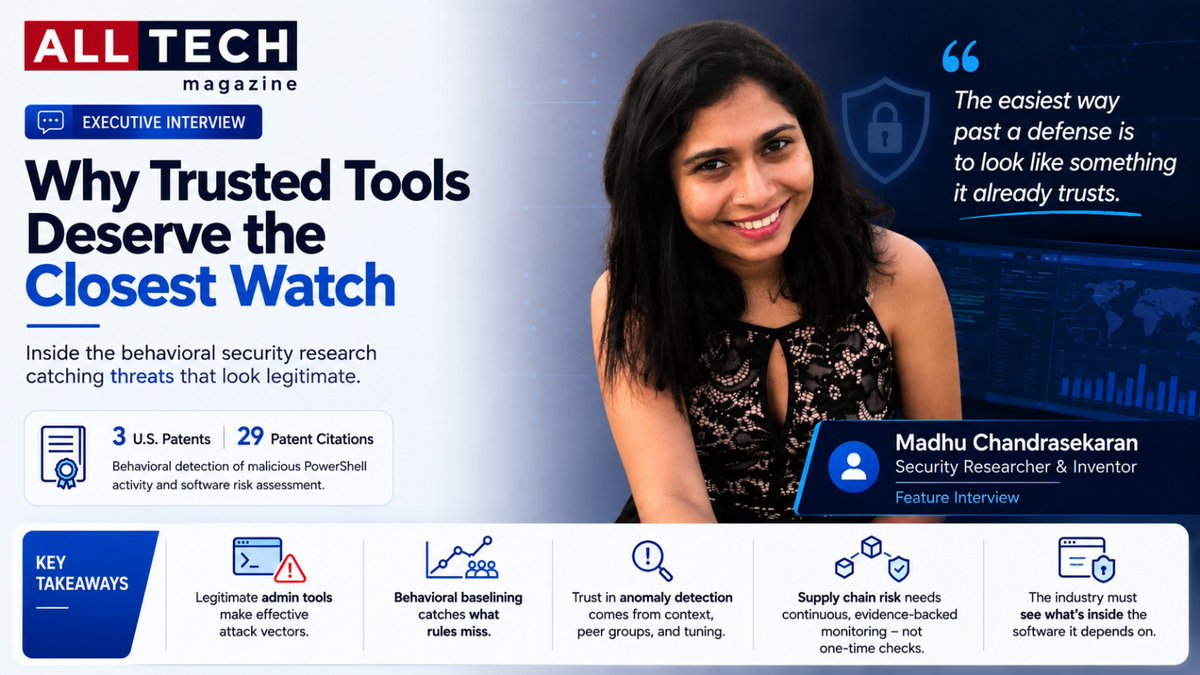
Madhu Preetha Chandrasekaran argues that organizations should have visibility into a vendor's own dependencies—essentially, an SBOM (Software Bill of Materials).
Why?
Because a vulnerability doesn't necessarily originate inside the product you purchased.
It can come from a dependency buried several layers underneath it.
Her recommended approach goes beyond simply collecting an SBOM:
→ Understand the software's dependencies.
→ Threat-model critical third-party software.
→ Track new vulnerabilities and public exploits.
→ Continue monitoring software after deployment.
The bigger lesson is simple:
𝗧𝗿𝘂𝘀𝘁𝗶𝗻𝗴 𝗮 𝘃𝗲𝗻𝗱𝗼𝗿 𝗶𝘀 𝗻𝗼𝘁 𝘁𝗵𝗲 𝘀𝗮𝗺𝗲 𝗮𝘀 𝘂𝗻𝗱𝗲𝗿𝘀𝘁𝗮𝗻𝗱𝗶𝗻𝗴 𝘁𝗵𝗲 𝘀𝗼𝗳𝘁𝘄𝗮𝗿𝗲 𝘆𝗼𝘂 𝗮𝗿𝗲 𝗱𝗲𝗽𝗲𝗻𝗱𝗶𝗻𝗴 𝗼𝗻.
Modern software security requires visibility that extends beyond the immediate vendor.
Madhu Preetha Chandrasekaran explores behavioral detection, trusted tools, vendor risk, and software supply-chain security on AllTech Magazine.
Read the full interview:
https://t.co/yOJ3pvboC7
#Cybersecurity #SupplyChainSecurity #SBOM #SoftwareSecurity #ThirdPartyRisk #AllTechMagazine
95% accuracy wasn't enough
An AI system reached roughly 95% clause-extraction accuracy.
That sounds impressive.
But Eshaan Jain's team didn't treat accuracy alone as proof that the system was ready for production.
Why?
Because not all mistakes have the same financial consequences.
An error in a low-impact clause isn't equivalent to missing a liability, indemnification, termination, or rate-escalation clause.
So the system used:
→ Stricter confidence thresholds for high-risk clauses
→ Human review for low-confidence extractions
→ Additional review above defined dollar thresholds
→ Expert-reviewed training data
→ Continuous expansion of the dataset
The system reduced contract review time from roughly 3 weeks to 48 hours.
But 𝗦𝗽𝗲𝗲𝗱 𝘄𝗮𝘀𝗻'𝘁 𝘁𝗵𝗲 𝗿𝗲𝗮𝗱𝗶𝗻𝗲𝘀𝘀 𝗯𝗲𝗻𝗰𝗵𝗺𝗮𝗿𝗸.
Risk-aware accuracy was.
That's an important lesson for anyone deploying AI in high-stakes environments.
Read the full interview:
https://t.co/Sr5c8f6nUg
#AI #MachineLearning #AIEngineering #RiskManagement #AllTechMagazine
OAuth isn't just an integration tool
Enterprise IAM systems rarely operate in isolation.
They need to connect users, applications, partners, cloud platforms, and external identity providers.
That's why standardized protocols matter.
Anoop Gopi highlights technologies such as:
𝗢𝗔𝘂𝘁𝗵 𝟮.𝟬
𝗢𝗽𝗲𝗻𝗜𝗗 𝗖𝗼𝗻𝗻𝗲𝗰𝘁
𝗦𝗔𝗠𝗟
𝗦𝗖𝗜𝗠
𝗝𝗪𝗧
Used correctly, these standards can simplify authentication and federation while supporting SSO, secure token validation, partner integrations, and automated identity lifecycle management.
The important part is designing the system so integrations don't become custom engineering projects every time a new partner arrives.
Clear documentation.
SDKs.
Standard protocols.
Shared JWKS endpoints.
Self-service capabilities.
𝗦𝗰𝗮𝗹𝗮𝗯𝗹𝗲 𝗜𝗔𝗠 𝗶𝘀 𝗮𝗯𝗼𝘂𝘁 𝗺𝗮𝗸𝗶𝗻𝗴 𝘀𝗲𝗰𝘂𝗿𝗲 𝗶𝗻𝘁𝗲𝗴𝗿𝗮𝘁𝗶𝗼𝗻𝘀 𝗿𝗲𝗽𝗲𝗮𝘁𝗮𝗯𝗹𝗲.
Read the full interview on AllTech Magazine:
https://t.co/ubZUViJISs
#OAuth #OpenIDConnect #IAM #IdentitySecurity #AllTechMagazine
Your authentication system can't be the single point of failure
Imagine an authentication system going down during a traffic spike.
Users can't log in.
Applications can't authenticate.
Critical transactions can't proceed.
For an enterprise IAM platform, availability isn't optional.
Anoop Gopi recommends designing for failure from the beginning.
That means:
→ Multiple availability zones
→ Multiple regions
→ Automated failover
→ Auto-scaling
→ Capacity planning
→ Stress testing
→ Chaos engineering
→ Retry and backoff mechanisms
→ Regular recovery exercises
But there's another important architectural decision:
𝗞𝗲𝗲𝗽 𝗰𝗿𝗶𝘁𝗶𝗰𝗮𝗹 𝗮𝘂𝘁𝗵𝗲𝗻𝘁𝗶𝗰𝗮𝘁𝗶𝗼𝗻 𝗳𝗹𝗼𝘄𝘀 𝘀𝘆𝗻𝗰𝗵𝗿𝗼𝗻𝗼𝘂𝘀 𝗮𝗻𝗱 𝗹𝗼𝘄-𝗹𝗮𝘁𝗲𝗻𝗰𝘆, while moving non-critical workloads such as analytics and breach-data checks to asynchronous processing.
At massive scale, resilience has to be designed—not hoped for.
Read the interview:
https://t.co/ubZUViJISs
#CloudArchitecture #IAM #Reliability #Cybersecurity #AllTechMagazine
You can't secure the software supply chain if you can't see inside it
A company can carefully assess its software vendor.
But what about the software that vendor depends on?
That's where supply-chain risk becomes complicated.
Madhu Preetha Chandrasekaran argues that organizations should have visibility into a vendor's own dependencies—essentially, an SBOM (Software Bill of Materials).
Why?
Because a vulnerability doesn't necessarily originate inside the product you purchased.
It can come from a dependency buried several layers underneath it.
Her recommended approach goes beyond simply collecting an SBOM:
→ Understand the software's dependencies.
→ Threat-model critical third-party software.
→ Track new vulnerabilities and public exploits.
→ Continue monitoring software after deployment.
The bigger lesson is simple:
𝗧𝗿𝘂𝘀𝘁𝗶𝗻𝗴 𝗮 𝘃𝗲𝗻𝗱𝗼𝗿 𝗶𝘀 𝗻𝗼𝘁 𝘁𝗵𝗲 𝘀𝗮𝗺𝗲 𝗮𝘀 𝘂𝗻𝗱𝗲𝗿𝘀𝘁𝗮𝗻𝗱𝗶𝗻𝗴 𝘁𝗵𝗲 𝘀𝗼𝗳𝘁𝘄𝗮𝗿𝗲 𝘆𝗼𝘂 𝗮𝗿𝗲 𝗱𝗲𝗽𝗲𝗻𝗱𝗶𝗻𝗴 𝗼𝗻.
Modern software security requires visibility that extends beyond the immediate vendor.
Madhu Preetha Chandrasekaran explores behavioral detection, trusted tools, vendor risk, and software supply-chain security on AllTech Magazine.
Read the full interview:
https://t.co/yOJ3pvbWrF
#Cybersecurity #SupplyChainSecurity #SBOM #SoftwareSecurity #ThirdPartyRisk #AllTechMagazine
Your payment stack should know when NOT to retry
Automation sounds great.
Payment fails → retry → recover revenue.
But payment infrastructure isn't that simple.
A hard decline shouldn't necessarily trigger another attempt.
A stolen card shouldn't be repeatedly submitted.
An issuer block shouldn't be treated like a temporary technical failure.
𝗦𝗺𝗮𝗿𝘁 𝗽𝗮𝘆𝗺𝗲𝗻𝘁 𝗼𝗿𝗰𝗵𝗲𝘀𝘁𝗿𝗮𝘁𝗶𝗼𝗻 𝗿𝗲𝗾𝘂𝗶𝗿𝗲𝘀 𝗰𝗼𝗻𝘁𝗲𝘅𝘁.
The system needs to understand things like:
→ Why the payment failed
→ The customer's payment history
→ The card's behavior
→ The geography
→ The available payment routes
→ Whether another attempt is actually worthwhile
That is where routing, billing history, vaulting, analytics, and retry logic can become much more powerful when they work together.
𝗧𝗵𝗲 𝗳𝘂𝘁𝘂𝗿𝗲 𝗼𝗳 𝗽𝗮𝘆𝗺𝗲𝗻𝘁 𝗼𝗽𝘁𝗶𝗺𝗶𝘇𝗮𝘁𝗶𝗼𝗻 𝗶𝘀𝗻'𝘁 𝗷𝘂𝘀𝘁 𝗮𝗯𝗼𝘂𝘁 𝗺𝗼𝗿𝗲 𝗮𝘂𝘁𝗼𝗺𝗮𝘁𝗶𝗼𝗻.
It's about making better decisions with every transaction.
Read the full guide on AllTech Magazine:
https://t.co/UXFnZOx03g
#PaymentOrchestration #Fintech #Payments #AI #Ecommerce #AllTechMagazine
The question companies should ask before buying AI
The usual enterprise AI conversation starts with:
“Which model should we use?”
Which vendor?
Which platform?
Which AI agent?
Which use case?
Evgenii Garde argues that there is a more important question that should come first:
“Is our data ready for AI at all?”
His recommendation is surprisingly practical.
Before approving a major AI budget, conduct four audits:
→ 𝗖𝗮𝗽𝘁𝘂𝗿𝗲: What important events aren't being recorded digitally?
→ 𝗖𝗼𝗻𝘀𝗶𝘀𝘁𝗲𝗻𝗰𝘆: How many different versions of critical entities like customers, products, or assets exist?
→ 𝗖𝗼𝗻𝗻𝗲𝗰𝘁𝗶𝘃𝗶𝘁𝘆 & 𝗖𝘂𝗿𝗿𝗲𝗻𝗰𝘆: Can the systems connect, and is the information fresh enough to act on?
→ 𝗧𝗵𝗲𝗻 𝗰𝗵𝗼𝗼𝘀𝗲 𝘁𝗵𝗲 𝗔𝗜 𝘂𝘀𝗲 𝗰𝗮𝘀𝗲.
It's not glamorous.
It won't generate an impressive AI demo.
But it may determine whether the next AI investment creates value—or simply creates an expensive lesson.
𝗧𝗵𝗲 𝘁𝗲𝗰𝗵𝗻𝗼𝗹𝗼𝗴𝘆 𝗶𝘀 𝗿𝗲𝗮𝗱𝘆.
𝗧𝗵𝗲 𝗳𝗼𝘂𝗻𝗱𝗮𝘁𝗶𝗼𝗻𝘀 𝗮𝗿𝗲𝗻'𝘁.
Evgenii Garde explores why the majority of companies are still not truly AI-ready on AllTech Magazine.
https://t.co/Dq9iVgmORs
#AI #AIReadiness #DataStrategy #EnterpriseAI #ArtificialIntelligence #AllTechMagazine
Architecture isn't about predicting the future
What should a CTO get right before launching an enterprise data and observability platform?
Sreedath Manjapatta Pazhiyotmana points to three decisions that become extremely expensive to change later:
𝗗𝗮𝘁𝗮 𝗮𝗿𝗰𝗵𝗶𝘁𝗲𝗰𝘁𝘂𝗿𝗲.
Get partitioning, multi-tenancy, retention, and data ownership right from the beginning.
𝗢𝗯𝘀𝗲𝗿𝘃𝗮𝗯𝗶𝗹𝗶𝘁𝘆.
Build meaningful logs, metrics, traces, and health signals into every service instead of treating observability as an afterthought.
𝗗𝗲𝘀𝗶𝗴𝗻 𝗳𝗼𝗿 𝗰𝗵𝗮𝗻𝗴𝗲.
Use modular architecture, well-defined APIs, and clear data contracts so the platform can evolve as technologies change.
Because the future will bring new AI models, cloud services, deployment patterns, and operational requirements.
𝗬𝗼𝘂 𝗱𝗼𝗻'𝘁 𝗻𝗲𝗲𝗱 𝘁𝗼 𝗽𝗿𝗲𝗱𝗶𝗰𝘁 𝘁𝗵𝗲 𝗳𝘂𝘁𝘂𝗿𝗲.
You need an architecture that can adapt when you're wrong.
Read the full interview:
https://t.co/TGUXSzXEpp
#SoftwareArchitecture #CloudArchitecture #Observability #EnterpriseTechnology #AllTechMagazine
Productivity gets AI pilots approved. Risk reduction gets executives' attention.
The business case for enterprise AI is often framed around productivity.
How many hours can we save?
How many tasks can we automate?
How much faster can employees work?
Eshaan Jain argues that enterprises should look beyond those metrics.
In high-value business systems, the bigger opportunity can be 𝗳𝗶𝗻𝗮𝗻𝗰𝗶𝗮𝗹 𝗿𝗶𝘀𝗸 𝗿𝗲𝗱𝘂𝗰𝘁𝗶𝗼𝗻.
AI can help organizations identify:
→ Contractual exposure
→ Compliance gaps
→ Unfavorable terms
→ Revenue leakage
→ Expiring obligations
The difference is significant.
Saving employees a few hours is useful.
Preventing a major financial exposure can change the economics of an entire AI investment.
𝗣𝗿𝗼𝗱𝘂𝗰𝘁𝗶𝘃𝗶𝘁𝘆 𝗺𝗮𝘆 𝗮𝗽𝗽𝗿𝗼𝘃𝗲 𝘁𝗵𝗲 𝗽𝗶𝗹𝗼𝘁.
𝗥𝗶𝘀𝗸 𝗿𝗲𝗱𝘂𝗰𝘁𝗶𝗼𝗻 𝗰𝗮𝗻 𝗷𝘂𝘀𝘁𝗶𝗳𝘆 𝘁𝗵𝗲 𝗶𝗻𝘃𝗲𝘀𝘁𝗺𝗲𝗻𝘁.
Read the interview:
https://t.co/Sr5c8f5Q4I
#EnterpriseAI #FinancialRisk #AIStrategy #DigitalTransformation #AllTechMagazine
The biggest IAM mistake may be trying to change everything at once
Large-scale IAM modernization can involve legacy systems, cloud platforms, millions of identities, partner integrations, compliance requirements and critical authentication flows.
Trying to replace everything at once creates unnecessary risk.
Anoop Gopi recommends a phased approach.
Start by defining measurable goals:
→ Faster onboarding
→ Better security
→ Lower operational costs
→ Regulatory compliance
→ Reduced over-privileged access
Then begin with a low-risk department or use case.
Automate provisioning and deprovisioning.
Introduce standardized protocols such as SCIM, OAuth 2.0 and OIDC.
Build Zero Trust and least-privilege controls into the architecture.
Use AI for fraud detection and risk assessment.
Measure authentication latency, login failures, provisioning time and compliance results.
Then expand gradually.
The same principle applies to the migration itself: use blue-green deployments, shadow traffic, data replication and rollback strategies rather than betting the entire organization on a single cutover.
IAM modernization isn't just a technology project. It's a controlled transformation of how an organization establishes trust.
Anoop Gopi shares his recommendations for modernizing IAM at scale on AllTech Magazine.
Read the full interview:
https://t.co/ubZUViJb2U
#IAM #Cybersecurity #IdentityManagement #ZeroTrust #DigitalTransformation #AI #AllTechMagazine
Don't build agents just because you can
AI makes it easier than ever to build sophisticated systems.
That's both an opportunity and a trap.
Cameron Witkowski learned this after moving from AI research at AWS and Caltech into building OpenLens as a production startup.
His biggest lesson?
The technology that is technically interesting isn't always the technology customers actually need.
AI makes it possible to architect increasingly complex, beautifully orchestrated systems in a fraction of the effort it once required.
But that can make teams fall in love with the technology itself.
Building agents for the sake of building agents may be fascinating from a research perspective.
Commercially, it can be useless.
The real question should always be:
What workflow, process, or customer problem is this technology actually solving?
That distinction separates an impressive AI demo from a product that creates measurable value.
Witkowski's approach at OpenLens reflects that principle: stay narrowly focused, move quickly, listen to customers, and build around a problem that actually exists.
Cameron Witkowski shares his perspective on AI visibility, source intelligence, agentic systems, and building AI products in the real world with AllTech Magazine.
Read the full interview:
https://t.co/04HyCGeJ9k
#AI #AgenticAI #AIStartups #GenerativeAI #ProductStrategy #AllTechMagazine
If everyone is using Excel beside your dashboard, you've learned something important
Here's a simple test for whether a data initiative is actually working:
𝗟𝗼𝗼𝗸 𝗮𝘁 𝘄𝗵𝗮𝘁 𝗽𝗲𝗼𝗽𝗹𝗲 𝗮𝗿𝗲 𝗱𝗼𝗶𝗻𝗴 𝗮𝗳𝘁𝗲𝗿 𝘁𝗵𝗲𝘆 𝗹𝗼𝗼𝗸 𝗮𝘁 𝘁𝗵𝗲 𝗱𝗮𝘀𝗵𝗯𝗼𝗮𝗿𝗱.
If they immediately open Excel to do the “real” analysis, something is wrong.
Ranjan Ebenezer argues that successful data organizations don't simply spend money making dashboards look better.
They make sure the data underneath those dashboards is accurate, trusted, governed, and connected to an actual business problem.
His advice to CIOs and CTOs?
𝗦𝘁𝗼𝗽 𝗯𝘂𝘆𝗶𝗻𝗴 𝘁𝗵𝗶𝗻𝗴𝘀.
Start with the business problem that's actually hurting.
Fix the data behind that one problem.
Prove the value.
Then scale.
Because the objective isn't another expensive dashboard.
𝗜𝘁'𝘀 𝗱𝗮𝘁𝗮 𝘁𝗵𝗮𝘁 𝗰𝗵𝗮𝗻𝗴𝗲𝘀 𝗵𝗼𝘄 𝘁𝗵𝗲 𝗯𝘂𝘀𝗶𝗻𝗲𝘀𝘀 𝗼𝗽𝗲𝗿𝗮𝘁𝗲𝘀.
Read Ranjan Ebenezer's full interview on AllTech Magazine:
https://t.co/LzP5Y8nnwR
#DataAnalytics #BI #DataStrategy #DigitalTransformation #AI #AllTechMagazine
The next fintech revolution could be personalized advice
The biggest fintech opportunity may not be another payment app.
It could be making personalized financial planning available to people who have never had access to it.
Sri Phani Teja Perumalla describes a potential future where AI agents combine long-term consumer data with financial strategies to provide tailored guidance through everyday devices.
The technology could help turn complex financial concepts into actionable recommendations.
And unlike traditional advisory models, digital platforms can potentially scale those experiences to millions of users.
𝗧𝗵𝗮𝘁'𝘀 𝘄𝗵𝗲𝗿𝗲 𝗳𝗶𝗻𝘁𝗲𝗰𝗵 𝗰𝗼𝘂𝗹𝗱 𝗺𝗼𝘃𝗲 𝗳𝗿𝗼𝗺 𝗱𝗶𝗴𝗶𝘁𝗶𝘇𝗶𝗻𝗴 𝗳𝗶𝗻𝗮𝗻𝗰𝗶𝗮𝗹 𝘀𝗲𝗿𝘃𝗶𝗰𝗲𝘀 𝘁𝗼 𝗱𝗲𝗺𝗼𝗰𝗿𝗮𝘁𝗶𝘇𝗶𝗻𝗴 𝗳𝗶𝗻𝗮𝗻𝗰𝗶𝗮𝗹 𝗲𝘅𝗽𝗲𝗿𝘁𝗶𝘀𝗲.
The potential impact extends beyond convenience.
More accessible financial guidance could help more people build savings, make informed decisions, and improve their overall financial health.
Read the full interview with Sri Phani Teja Perumalla on AllTech Magazine:
https://t.co/r35NWmuH3g
#Fintech #AI #FinancialAdvice #FinancialInclusion #DigitalFinance #AllTechMagazine
A security questionnaire is already outdated when you finish it
How do companies assess the security of third-party software?
Often, they send the vendor a questionnaire.
The vendor answers it.
The security team reviews the answers.
Then procurement moves forward.
But Madhu Preetha Chandrasekaran points out a fundamental problem:
Software changes constantly.
A security assessment completed today may no longer represent the software's actual state months later.
That's why she advocates for continuous, evidence-backed monitoring.
Instead of relying exclusively on what a vendor says, organizations can correlate:
→ Vendor attestations
→ Independent audit reports such as SOC 2 or ISO certifications
→ Live operational data
→ Internet exposure
→ System integrations
The goal is to identify the gap between what a vendor claims and what is actually happening.
This turns vendor risk management from a periodic questionnaire into an ongoing process.
Because third-party security isn't a snapshot.
It's a moving target.
Madhu Preetha Chandrasekaran explains why continuous software risk assessment matters in her latest AllTech Magazine interview.
https://t.co/yOJ3pvbWrF
#Cybersecurity #ThirdPartyRisk #SupplyChainSecurity #RiskManagement #SoftwareSecurity #AllTechMagazine