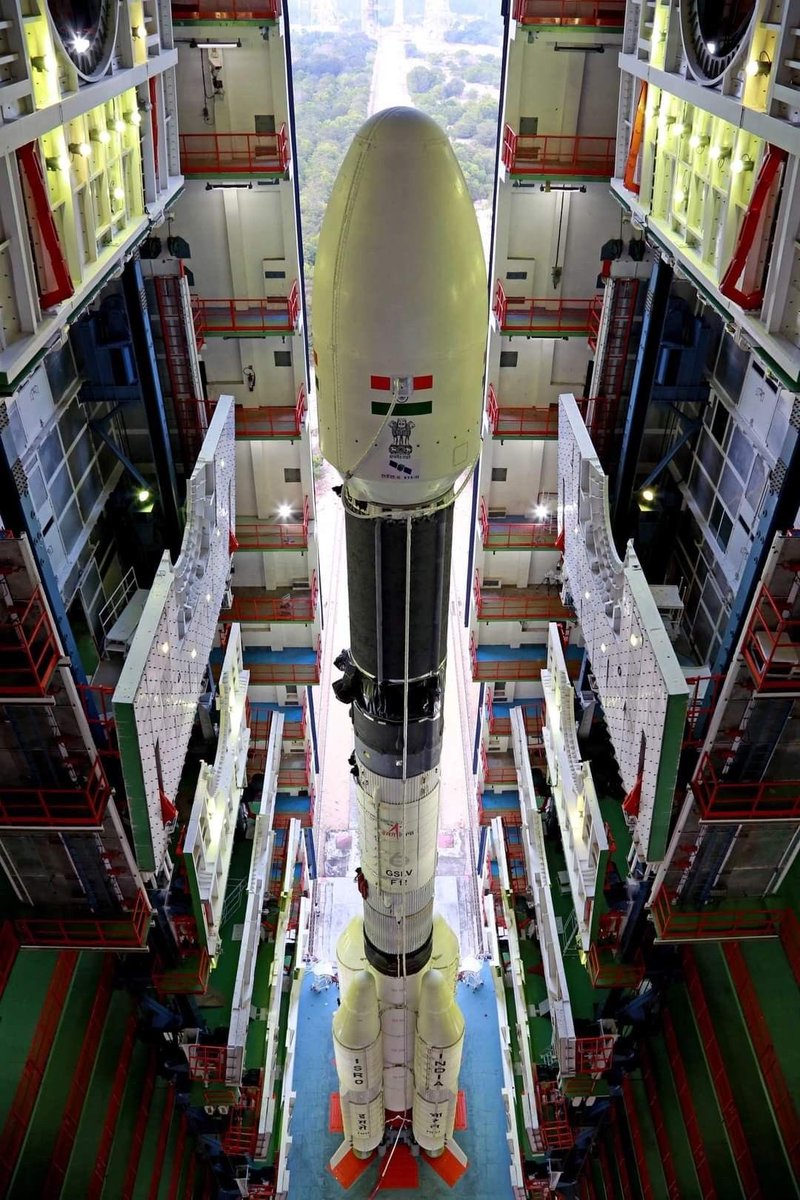
On the pad:
414 tons.
49 meters.
1 cryogenic stage.
SDSC SHAR.
MST retracted:
Arms back.
Tower clear.
GSLV-F08 ready.
Cryo power:
LOX at -183°C.
LH2 at -253°C.
75 kN to GEO.
Strap-ons:
4x Vikas.
1x CE-7.5.
भारत / INDIA.
SLP:
Second Launch Pad.
First cryo launcher.
Sriharikota.
Flag on fairing:
Tricolor to 36,000 km.
GSLV delivers.
Backyard LC-39:
LC-39A.
And LC-39B.
My backyard.
Moon program, patio edition:
363 feet.
1/96 scale.
100% backyard.
Mission profile:
CSM.
LM.
LRV.
All present.
Two pads:
Apollo 11: Left pad.
Apollo 17: Right pad.
Your pick.
LES towers:
Pointy end up.
Flamey end down.
Tower = just in case.
Backyard NASA:
Houston?
We have a patio.
Extraction:
Pop the panels.
Flip the ship.
Grab the lander.
Apollo 9, 1969.
Spider in a can:
LM “Spider” tucked inside.
4 petals open.
Red X marks the spot.
Transposition & docking:
Step 1: Launch.
Step 2: This.
Step 3: Moon.
Dress rehearsal:
No Moon yet.
But everything else.
Apollo 9 proved it.
SLA petals:
4 panels.
1 lander.
120 miles up.
Red X:
Aim here.
Dock here.
History here.
Tower + Capsule:
Black capsule.
White tower.
400,000 lbs of “nope”.
Escape plan:
Rocket fails.
This tower fires.
0 to 500 mph in 3 sec.
EFT-1:
2014: Uncrewed test.
2026: Crewed Moon.
Same capsule.
Scale:
13 meters tall.
3 solid motors.
1 job: save 4 lives.
Apollo DNA:
Apollo had it.
Shuttle didn’t.
Orion brings it back.
Heat shield:
Back: 5,000°F reentry.
Front: 0-0 abort.
Orion does both.
First cryo:
April 15, 2010.
India’s first cryogenic stage.
It failed.
We kept building.
Denied → Designed:
MTCR: No cryo for you.
ISRO: Hold my LOX.
GSLV-D3, 2010.
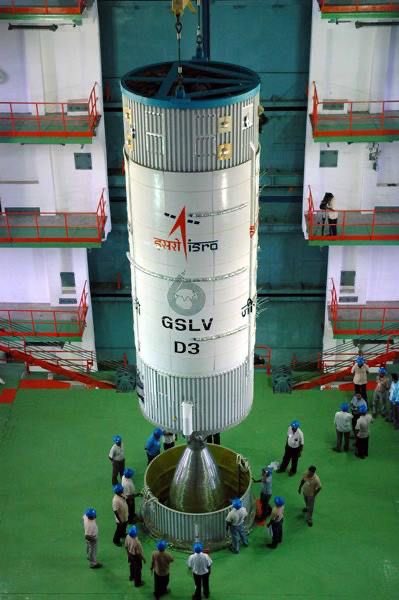
Hoisting history:
Crane cables.
Blue helmets.
-253°C inside.
India’s cryo debut.
Learn to fly:
GSLV-D3 failed.
GSLV-D5 succeeded.
That’s rocket science.
GS3:
LOX + LH2.
75 kN.
720 seconds.
Made in India.
Before success:
2010: GSLV-D3 fails.
2014: GSLV-D5 succeeds.
2026: GSLV routine.
First cryo:
April 15, 2010.
India’s first cryogenic stage.
It failed.
We kept building.
Denied → Designed:
MTCR: No cryo for you.
ISRO: Hold my LOX.
GSLV-D3, 2010.
Hoisting history:
Crane cables.
Blue helmets.
-253°C inside.
India’s cryo debut.
Learn to fly:
GSLV-D3 failed.
GSLV-D5 succeeded.
That’s rocket science.
GS3:
LOX + LH2.
75 kN.
720 seconds.
Made in India.
Before success:
2010: GSLV-D3 fails.
2014: GSLV-D5 succeeds.
2026: GSLV routine.
India's heavy:
640 tons.
43.5 meters.
Moon, Sun, humans.
HRA / INDIA
VAB:
Two S200 boosters.
One cryo upper stage.
All India.
Chandrayaan:
Same rocket.
Put India on Moon.
South pole.
Cryo power:
Tech denied.
Built anyway.
CE-20 hydrolox.
Gaganyaan:
Next ride for Indian astronauts.
Human-rated.
Scales:
F10/S2.
Flight 10.
Strap-on 2.
Humans for scale.
First orbit:
Sputnik: Oct 1957.
Explorer 1: Jan 1958.
84 days to answer.
Cutaway:
No computers.
15 solid rockets spun at 750 rpm.
Still made orbit.
Goddard to orbit:
Left: 1926.
Right: 1958.
32 years.
Zero to orbit.
Spinning tub:
11 rockets.
One tub.
Spin it fast.
It worked.
Von Braun:
Army: We have a rocket.
Navy: We have Vanguard.
Vanguard blew up twice.
Army launched.
84 days:
Ordered Nov 8 1957.
Launched Jan 31 1958.
War speed.
Two Moons:
Orange toam.
Stainless steel.
Same destination.
Different philosophy.
VAB lineup:
Built the VAB for Saturn V.
SLS uses it now.
Starship doesn't fit.
Future doesn't wait.
Cost:
SLS: $4.1B per launch.
Starship: $10M target.
Math is undefeated.
Artemis:
SLS brings Orion.
Starship brings the lander.
Apollo never needed partnerships.
Scale:
Humans for scale.
Rockets for Moon.
VAB for both.
Reusability:
Left:Lands.
Right:Crashes.
Pick one.
Generations:
1969: Moon.
2011: LEO.
2026: Mars.
We kept building.
Scale:
Saturn V: 363 ft.
Shuttle: 184 ft.
Starship: 397 ft.
Up.
Thrust:
7.6M Ibs.
7.8M Ibs.
16.7M Ibs.
Each generation doubles down.
What if:
If Saturn V was reusable...
We'd be on Mars already.
Starship fixes that.
Starbase:
Apollo nostalgia.
Shuttle museum.
Starship future.
All at Starbase.
Tower catch:
Saturn V: Thrown away.
Shuttle: Landed on runway.
Starship: Caught by tower.
2026 is wild.
Godspeed:
3 orbits.
4 hours 55 minutes.
First American in orbit.
Godspeed, John Glenn.
Soda can rocket:
Walls thin as a dime.
Pressurized or it collapses.
Put a man on top anyway.
White Room:
Last steps on Earth.
Next stop: orbit.
1962.
Escape tower:
52,000 Ibs thrust.
0.3 seconds.
From pad to safety.
Never used.
Friendship:
NASA: No names.
Glenn: Friendship 7.
History: Agreed with Glenn.
1962 tech:
No computers onboard.
Radio steered it.
Still made orbit.
White Room:
Last walk on Earth.
Red arm.
White room.
Next stop: Moon.
Top down:
363 feet down.
7.6M Ibs thrust up.
Math checks out.
Scale:
That white van?
Ant.
This rocket?
Moon.
LUT:
380 ft tower.
12 million Ibs.
Moves at 1 mph.
Skylab:
No crew.
No escape tower.
Just a space station.
Last Saturn V.
T-O:
Arms swing back.
7.6M Ibs light.
America leaves Earth.
Saturn IB:
Not Saturn V.
Saturn IB.
8 engines.
1.6M Ibs thrust.
Tested Apollo.
Smaller giant:
224 feet.
8x H-1 engines.
Took Apollo to orbit.
Before the Moon.
Liftoff:
T+1 second.
8 engines lit.
Tower clear.
Skylab crew:
Same rocket.
Took 3 crews.
To Skylab.
1960s power:
Kerosene.
LOX.
5,800°F.
Slide rules designed it.
LC-34:
Apollo 1 fire here.
Apollo 7 flew from here.
History.
Cutaway:
Cut it open.
Still works.
190,000 lbs thrust.
Turbopump:
36,000 RPM.
10,000 horsepower.
Size of a backpack.
Gas generator:
Not staged.
Not full-flow.
Just reliable.
350 flights.
Engineering art:
40 miles of tubes.
1 injector plate.
5,900°F flame.
Workhorse:
Starlink:Merlin.
Dragon:Merlin.
Falcon Heavy: 28 Merlin
Museum piece:
This flew.
Now it teaches.
Cutaway Merlin.
Vacuum king:
Sea level: 311s Isp.
Vacuum: 348s Isp.
Same engine.
Bigger bell.
Niobium flex:
2.8m extension.
Niobium alloy.
Glows orange.
Works in vacuum.
Gas generator:
Not full-flow.
Not staged.
Just works.
350 times.
Workhorse:
Starlink.
Dragon.
Falcon Heavy.
One engine.
Test cell:
Before space,
McGregor.
Pass or scrap.
Efficiency:
Kerolox record.
348s Isp.
Gas generator.
Merlin did it.
Full-flow flex:
Two preburners.
Two turbines.
300 bar.
Zero waste.
Methalox:
Methane in.
3,500°C out.
Mars tuel.
Tested in Texas.
300 bar:
Your car: 10 bar.
F1 engine: 70 bar.
Raptor: 300 bar.
Mars engine:
Burns methane.
Methane = Mars.
This is why.