1. CRISPR came from basic research on bacteria.
2. Optogenetics started with a discovery in algae.
3. The GFP protein comes from jellyfish.
The biggest breakthroughs all trace to scientists follow their curiosity. This is one huge reason why we must keep funding basic research!
This week in medicine
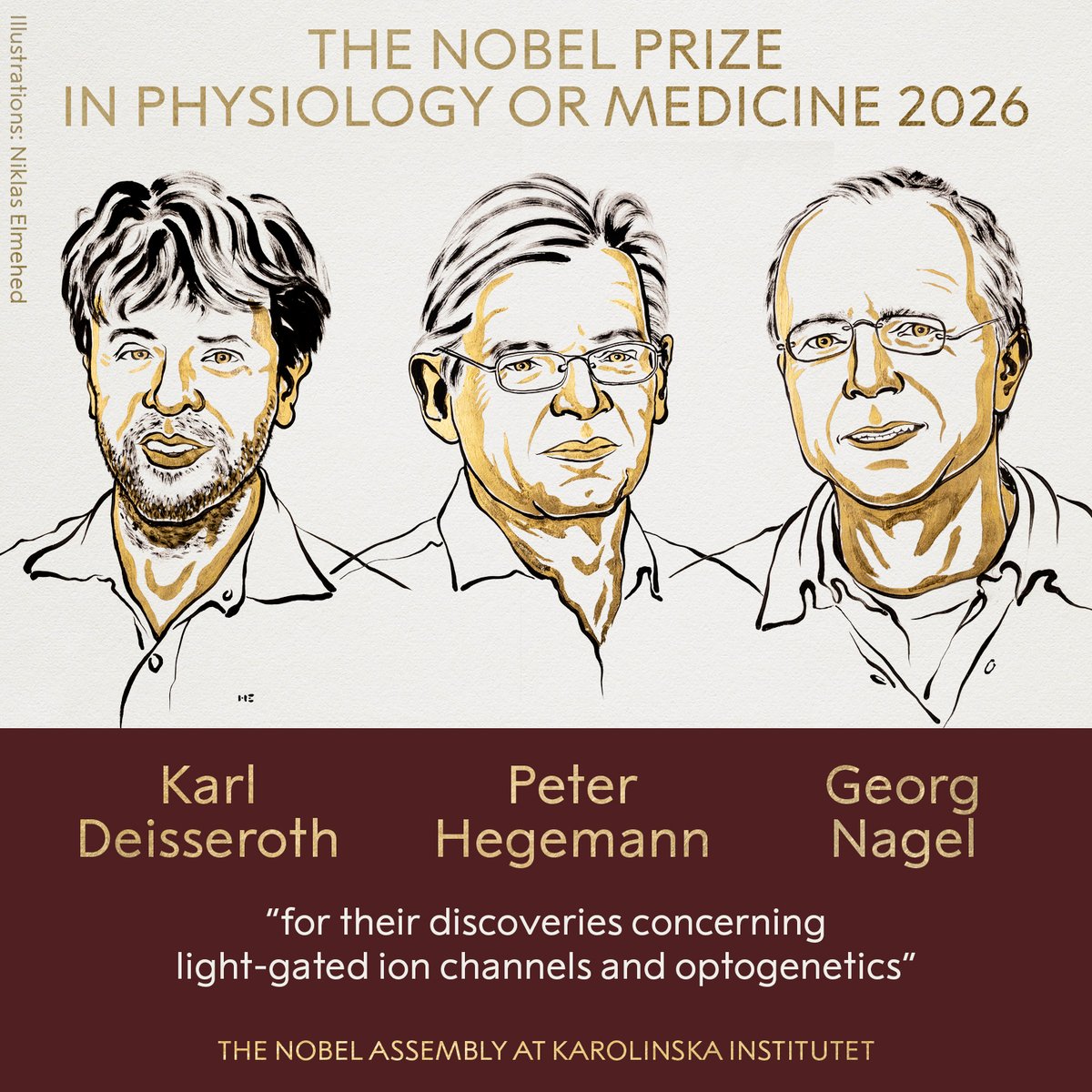
1. Optogenetics wins the Nobel Prize! It goes to Karl Deisseroth, Peter Hegemann and Georg Nagel.
2. Full phase 3 results published for Lilly’s triple-G, retatrutide: ~25% mean weight loss.
3. ARPA-H plans to cut drug development from 10+ years to <4 years: with phaseless trials, adaptive platforms, digital twins and AI agents.
4. Pfizer's trispecific antibody works (in a phase 2 trial) in atopic dermatitis - it blocks IL-4, IL-13 and TSLP.
5. Dana-Farber researchers develop a new way to drug undruggable GPCRs, with GTACs: bispecific antibodies that use the transferrin receptor to drag GPCRs into lysosomes.
6. FDA approves the Autus Size-Adjustable Valve, for patients with congenital pulmonary valve disease - the first heart valve that grows with a child.
7. The first treatment for the rare genetic disease, MCT8 deficiency, is FDA-approved - a thyroid-hormone analogue that reduces peripheral thyrotoxicosis.
8. Both of Kodiak’s next-gen antibodies work in phase 3 trials for wet age-related macular degeneration - the long-acting anti-VEGF antibody–biopolymer conjugate and the bispecific VEGF-trap/anti-IL6 therapy.
9. Roche's all-oral combo of giredestrant (SERD) + everolimus (mTOR inhibitor) targets both ER and PI3K–AKT–mTOR resistance, cutting progression in ESR1-mutant breast cancer.
10. Lilly’s EloraTZP, an amylin agonist-tirzepatide combination, beats tirzepatide alone in a phase 2 diabetes trial (with increased risk of adverse events).
BREAKING NEWS
The 2026 #NobelPrize in Physiology or Medicine has been awarded to Karl Deisseroth, Peter Hegemann and Georg Nagel “for their discoveries concerning light-gated ion channels and optogenetics.”
@homespital1 Great 👍
The oncogenic nature of high risk HPVs is due to the immortalising and transforming properties of HPV oncoproteins E6 and E7, which target the p53 and pRB tumour suppressor pathways, respectively, rendering infected cells susceptible to mutations and cancer formation.
In countries like Uganda, patients take over 4 hours waiting for a doctor, this reduces the quality of health care delivered to the patients, patient safety and satisfaction. https://t.co/AWgqt2ZX9A
You can avoid all this by just getting in touch with our humble team and get medical consultation from comfort of complex hall, Africa hall or Marystuart🙂
@rssekyejwe Even more so, GBM remains a largely incurable disease with a median survival of only 15 months.Only 5.8% of patients survive 5 years post-diagnosis. And it has very high recurrence rate for the small minority that gets to long-term survival.
@rssekyejwe There's a lot missing contextually for people to draw such conclusions. From a medical POV, PET scan isn't the gold standard for diagnosis of Glioblastoma. In fact, MRI is the preferred imaging modality initially. So size, biological nature of the tumor matter. A lot of info is
@CanaryMugume It's the most aggressive and pervasive subtype. Age, performance scores of the patient, extent of surgical therapy are some of the important variables that govern its prognosis
@CanaryMugume Much to uncover. True though ; in low and middle income countries, low case ascertainment, financial hardship, lack of a dedicated workforce, and weak infrastructure are significant hindrances to improved patient outcomes.
But glioblastoma has median survival of 15 months