@gdisney_melb @JN_Rachele Completely agree @JN_Rachele - this piece was a really well rounded integrated summary of where we need to go in Australia. Thanks @gdisney_melb @DisabilityHlth@mdi_unimelb
Great appointment for Australia to International Association for #suicideprevention. @IASPinfo. Thanks to @JoRobinson_Aus for her work as previous national representative
Led by @TaniaLKing & hot of the press-our article on #disability, #masculinity & #mentalhealth @AllisonMilner2 @TommyShakes
An intersectional approach to understandings of mental health inequalities among men with disability https://t.co/jtbIE7L20q
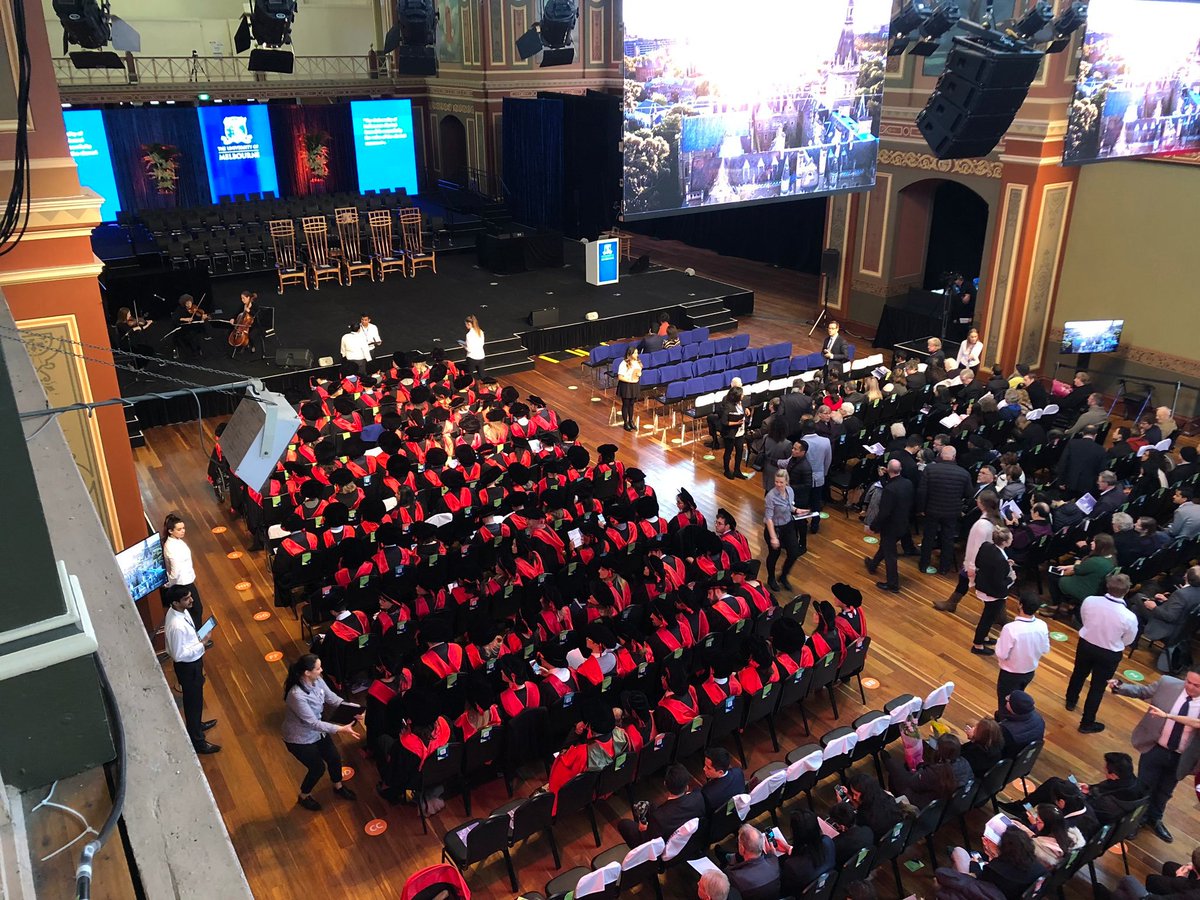
Congratulations to all of our newly minted @TheFlorey and @unimelb PhD graduates. We're so proud to see you recognised for the significant and original contributions you've made to human knowledge!
We are looking for people with disabilities to talk about their experience of looking for work/finding work and how this impacts their health and well-being. Tell us your story, apply here by 31 July: https://t.co/89E78h7PZN
“Better data are needed, including routine health metrics and information on health coverage disaggregated by disability. But there are actions that can be implemented now.” @Kavanagh_AM@DisabilityHlth @gdisney_melb
Prioritising disability in universal health coverage https://t.co/tx2Kth4nD6. A fantastic new editorial from the Lancet. Well worth a read. @mdi_unimelb@DisabilityHlth@Kavanagh_AM
Prioritising disability in universal health coverage https://t.co/tx2Kth4nD6. A fantastic new editorial from the Lancet. Well worth a read. @mdi_unimelb@DisabilityHlth@Kavanagh_AM
2/2 “by adopting a gendered, asset-based approach that embraces social determinants of health, we will be able to improve the health and wellbeing of countless men, women, and families around the world.”
"While women and girls experience more disability in every region of the world, men and boys bear a greater share of the global mortality burden." A Comment in this week’s issue looks at the masculine social norms which drive poor health https://t.co/pgbcDxuGKE #GenderNorms
1/2 “seven key health behaviours—poor diet, tobacco use, alcohol use, occupational hazards, unsafe sex, drug use, and limited health-seeking behaviour—account for more than half of all premature male deaths and about 70% of men's illnesses.”
"While women and girls experience more disability in every region of the world, men and boys bear a greater share of the global mortality burden." A Comment in this week’s issue looks at the masculine social norms which drive poor health https://t.co/pgbcDxuGKE #GenderNorms
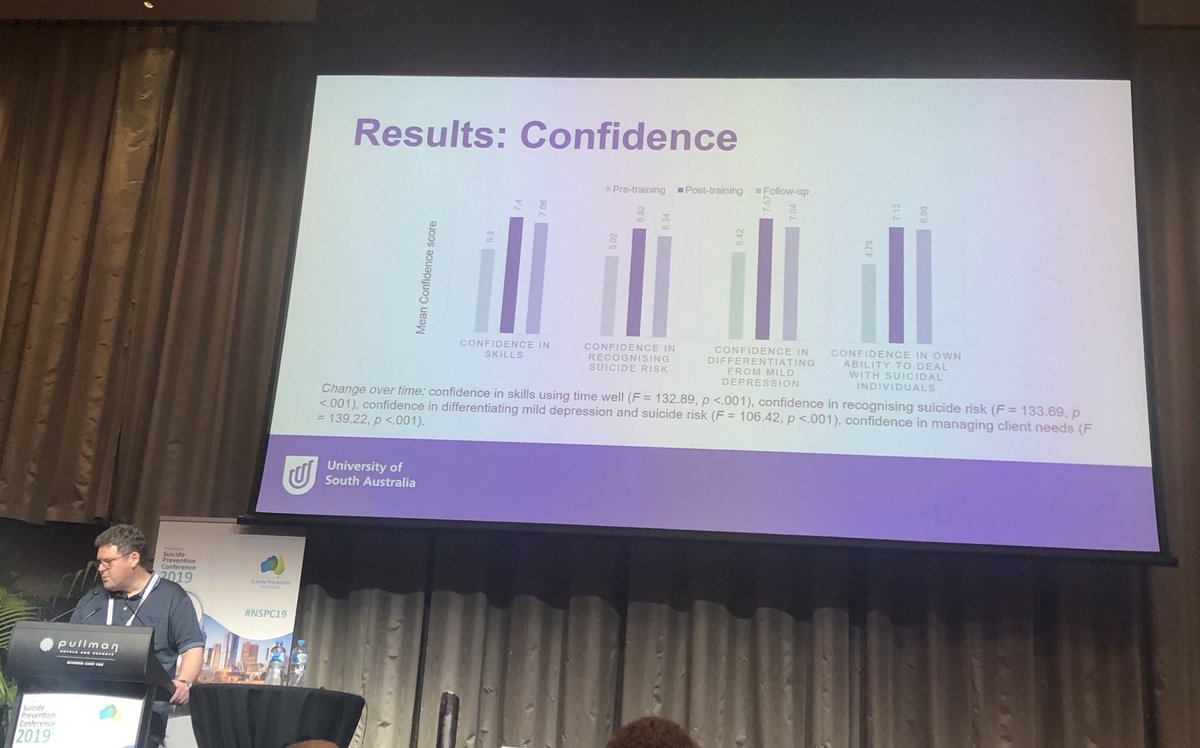
New research findings presented today demonstrating that NGO workers supporting #refugees and #asylumseekers have benefited from targeted #SuicidePrevention education. Significant improvements in confidence, competence, and use of safety planning to reduce suicidality. #NSPC19
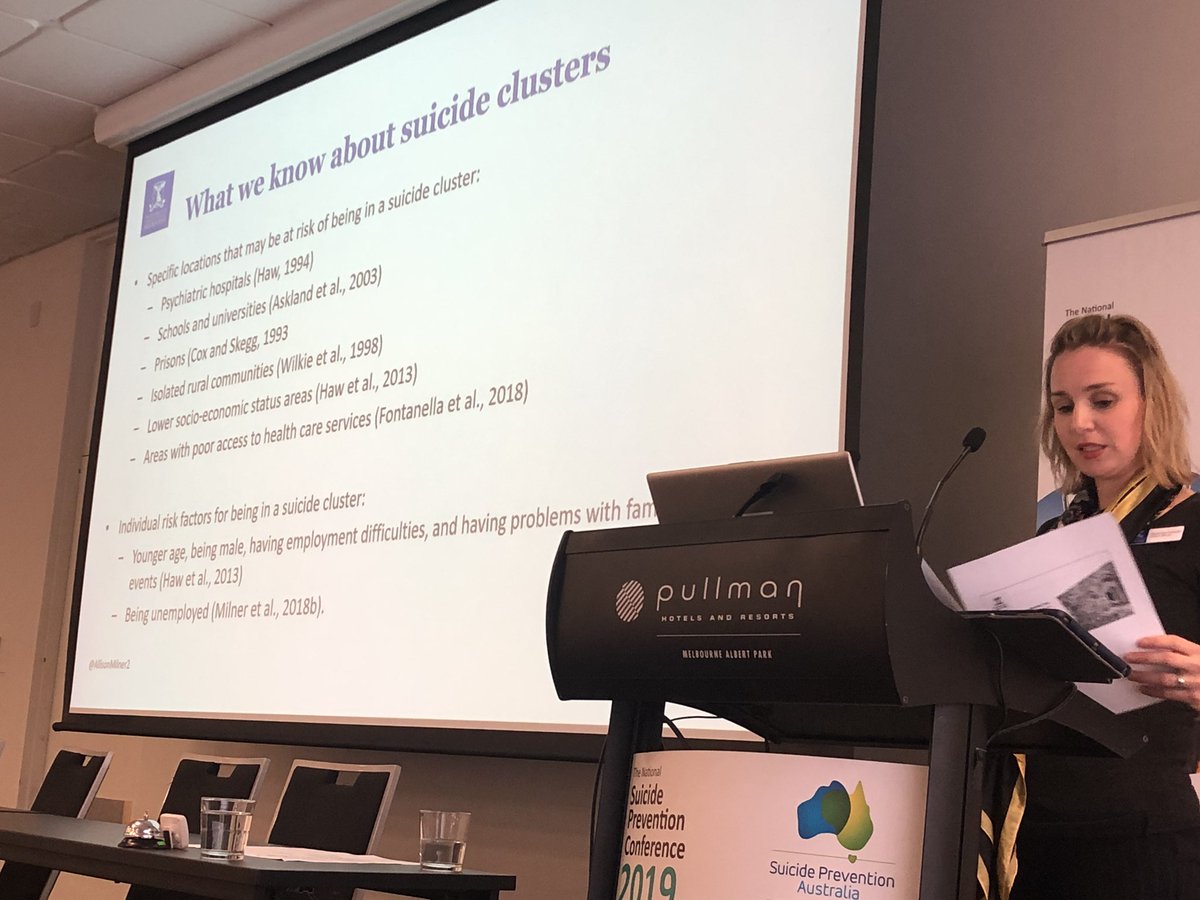
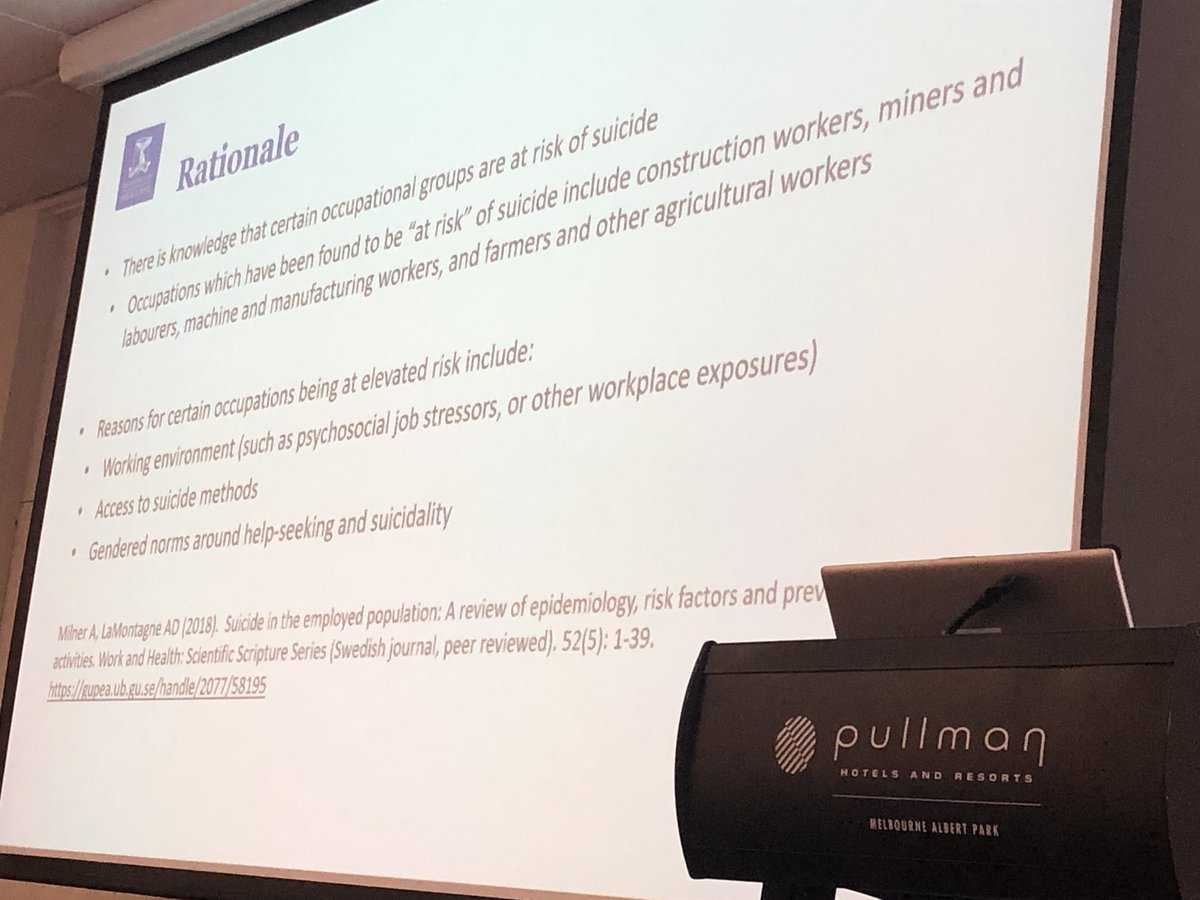
.@AllisonMilner2 presents on suicide clusters at #NSPC19 - a clear and deep dive into data pertaining to high risk occupations. Asking: Are certain high risk occupations are at greater risk of being a spatial-temporal suicide cluster?
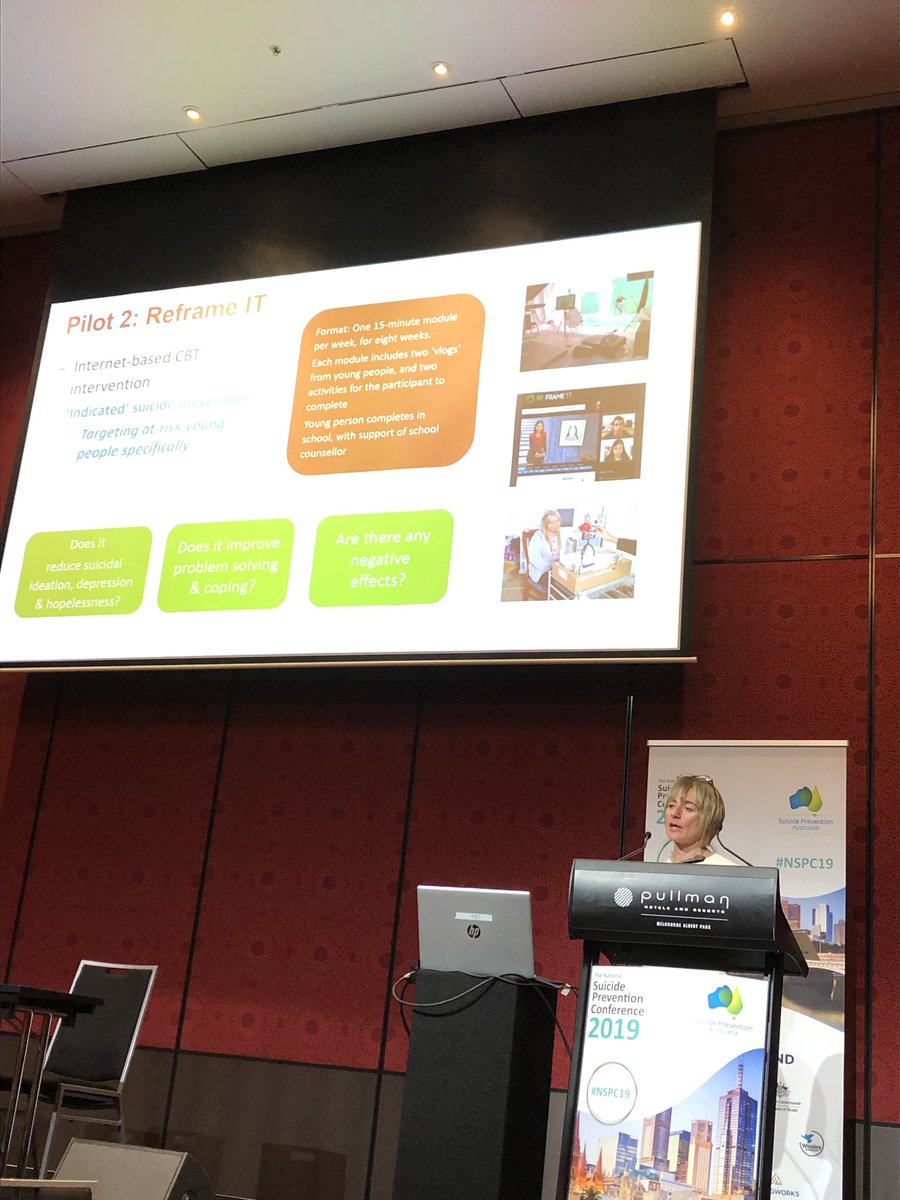
It was great to hear more about the new multimodal suicide prevention program led by @JoRobinson_Aus at the School and Youth session at #NSPC19 this morning. Looking forward to hearing the outcomes of this novel study.
A very informative plenary presentation on suicide stigma by @pbatterham at #NSPC19. More research is needed to understand how to reduce stigma and promote help-seeking. @CMHR_ANU@ANUPopHealth