Selected! Not allowed to live longer, murdered. Please follow @AuschwitzMuseum and learn about the past, so that victims like little Charlotte are never forgotten. Let's cherish their memories!
#NeverForget
26 June 1935 | A French Jewish girl, Charlotte Groner, was born in Paris.
In August 1942 she was deported from Drancy to #Auschwitz. After the selection she was murdered in a gas chamber.
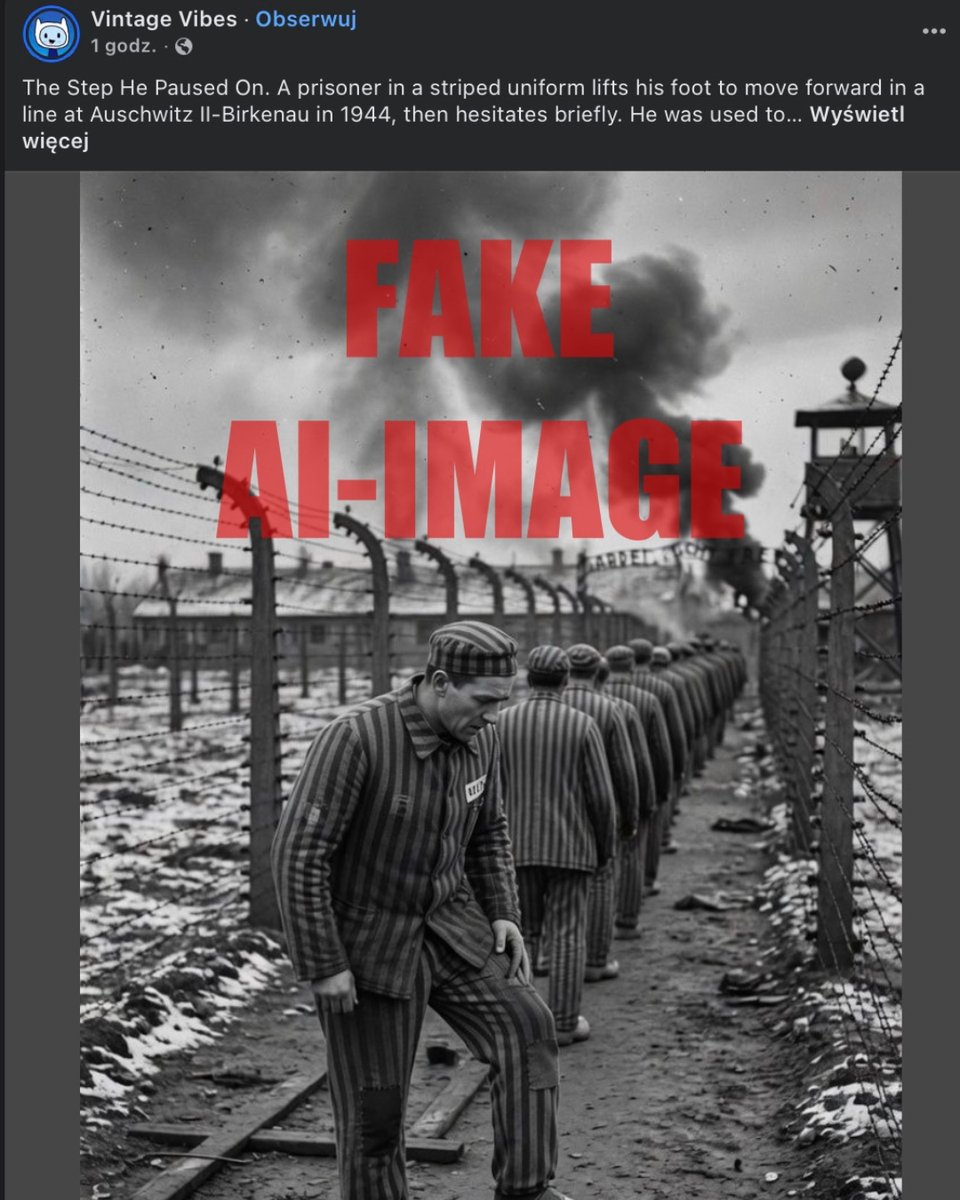
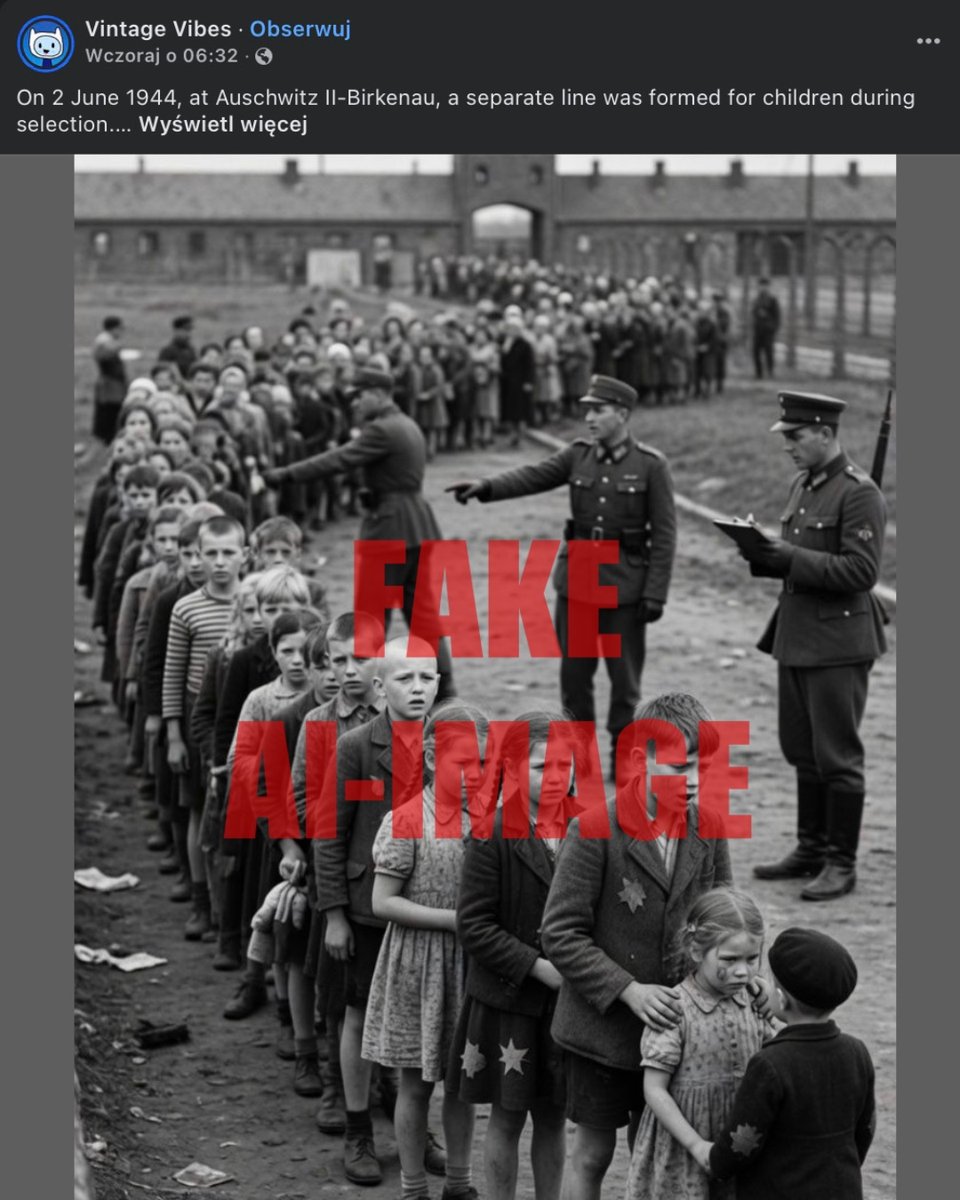
By failing to respond to the spread of fake, AI-generated images and videos of Auschwitz and other Holocaust-related sites, social platforms like @facebook are contributing to the spread of historical distortion.
We believe platforms should take responsibility by actively moderating such content and clearly flagging fabricated images and videos. Memory and historical truth deserve stronger protection. This matters because such content does not merely falsify history.
IT ACTIVELY HARASSES THE MEMORY OF VICTIMS.
Today, when users search for “Auschwitz” on Facebook, an increasing number of results consist of fabricated, AI-generated videos rather than authentic historical documentation.
By allowing these distortions to surface, circulate, and gain visibility, platforms like @Meta directly contribute to the erosion of factual understanding of the complex history of Auschwitz, which we try to protect.
Being a Jewish student in Britain today means living a kind of double life.
I go to lectures. I take exams. I navigate seminar rooms and library queues like any other student. But unlike most of my peers, I do all of this while calculating: am I in danger because my Star of David or Kippah is visible? Will speaking up in this discussion make me a target? Is today a day there'll be a demonstration outside?
Going to university is supposed to be a student’s main job. Right now, for many British Jewish students, it feels like a side gig - squeezed in around the exhausting, full-time business of simply being Jewish on campus.
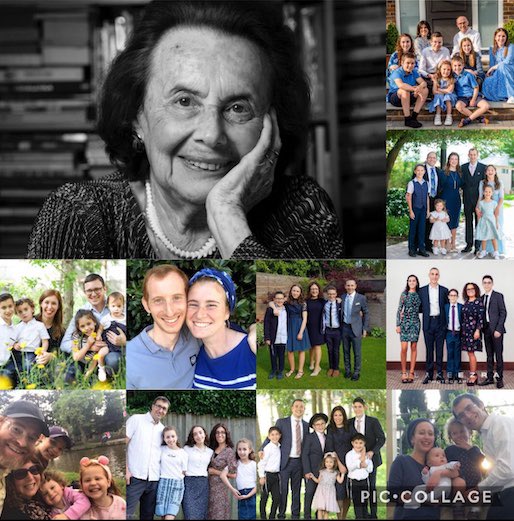
My great-grandmother was Lily Ebert. She arrived at Auschwitz at just 20 years old. In a single day, her mother, her younger sister, her youngest brother, and over 100 members of her extended family were murdered - gassed and cremated, their ashes scattered with no grave, no place to mourn. That was July 1944.
She survived. She came to Britain to rebuild her life, and she did more than survive; she thrived. She built a large and loving family: ten grandchildren, 38 great-grandchildren and even a great-great-grandchild in her final year. She believed Britain would be a safe haven. A place where her family could live openly, proudly, as Jews. A country that had learned the lessons of history.
For decades, she travelled across the UK speaking in schools, and in her later years she used social media to warn young people that the Holocaust did not begin with violence. It began with words. With small actions. With a shifting atmosphere.
In her final months before she passed away in October 2024, my great-grandmother was horrified. Horrified to see the country she had trusted - after the greatest crime in history beginning to fail its most basic duty.
She was right to be horrified. And this week, her warnings feel more urgent than ever.
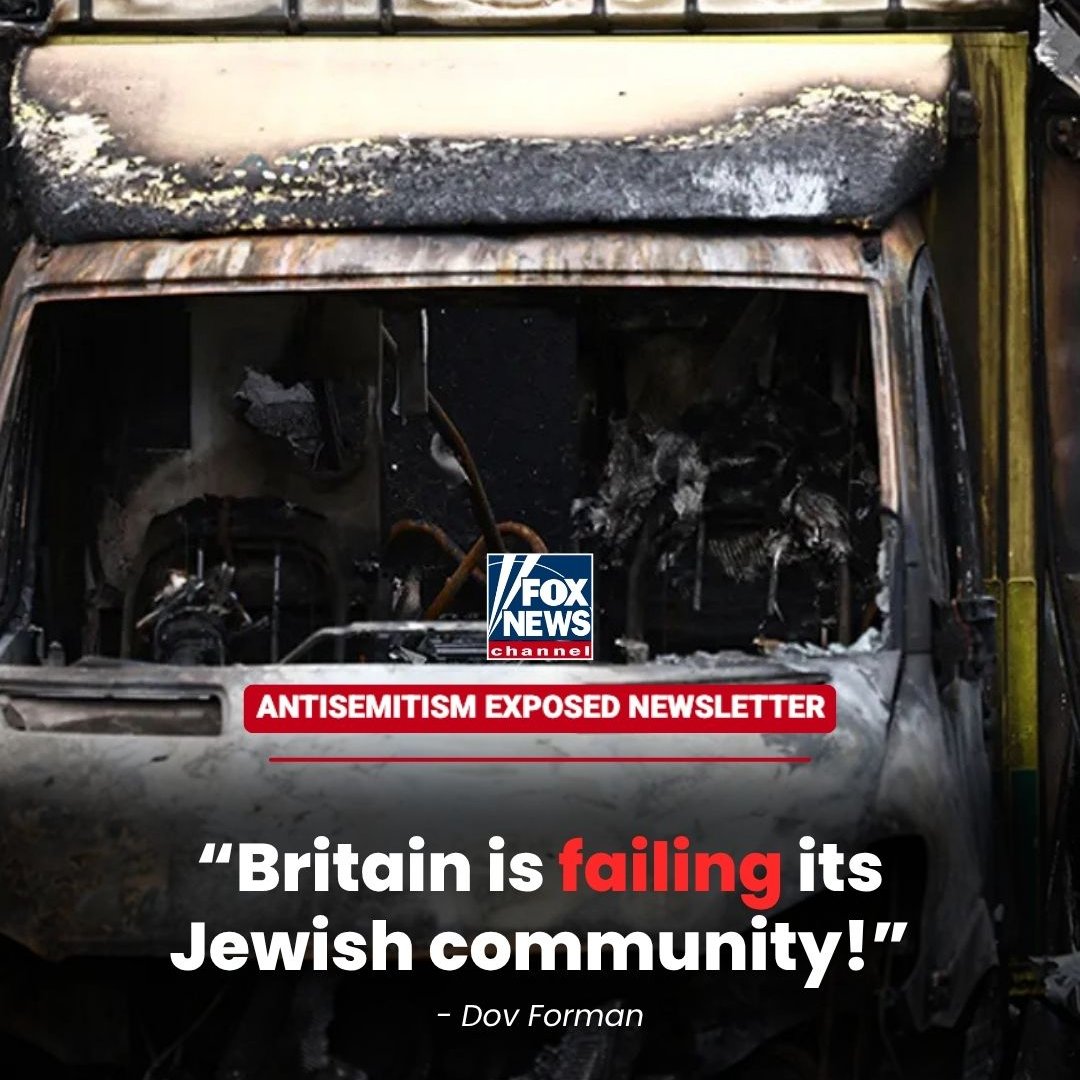
British counter terror police are today investigating a wave of arson attacks on Jewish sites across London - four in as many days - probing whether Iranian proxies are responsible. Two synagogues and a Jewish charity torched. And an Iran-linked group threatening to fly drones carrying hazardous substances at the Israeli embassy. This all coming only a few weeks after Jewish ambulances were set alight in Golders Green – one of the most Jewish areas in the UK. Chief Rabbi Ephraim Mirvis has warned that "a sustained campaign of violence and intimidation against the Jewish community of the UK is gathering momentum."
Prime Minister Keir Starmer has expressed surprise and called the attacks "abhorrent." But how can he possibly claim surprise? If you tolerate chants of "Globalise the Intifada," don't be surprised when the Intifada is globalised.
And throwing money at the problem simply is not a solution. You cannot pay your way out of an Intifada. And we cannot continue to besiege ourselves with security – living behind ever thicker doors and higher fences with barbed wire.
This violence doesn't begin with arson. It begins with ideology - and until Britain starts tackling the ideology, no amount of policing or security will stop the flames.
That means banning the IRGC, who may well be behind this very campaign of attacks. And it means confronting the Muslim Brotherhood, who are radicalising young people across this country - on campuses, in mosques, in community centres - and may well be recruiting the people lighting these fires.
And it starts closer to home too, on campuses like mine, where week after week, masked demonstrators flood university spaces, chanting slogans that go far beyond political protest into something far darker. Jewish students are singled out in lectures, booed, shouted down, accused of being "baby killers" simply for being Jewish. Many now tuck away their Star of David necklaces and think twice before speaking up in seminars. A Jewish professor had his lecture stormed by masked protesters who screamed abuse, branded him a "war criminal," and - according to witnesses - threatened to behead him. His only crime was being Jewish and refusing to be intimidated.
And it is not just coming from the students. Too often, academics themselves are part of the problem. On my own campus, the medieval blood libel - the conspiracy that Jews use non-Jewish blood in their rituals - was repeated to students as fact, at one of supposedly the best universities in the UK.
Beyond campus: an NHS doctor posts "gas the Jews" online and faces no meaningful consequence. Jewish artists are quietly dropped from programmes. Jewish events are cancelled without explanation. Protests where chants cross into open hatred are allowed to continue unchecked by police.
Individually, each moment can be explained away. Together, they reveal a slow and steady normalisation of dangerous jew-hatred.
In the past year alone, the UK recorded the highest number of violent antisemitic assaults per capita anywhere in the diaspora - roughly one for every 2,500 Jews. Jewish schools have warned students not to wear visible symbols on their commute. Jewish teenagers have been assaulted on public transport. Every Jewish institution now sits behind security barriers, guards, and locked doors. We are a community under siege.
My great-grandmother spent her life warning that these things begin not with violence, but with silence. With the small capitulations. With institutions that hedge, qualify, and reach for the language of "context" and "balance" - as if balance is possible when a minority is being targeted.
Britain has a choice. It can honour the lessons it claims to have learned. Or it can allow that silence to continue - and discover, too late, where silence leads.
My great-grandmother, Lily Ebert, survived Auschwitz. It is shameful that she lived to see Britain begin to echo the very hatred she had survived - and thought she had left behind in Eastern Europe.
@DovForman@thetimes That's so amazingly fantastic. Congratulations. Well deserved!
Lily would be so proud of you. Keep your incredibly important work going on.
Every post about a Holocaust victim hits me hard. But those about children are the hardest. Thank you to @AuschwitzMuseum for your tireless work raising awareness. You are doing invaluable work.
2 April 1930 | A Czech Jewish girl, Daisy Lowositzová, was born in Prague.
She was deported to #Auschwitz from the #Theresienstadt ghetto on 23 October 1944. She was murdered in a gas chamber.
---
Children at Auschwitz
📖 Lesson: https://t.co/q0qSVrI097
🎧 Podcast: https://t.co/NaEgs65cjE
Sara Cohen lived eight months. Her father never held her. Her mother carried her to Auschwitz.
This is what we remember.
Sara was born on May 13, 1943, in Groningen, Netherlands. A healthy baby girl, six pounds, four ounces, with dark eyes. Her mother, Carolina, had already lost two children, and now she had a newborn to care for. But her husband, Joseph, had been taken a month before, deported to a concentration camp without ever having met his daughter.
Carolina brought Sara home to J.C. Kapteynlaan 7b, a house in Groningen, where she lived with her two older children. Alone, she fought to keep them alive in a Nazi-occupied world. For eight months, Carolina did what mothers do—she cared for her children, fed Sara, changed her, and likely sang to her. But she knew, deep down, the knock on the door would come. And it did, in February 1944.
The family was taken to Westerbork, a transit camp in northeastern Netherlands. Thousands of Dutch Jews passed through it on their way to the extermination camps of Poland. At Westerbork, they lived in crowded barracks, waiting. Every Tuesday, a train would leave for the east, filled with people who knew their fate, but not the details. Carolina and her children, Sara now eight months old, were put on one of those trains.
The journey to Auschwitz lasted three days, spent in sealed cattle cars. No food, no water, no sanitation. People stood pressed together, old and young alike, enduring the agony of travel before reaching the camp. When the train stopped, the doors opened, and SS officers separated the arrivals into two lines: those who could work and those who could not.
Carolina, holding Sara, with her two toddlers beside her, was sent to the left. There was no selection for her. Mothers with babies were immediately sent to the gas chambers. Babies couldn’t work. Children couldn’t work. Carolina and her children had no chance to survive.
Sara Cohen was murdered in Auschwitz at just eight months old. Her mother, Carolina, was murdered beside her, along with her two siblings. Her father, Joseph, who never got to meet his daughter, was murdered in another camp. The entire family was erased from existence, their names lost to history.
Sara Cohen’s name lives on, though—remembered in documents, in a birth certificate, a deportation record, a line in the Auschwitz death registry. She is remembered because we refuse to forget.
Sara would be 82 today. She might have had children, a career, a life full of experiences. Instead, she lived eight months. Her father never held her. Her mother carried her to Auschwitz. And we carry her memory now.
Zichrona livracha. May her memory be a blessing.
"Every atom of hate that we add to this world makes it sill more inhospitable"
(Etty Hillesum diary)
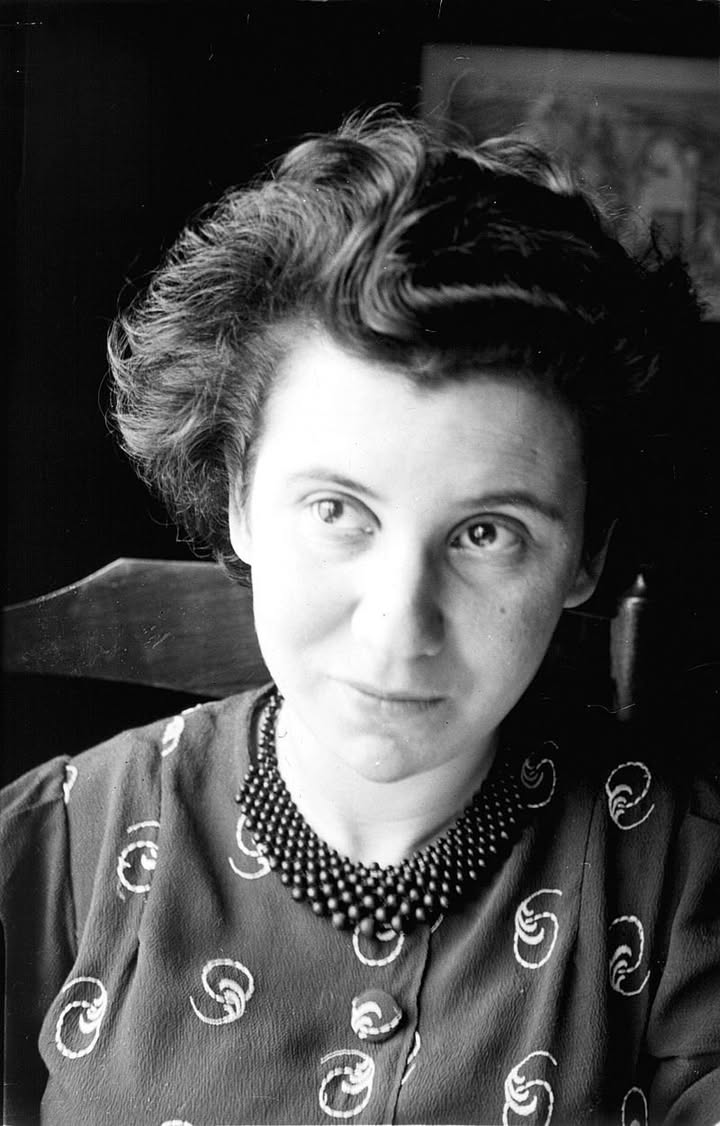
30 November 1943 | Etty Hillesum, a Dutch Jewish diarist and author, perished in Auschwitz. She was deported there from the Westerbork camp in the occupied Netherlands on 7 September 1943.
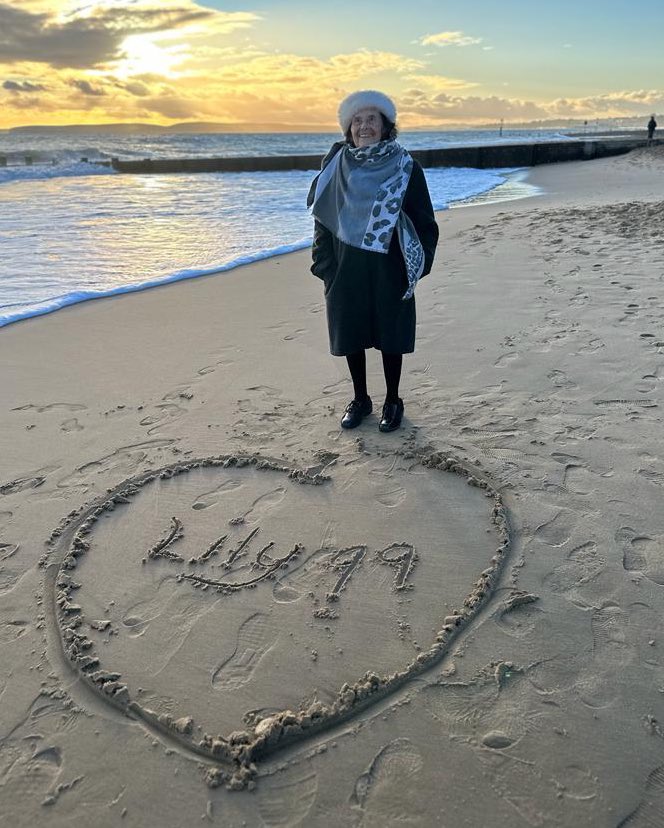
She will never be forgotten, not only because she survived the Holocaust, but also because she had the courage to speak about it. She was a unique and warm-hearted woman. Her memory lives on in her family and her unforgettable and important work! We'll never forget you, Lily ♡
One year ago today, on October 9, 2024, my incredible, indomitable, and ever-present great-grandmother, Lily Ebert MBE, passed away peacefully at home, surrounded by her family.
She was 100 years old. She left behind 2 children, 10 grandchildren, 38 great-grandchildren, and one great-great-grandchild - five Jewish generations born because she chose to live, rebuild, and believe in the goodness of humanity after the darkest chapter in history.
From the ashes of Auschwitz, she built a home filled with laughter, love, and faith. From the horror of being reduced to a number - A-10572 - she created a legacy that reached over a billion people around the world. Tens of thousands heard her speak in schools. Millions saw her smile online. Everyone who met her and watched her online felt her strength.
Safta’s lessons were simple, but life-changing. She taught that kindness is not weakness. That every person has the power to make a difference. That hate can never be answered with more hate. And that even after the darkest night, light will return.
She would often tell me: “If you have life, you must do something with it.” And she did. She knew how precious life was and how everything could change so quickly. And despite all she achieved, she would say to me, “Let’s do something more, Dov.” Every single day of her last decades was spent educating others - ensuring that the world would never forget what hate can do, and what hope can rebuild.
Since she left us, that mission feels more urgent than ever. In the year since her passing, we have seen the world grow darker once again. She was heartbroken to see the hatred that followed October 7 - but she also reminded us never to despair, never to give up, and never to stop teaching and educating about that hatred. Because our love will always be stronger than their hate.
One year on, we remember her not just for what she endured, but for how she lived - with joy, purpose, and unwavering belief in humanity.
Her promise now becomes ours: to educate, to speak out, to choose life, and to keep her light shining.
May her memory always be a blessing - and an inspiration.
We will never forget you Safta ❤️
Auschwitz I. Visitors entering the site of the former camp through the main gate of the Auschwitz I camp with the "Arbeit macht frei” sign (work makes one free).
The inscription was a cynical promise and a lie given to all the prisoners who entered the camp. It became one of the most recognizable visual icons of Auschwitz.
The camp was initially established by the Germans to target members of Polish intelligentsia and resistance. In 1940-1942, Poles predominated among Auschwitz I prisoners as a nationality group. With the development of Auschwitz, the prisoners’ structure changed. In August 1944, the main camp held more than 9,000 Jews, less than 4,000 Poles, and almost 3,000 prisoners of other nationalities.
A short video about the history of the gate: https://t.co/6HQoSomwut
Learn more about the history and development of the Auschwitz camp that finally included three main camps and around fifty sub-camps: https://t.co/Pg0bA4FqnM
Photo: https://t.co/zh3UCdC0Jz
—
A visit to the Auschwitz Memorial is far more than a history lesson. It is a deeply personal experience that should inspire reflection on our individual moral responsibility for the world in which we live.
Reservations of entry cards: https://t.co/8nmsz2SDEv
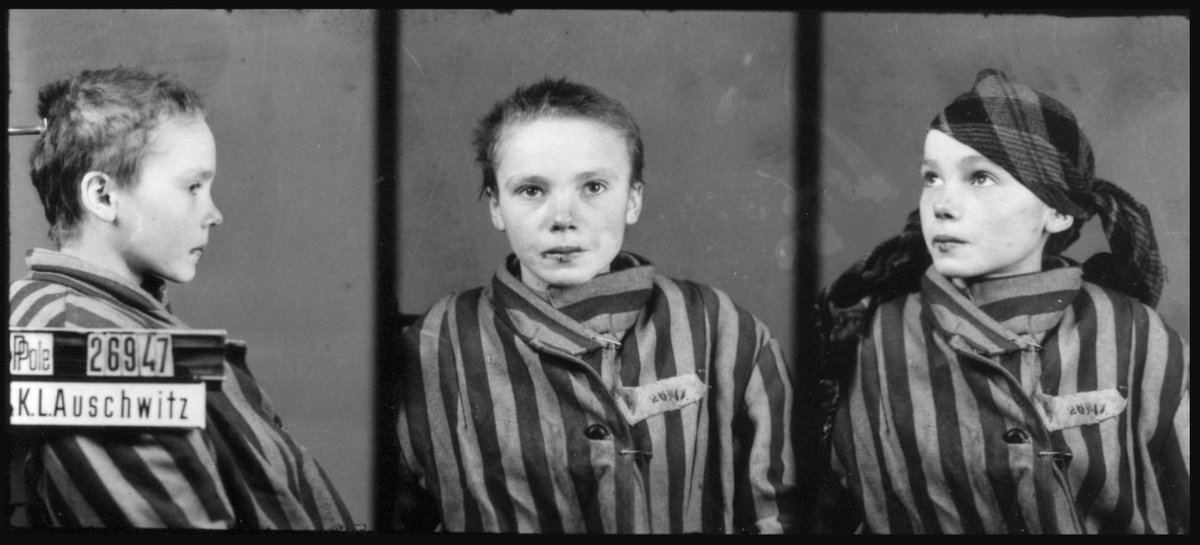
15 August 1928 | A Polish girl, Czesława Kwoka, was born in Wólka Złojecka
In #Auschwitz from 13 December 1942 (expelled during the ethnic cleansing of Zamość Region).
No. 26947
She was murdered with a phenol heart injection on 12 March 1943.
---
Listen to our podcast dedicated to the fate of 1,301 Polish people deported to Auschwitz within the ethnic cleansing program perpetrated by Nazi Germany in the Zamość Region in occupied Poland in 1942/3: https://t.co/YhqLfxb8BS
“I know what I want, I have a goal, an opinion, I have a religion and love. Let me be myself and then I am satisfied. I know that I’m a woman, a woman with inward strength and plenty of courage"
Anne Frank diary
#WomenduringtheHolocaust
An incredibly strong and personable woman. With the help of her grandson @DovForman, we learned about her life story in her book "Lily's Promise". I'm glad to have her book. Happy Birthday in heaven, dear Lily ♡
29 December 1923 | Hungarian Jewish woman Lily Ebert was born in Bonyhád.
In July 1944 she was deported to #Auschwitz. She was then transferred to an ammunition factory near Leipzig where she was liberated.
She passed away in October 2024, at the age of 100.