Nigeria doesn’t have a shortage of hard working people, we have productivity problem.
And there’s huge difference between the two
I’ll be using this account to break down Nigeria economy, business, money and politics in simple term.
If someone gave you N10 million today with one condition - you cannot spend it on a car or luxury items,what would you do with it?
Business?
Real estate?
Investment?
Education?
Something else?
I’m genuinely curious.
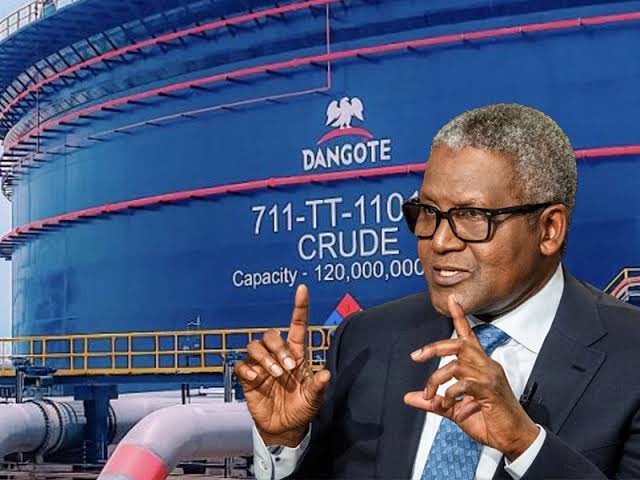
Dangote Petroleum Refinery has emerged as Europe's largest external supplier of jet fuel.
Aliko Dangote says Europe should thank Nigeria, under President Tinubu's leadership, for helping keep their planes flying.
This shows how quickly Nigeria's financial system is changing. The real challenge is ensuring digitalisation doesn't leave underserved Nigerians behind.
Revenue tells us how much came in. Expenditure tells us where it went. The balance tells us what is left.
Understanding that difference changes how you look at business, government finances and Nigeria's economy
One of the biggest mistakes people make when discussing Nigeria's economy is confusing revenue with profit.
A business can generate N100 million in revenue and still make a loss if its expenses is higher than what it earns.
The same principle applies to government. ⬇️
A government is not financially healthy simply because more money is coming in. It is financially healthier when it can manage what comes in efficiently, keep its obligations sustainable, invest in productive sectors and deliver meaningful value to its citizens.
Nigeria's economic conversation should therefore go beyond celebrating revenue figures. We should also examine expenditure, debt, efficiency, leakages, productivity,and the value created from every naira collected
A household earning N500,000 every month can still be financially stressed if its monthly obligations are N550,000.
The income sounds impressive until you look at the expenses.
How much was collected?
How much was spent?
How much went to debt servicing.
How much went into recurrent expenditure?
How much was available for capital projects?
And, most importantly, what did Nigerians actually get in return?
Revenue is what comes in. Profit is what remains after expenses.
For a government, the closest comparison to profit is what remains after paying for salaries, infrastructure, debt servicing, security, healthcare, education, subsidies, pensions, government operations
A country can generate huge amounts of revenue from crude oil, taxes, customs duties, ports, and other sources, yet still struggle financially because it has enormous expenses and obligations.
@instablog9ja N3,000 × 30 days = N90,000
a month.
But I think we need to distinguish between surviving and living.
Can N90,000 cover food, transport, accommodation, electricity, healthcare,
communication and other basic needs for the average Nigerian?