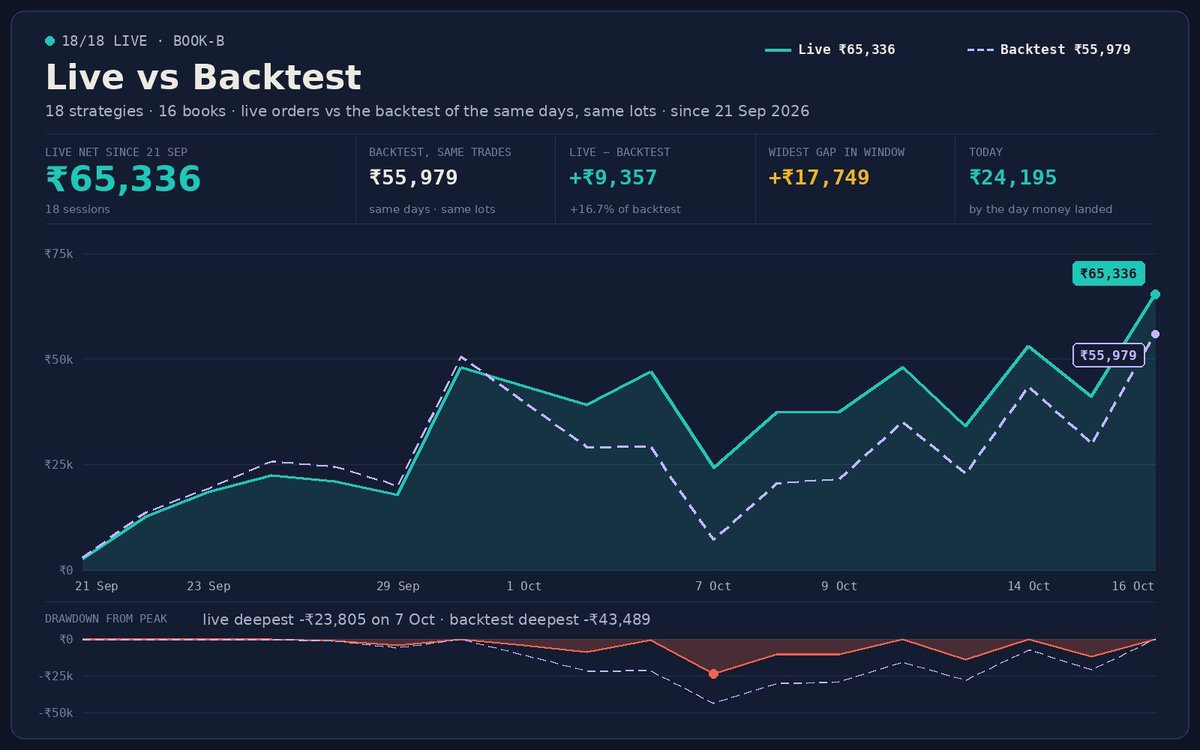
Intraday trades wiped out positional gains, but the algo broke even. Backtest vs. live results are tracking well so far.
Key takeaway: Intraday trades are lagging, while positional stocks and long index options are performing well.
Position sizing will increase once live trade performance aligns with backtests.
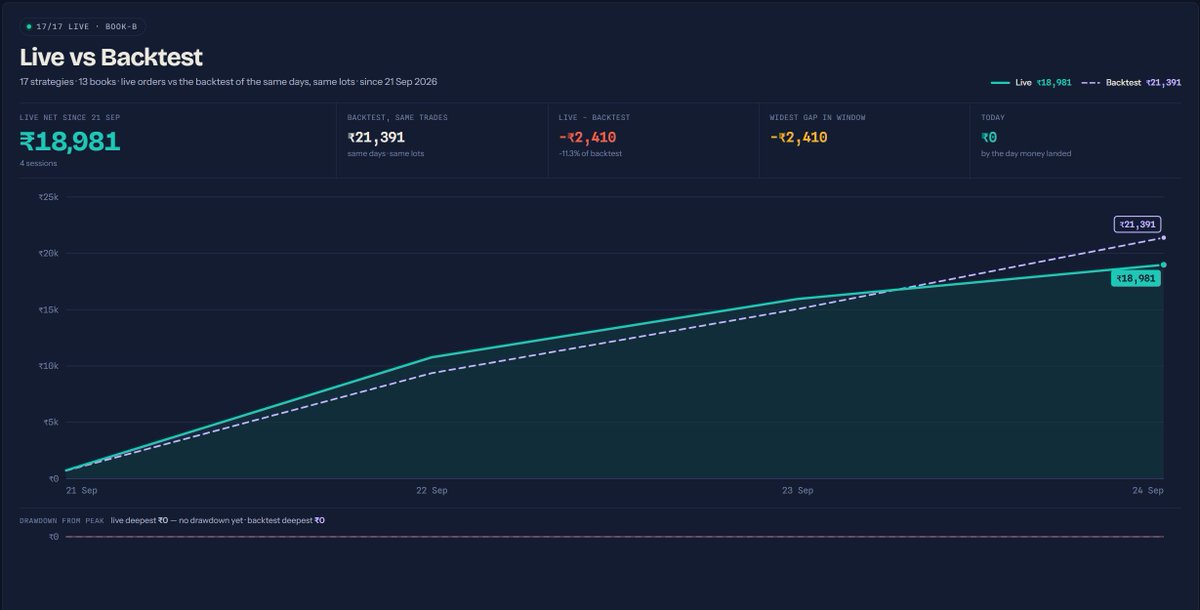
Added new strategies to the system! Focused heavily on capital efficiency—structuring trades so the same Capital can be deployed for overnight positions and seamlessly reused for intraday. Backtest vs. live execution is tracking perfectly so far.
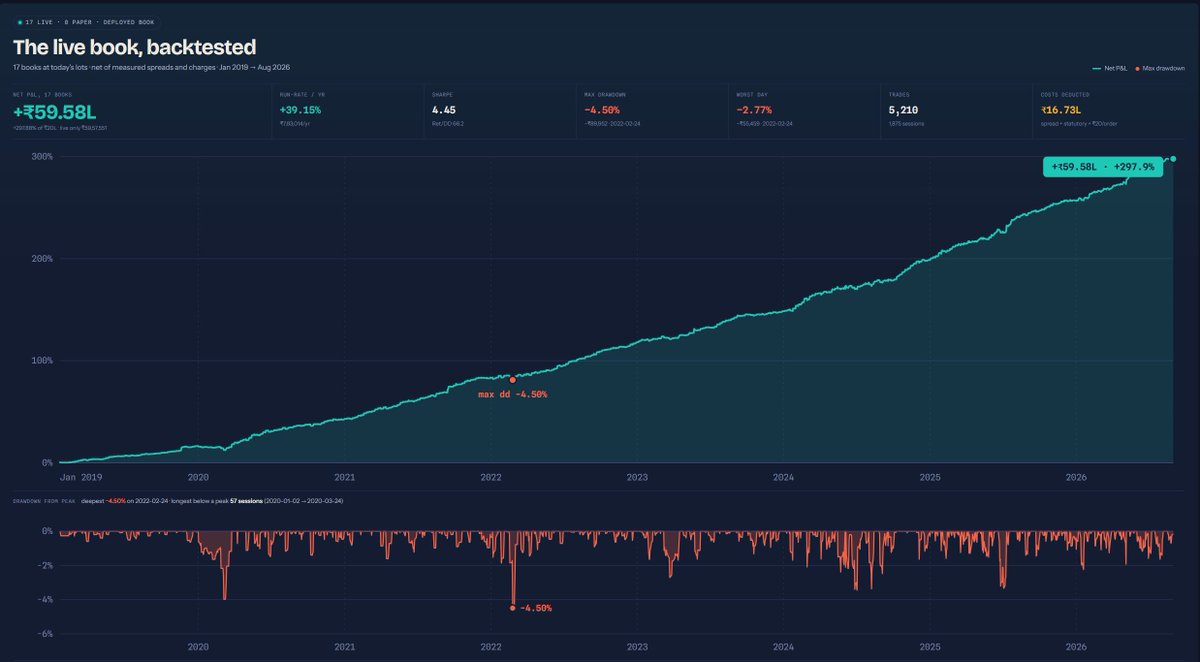
Went live with my options book, built on this backtest (2019–26: ~39%/yr, −4.5% max DD, after costs).
Next: match live to the backtest trade by trade, and fix where they differ.
Low expectations: half the run-rate at double the drawdown (~19%/yr, −9%). Anything above is bonus.
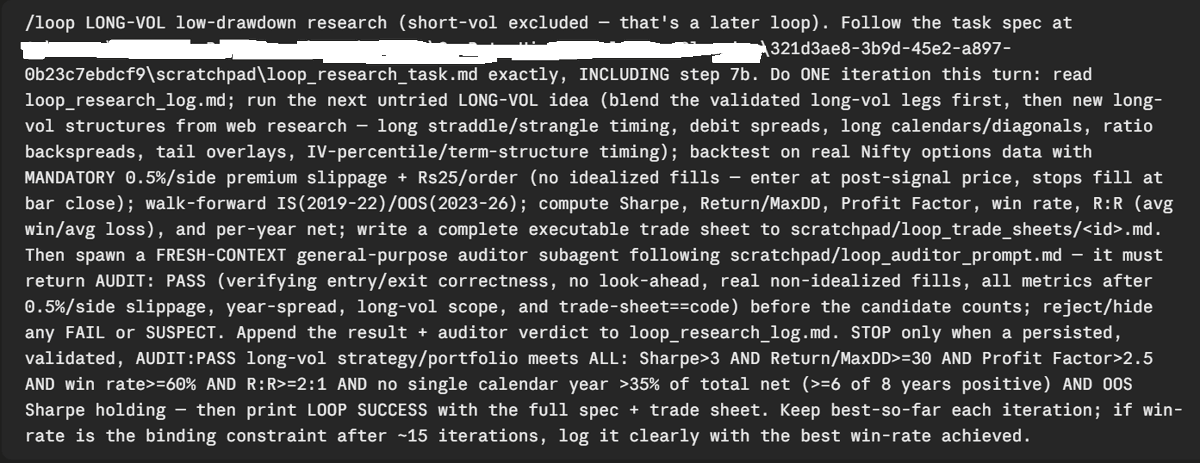
Discovering a good long volatility strategy is difficult. To solve this, I am deploying loop engineering to ingest global options research and ideas. I got one Long vol but its not looking good beacause almost all the profits are in same year.
Hitting pause on the intraday short vol analysis for a bit. Now will spend some time experimenting with long vols—fully expecting to take some hits—and then will start positional. What was the short vol logic?👇
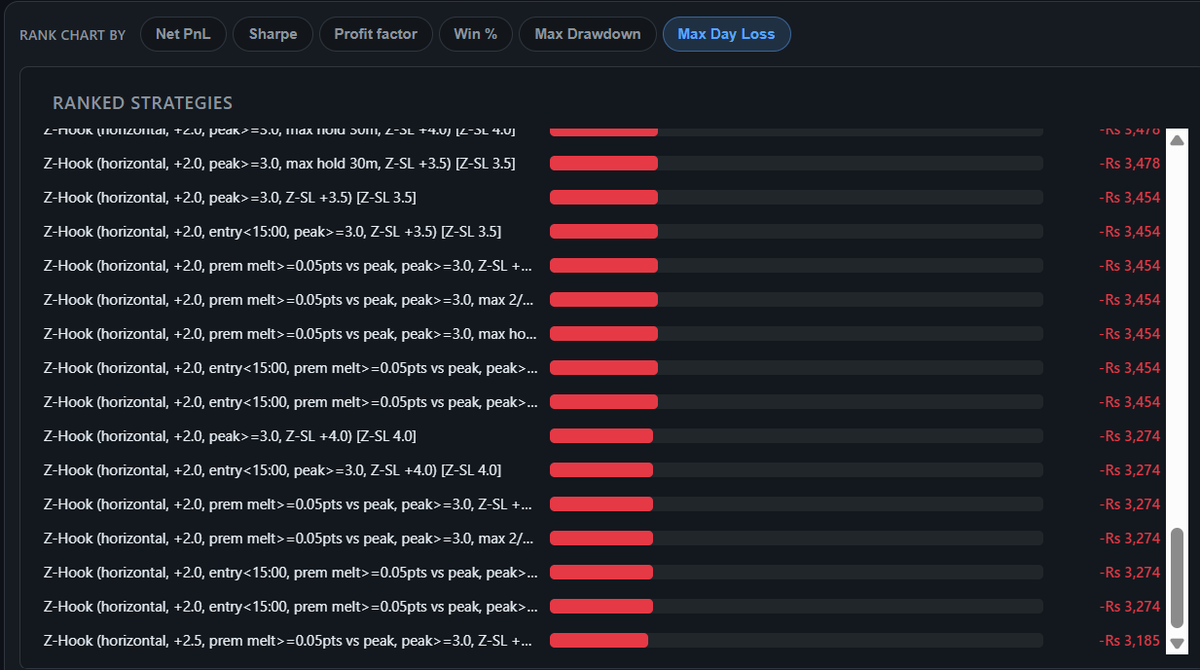
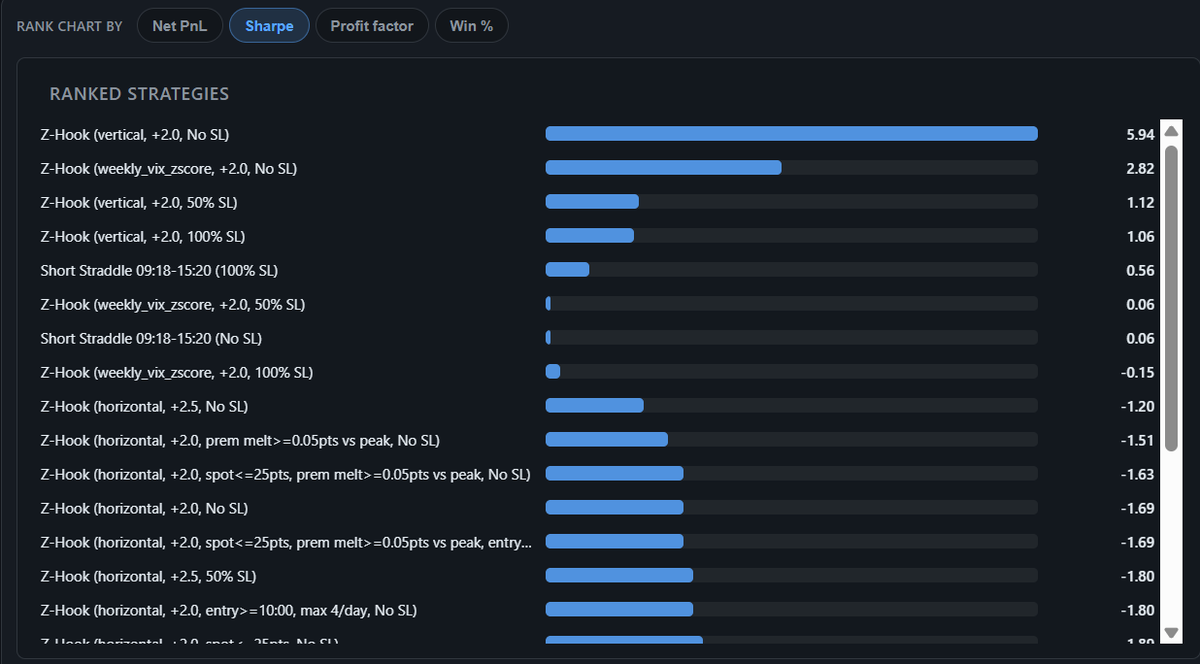
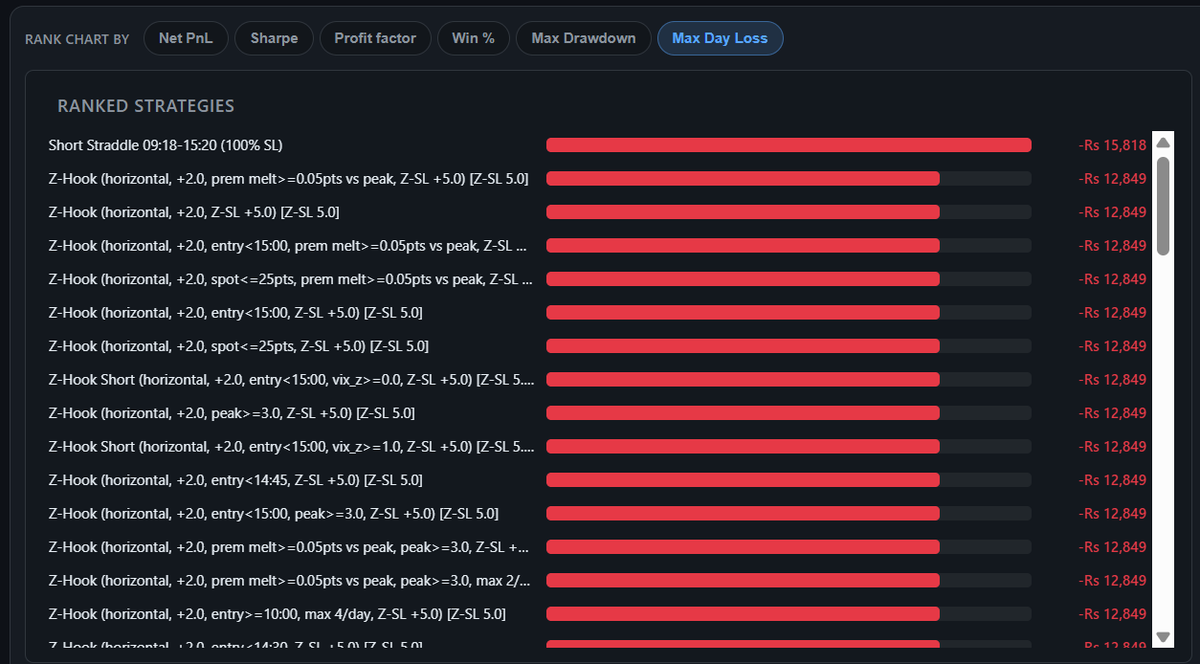
Even with the expiry filter, the vanilla straddle stays the top winner. That said, using the Vol Z-score gives us solid signals in almost all the expiries while keeping our drawdowns and max per day loss in controlled.
@saketh1998 That’s correct. Most productivity gains are concentrated in backtesting and portfolio optimization; while trading strategies frequently evolve, the underlying execution logic remains largely unchanged.
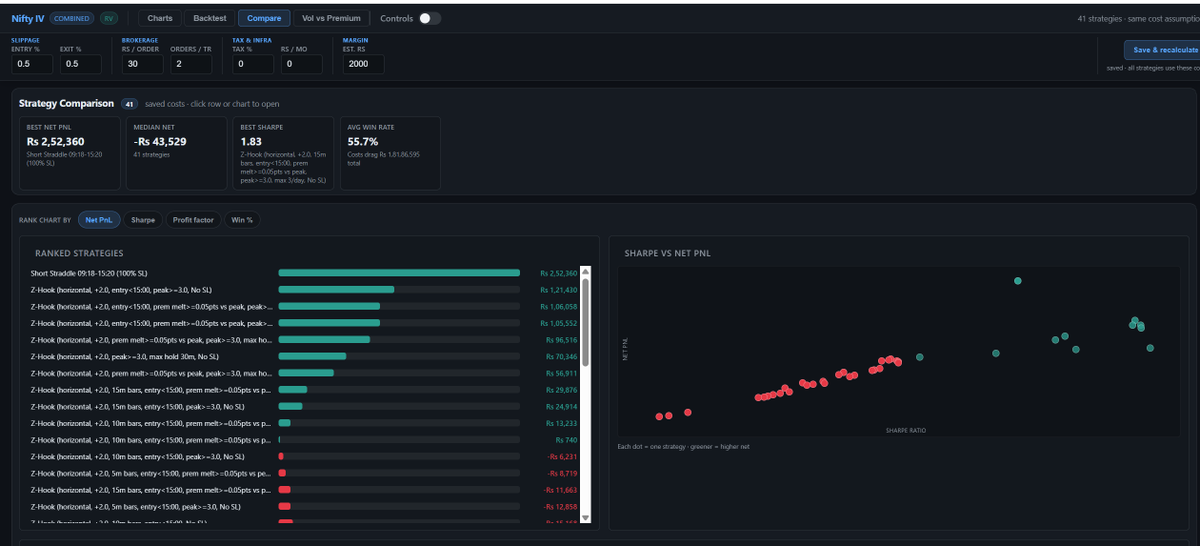
The Short Straddle remains the superior volatility strategy, maintaining its edge even after factoring in the drag from slippage, execution fees, and taxes.
Tested all scenarios. X-axis Z-score yields over-trading, which kills performance. Optimizing the horizontal setup next. Real-world friction—brokerage, higher STT, and tax on the Profit - is the ultimate hurdle.
Evaluating three distinct volatility frameworks to pin down the exact structural turning point for premium melt. Next, we check how the strategies perform under each Vol metric.
Baseline locked. Next up: vol filters. Even with 0.5% slippage built-in, unlogged ticks, micro-whipsaws, and brokerage fees are severe risks to our edge.
By the way, the dashboard UI is just for visuals—anyone can spin these up with AI nowadays.
Validating robust volatility frameworks requires options data, I personally record real-time market feeds directly from Rest APIs to construct a clean data lake for historical backtesting. Else people can buy the data from authorized data vendors.
What I am validating:
Directional: Skip. Handled via passive SIPs.
Arbitrage: Out of scope. Requires HFT infra/colocation.
Non-Directional: The sweet spot. Specifically pure Volatility Trading—betting on market temperature and mean-reversion.