You don’t need to be an engineer to spot a bad building.
If a building has:
No approval.
No test results.
Poor drainage.
No maintenance plan.
No supervision.
Start asking hard questions.
This one pain me pass the last one.
Look this car well. This no be small accident. This na total structural failure. People definitely enter emergency room here. Maybe people die. Airbags deploy. Chassis bend. Load paths collapse. This car don finish for safety sense.
Yet una dey rebuild am, spray paint, and sell am like say na normal used car.
Make we talk plain.
Once structure don collapse like this, the car no be car again. Na shell. You fit weld iron. You fit change panels. But you no fit recreate factory crash geometry, load distribution, sensor calibration, or stability behavior.
This kind car enter Nigerian road, hit pothole at speed, suspension alignment shift small, ESP calibration confuse, steering react late, next thing rollover or loss of control. Person die. Then dem go say na village people.
This no be business. Na wickedness.
Insurance companies abroad no dey foolish. Dem write off cars like this because the risk no fit be priced. That na why abroad, this car no suppose ever return to road without permanent salvage stigma and deep discount.
But Nigerians think say we too smart. We dey laugh say “fall mugu” while we dey sell death wrapped in paint.
Selling cars like this without conscience no be hustle.
Na gambling with human lives.
Nigerians, be careful.
And those of una wey dey proud to advertise this thing, may God give una sense.
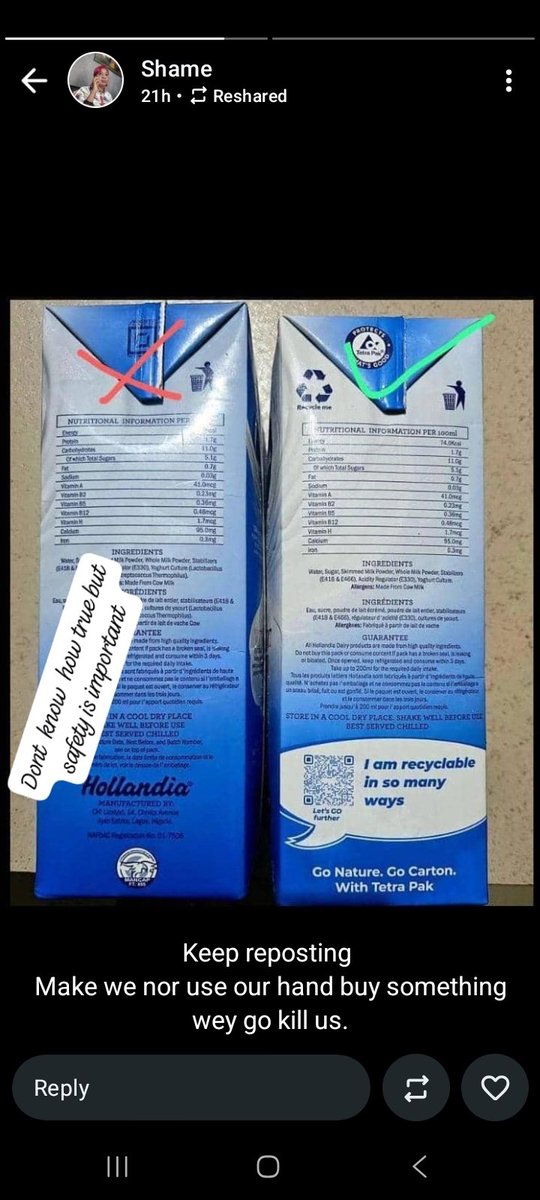
Palm oil is in almost every Nigerian kitchen, but right now, most of what is being sold in our markets isn’t oil.
It’s a mix of water, dyes, and unsafe additives.
“Can I bring my baby to the interview?”
The message came in at 11 PM:
“Hi, I have an interview with you tomorrow at 2 PM. My childcare fell through. Can I bring my 8-month-old? I understand if you need to reschedule.”
Old me would have rescheduled.
Unprofessional. Distraction. Red flag.
New me replied:
“Absolutely. See you tomorrow.”
She showed up with her baby on her hip.
She apologized three times before even sitting down.
Ten minutes in, the baby started crying.
She tried to soothe him while answering questions.
She apologized again.
I stopped the interview and said:
“Hey. You’re managing a fussy baby, answering complex questions, and staying calm under pressure. That’s literally the job. Handling chaos while staying professional. You’re already proving you can do it.”
Her eyes filled with tears.
We hired her.
She’s been with us for a year now.
The most reliable team member we have.
Why?
Because when you’re used to handling a screaming infant at 3 AM and still showing up to work the next day, workplace stress feels like nothing.
Working parents, especially mothers, are some of the most organized, efficient, and resilient people you’ll ever hire.
Yet we lose them because our hiring processes are built for people with zero caregiving responsibilities.
If your interview process can’t accommodate a parent facing a childcare issue, you’re not filtering for professionalism.
You’re filtering for privilege.