After years of manual trading, I'm going full algo.
Why?
• I'm tired of emotional decisions
• I want systems that trade while I sleep
• I believe retail traders deserve institutional-grade tools
Starting today, I'm documenting the entire journey:
✅ Every strategy I develop
✅ Every backtest (wins AND losses)
✅ Every tool I build
✅ Every lesson I learn
My background:
📊 Data analyst (markets, futures, crypto)
💻 Python for analysis + automation
📈 Trading futures (ES, NQ) + crypto since 2020
My goal:
Build a profitable algo trading system from scratch. Share the playbook for free.
Why share everything?
Because I wish someone had done this for me when I started.
Follow if you want:
• Real trading strategies (not theory)
• Python code (not pseudocode)
• Honest results (not fake screenshots)
• Free tools (not $2K courses)
First post: Tomorrow.
First strategy: Mean reversion on ES futures.
First lesson: Already learned that "easy backtests" are a myth.
Let's build. 🚀
been working on something dope for quite some time & I'm excited announce the launch of our crypto options analytics platform :
https://t.co/u0lmtU5fUu
No Login or Payment Required. It's completely free to use!
will explain in tweets below what it does below & how it works👇
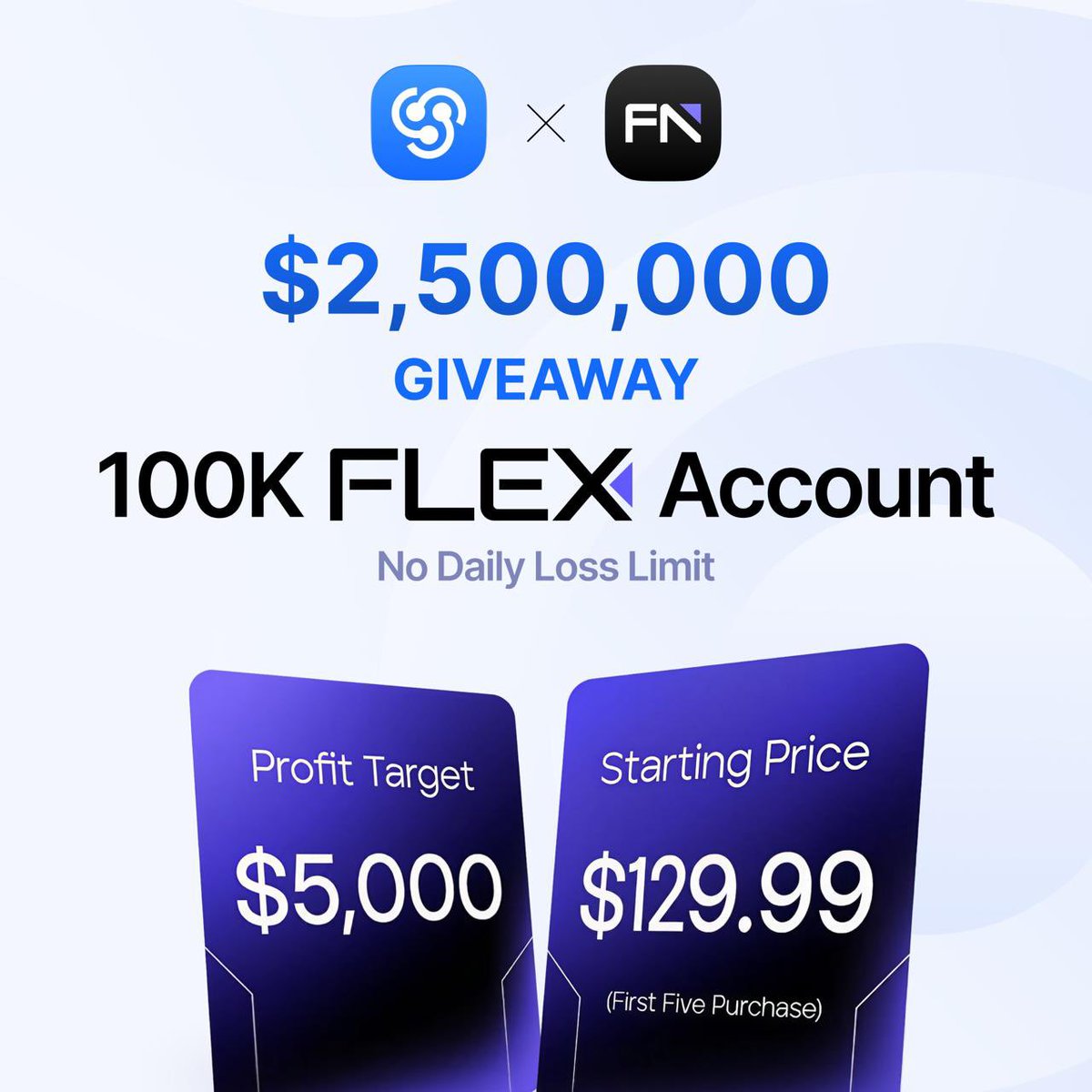
🚀 $2,500,000 GIVEAWAY 🚀
We teamed up with @FundedNext to celebrate their new FLEX Challenge 🤝
Win 1 of 25x $100K FLEX accounts!!
To enter:
• Follow @Tradesyncer & @FundedNext
• Like & repost
• Comment “DONE”
⏳ Winners announced Friday.
$1,250,000 TRADEIFY EVALUATION GIVEAWAY 🎉
It's time. @Tradesyncer x @Tradeify
We're giving away 25x $50K Select Plan evaluation accounts. Here's all you gotta do:
✅ Follow @Tradesyncer & @Tradeify
✅ Like, Repost & Comment "DONE"
P.S. Tag someone for an extra entry.
Good luck! 💙
Unpopular opinion:
Most "profitable" algo strategies shared online are:
1. Curve-fitted to historical data
2. Cherry-picked best results
3. Ignoring transaction costs
4. Tested on clean data (not real market conditions)
Always verify. Always question. Always test yourself.
#AlgoTrading #TradingReality
Best free resources to learn algorithmic trading:
📚 Books:
• "Algorithmic Trading" - Ernest Chan
• "Quantitative Trading" - Ernest Chan
🎥 YouTube:
• QuantPy
• Part Time Larry
• Coding Jesus
💻 Platforms:
• QuantConnect (free tier)
• Backtrader (open source)
No paid courses needed to start.
#AlgoTrading #FreeResources
The difference between backtesting and forward testing:
BACKTEST:
• Test strategy on historical data
• Shows what WOULD have happened
• Fast, cheap, easy
• Risk: Overfitting
FORWARD TEST:
• Test strategy on NEW data (or live)
• Shows what ACTUALLY happens
• Slow, real-money risk
• Proof: It works now
You need BOTH.
#Backtesting #AlgoTrading
Common backtesting mistakes that inflate results:
1. Look-ahead bias (using future data)
2. Ignoring slippage/commissions
3. Overfitting to historical data
4. Survivorship bias (only testing "winners")
5. Not testing on out-of-sample data
Which one have you fallen for?
#Backtesting #AlgoTrading
4/ The lesson:
Lower risk per trade = longer survival = more opportunities to be right.
High risk per trade = one bad streak and you're done.
Protect your capital first. Profits second.
Risk management rule I wish I learned earlier:
Never risk more than 1-2% of your account on a single trade.
Why?
Because even a 50% win rate strategy can blow up your account if you risk 10% per trade.
Math breakdown 👇
#RiskManagement#AlgoTrading
3/ The Kelly Criterion formula:
f = (bp - q) / b
Where:
• f = fraction of capital to risk
• b = win/loss ratio
• p = win probability
• q = loss probability (1 - p)
For most strategies, Kelly suggests 0.5-2% per trade MAX.
Python tip for algo traders:
Use pandas `.resample()` to convert timeframes instantly.
1-min data → 5-min bars
5-min data → 1-hour bars
Daily data → weekly/monthly
One line of code.
Example 👇
#Python#AlgoTrading