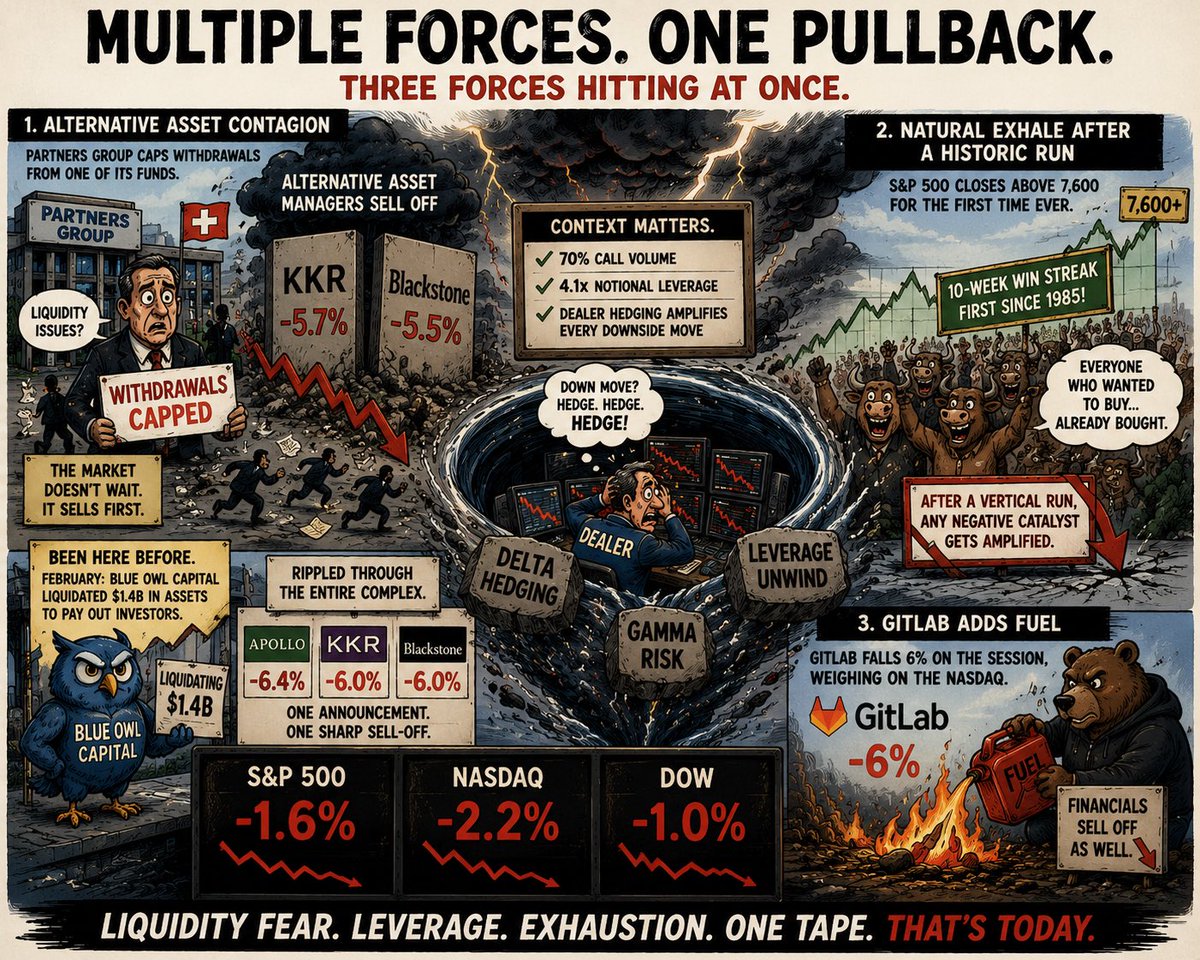
Three distinct forces are hitting simultaneously this morning.
The alternative asset manager contagion is the sharpest catalyst. KKR fell 5.7% and Blackstone dropped 5.5% amid a broader selloff in alternative asset managers after Switzerland’s Partners Group reportedly capped withdrawals from one of its funds.  When a major private markets firm gates withdrawals, it triggers immediate repricing across the entire private credit and alternatives complex. Investors don’t wait to find out who else has liquidity issues. They sell first.
This isn’t an isolated event either. Back in February, a similar panic hit when Blue Owl Capital announced it was liquidating $1.4 billion in assets to pay out individual investors, dragging Apollo, KKR, and other asset managers sharply lower in a single session.  The market has seen this script before and it reacts fast.
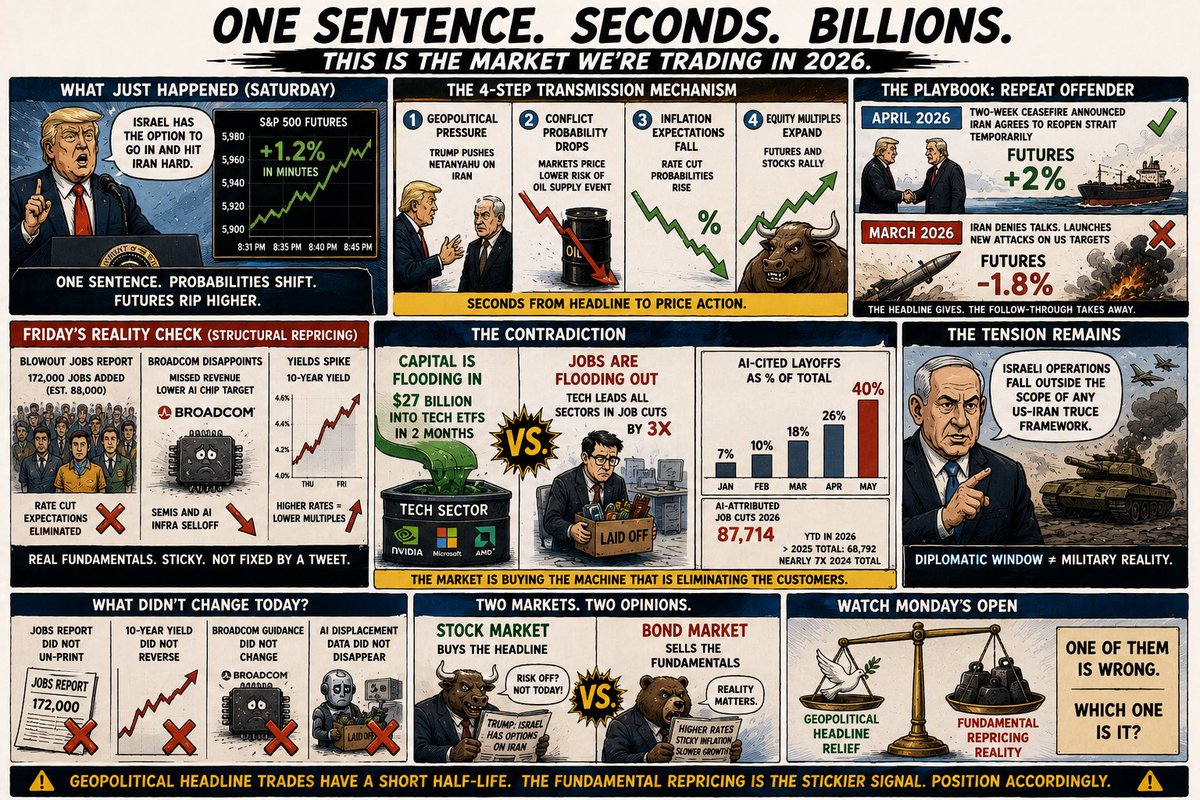
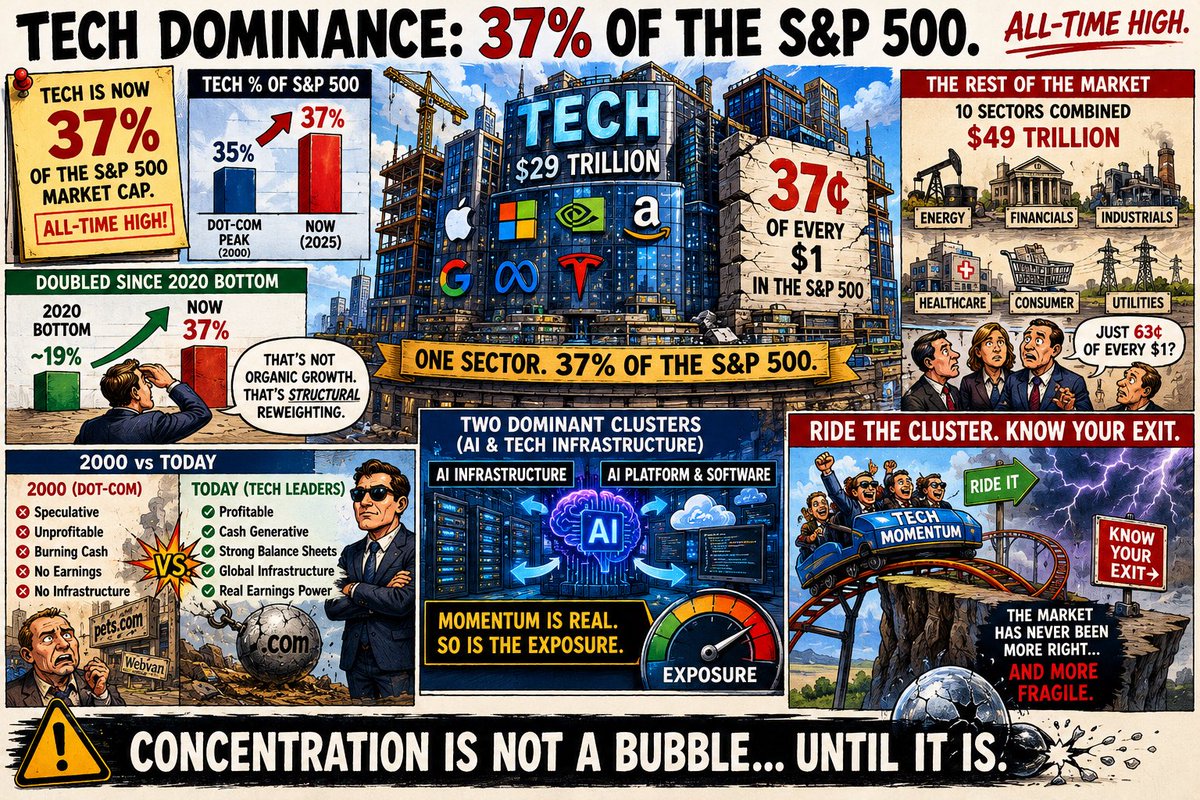
It’s also a natural exhale after vertical price action. The S&P closed above 7,600 for the first time ever just yesterday, capping a 10-week win streak, the first since 1985.  After a run that steep, any negative catalyst gets amplified. There are no natural buyers left at the margin when everyone who wanted to buy already bought.
And GitLab added fuel. GitLab fell 6% on the session, contributing to the Nasdaq’s broader weakness alongside the financial sector selling. 
The context is critical here. This is a pullback after a historic run, triggered by a legitimate liquidity concern in private markets, happening in a tape where 70% call volume and 4.1x notional leverage means any downside move gets amplified mechanically as dealers unwind their delta hedges.
Liquidity crises don’t announce themselves. They leak.
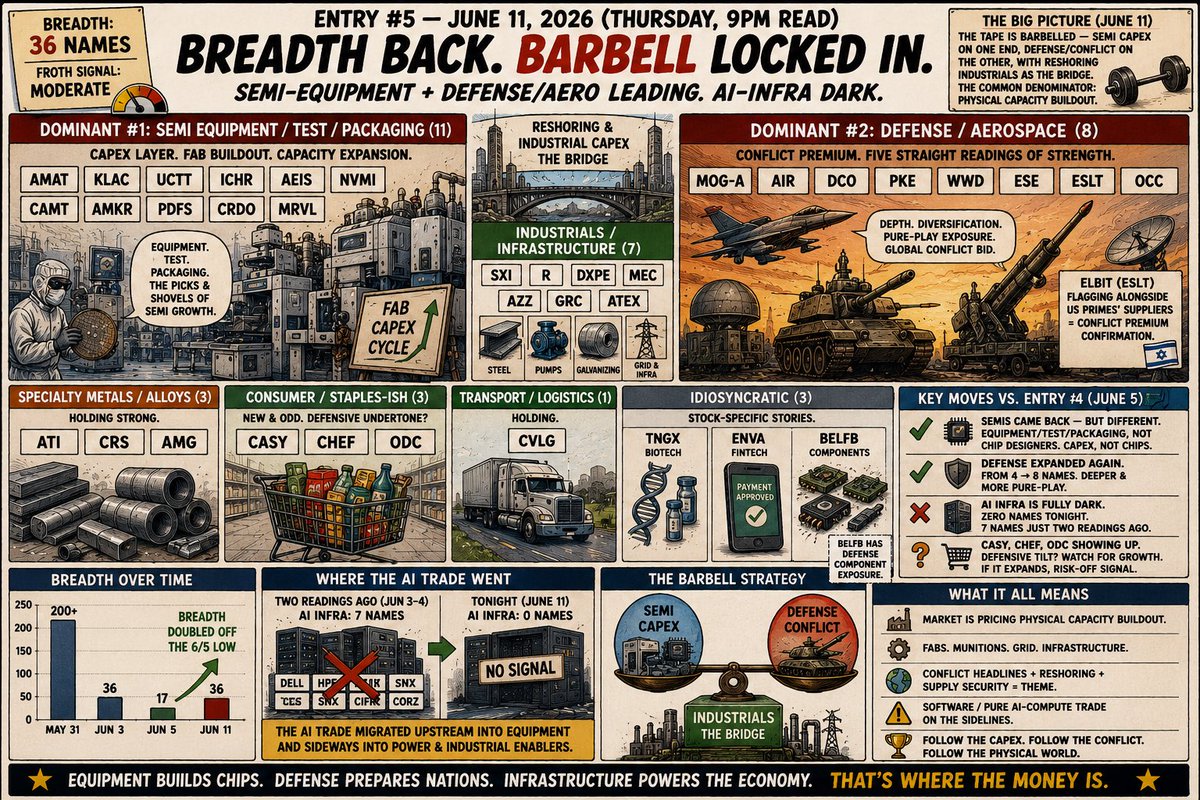
The sector cluster map doesn’t lie.
My screener is currently flagging two Dominant clusters with the highest concentration of strong buy signals:
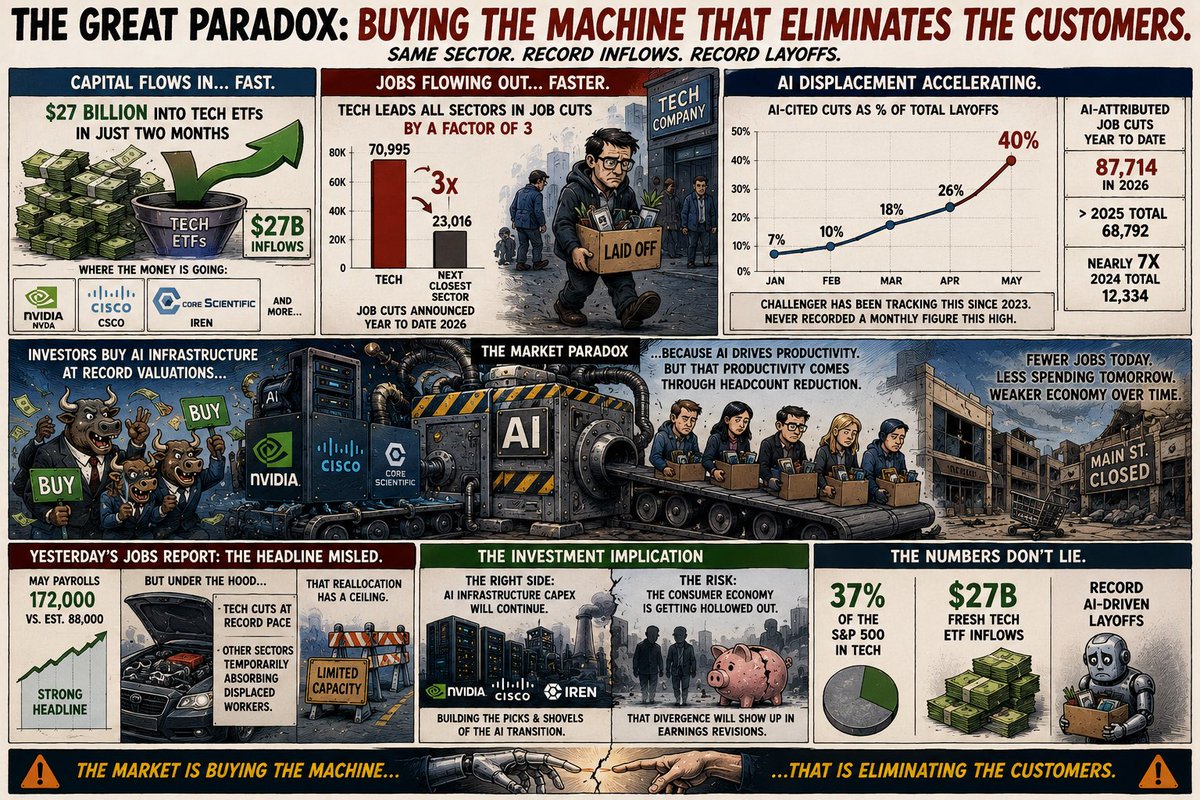
AI Infrastructure / Semis: largest cluster in the book. Already concentrated here, and still expanding. When the biggest cluster keeps getting bigger, you don’t fight it, you size with it.
AI Networking: IREN, CSCO territory. Overlapping with semis, which tells you institutional money is rotating through the entire AI capex stack, not just one pocket of it.
One Emerging cluster is forming but hasn’t reached critical mass yet. That’s the next wave to watch, not chase.
And an Early cluster is quietly building around AA, KALU, and a third name, industrial metals and materials. That thesis is still in construction. When the screener confirms, that’s a green light.
The playbook: heaviest allocation where clusters are Dominant, starter position where they’re Emerging, watchlist only where they’re Early.
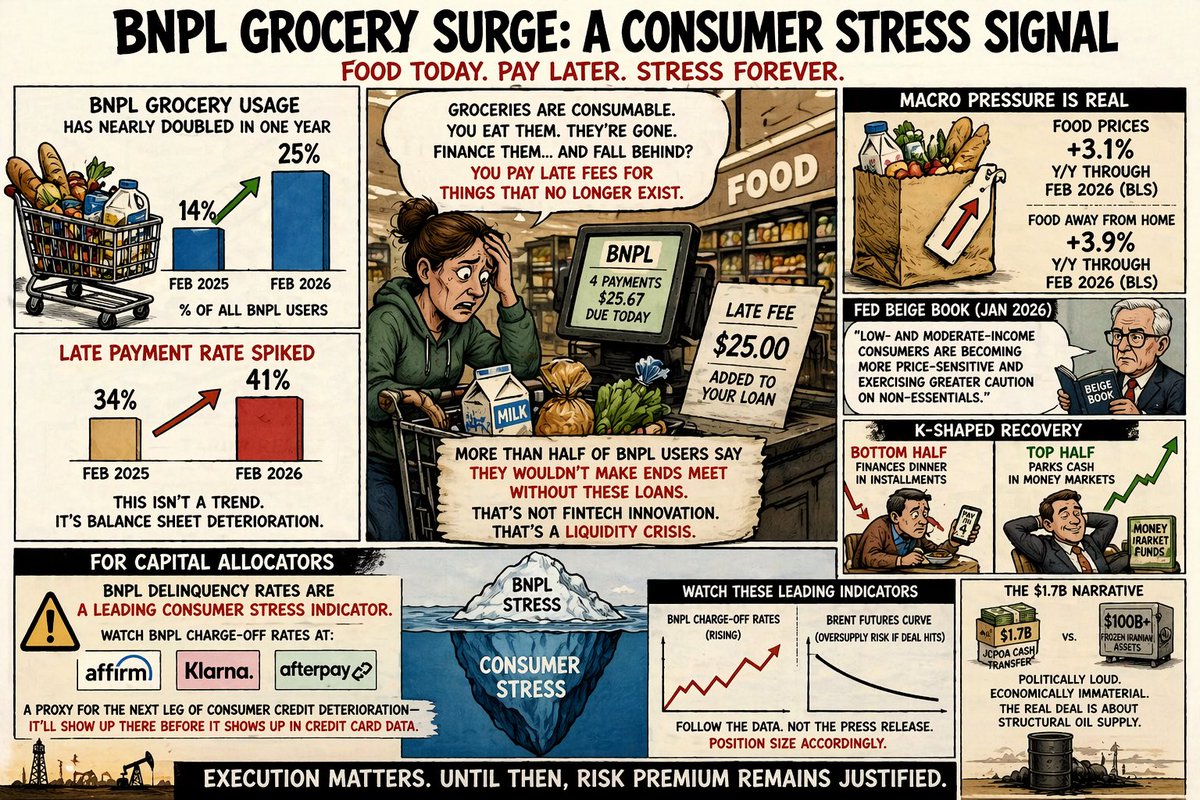
BNPL grocery usage has nearly doubled in one year, from 14% to 25% of all BNPL users, while the late payment rate jumped from 34% to 41% in the same period. That is not a behavioral trend. That is a balance sheet deterioration signal at the household level.
The math is straightforward: groceries are consumable. You eat them. They’re gone. If you’re financing food on an installment plan and falling behind on that loan, you’ve paid a premium in late fees and stress for goods that no longer exist.
More than half of BNPL users now say they wouldn’t be able to make ends meet without these loans. That’s not a fintech adoption story. That’s a liquidity crisis dressed in a checkout widget.
On the macro: food prices rose 3.1% year-over-year through February 2026 per BLS, with food away from home up 3.9%. Meanwhile, the Fed’s Beige Book for January 2026 notes that low- and moderate-income consumers are becoming more price-sensitive and exercising greater caution on non-essentials.
Wage gains remain sharply skewed toward higher-income households, producing a K-shaped recovery where the bottom half finances dinner in installments while the top half parks cash in money markets.
For capital allocators: BNPL delinquency rates are a leading consumer stress indicator. Watch BNPL charge-off rates at Affirm, Klarna, and Afterpay as a proxy for the next leg of consumer credit deterioration. It will show up there before it shows up in credit card data.
@unusual_whales BNPL grocery usage has nearly doubled in one year, from 14% to 25% of all BNPL users, while the late payment rate jumped from 34% to 41% in the same period. That is not a behavioral trend. That is a balance sheet deterioration signal at the household level.
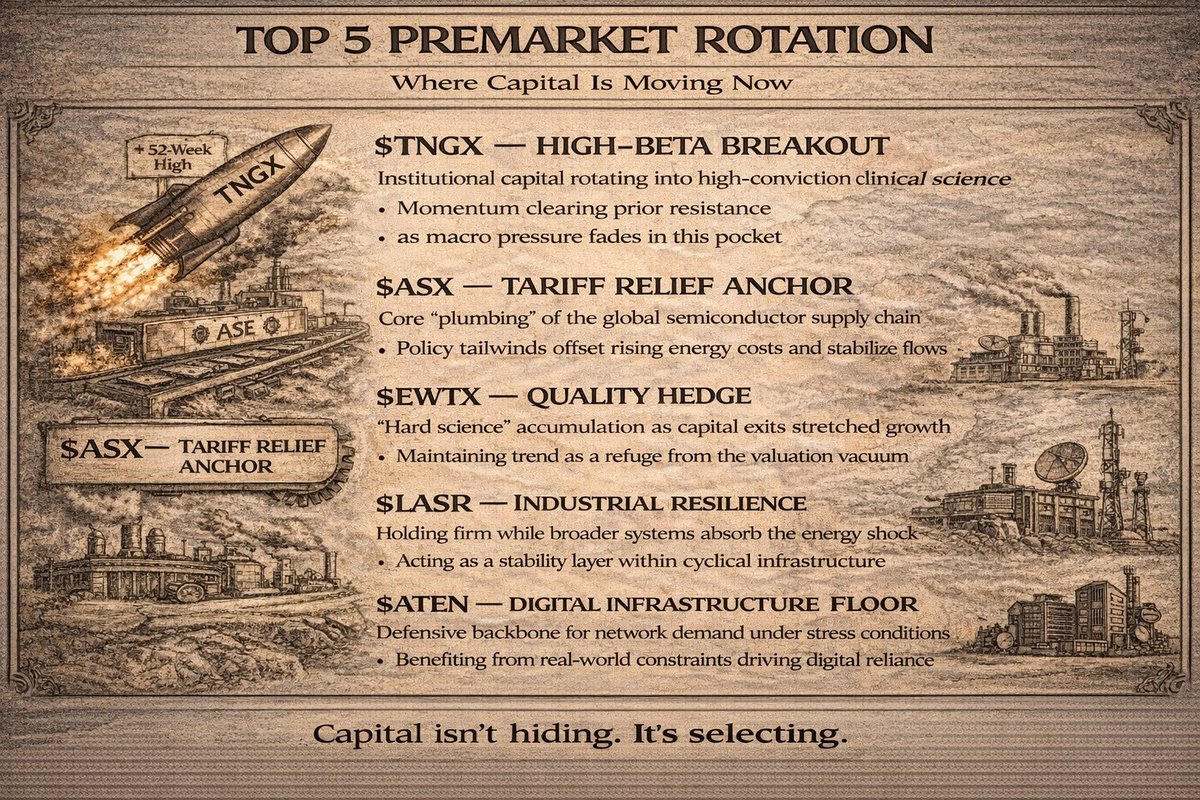
🖥️ $ATEN DIGITAL INFRASTRUCTURE FLOOR
Defensive backbone for network demand under stress conditions
Benefiting from real-world constraints driving digital reliance
🧬 $EWTX QUALITY HEDGE
“Hard science” accumulation as capital exits stretched growth
Maintaining trend as a refuge from the valuation vacuum
🧱 $LASR INDUSTRIAL RESILIENCE
Holding firm while broader systems absorb the energy shock
Acting as a stability layer within cyclical infrastructure