The Story of How a Warrior on Horseback Saved Motherland: An Analysis of Militarized Masculinity and National Identity in Azerbaijani History Textbooks
https://t.co/HGO7mN1nT4
Biennale du CERI – Sciences Po
Nous avons le plaisir de vous inviter à la session :
« Gouverner les acteurs transnationaux en contexte illibéral : diasporas et sociétés »
Intervenant(e)s : • Françoise Daucé (EHESS) • Jérôme Doyon (CERI–Sciences Po / CNRS) • Altay Goyushov (CERI–Sciences Po / CNRS) • Gilles Vernier (CERI–Sciences Po / CNRS)
Modération : • Thomas Lacroix (CERI–Sciences Po / CNRS)
Date : 3 juin 2026 Horaire : 09h00 – 11h00 Lieu : Salle K011, Sciences Po, 1 place Saint-Thomas-d’Aquin, Paris
Inscription : https://t.co/yRBdhtEFIp
The Other Side of the Pipe Fri, June 12 | Idrija Cinema
Three activists join forces to resist the construction of a gas pipeline which, with the support of the European Union, severely disrupts the lives of local communities from Azerbaijan to southern Italy.
Time & Location
June 12, 2026, 7:00 PM – 8:20 PM Idrija Cinema, Trg Sv. Ahacija 5, 5280 Idrija, Slovenia
Description
The Southern Gas Corridor, stretching 3,500 kilometers from Azerbaijan to southern Italy, is one of the largest energy projects in Europe. Its construction has deeply disrupted the lives of people along its route. Greek farmer Themis, retired teacher Ippazio, and young activist Giacomo each experience the consequences of this intervention in their own way, leading them to join forces in a global struggle against the project. Despite uncertainty and fear, they are driven by a profound desire to protect the environment, democracy, and European values. What unfolds before us is an intimate portrait of a struggle that is still ongoing.
Director’s Statement
“The Southern Gas Corridor ranks among the largest energy projects in the European Union. During its construction across several countries, it enjoyed broad political support. The film sheds light on the personal stories of residents in Italy and Greece who courageously opposed the pipeline for environmental and political reasons — and paid a high price for their courage.
The Azerbaijani intellectual Altay Goyushov also draws attention to the importance of choosing energy partners wisely, offering a valuable perspective and emphasizing that the European Union’s global policies must also reflect its values. This is precisely why these stories need to be heard, especially today, as policymakers search for new routes for gas distribution in Europe — primarily from Africa, the Arab states, and the Middle East. I am convinced that similar stories will continue to repeat themselves. People who oppose the European Union’s political and energy projects will have to face serious consequences — but through their courage, they will defend the fundamental values of democratic Europe.”
The Other Side of the Pipe
Marko Kumer Murč, Rusaalka Films, Incipit, Film Factory, 52 or 75 min, 2024
https://t.co/7ID4J5po1Q
I appear in the documentary Na drugi strani plinovoda (“On the Other Side of the Pipeline”), directed by Marko Kumer Murč.
The film examines the Southern Gas Corridor and its political, environmental, and social consequences across Europe — from Azerbaijan to southern Italy. My contribution focuses on the question of whether European energy policy can be separated from democratic values and human rights.
https://t.co/K3xub438an
Guests of the UN Urban Forum in Baku: we have a saying in Azerbaijani — “üstü bəzək, altı təzək” (“decorated on the outside, rotten underneath”). It perfectly captures the urban beautification and “amelioration” projects of Aliyev’s government: polished facades masking deeper structural problems.
Yesterday, a young jailed Azerbaijani scholar, Bahruz Samadov, accused of treason by the Azerbaijani authorities because of his dedication to peace between Armenia and Azerbaijan, appealed to civil society representatives and conscientious individuals attending the UN World Urban Forum in Baku to attend his court hearings.
The Azerbaijani authorities have already shown their unease over this call. Now it is the turn of those whom Bahruz called “conscientious individuals” to show whether they truly care.
From Bahruz Samadov:
"I invite all civil society representatives and conscientious individuals who will be coming to Baku for the World Urban Forum to my Supreme Court hearing that will take place on 21 May at 12:00.
I would like to emphasize once again that every day I spend in a closed-regime prison has a serious negative impact on my health and my eyesight, and I consider this as ongoing torture.
I will dedicate my court speech to the cherished memories of Elbay Karimli, Bayram Mammadov, and Mehman Galandarov."
For context, both Elbayi Karimli (2025) and Mehman Galandarov (2016) reportedly committed suicide in prison, while Bayram Mammadov died under dubious circumstances 2 years after his release from prison.
By Atakhan Abilov
In 2024, Azerbaijan’s delegation was excluded from the Parliamentary Assembly of the Council of Europe due to its long-standing failure to fulfill the obligations it had undertaken before the Council of Europe. This decision represented a delayed political response to systemic violations that had been tolerated for many years. For a long time, the Council of Europe had remained largely passive in the face of Azerbaijan’s persistent breaches, limiting itself to formal statements. The Azerbaijani case demonstrated that while international institutions may tolerate deviations from normative principles up to a certain point, such a situation cannot persist indefinitely, and a response ultimately becomes inevitable.
https://t.co/pAcbAebdY5
Azerbaycan’da kime selam versem ekonomiden dert yandı. Özellikle son yıllarda halkın çok fakirleştiğini söylediler. Birine “acaba savaşın ve kurtarılan bölgeleri imar etmenin ekonomik yükünden mi” diye sordum. Yok dedi; “ilgisi yok, Aliyev ve çevresine para yetiştiremiyoruz, o yüzden”. Rastgele 4-5 kişiyle aynı muhabbeti yaşadım, hepsinin dedikleri üç aşağı beş yukarı aynıydı; fakirlikten dert yandılar, Aliyev ve çevresinin nasıl zenginleştiğinden bahsettiler. Birisi, Karabağ zaferinden sonra daha da pervasızlaştığını artık halkı hiç umursamadığını söyledi. Bir diğeri ise “ne zaman sizinkinin kucağına oturdu, bu da ona benzedi, eskiden bu kadar değildi” dedi. Bunu diyen kişiyle çok keyifli bir sohbet yaptık. Birbirimize karşılıklı olarak kendi ülkelerimizde olan vergilerden bahsettik hangisi kimde var kimde yok karşılaştırdık. Vardığı sonuç Türkiye’de daha çok vergi olduğuydu ama “bizimki de sizinkinden ne görüyorsa yapıyor, o vergilerden haberi olursa hemen buraya da getirir.” diye ekledi. Bir başkası da “sizinkine özeniyor, onun gibi olmaya çalışıyor” demişti. İkisine de Erdoğan’ı sormuştum, burada sevilir mi diye; ikisi de sevilmez dedi. Vergileri kıyasladığımız abi, Erdoğan’ın dini kullandığından epey bahsedip bizdekinde en azından o yok dedi.
Uygulama üzerinden taksicilik yapan bir başkası, arabaya girdiğim gibi “Gardaş Türkiye’de durumlar nasıl diye sordu” ama bu soru aslında içini dökmek için bahaneymiş anlaşılan çünkü benim cevabımla hiç ilgilenmeden kendisi anlatmaya başladı. İlk cümlesi “Ben artık ölmek istiyorum, ölüp Hz. Muhammed’e kavuşmak istiyorum. Bıktım artık böyle yaşamaktan. Evde üç çocuğum var, para kazanabilmek için eve gidemiyorum. 24 saat taksicilik yapıyorum, aralarda takside uyuyorum, eve sadece günde bir saat yemek için uğruyorum.” diye gözleri dolarak anlatmaya başladı. Halkın ne kadarı bu durumda diye sordum; 1 milyon kişi rahat yaşıyordur ama geri kalan herkes sıkıntıda dedi. “Gençler Rusya’ya, Avrupa’ya kaçıyor, kızlar fahişelik yapıyor, sabaha kadar fahişe taşıyorum ben. Neft zengini bir ülkede halk nasıl bu halde olabilir?” diye sıraladı. Neden böyle diye sorunca cevabı yine aynı oldu; “yukarıdakinin gözü doymuyor ki, her şey onun cebine gidiyor.” Trafikte beklediğimiz bir ara camları kapatıp fena sövmeye başladı. Bir baştakilere, bir polislere… Polisleri sordum, daha da küfür etti. Bizdekiyle aynı şeyleri anlattı; milleti nasıl acımasızca dövdüklerini, sosyal medyada aleyhe bir şey yazarsan nasıl alıp götürdüklerini… Biz “iki devlet tek millet” diyorduk ama devlet de tekmiş meğer dedim. Savaş sayesinde desteği artmadı mı diye sordum. Savaş öncesi zaten tepki çokmuş, zafer kazanınca ilk başta tepki azalmış ama fazla sürmemiş, millet yoksulluktan bıktı artık kanmıyor buna dedi. Herkes bu adamdan da ailesinden de bıktı usandı artık, görüsün bak dedi; “yakında Azerbaycan’da öyle bir inkılap olacak ki tüm dünya gıpta ile bakacak." Sonra yine umutsuzluğa kapılıp “ben ölünce bunların hiçbirine hakkımı helal etmeyeceğim, hiçbirine etmeyeceğim” diye söylendi.
Yine uygulamadan taksicilik yapan bir başka kişiye bu sefer ben ekonomiyi sordum: “çalışan para kazanır, çalışmayan kazanamaz” diyerek geçiştirdi ilk başta. Sonraları muhabbet ilerleyip samimiyetimi fark edince o da açılmaya başladı; “burada tepedekinin izin vermediği kimse zenginleşemez anca geçinir. Sadece onlara da para veriyorsan zengin olursun” dedi. Daha çok polislerden ve rüşvetçiliklerinden dert yandı, ceza ve rüşvet ödemekten illallah etmiş.
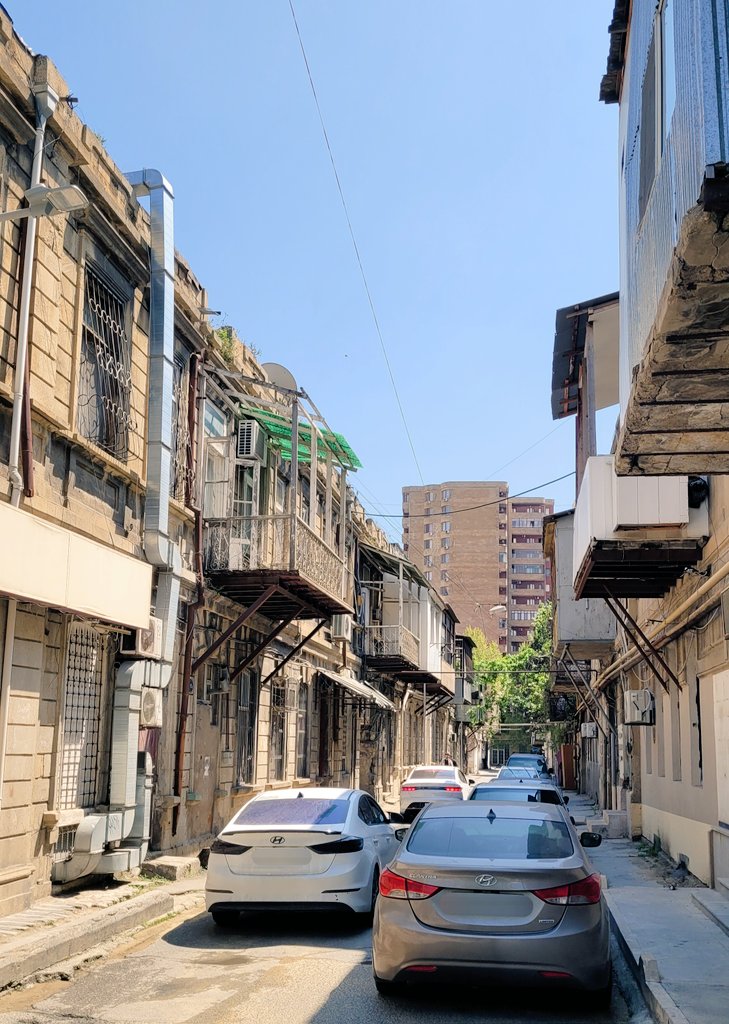
Kısacası benim gözlemlediğim kadarıyla Aliyev’e tepki çok büyük, insanlar yoksulluktan çok dertli ve bunun sebebi olarak da Aliyev ve çevresini görüyorlar. Bakü'nün merkezinin o ihtişamlı ve zengin görüntüsünün aksine halkın çoğu geçim derdinde. Nitekim merkezden dışarıya doğru çıkınca cepheleri yenilenip jilet gibi olan tarihi ve tarihi gibi görünen ama yeni yapılmış ihtişamlı binalar yerini Rus romanlarındaki kahramanımızın 50 kapiği daha olsa kiralayabileceği eski püskü evlere bırakıyor.
“This article is devoted to how Heydar Aliyev interpreted the major political transformations that took place in Azerbaijan between 1990 and 1993. It reflects how a Soviet bureaucrat who led both Soviet Azerbaijan and independent Azerbaijan perceived the struggle for power, how he defined and evaluated his own place and role within that struggle, and under what circumstances and conditions he returned to power.”
https://t.co/bCwGZi9CDo