@macaseroa@liberalcentrado@NeoLinkNavi No vives en el medio rural. A mi pueblo de 200 habitantes a 80 km de ninguna capital de provincia llegan las furgonetas de Amazon casa por casa
@GuerraenlaUni Que sí, que la Wikipedia es facha, 100000000 de votos para VOX, madre mía, algunos tenéis la cabeza caliente todo el día...será un error de algún revisor y ya está
@jose_basa Finales de 2021. Mi hipótesis 80% COVID + vacunas y 20% enfermedades mal tratadas. Habrá que ver si a finales de este año no se recupera y vuelve a la tendencia anterior, entonces habría que preocuparse
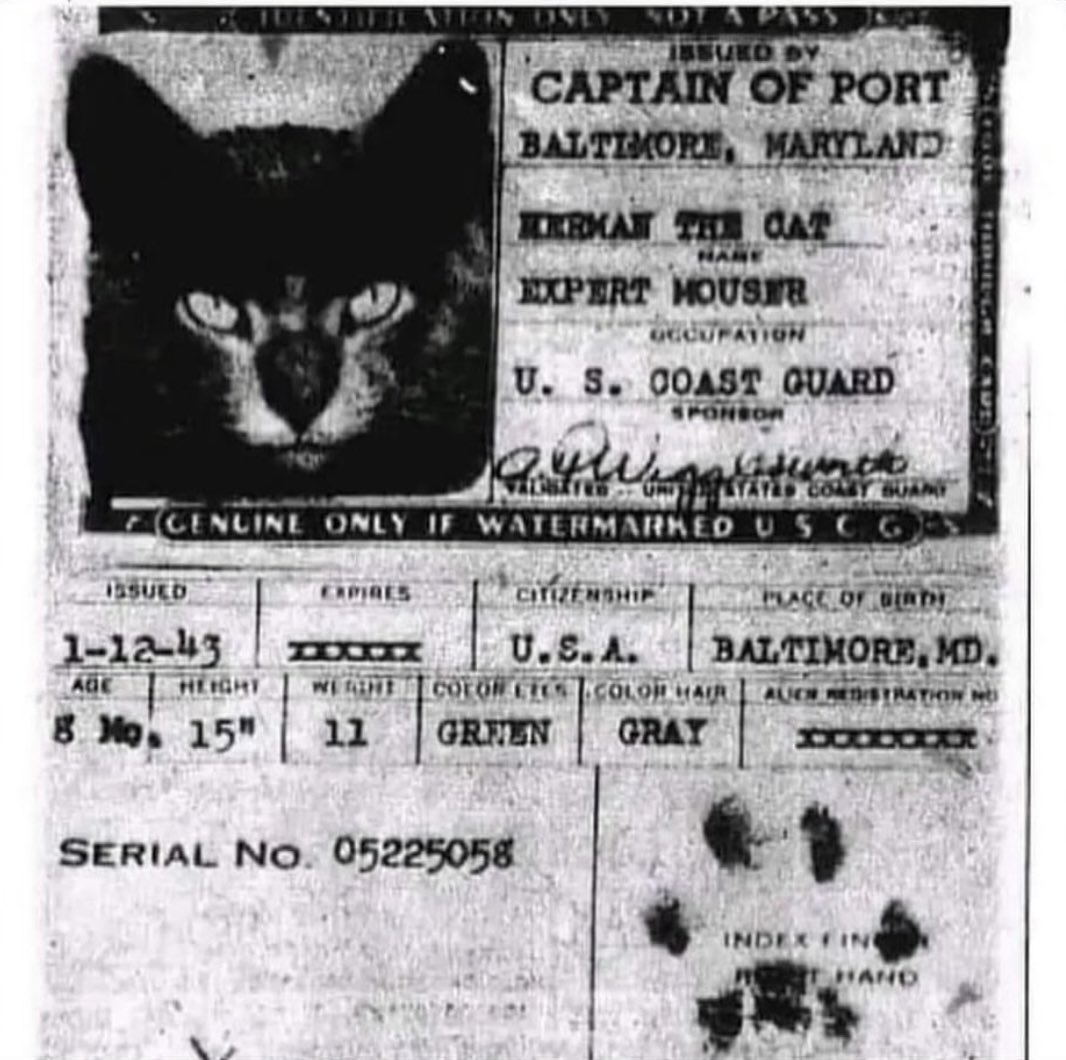
During the mid-20th century, cats played an important role on ships as skilled rodent catchers. Sailors realized that having cats aboard helped control the population of rats and mice, which were notorious for damaging supplies and spreading diseases. These ship cats became valued members of the crew and were even given passports to acknowledge their contribution and ensure their safety during international travels.
The passports for ship cats were a unique and lighthearted tradition. While they didn't serve any legal or official purpose, they were created to recognize the cats' role and provide a form of identification. The passports typically consisted of a small booklet with pages that included the cat's name, description, and an area for their paw print.
When it was time to depart or dock in a foreign port, the ship's captain or crew members would present the cat's passport to the authorities as a fun way to document the feline's presence onboard. The cat's paw print, obtained using ink or paint, was added to the designated page, providing a personalized and whimsical touch to the document. This practice not only amused the sailors but also showcased the camaraderie they shared with their feline companions.
While these ship cat passports were not legally recognized, they symbolized the close bond between humans and their feline shipmates. They served as a reminder of the cats' essential role in maintaining a clean and rodent-free ship, thus safeguarding the crew's provisions and health during long sea voyages.
However, as the mid-20th century progressed and maritime practices evolved, the reliance on ship cats diminished with the advent of more effective pest control methods. With the decline in the need for ship cats, the tradition of issuing passports gradually faded away. Nevertheless, the memory of these seafaring felines and their unique passports continues to fascinate and entertain those interested in maritime history and the unique relationships forged between humans and animals at sea.
@William77798030@alexchanberger@cerosietetres Qué es una guerra/batalla/pelea contra otras personas o animales? El hombre lleva compitiendo por supervivencia desde que comenzó su existencia
PERO QUÉ COJONES ES ESTO?
Alguien conoce a esta raspa de ANCHOA?
Qué se ha fumado este tío?
3K RT antes de las 19H y le hago un vídeo al y o n k i
#DesokupaManda
@Victorhercab Me suena mucho a la polémica con los pepinos. Yo creo que son las asociaciones o lobbies nacionales de agricultura para beneficiar su producto. Ya que no pueden tirar los camiones como hace 20 años hacen esto
@DMusanni@Gianluca_Bing They need a "surprise" event to cook such crash like COVID was. I don't think they will force sellers without panic. First step Binance, which is big one, but they need more gas to the fire. What will come next? Maker DAO will be enough to crash the whole market?