Bangladesh Protests Erupt Over Gang Rape of 12-Year-Old Schoolgirl in Khagrachari
AB News - September 26, 2025
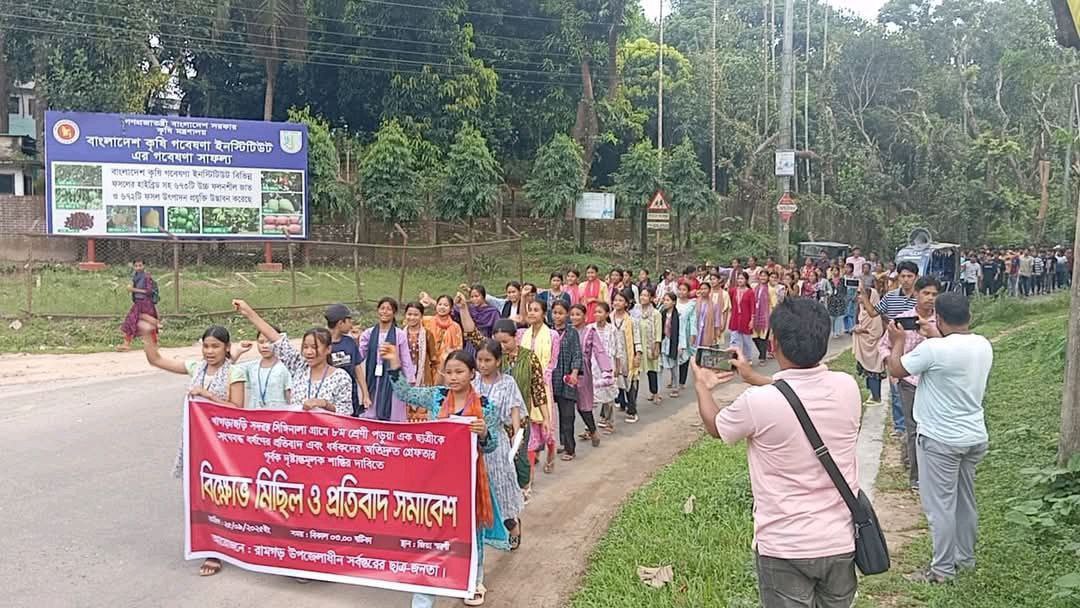
In Bangladesh, protests and marches have been held in response to the gang rape of an 8th-grade schoolgirl. In Khagrachari town, Bangladesh, marches and protests have begun in the hilly regions following the gang rape of a 12-year-old 8th-grade schoolgirl from the Rakhine ethnic group.
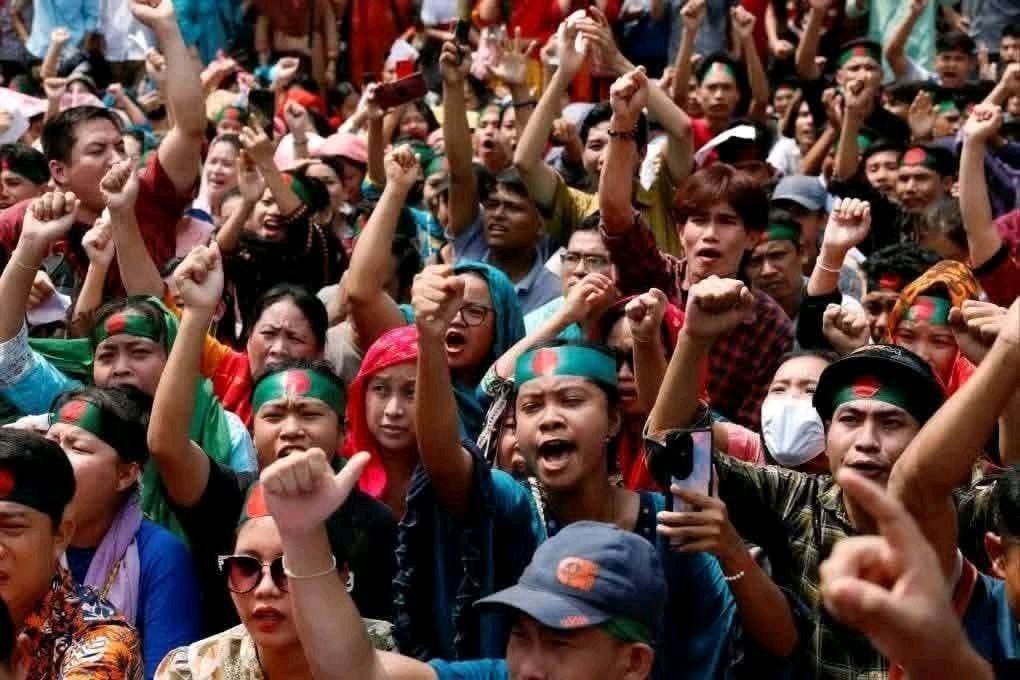
Additionally, students have staged protests in front of Dhaka University and Chittagong University. The main demands from the protesters and student unions are:
(1) Immediate arrest and punishment of the perpetrators.
(2) Withdrawal of the army from the hilly areas.
(3) "No army domination in the hilly areas," as they chanted during the protests.
The incident involved the girl returning home from tuition when she was gang-raped by three Bangladeshi youths. After the rape, they administered anesthetic liquid to her nose and mouth and fled the scene.
One schoolgirl said, "We come to school for education and safety. The news of a 12-year-old little sister being subjected to such a horrific gang rape deeply hurts and pains the hearts of schoolgirls. If education is the guide for the future, then every female student must have the right to move safely on the streets and at school. This place is not a battlefield." Currently, the Chittagong University Student Union is strongly protesting and demanding action against the perpetrators.
Some Bangladesh Border Guard (BGB) officials are providing military training to the terrorist groups ARSA and RSO to carry out acts of terrorism in Myanmar's Rakhine State.
Press Release from Arakan Army
September 11, 2025
On September 10, 2025, around 1:00 PM, approximately 80 Bangladeshi fishing boats illegally entered Arakan waters and engaged in poaching, located about 6.75 km west of Koetankauk village and 6.72 km west of Chainkharli village in Rathedaung Township, Arakan State. The Arakan Coast Guard pursued and managed to apprehend only five of these boats, bringing them to the shore around 7:00 PM for legal inspection and processing.
During the transfer, one of the five apprehended boats, carrying terrorists disguised as fishermen, attacked and killed one Arakan security officer and one coast guard member, seizing their weapons before fleeing to Bangladeshi territorial waters.
The Arakan Army has repeatedly apprehended and released illegal fishermen with mutual respect and issued multiple warnings, but this incident, involving blatant poaching and the murder of security personnel, constitutes a terrorist act, and we will take decisive action to address it, as announced herein.
#AAInfoDesk
🚨 Breaking News: Junta Airstrike Kills Dozens of Students in Kyaukphyu
Kyaukphyu, Rakhine State — September 12
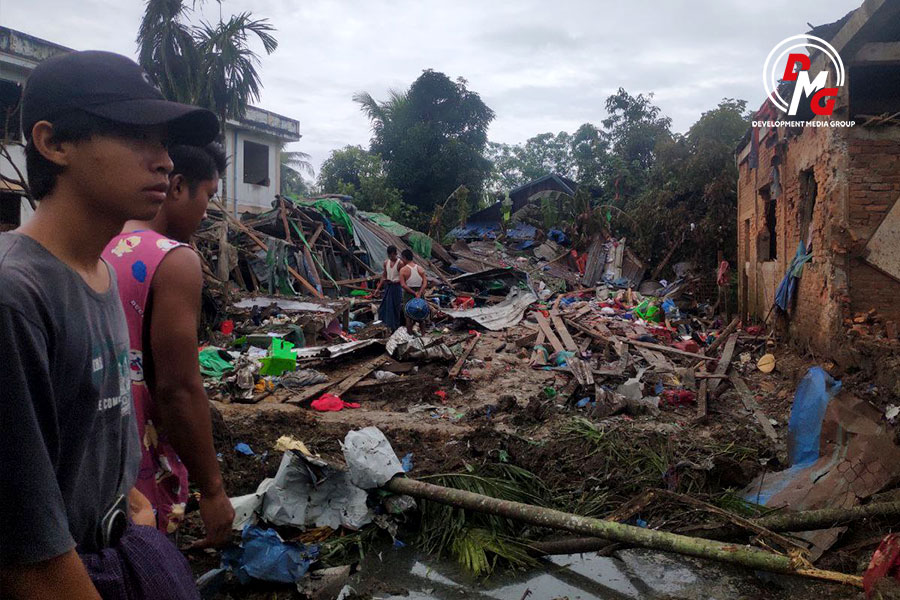
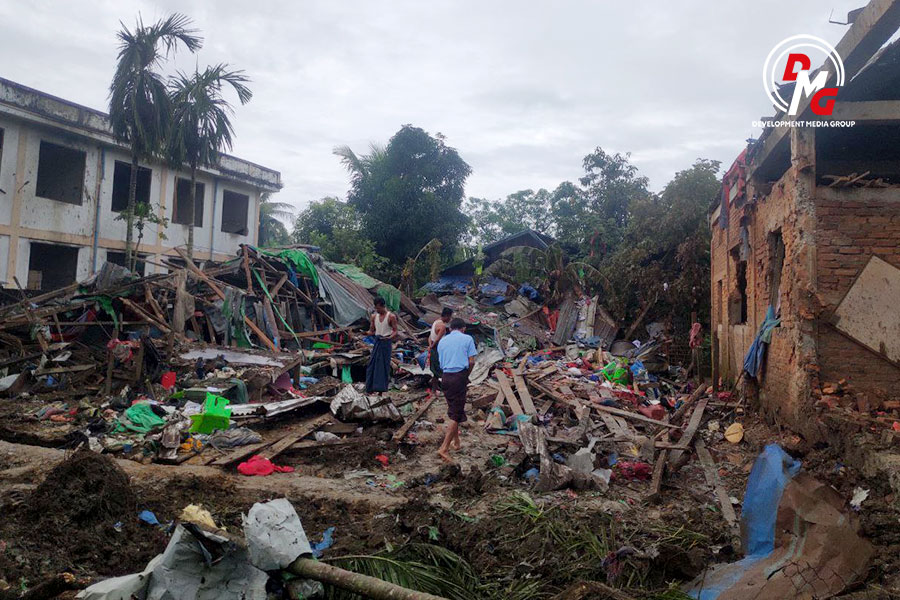
At least 17 students have been killed and more than 20 others injured after the Myanmar military junta bombed a private school dormitory in Tharyetapin Village, Kyaukphyu Township, in the early hours of Thursday morning.
The attack occurred around 1:00 a.m. when two bombs were dropped directly on the student housing facility. Local reports say several of the injured are in critical condition, with fears the death toll will rise.
In addition to the casualties, at least four homes were destroyed in the blast.
The strike comes just two days after a separate junta air raid on the Zeichaung mountain range in Kyaukphyu Township.
Residents and rights monitors warn that the military is increasingly targeting civilian areas, including schools and villages under Arakan Army control, leading to a growing toll of civilian deaths — many of them children and students.
Developing story — more updates to follow.
AA Condemns Junta’s Deadly Airstrikes on Schools and Civilian Areas in Arakan
The United League of Arakan (ULA) has condemned the Myanmar junta, referred to as the Fascist Terrorist Military Commission, for carrying out repeated airstrikes on schools and civilian areas in Arakan, including the September 12 attack on two private schools in Thayet Tapin Village, Kyauktaw Township.
According to the ULA, the airstrike at around 1:05 AM on September 12 killed 19 students, injured 22 civilians, and destroyed nearly all seven buildings in the school compound, including classrooms and nearby homes.
Previous Attacks in 2025
The ULA highlighted a series of major airstrikes this year:
August 25, Mrauk-U – 15 civilians, including 5 children, killed during a donation ceremony.
May 14–15, Kyauktaw – 8 killed, 14 injured.
May 13, Rathedaung – 12 killed, 23 injured, 31 homes destroyed.
January 18, Mrauk-U (Ramchaung) – 28 killed, including women and children, 25 injured.
January 8, Ramree (Kyauk Nyi Maw) – 26 killed, 12 injured, 398 homes destroyed.
ULA’s Call
The ULA urged international organizations to take decisive action against war crimes and vowed to pursue accountability for atrocities committed against the people of Arakan. It also warned of retaliatory measures against those responsible and called on civilians to remain vigilant as junta forces escalate strikes on non-military targets, including villages, hospitals, clinics, schools, and densely populated areas.
United League of Arakan (ULA) Statement
1942 Rakhine Massacre and Ethnic Cleansing Podcast
Transcript:
In May 1942, Rakhine people were subjected to brutal massacres and ethnic cleansing during Bengali-Rakhine riots in present-day Rakhine State, Myanmar. Sparked by violence involving British Indian soldiers and Bengali civilians, the conflict led to the destruction of over 200 Rakhine villages, mass killings, and forced displacement. Despite mediation efforts, thousands perished and survivors were driven to refugee camps, profoundly impacting Rakhine communities.
1. Origins of the 1942 Bengali-Rakhine Conflict
1.1. Host: To start our exploration of Rakhine history, let's set the stage for the events of May 13, 1942. Dr. Min, what were the underlying causes that led to the onset of the Bengali-Rakhine riots in Sittwe that year?
1.2. Guest: Certainly. The roots of the conflict intertwine with British colonial administration. British forces, particularly Indian soldiers, were stationed in Rakhine, and reports indicate these soldiers, sometimes collaborating with Bengali civilians, committed abuses against the Rakhine. This included violence and even rape, creating deep resentment and unbearable conditions for the local Rakhine population.
1.3. Host: That’s a striking example of how colonial governance could inflame local tensions. How did these initial incidents escalate into widespread violence across the region?
1.4. Guest: The unrest in Sittwe rapidly spread to other townships: Maungdaw, Minbya, Mrauk-U, and Kyauktaw. Although Rakhine leaders like U Pyinya Thiha and U Tha Kyaw attempted to mediate and calm the situation, the fabric of trust was already torn. Some Bengali leaders and refugees, feeling threatened, began organizing for self-defense, but this quickly escalated into coordinated attacks on Rakhine villages.
1.5. Host: So, would you say that a blend of colonial mismanagement and local fears about survival fueled cycles of retaliation?
1.6. Guest: Absolutely. It’s a classic case of a power vacuum—colonial officers failing to protect civilians, which emboldened both sides to take matters into their own hands. Tragically, this set the stage for ethnic cleansing and mass atrocities.
2. Escalation: Violence and Massacres in Maungdaw and Beyond
2.1. Host: Transitioning from initial unrest, let’s delve into how the violence intensified, particularly in Maungdaw. What do historical accounts reveal about the scale and nature of these attacks?
2.2. Guest: Evidence shows that by May 1942, all Bengali villages in Maungdaw Township mobilized. Over 20,000 Bengalis, many armed with machetes and crude weapons, surrounded Rakhine villages, cutting off roads and bridges. This siege strategy isolated entire communities, making escape nearly impossible.
2.3. Host: That scale is staggering. Are there examples or survivor testimonies that illustrate what families experienced during these attacks?
2.4. Guest: Indeed. Imagine a household trying to flee before dawn, only to be ambushed—losing all possessions and returning wounded. Thousands sought refuge in monasteries, like the Maha Kyan Phyu compound, which became overcrowded, echoing with the cries of terrified children. Many attempted to cross the Naf River, but with limited boats and heavy monsoon rains, escape was perilous.
2.5. Host: It’s reminiscent of other historical sieges, where civilians are trapped and infrastructure collapses. Did any authorities attempt interventions at this stage?
2.6. Guest: Efforts were made. Session Judge U Aung Tha Kyaw coordinated with British officers and Nepalese Gurkhas to escort refugees. However, logistical challenges and ongoing attacks meant only a fraction could be ferried to safety. By nightfall, those across the river witnessed Maungdaw ablaze—a haunting symbol of the destruction left behind.
3. Systematic Erasure: Destruction of Villages and Communities
3.1. Host: Now, let’s examine the aftermath: the destruction of Rakhine villages. Dr. Min, how widespread was the devastation, and what methods were used in this systematic erasure?
3.2. Guest: The scale was unprecedented. Nearly 100 named Rakhine and minority villages were razed, with detailed household counts lost to history. Attackers looted homes, seized food stores, and then torched entire settlements—sometimes not sparing even livestock. In Taungphunpyin, for example, over 500 people, including monks, were burned alive after seeking sanctuary in a monastery.
3.3. Host: That’s horrifying and tragically similar to events like the burning of Lidice in WWII Europe. What happened to survivors and those who managed to escape?
3.4. Guest: Many survivors fled by boat to Bangladesh or over the Mayu Mountains, only to face further violence. Some reached refugee camps in Dinajpur, India. But for those unable to escape, entire communities—elders, adults, children—were wiped out. Postwar, most villages were never rebuilt, and the loss of farmland and homes permanently destabilized the region.
3.5. Host: Were there any attempts to document or memorialize these communities, or did international observers respond at all?
3.6. Guest: International response was minimal, with most global historians neglecting these events. Today, only traces remain—charred fields and oral histories. The trauma persists, shaping Rakhine identity and memory.
4. Long-Term Impact and Lessons for Modern Ethnic Conflict
4.1. Host: As we bring our discussion to the present, how did the 1942 events shape the long-term trajectory of the Rakhine people and the dynamics of ethnic conflict in the region?
4.2. Guest: The 1942 massacres left deep scars—demographically, economically, and psychologically. Many Rakhine communities never recovered, and survivors’ stories fostered generational trauma and mistrust. Studies on ethnic violence, like those by Dr. Fearon at Stanford, show such events often entrench divisions and perpetuate cycles of fear.
4.3. Host: Do you see parallels between these historical events and more recent ethnic conflicts in Myanmar or elsewhere?
4.4. Guest: Absolutely. The mechanisms—breakdown of authority, use of siege tactics, targeting of civilians—mirror later crises, from Rwanda to Bosnia. It underscores the importance of early intervention, minority rights protections, and robust international response to prevent history from repeating itself.
4.5. Host: If you could suggest one major lesson for policymakers or peace builders today, what would it be?
4.6. Guest: The main takeaway is that ignoring early warning signs and failing to address grievances can have catastrophic consequences. Proactive mediation, inclusive governance, and transparent documentation are essential. The tragedy of 1942 should remind us all that silence and denial only fuel future violence. And there is also some accusation that British Army was the one arming the Muslims to counter-attack the advancing Japanese troops and Burmese nationalists but they turned their guns against the Rakhine people. I hope it will be explored in the future podcast.
The Fortify Right team only defends Muslim rights. It's not a team that protects the human rights of all people. It's truly astonishing that they don't see suffering people under the military dictatorship, but instead focus on the lies of the "Muslims".
@UN@ICC@FortifyRights
The Fortify Right team only defends Muslim rights. It's not a team that protects the human rights of all people. It's truly astonishing that they don't see suffering people under the military dictatorship, but instead focus on the lies of the "Muslims".
@UnitedNationsRU@ICC
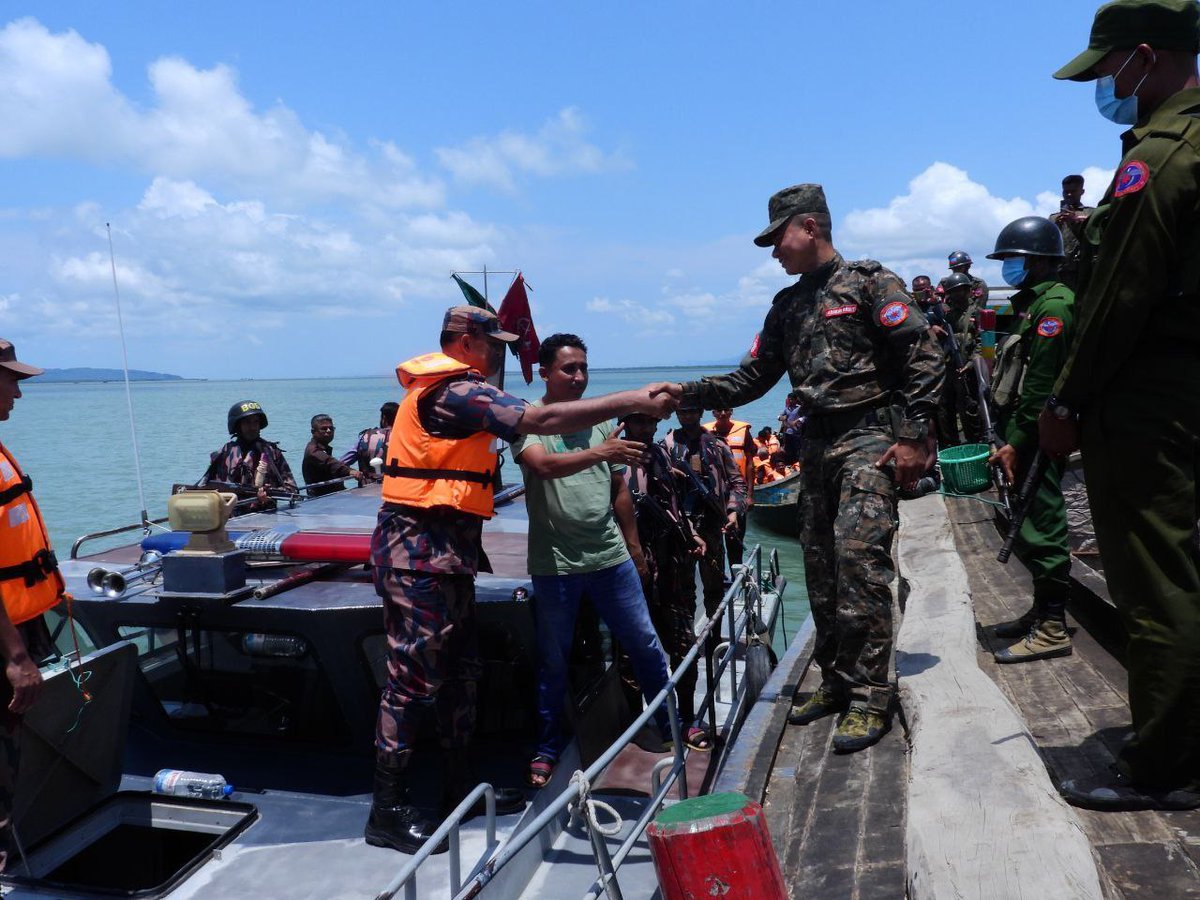
On April 16, 2025, at 12:00 PM, a total of 55 people from Bangladesh who were previously arrested for illegally crossing into Arakan territorial waters from Bangladesh to engage in illegal fishing were repatriated by boat from Maungdaw Township to the Bangladesh Border Guard (BGB).
11 individuals arrested on February 24, 2025
5 individuals arrested on January 25, 2025
15 individuals arrested on March 6, 2025
24 individuals arrested on April 8, 2025
#Myanmar #Arakan #Rakhine