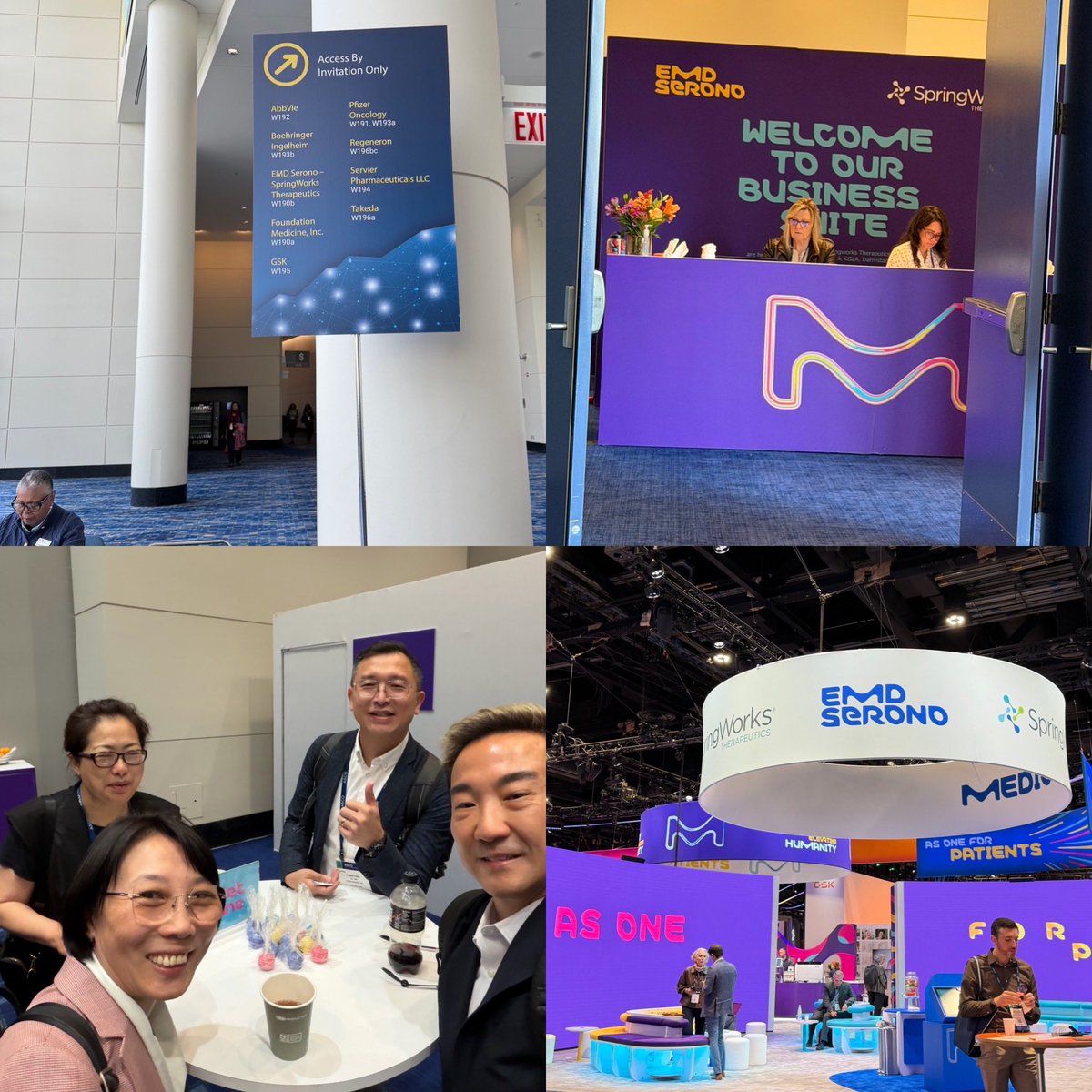
After 30+ years in biotech, I remain driven by one goal: making life-changing treatments accessible to those who need them most.
At @HuidaGene and @HanchorBio, we’re advancing in-vivo #CRISPR and next-gen immunotherapies for rare CNS, muscle, ocular diseases & solid tumors.
#GeneTherapy #GeneEditing #RareDisease #Immunotherapy
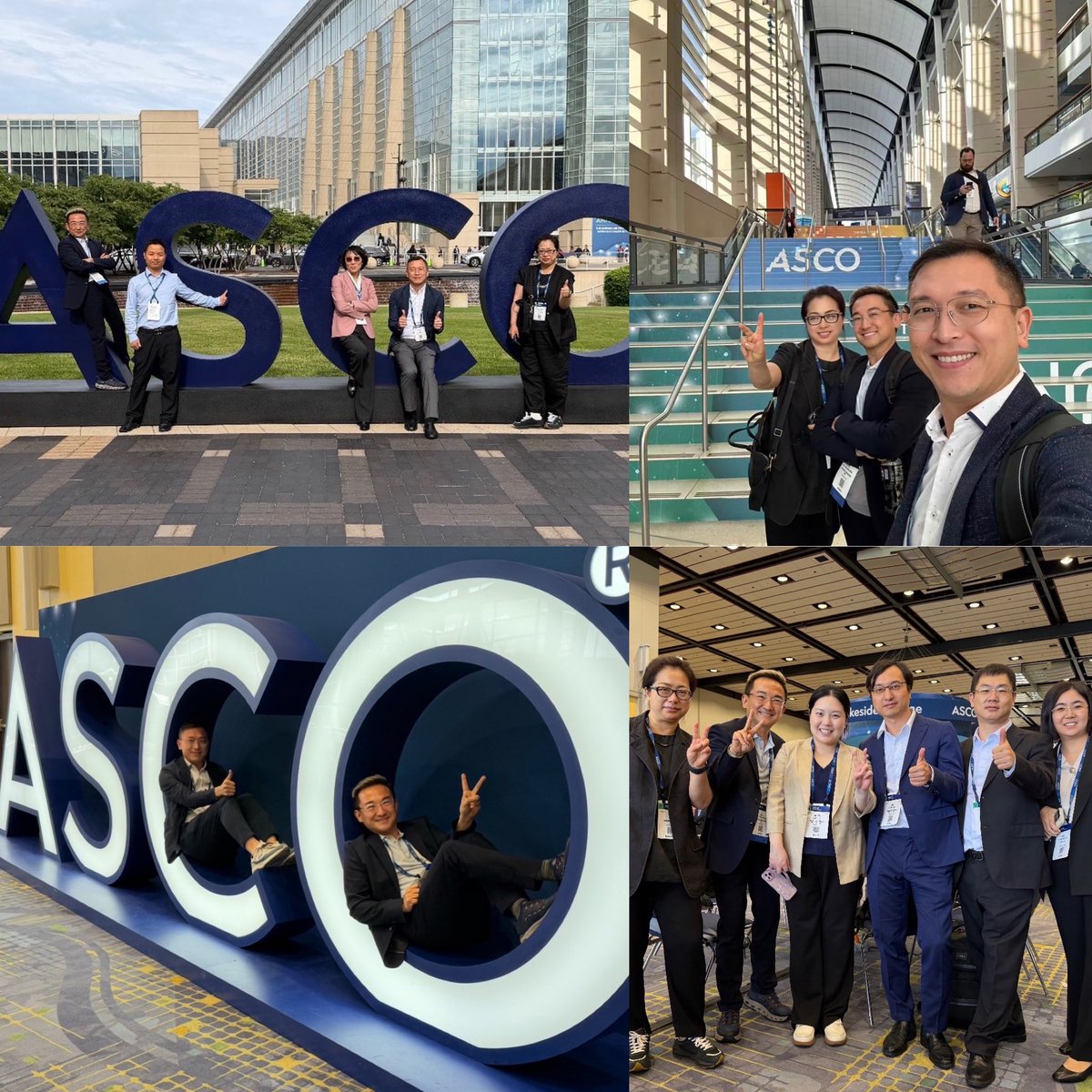
Leaving #Chicago after #ASCO .
From HanchorBio’s #TWSE IPO to ASCO in the same week — a reminder of how fast biotech moves, and how much teamwork sits behind every slide, dataset, and conversation.
Thankful, humbled, and excited for what comes next.
Grateful to see this @GeneOnlineNews interview published.
CD47–SIRPα is not an easy field — but I believe difficult biology deserves better engineering, stronger clinical discipline, and global execution.
Proud of the HanchorBio team. #HanchorBio#Biotech
https://t.co/0jxPe532et
From #tregs to #tumors: 2025 #NobelPrize for Foxp3 highlights the power of #Immunetolerance . At HanchorBio, we’re translating that legacy into #CD47-#SIRPα fusion therapies to help patients to re-enable immune attack to fight #cancers. Congrats-laureates & everyone advancing the field!
Mary Brunkow, Fred Ramsdell and Shimon Sakaguchi have been awarded the 2025 Nobel Prize in Physiology or Medicine for their groundbreaking discoveries concerning peripheral immune tolerance that prevents the immune system from harming the body.
The Nobel Prize laureates identified the immune system’s security guards, regulatory T cells, thus laying the foundation for a new field of research. The discoveries have also led to the development of potential medical treatments that are now being evaluated in clinical trials.
The hope is to be able to treat or cure autoimmune diseases, provide more effective cancer treatments and prevent serious complications after stem cell transplants.
#NobelPrize
@StphTphsn1@seeingwithsound Haha, I'll check with Prof. Yin Shen (Founder of @ZMTherapeutics ) on a review. For now, we're submitting our MOON trial to a pretigious journal. A review will certainly follow afterward.
Good question. It may look that way if you only track the early references, but the field has kept moving since 2021. Next-gen opsins and improved delivery systems have broadened the toolkit, while FiH opto trials have shifted from feasibility into long-term follow-up. At this stage, progress is less about splashy publications and more about translational work, trial registries, and conference updates. In short, I think the science hasn’t stalled; it’s simply maturing into the clinic, where progress is measured in patients and outcomes rather than PubMed counts. Just my 2¢.
It’s a very good point, @StphTphsn1 The ON/OFF split usually comes from photoreceptor -> bipolar synapse through glutamate signaling, which is lost in late-stage RP. Opto reintroduces light sensitivity downstream, but several mechanisms prevent uniform sustained ON: mosaic expression, opsin biophysics + spike adaptation, amacrine inhibition, and natural eye micro-movements constantly refresh temporal contrast. NHPs show structured receptive fields after optogenetic transduction (Chaffiol 2017), and in humans, restored object localization occurred without confusion (Sahel 2021). Fascinating biology.
Even if multiple classes express opsins, vision isn’t “all sustained ON.” Thus, expression is patchy, not universal (Gauvain 2021). Amacrine inhibition and center-surround circuitry preserve antagonism (Masland 2012). Opsin dynamics with adaptation keep responses transient and contrast-sensitive (Klapoetke 2014). Micro-saccades refresh contrast. NHPs and humans show stable receptive fields and function vision tasks, not perceptual confusion (Sahel 2021).
Patients in trials are late-stage RP with bare light perception or worse, legally blind at baseline (Boye 2021). Early human data show functional gains (orientation and object localization), not high acuity such as face recognition (Sahel 2021). The cortex adapts: V1 reweights input when structured temporal contrast is present (Gilbert & Li, 2021). No evidence of cortical “confusion” has been reported.
In addition, native ON/OFF logic comes from photoreceptor glutamate. In late RP that input is lost, but optogenetics re-implements light sensitivity downstream. Inhibition (amacrines), adaptation, and micro-saccades prevent tonic saturation (Shepley & Enroth-Cugell 1984). NHP work confirms structured receptive fields (Chaffiol et al., Nat Commun 2017). In humans, ChrimsonR restored visually guided behaviors without reports of confusion (Sahel 2021).
Intravitreal AAV delivery yields preferential (not absolute) targeting of RGCs or subsets of bipolars, guided by capsid tropism and promoters (Boye 2021). Each cell doesn’t get a unique “preprocessed image”. The same optical scene reaches all cells, with amacrine/bipolar circuits and the brain doing the heavy lifting (Euler 2014).
no, next-gene opto therapies don’t need “eye-frying” light. Red-shifted opsins (ReaChR, bReaChES) respond to room light (Sengupta 2019). First ChrimsonR patient used googles only to optimize activation, and trials remain within ICNIRP safety limits with no retinal injury reported (Sahel 2021). Preclinical studies confirm rod-opsins and red-shifted channelrhodopsins restore visual behavior at room-light or sub-ambient lux levels (De Silva 2011).
Thrilled to see this come full circle. From early BD talks last year to #asco2025 data just weeks ago—and now a global #licensing deal with @HenliusBiotech for HCB101. A proud moment for #HanchorBio, #Taiwan biotech, and macrophage #Checkpoint#Innovation. We’re just getting started.
https://t.co/pbG0HXzRLn
#CD47 #Biotech #Biotechnology #Technology #BusinessDevelopment #collaboration #Partnership #CancerResearch #science