@yabaleftonline Wait ✋️ before you judge; have you ever wondered why she has never cursed herself if this was a fabricated story 🤔 . If it's fine to curse him for ignoring you but you should also rain curse on yourself if he didn't have s3x with you nor the father of your child.
@renoomokri I am sure you are in Oxford In search of another lie to tell feed your CHIHUAHUA and not for this 10 people in a room 😂😂😂
God abeg no give me a lying-son like Reno God abeg o 🙏
@renoomokri It's obvious you're no longer relevant since you've been casted. You're only struggling & battling to be back but NO WAY! YOU'RE GONE!!! look at how Nigerians keep raining negative comments on all ur posts, prior to this; you'd have blocked them but so unfortunate u can't now😂
@renoomokri See your engagement crumbling it's over for you shameless liar. You blocked me cos I figured out and told pple you're a big liar and after a while you unblocked since you no longer have engagement. Mumu man I am blocking you right now and unfollow you. If possible report you!
@renoomokri I'm still surprised why you haven't blocked pple with all this truth(negative comments) against you🙄 cos you always block anyone revealing your secrets by checkmating your lies but all of a sudden you couldn't block them. Pple should report your account and bring it down. LIAR!!
Cannabis (Medical and/or Recreational)
Current Status: Cannabis is illegal under the Dangerous Drugs Act and Indian Hemp Act, with severe penalties for possession, cultivation, or distribution. However, it’s widely grown and used, contributing significantly to the informal economy.
Arguments for Legalization:
Medical Use: Proposed bills in 2019, 2020, and 2023 aim to legalize medical cannabis for conditions like cancer, with support from figures like the Ondo State Governor. Doctors have anonymously recommended it for patients.
Economic Potential: Legalizing cannabis could create a regulated industry, generate revenue, and reduce the black market. Farmers see it as a “leaf of wealth.”
Decriminalization: Studies show high usage (10% of adults) and suggest decriminalizing personal use to reduce stigma and prison overcrowding.
Challenges:
Social stigma links cannabis to deviance and mental health issues.
Law enforcement benefits from the illegal trade through bribes, resisting reform.
Lack of political will due to conservative values and fear of increased use.
Recommendation: Start with medical cannabis legalization under strict regulation, followed by decriminalization of personal use to align with global trends.
Firearms for Self-Defense
Current Status: Firearm ownership is heavily restricted under the Firearms Act, with licenses rarely issued to civilians due to security concerns.
Arguments for Legalization:
Security: Rising insecurity (kidnappings, banditry) has led to calls for citizens to defend themselves, especially in rural areas.
Constitutional Rights: Some argue responsible gun ownership is a fundamental right.
Challenges:
Risk of increased violence, crime, and militia activity.
Weak enforcement and corruption could lead to misuse.
Recommendation: Legalize limited firearm ownership for vetted individuals in high-risk areas, with rigorous background checks and training.
Cannabis (Medical and/or Recreational)
Current Status: Cannabis is illegal under the Dangerous Drugs Act and Indian Hemp Act, with severe penalties for possession, cultivation, or distribution. However, it’s widely grown and used, contributing significantly to the informal economy.
Arguments for Legalization:
Medical Use: Proposed bills in 2019, 2020, and 2023 aim to legalize medical cannabis for conditions like cancer, with support from figures like the Ondo State Governor. Doctors have anonymously recommended it for patients.
Economic Potential: Legalizing cannabis could create a regulated industry, generate revenue, and reduce the black market. Farmers see it as a “leaf of wealth.”
Decriminalization: Studies show high usage (10% of adults) and suggest decriminalizing personal use to reduce stigma and prison overcrowding.
Challenges:
Social stigma links cannabis to deviance and mental health issues.
Law enforcement benefits from the illegal trade through bribes, resisting reform.
Lack of political will due to conservative values and fear of increased use.
Recommendation: Start with medical cannabis legalization under strict regulation, followed by decriminalization of personal use to align with global trends.
Firearms for Self-Defense
Current Status: Firearm ownership is heavily restricted under the Firearms Act, with licenses rarely issued to civilians due to security concerns.
Arguments for Legalization:
Security: Rising insecurity (kidnappings, banditry) has led to calls for citizens to defend themselves, especially in rural areas.
Constitutional Rights: Some argue responsible gun ownership is a fundamental right.
Challenges:
Risk of increased violence, crime, and militia activity.
Weak enforcement and corruption could lead to misuse.
Recommendation: Legalize limited firearm ownership for vetted individuals in high-risk areas, with rigorous background checks and training.
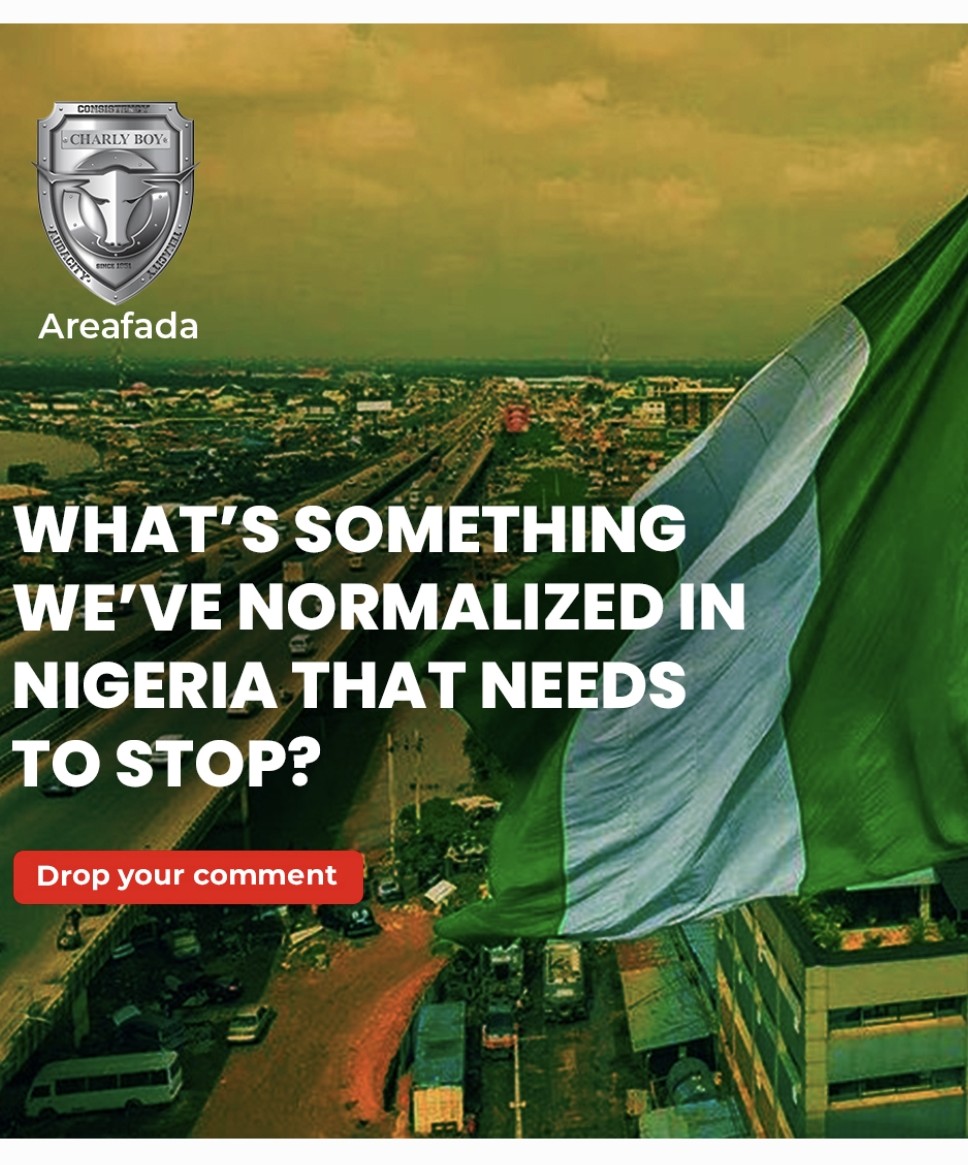
Nigerians, like any society, have cultural practices and social norms that some argue should be reconsidered. Based on discussions and observations, here are a few behaviors or practices that are often normalized in Nigeria but have been criticized and suggested to stop:
Corporal Punishment as Discipline: Flogging or harsh physical discipline of children, often seen as a standard parenting or teaching method, is widely normalized. Critics argue it can cause long-term psychological harm and perpetuate cycles of violence. There's a growing call for non-violent disciplinary methods.
Bribe-Taking and Corruption: Bribery, from small-scale "dash" to systemic corruption, is often treated as a fact of life in Nigeria. Many see it as a way to navigate bureaucracy or secure opportunities. However, this undermines trust, development, and fairness, and there’s a push to reject this culture.
Child Hawking and Labor: It’s common to see young children selling goods on the streets or engaging in labor to support families. While driven by economic necessity, this practice deprives children of education and safety. Advocates urge addressing poverty to end this normalization.
Gender-Based Expectations and Violence:
Rigid gender roles—like expecting women to endure domestic abuse or prioritizing male authority—are still normalized in parts of Nigeria. This contributes to gender inequality and violence. Awareness campaigns and legal reforms are challenging these norms.
Extravagant Social Ceremonies: Lavish weddings, funerals, or naming ceremonies are often prioritized, even by those who can’t afford them, due to social pressure. This can lead to debt and financial strain. Many suggest simpler, more sustainable celebrations.
@AlwaysOnline4us
Nigerians, like any society, have cultural practices and social norms that some argue should be reconsidered. Based on discussions and observations, here are a few behaviors or practices that are often normalized in Nigeria but have been criticized and suggested to stop:
Corporal Punishment as Discipline: Flogging or harsh physical discipline of children, often seen as a standard parenting or teaching method, is widely normalized. Critics argue it can cause long-term psychological harm and perpetuate cycles of violence. There's a growing call for non-violent disciplinary methods.
Bribe-Taking and Corruption: Bribery, from small-scale "dash" to systemic corruption, is often treated as a fact of life in Nigeria. Many see it as a way to navigate bureaucracy or secure opportunities. However, this undermines trust, development, and fairness, and there��s a push to reject this culture.
Child Hawking and Labor: It’s common to see young children selling goods on the streets or engaging in labor to support families. While driven by economic necessity, this practice deprives children of education and safety. Advocates urge addressing poverty to end this normalization.
Gender-Based Expectations and Violence:
Rigid gender roles—like expecting women to endure domestic abuse or prioritizing male authority—are still normalized in parts of Nigeria. This contributes to gender inequality and violence. Awareness campaigns and legal reforms are challenging these norms.
Extravagant Social Ceremonies: Lavish weddings, funerals, or naming ceremonies are often prioritized, even by those who can’t afford them, due to social pressure. This can lead to debt and financial strain. Many suggest simpler, more sustainable celebrations.
@AlwaysOnline4us