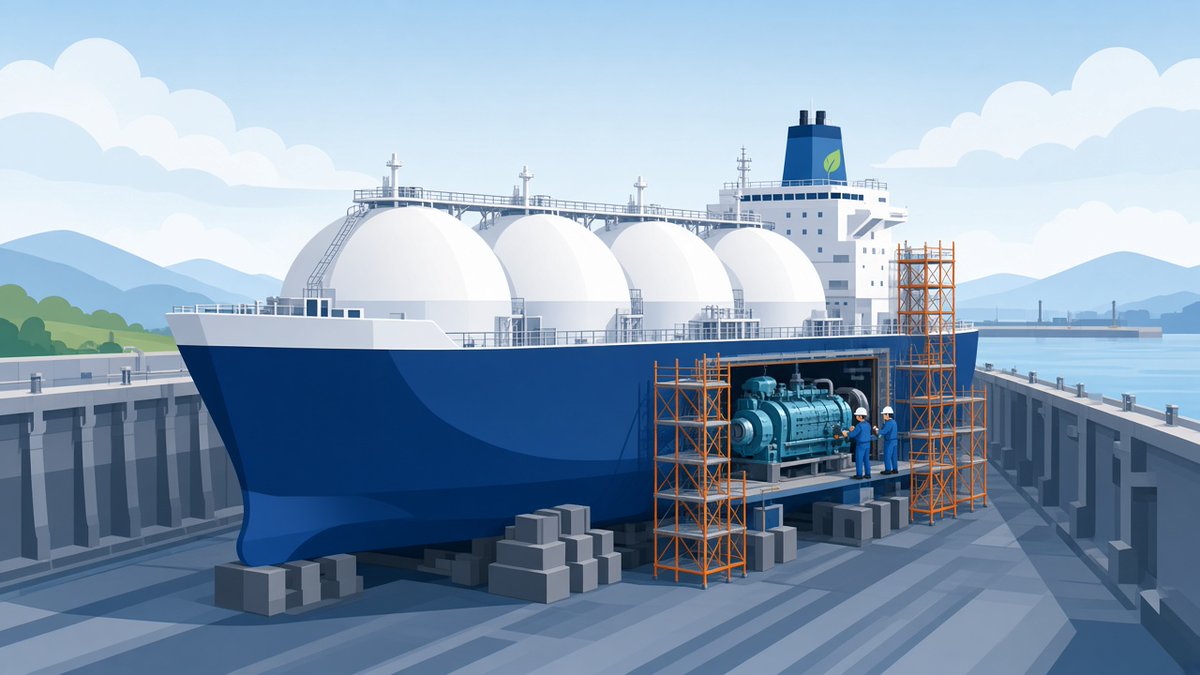
Hydrogen is hard to ship. Ammonia is much easier. So a growing plan in big ports is simple: ship ammonia, then turn it back into hydrogen on arrival.
H2SITE's Phantom project in the Port of Rotterdam, selected for EU Innovation Fund support, would make about 20 tons of hydrogen a day from ammonia, using a reactor that runs cooler than conventional crackers.
Between the ship and the cracker there is always a tank and a transfer. That part has to be just as safe.
https://t.co/565PrQE5va
India is testing an idea US farmers know well: putting ammonia straight into the soil.
Pilots under India's National Green Hydrogen Mission are injecting green ammonia about six inches below the ground on 10,000 acres across six states, as an alternative to spreading urea. India's renewable energy secretary says the goal is to cut fertilizer costs to around one third of today's levels and reduce losses when fields are irrigated.
Placing nitrogen right at the roots is standard practice in the US Corn Belt. What makes it work is everything before the field: pressurized storage, safe transfers and trained hands at the nurse tank. If these pilots scale, that last mile is where the real work begins.
https://t.co/uGLI433O60
Most ships go to the fuel. A new EU backed project wants ammonia fuel to go to the ships.
Færder Tankers plans a fleet of midsized gas carriers that can run on ammonia, carry it as cargo, and refuel other ships at sea on routes between India, the US Gulf Coast and northwest Europe. The aim is to move up to one million tons of ammonia fuel a year, with the first vessel expected in the second half of 2028.
It is a reminder that a cleaner fuel is only as good as its delivery. Every handover, from storage tank to hose to fuel tank, has to be planned and done safely, whether it happens at a farm, a port or out at sea.
https://t.co/GRMgcSdvzf
The tank trucks that carry propane and anhydrous ammonia get a new rulebook option today.
A PHMSA rule taking effect October 28 lets these pressure tanks be built and kept in service under a newer engineering code, ASME Section XII. PHMSA says tanks built this way should be better able to withstand rollovers. It is an option, not a mandate.
A lot of ammonia makes its final trip to farms and plants by road. Better built and better inspected tanks make that last mile safer.
https://t.co/8zxMU0778V
#ammonia #hazmat
Farmers are paying more for nitrogen this fall, and the cheapest form is also the one that needs the most care.
DTN's survey of U.S. farm retailers puts anhydrous ammonia at $987 a ton, up 18% from a year ago. All eight major fertilizers now cost more than last year. Per pound of nitrogen, though, anhydrous is still the best deal at about $0.60, versus $0.73 for urea.
The catch is handling. Anhydrous ammonia is stored under pressure and moved in nurse tanks from the retailer to the field. When every pound counts, safe storage and careful delivery keep that value from leaking away.
https://t.co/DVlT8pilWm
Japan is building an ammonia fuel chain, not just an ammonia ship.
Seven Japanese companies, including NYK, K LINE, JERA and four shipbuilders, announced today that they will build four ammonia fueled car carriers and the supply chain behind them: green ammonia supply, loading facilities at the Hekinan terminal in central Japan, and a dedicated bunkering vessel built to prevent leaks. The first ships are targeted by fiscal 2030.
That is the right order of thinking. A cleaner fuel only works when there is a safe place to store it near the port and a safe way to hand it over, every single time.
https://t.co/V2MiYudV7H
The air now holds more carbon dioxide than ever recorded.
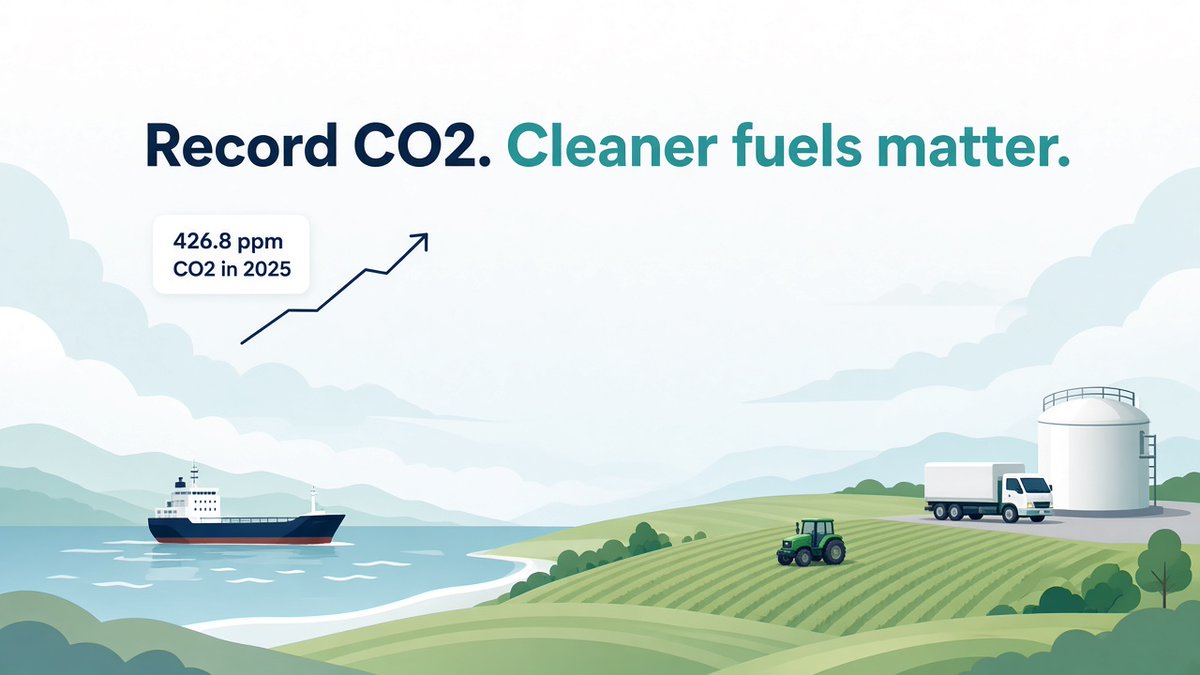
The World Meteorological Organization reported today that CO2 averaged 426.8 parts per million in 2025, a new record and about 153% of preindustrial levels. Methane and nitrous oxide hit new highs too. When WMO first published this report in 2004, the number was 377.5.
That is why cleaner fuels for ships, power plants and farms matter. Ammonia is one of them. It contains no carbon, and when it is made with clean energy it can cut a lot of emissions.
But a cleaner fuel only helps if it can be stored, moved and handed over safely, close to the people who use it. That last mile is where AmHyTech is focused.
https://t.co/aqrAtHVo3q
#climate #ammonia
An ammonia powered ship just took on fuel from another ship, and the most important part was the safety planning.
The bunker vessel Sheng Yongle transferred 1,000 metric tons of green ammonia to https://t.co/IAtJxNJSAj's bulk carrier Mineral Europa in Zhoushan, China. The fuel moved as a cold liquid, about minus 48°C, through a single flexible hose.
Behind that hose were risk assessments, leak detection, emergency response plans and procedures for every step of the handover. That is the work every new ammonia fuel route has to get right, from the port all the way to the last tank.
https://t.co/NuyjmP9aWW
#ammonia #shipping
A plant in Japan just started making ammonia from local natural gas and putting the carbon back underground.
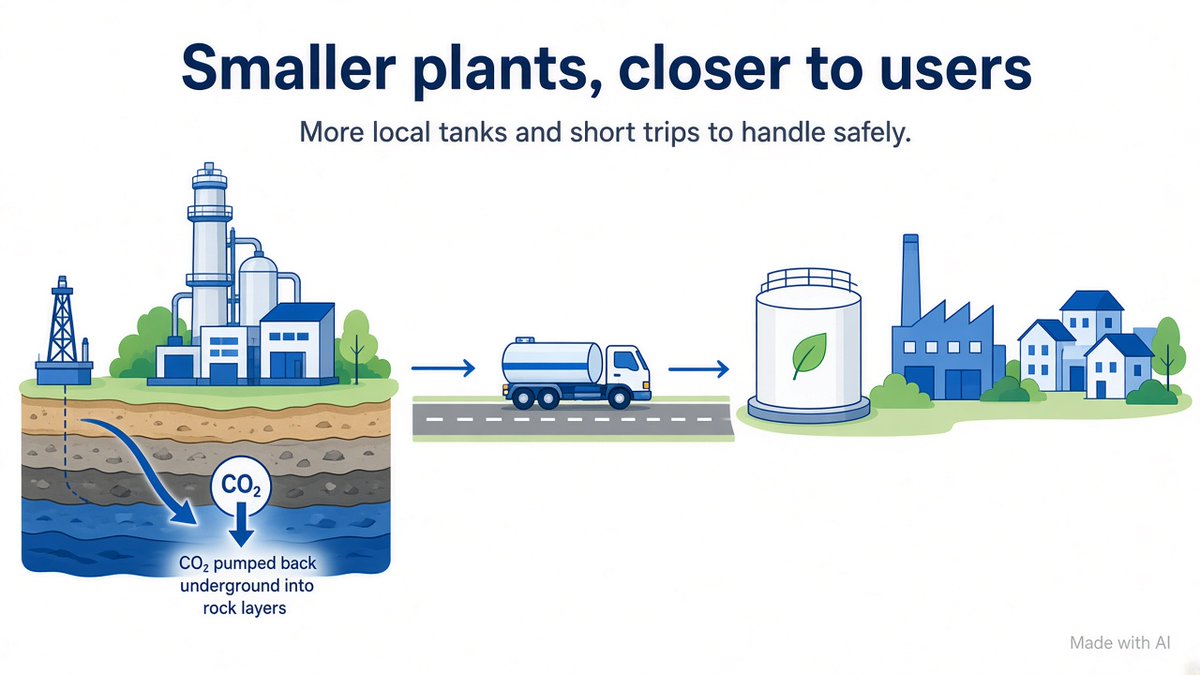
INPEX began producing blue ammonia at its demonstration project in Niigata and is now supplying it to Mitsubishi Gas Chemical. The CO2 from the process is injected into a depleted gas field nearby. The plant also uses a newer catalyst that makes ammonia at lower heat and pressure than the century old Haber Bosch process, which could mean smaller plants built closer to the people who use them.
Smaller plants closer to users mean more local tanks, more short trips and more handovers. That last stretch has to be just as safe as the plant itself.
https://t.co/KjYz2iIWIQ
A farmer cooperative is putting its own money into making ammonia.
GROWMARK, which serves nearly 400,000 farmers and customers, just took a minority stake in Wabash Valley Resources. The Indiana plant is designed to make 500,000 metric tons of anhydrous ammonia a year for the Eastern Corn Belt, with operations expected in 2029.
When the people who sell fertilizer to farmers invest in making it, they are betting on reliable supply through the season. That supply still has to be stored, moved and handed over safely between the plant and the field.
https://t.co/Yev9NtJqxj
#ammonia #fertilizer
Ammonia may soon be made a lot closer to the farm.
USDA last week selected TalusAg to place 20 small modular ammonia units at 11 sites in seven farm states. According to USDA, they are expected to make about 130,000 tons of anhydrous ammonia a year.
A shorter trip is good news for farmers. The last steps stay the same: tanks that hold ammonia safely until fall or spring application, and nurse tanks that carry it down rural roads to the row.
https://t.co/kmC1ZZg6i0
#ammonia #fertilizer
Ports used to sell ships one kind of fuel. The busiest ones are turning into multi fuel stations.
Zhoushan in eastern China, one of Asia's busiest ship refueling hubs, now supplies marine biofuel, LNG, methanol and green ammonia. Officials say about 45,000 metric tons of biofuel have already been blended there, and this month the port handled the first commercial ship to ship refueling with green ammonia.
The part that gets less attention is everything behind the hose: the tanks, the storage and the supply routes for each fuel. Ships can switch engines over a few years. Ports have to be ready to store and hand over several fuels at once, safely.
That last mile is what we think about every day at AmHyTech.
https://t.co/WO1H6ZeCuN
About a fifth of the ammonia sold between countries normally passes through one narrow stretch of water.
A new S&P Global Institute report says roughly 29% of global urea trade and about 21% of merchant ammonia usually move through the Strait of Hormuz. With that route disrupted, the authors warn farmers in exposed regions may use less fertilizer or plant less, and food markets could feel it in 2027.
Fertilizer runs on a calendar. A cargo that shows up a few weeks late can miss the planting window entirely.
That is why supply that sits closer to the field matters: more storage near farms and ports, and more ways to deliver ammonia safely when the usual route is blocked.
https://t.co/jW4WWKbfrA
Almost every big data center has a row of diesel generators that sit idle for all but a few hundred hours a year. Their one job is keeping servers on when the grid fails.
A new Hydrogen Europe guide for data center operators says those backup fleets could switch to hydrogen, and even help the grid instead of just waiting for blackouts. Backup alone needs surprisingly little fuel, about 5 metric tons of hydrogen a year per megawatt by its estimate.
The catch is not the generators. The report says the hard part is onsite storage and reliable delivery, and it names ammonia as one of the clean fuels that is easier to store and handle than hydrogen gas.
That is the part we think about every day. Clean backup power is only as good as the tank behind it and the truck that refills it safely.
https://t.co/bIW7wJs81c
Why don't cargo ships just switch to clean fuel tomorrow? Mostly, it comes down to cost.
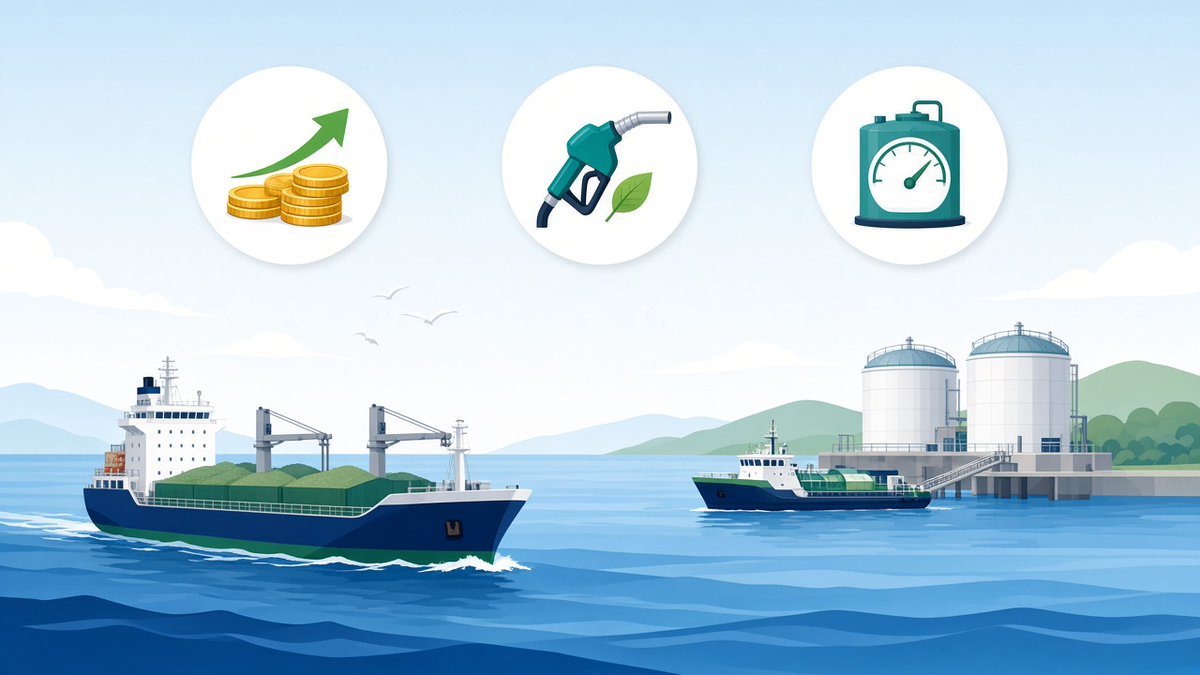
DNV estimates a new ammonia fueled ship costs about 15 to 20% more to build than a conventional one. Green ammonia in Europe runs roughly five times the price of diesel for the same energy. And ammonia needs nearly three times the tank space, so ships refuel more often.
So why are owners ordering these ships anyway? They are betting on long term cargo contracts, rising costs for emissions and tighter rules, especially in Europe. https://t.co/IAtJxNJSAj alone plans 21 ammonia powered ships by 2029.
More refueling stops mean more ammonia stored at ports and more transfers that have to be done right. That is the part we focus on: storing and delivering ammonia safely, all the way to the last tank.
https://t.co/mDW7DtyQmU
Singapore just wrote the safety rulebook before the ammonia fuel arrives.
The Ministry of Manpower released its first Ammonia Safety Guidelines this month, written for ammonia used as a clean fuel and hydrogen carrier. It covers how ammonia is stored in tanks, moved by truck, container, pipeline and ship, transferred between them, and handled in an emergency.
Ammonia itself isn't new. Industry has handled it for fertilizer, refrigeration and chemicals for generations. What's new is using it as fuel, which means larger amounts, more handovers and more people working near it.
Writing the rules before the volumes show up is the right order. Every new tank, truck and transfer point needs the same basics: good design, gas detection, clear procedures and trained people.
That last mile of tanks and transfers is the part we think about every day at AmHyTech.
https://t.co/iBtAUyvxQt
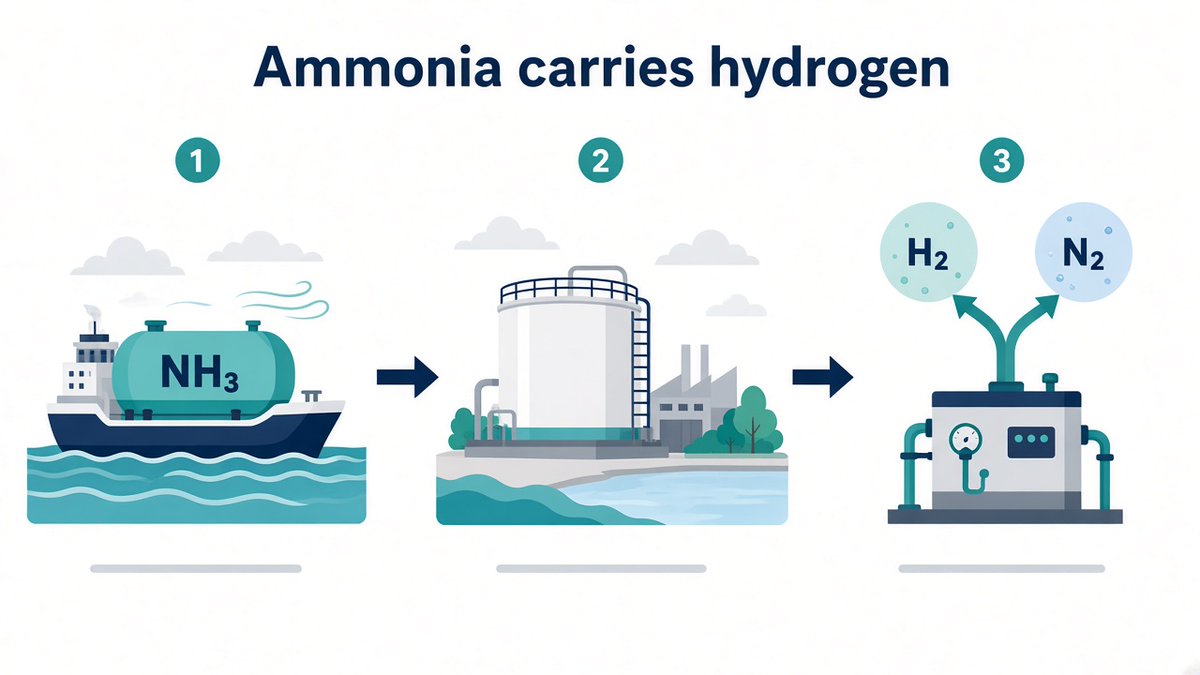
Hydrogen is hard to ship. Ammonia is much easier. So what happens when it arrives?
Amogy plans to test its ammonia cracking system on Singapore's Jurong Island in 2027, working with the research agency A*STAR. Cracking simply means breaking ammonia back into hydrogen and nitrogen right where the hydrogen is needed. The pilot unit is designed to make up to one ton of hydrogen a day under real industrial conditions.
This matters because ammonia already moves around the world by ship, so it can bring clean hydrogen to places that cannot easily make their own. Tests like this show whether that last step works at industrial scale.
Every one of those deliveries still ends at a tank, and that is where we focus: storing and handling ammonia safely before it becomes hydrogen.
https://t.co/GqD7Hq7wVV
Not every clean ship has to be a new ship.
Maersk Tankers' plan to retrofit four of its very large ammonia carriers so they can run on ammonia, the same cargo they already carry, has been selected for EU Innovation Fund support. The project expects to avoid more than 1.2 million tonnes of CO2 equivalent over ten years. Grant terms are still being finalized, and the company says going ahead depends on customer commitments.
Upgrading ships already on the water matters, because a ship built today can sail for decades. It also means more ammonia moving through ports and more fuel transfers that have to be done safely.
That is the part we focus on: storing and delivering ammonia safely, from terminal tank to ship.
https://t.co/jKqQt2XgxJ
Why do Midwest farmers watch soil thermometers before fall fertilizer goes on?
The rule of thumb is "fifty and falling." Farmers wait until soil four inches down is 50°F and cooling before they inject anhydrous ammonia. In cold soil, microbes work slowly, so more nitrogen stays put over winter for next year's corn instead of washing into streams. Iowa officials this week also urged inhibitors and cover crops to cut losses further.
Good for yields, good for water, and it saves money when ammonia costs this much.
It also means a lot of ammonia has to move in a short window once the ground cools. Safe storage near the farm and reliable last mile delivery help farmers hit that window.
https://t.co/15cmkmmFNC
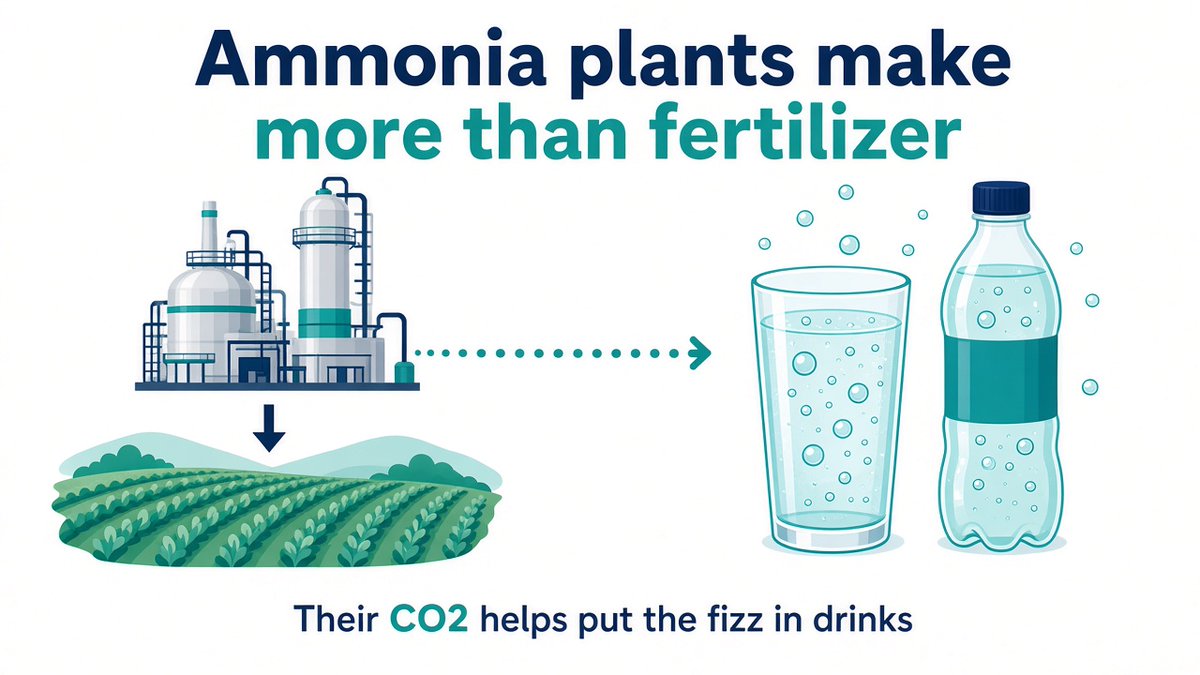
Ammonia plants make more than fertilizer. They also help put the fizz in your soda.
When ammonia is made from natural gas, carbon dioxide comes out as a byproduct. In Europe, that CO2 has been a major source for sparkling drinks, food packaging and food processing.
Now high gas prices have pushed Yara to cut European ammonia output, and its executives cite estimates that 25 to 28% of the region's ammonia is offline. One said it looks a lot like 2021 and 2022, when plant closures also squeezed CO2 supply.
Fewer local plants means more imported ammonia moving by ship, rail and truck. Every one of those tanks and transfers has to be safe. That last mile is where AmHyTech focuses.
https://t.co/oAC15jU8xG
#ammonia #fertilizer