Humanoids were built for kitchens and factories.
We built them for defense!
Today we're unveiling what our team has been working on: fully autonomous humanoids running Skylark's patented vision-reasoning-action stack — learning new skills from a few minutes of demonstration, then improving on their own, in the field, with no retraining.
No cloud. No data center. The learning happens on the robot.
The future of humanoids that science fiction imagined is here, and it's operational.
More to come. Menlo Park + Pune.
#Humanoids #DefenseTech #Robotics #AI #Autonomy
@heyshrutimishra Wild to watch—but once the sensors were destroyed, the humanoid would not have been able to function. This is tele-operation, not autonomy. The real breakthrough is a robot that can perceive, adapt, and keep operating on its own.
Model-Driven Autonomy in Action
Our drone autonomously executes the command: “Go through the cones.”
The model plans and performs the required skills sequentially: hovering → straight-line locomotion.
#ModelDrivenAutonomy#AIEnabledDrones#PhysicalAI#SkylarkLabs
Most autonomous drones follow fixed routes. We are developing Model-Driven Autonomy—systems that understand the environment, compose learned skills, and execute the right sequence of tasks as conditions change.
Autonomy should adapt in the field, not wait for a new plan.
#ModelDrivenAutonomy #PhysicalAI #DefenseTechnology #AutonomousSystems #DroneTechnology #ContinualLearning #SkylarkLabs
Thank you for the tag, Ankit, and great post.
One of the most important things in robotics for mission-critical applications is the acquisition of data on which the model can be trained. Obviously, the ability of the model to generalize and adapt for novel situations (which will most certainly appear when the model is deployed and has to operate on edge, without reliance on the outside world in the absence of internet or GPS) is essential.
In that case, a new class of model which can learn from limited data in the lab, can run on edge, and has the capacity to keep on learning unguided or unattended on device in real time without forgetting the knowledge it has learned would be the key mover to realize robotics for real-world mission-critical applications. We have been working on adaptive AI which solves this gap.
Robotics feels like a solved problem—until you talk to the people actually building it.
As @Amar_2407, founder of @SkylarkLabs (our Portco), likes to joke:
“If you go on Twitter, you were having lunch with your humanoid last week.”
Reality is very different.
Unlike LLMs, robotics has to solve intelligence and physics. Manipulation, controls, sensing, power, safety, hardware, manufacturing—every layer is hard.
The good news? The pieces are finally coming together:
• More capital than ever before
• Better talent entering the field
• AI unlocking physical intelligence
• Massive market demand waiting
We’re probably much closer to a robotics breakthrough than most people think.
The real question is whether countries like India will help build this future—or once again be late to the party.
I explore this in my latest @moneycontrolcom column.
https://t.co/Ne8O9UnSdI
#Robotics #PhysicalAI #DeepTech #AI #India
For the past three years, Skylark Labs has helped drones see, understand, and adapt in real time through our Continual Learning AI—and this technology is already being used in the field across defense, public safety, and critical-infrastructure applications.
Now, we are extending the same adaptive intelligence from perception to navigation, control, and action. The result is end-to-end autonomy and a new class of learning munitions that can track moving targets, adapt to changing conditions, and continue operating without relying on the cloud or a continuous operator link.
This is the future we have been building toward—and it is already here: https://t.co/W2amfGTIi0
#SkylarkLabs
#ContinualLearning
#EndToEndAutonomy
#AutonomousDrones
#LoiteringMunitions
#DefenseTechnology
#PhysicalAI
#EdgeAI
#AdaptiveAI
#MissionAutonomy
I gave a live demo an Interview and Live Demo of SkyLark Labs Disguised Face Identification (DFI) solution to Skynews Channel, Punjab, India. Complete interview here: https://t.co/UJyfLd42aX
The interview is in #punjabi.
#interview#disguises#facerecognition#skylarklabs
Our team is looking for two full-time and three internship full stack engineer positions.
Apply here:
Full-time Positins (2): https://t.co/dw4UEHeJUw
Intern Positions (3): https://t.co/KCqR08hnS8
#jobs#fullstackjobs#fulltime#interships#hiring#skylarklabs
We are building the backbone of face recognition systems. Our Dense Facial Landmark Detection can be used to extract person specific facial landmarks that can be used to constuct state-of-the-art face recognition systems
#skylarklabs#facialrecognition#faciallandmarks
I have launched 10+ products on Product Hunt. Most made it to top 5 & all in top 10.
Product Hunt is great for sales, early users & even SEO. But it's highly competitive.
Successful products prepare for launch months before launch day.
11 things you must do BEFORE launch 🧵
Aerial Desity Estimation System can be vital in monitoring the flow of large crowds to avoid riots or other accidents. In the event of a riot or mass panic, these systems can be used to direct the appopriate number of law enforcement officers!
#safetyandsecurity#drones#crowds
Our Data Modelling Lab has been incubated for 2 years now at the Innovation and Incubation Center at NIT Warangal! It has been fun flying drones, recording different datsets, building proprietary technology for our security solutions. We are thakful for their continous support
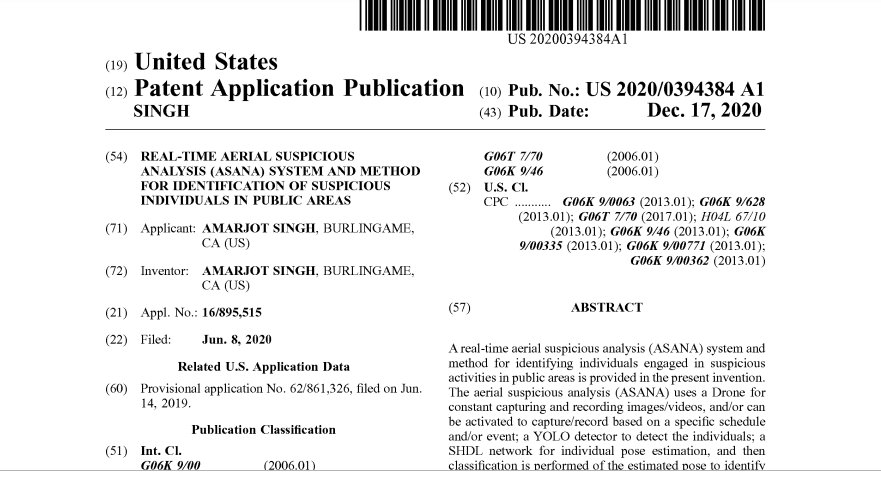
Our second patent application is online now. This breakthrough technology would allow drones to monitor large public areas and greatly advance the safety and security apparatus.
https://t.co/4mp4hKqFvh
#suspiciousanalysis#safety#security#drones#artificialintelligence
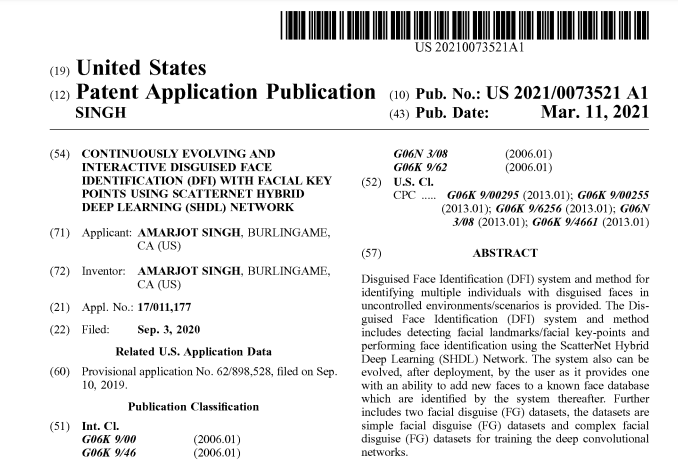
Our first patent application on Continuously Evolving Disguised Face Recognition is online now. This breakthrough technology would allow systems to learn and recognize faces on the fly without the need for extensive training paving the way for true artificial general intelligence