We also provided vehicles to permanent secretaries and directors for the first time in the history of the state, recognising the importance of mobility in the effective discharge of their administrative responsibilities.
Towards laying the foundation for stronger institutional collaboration between the state and federal governments, we also facilitated the establishment of the Federal Secretariat Complex in Awka.
Strengthening Governance at the Grassroots
We believed that government must not exist only in the state capital. Local governments constitute the tier of government closest to the people and must therefore have the institutional capacity and infrastructure to discharge their responsibilities.
Our administration undertook a comprehensive programme of constructing new local government secretariat complexes, equipping existing ones, and renovating those that required rehabilitation. Examples of the new secretariat complexes included those in Onitsha North, Onitsha South, and Dunukofia, among others. We also renovated the Awka South headquarters and constructed new facilities in Anaocha, with its headquarters at Neni.
Beyond the main secretariat buildings, we provided various local government headquarters with essential administrative and service infrastructure, including administrative and finance blocks, traditional rulers’ council buildings, tax offices, education and health blocks, sports clubs, amusement parks, and works buildings.
Our objective was to restore the functionality of local government administration and bring government closer to the people, where its impact could be directly felt.
Cutting the Cost of Governance: Making Public Resources Work
Institutional rebuilding required more than physical infrastructure. It demanded a fundamental change in the way public resources were managed. A government that spends excessively on itself cannot adequately serve its people.
One of the defining principles of our administration was therefore the reduction of the cost of governance. We cut waste, discouraged ostentatious expenditure, and redirected resources towards public infrastructure and human development. We demonstrated that prudent management was not simply about accumulating savings but about ensuring that every kobo entrusted to government delivered value to the people.
We believed that public office was a responsibility, not an opportunity for personal enrichment or patronage. The resources of the state belonged to its people, and those entrusted with managing them had a duty to ensure that they were deployed for the common good.
From Anambra to Nigeria: Scaling Up What Works
What we demonstrated in Anambra State was that purposeful leadership, strong institutions, financial discipline, and clearly defined priorities could produce tangible results, even with limited resources.
Nigeria’s challenge is not simply a shortage of resources. It is also the failure to manage available resources effectively, the weakening of public institutions, wasteful expenditure, and misplaced priorities. We must therefore begin by making government work: rebuilding institutions, eliminating waste, restoring accountability, and directing public resources towards the common good.
What we achieved in Anambra was not an accident, nor was it an experiment that cannot be replicated. It was the outcome of a deliberate philosophy of governance and a disciplined approach to public administration. I assure Nigerians that the same principles and commitment that guided us in Anambra State will guide our approach at the national level. We can build a country where institutions work, public resources serve the people, and government delivers measurable improvements in their lives.
A New Nigeria is Possible!
In Series 3, we shall examine what we did in the education sector, with the projects, investments, and measurable outcomes presented for all to scrutinise. To those who doubt our claims, our invitation remains simple: Go and verify. -PO
NIGERIANS, GO AND VERIFY (2)
Building the Institutions of the State
Peter Obi
In Series 1, I explained the philosophy that guided our administration in Anambra State: governance as a public trust, anchored on character, competence, capacity, and compassion. I also introduced the Anambra Integrated Development Strategy (ANIDS), our comprehensive framework for achieving balanced and sustainable development across all sectors.
But a development vision, however noble, cannot succeed without strong institutions to drive it. Before the government could effectively deliver on its promises in education, healthcare, infrastructure, security, and other sectors, we had to first restore the machinery of government itself. We could not build a prosperous state on a cracked and unstable foundation.
This was why one of our foremost priorities under ANIDS was to rebuild, strengthen, and reposition the institutions of government. When I assumed office, the physical and administrative architecture of governance was in a deplorable condition. Our task was not simply to construct buildings but to restore the institutions, systems, and structures through which government could function effectively.
We therefore began systematically rebuilding the infrastructure of governance across the executive, legislature, judiciary, civil service, and local government system.
Restoring the Seat of Government
The Government House in Awka, the state capital, had been vandalised and burnt by reactionary forces in 2004. We therefore had to rebuild, re-equip, and furnish it, restoring its dignity and functionality as the seat of executive government.
In the same vein, we rehabilitated the Governor’s Lodge in Amawbia and constructed a new Governor’s Lodge in Onitsha. These investments were intended not merely to provide accommodation but to strengthen executive presence and facilitate effective governance across the state’s major administrative and commercial centres.
Strengthening the Legislature and Judiciary
We rehabilitated the Anambra State House of Assembly Complex in Awka, providing our lawmakers with a more conducive and decorous environment in which to discharge their constitutional responsibilities. We also provided legislators with vehicles to facilitate the effective performance of their legislative duties.
We recognised that a functioning democracy requires strong institutions, including an effective legislature and an independent judiciary, each operating within its constitutional mandate.
In strengthening the judiciary, we provided brand-new vehicles to High Court judges. This was the first time such provision had been made for them in the history of the state. We also provided vehicles to magistrates for the first time since the creation of Anambra State.
These interventions were intended to strengthen the administration of justice, improve mobility, and enable judicial officers to discharge their responsibilities more effectively.
Rebuilding the Civil Service: The Chief Jerome Udoji State Secretariat Complex
Before our administration, many Ministries, Departments, and Agencies (MDAs) operated from scattered rented apartments, while civil servants lacked a centralised and decent working environment. This untidy arrangement undermined coordination, efficiency, and the dignity of public service.
We addressed this situation by constructing the two-phase, ultra-modern Chief Jerome Udoji State Secretariat Complex, comprising Blocks 1 and 2. The project brought the MDAs together under one roof, improved administrative coordination, and provided civil servants with a more suitable environment in which to serve the people.
The complex was named after Chief Jerome Udoji, the first indigenous Chief Secretary (the equivalent of today’s Secretary to the State Government) of the Eastern Region during the First Republic. This was also a recognition of his contribution to public administration and the civil service tradition.
LET MY RECORD SPEAK
I just arrived United States this evening to honour an important invitation and participate in a series of engagements beginning at 9am tomorrow morning in Washington DC.
Throughout my election campaigns, I have sought to emphasise policies, ideas, and practical solutions that can deliver the change Nigeria urgently requires and help our nation overcome its current challenges.
Nevertheless, because certain individuals have repeatedly scrutinised my past, even as they appear uneasy about their own records, I have chosen to allow the facts to speak for themselves. Starting today and running for ten days, I will present some of the accomplishments recorded during my tenure as Governor of Anambra State. This series will outline my interventions, achievements and the responsibilities entrusted to me. I have titled it my Record of Service.
In every position I have held, I have consistently given my utmost effort in fulfilling my responsibilities. Although no one can always attain every intended result, I have never been found lacking in dedication or effort. I have always given the task my full commitment.
As campaign activities gather momentum, I will also continue to keep you updated on my daily engagements and other significant developments.
In particular, in light of allegations that I abandoned Anambra State during the erosion crisis, among other assertions, I consider it necessary to present the facts to the public. I have never evaded any responsibility entrusted to me, and I will certainly not shirk my responsibility to help address Nigeria’s challenges.
I am confident that, ultimately, facts outlast allegations, while records carry greater weight than rhetoric.
Let my record speak for itself! -PO
When Alex Otti assumed office in 2023, Abia State had only 151,000 children enrolled in public schools across the primary, junior secondary, and senior secondary levels.
Today, that number has grown to over 860,000 students, thanks to the remarkable efforts of the Abia State Government and ISEE.
However, this remarkable progress has created a new challenge.
Families are now relocating from neighbouring states, including Akwa Ibom, Ebonyi, and Rivers, to enrol their children in public schools in Abia State.
This growing influx is now putting enormous pressure on the state’s public schools and educational infrastructure.
FROM KANO TO ZARIA : ADVANCING EDUCATION, EXPANDING OPPORTUNITIES AND UNITING NIGERIANS FOR CHANGE
After my engagements in Delta State on 13th November, I travelled yesterday, Saturday, 14th November, to Kano via Abuja to serve as the Special Guest of Honour at the 5th Convocation Ceremony of Skyline University, Kano.
In my address at the ceremony, I reaffirmed that education is the bedrock of development. Experience has consistently shown that the more educated a nation is, the greater its level of development.
Skyline University has achieved another significant milestone by ensuring that every student receives training in entrepreneurship and innovation. Such training lays the groundwork for start-ups and SMEs, which remain among the largest sources of employment, important instruments for lifting people out of poverty and significant contributors to the most productive economies, particularly those of comparable developing countries.
Following the convocation, my dear elder brother and our Vice Presidential Candidate, Senator Rabiu Musa Kwankwaso, and I travelled from Kano to Zaria in Kaduna State for a town hall meeting. Upon our arrival in Zaria, we first commissioned the senatorial campaign office of the NDC Senatorial Candidate for Kaduna North Senatorial District, Mohammad Turad Sha’aban.
At the Zaria town hall meeting, I reiterated that Senator Rabiu Musa Kwankwaso and I will work together to unite and secure the country around a shared national purpose. We will confront the deep-rooted and widespread corruption that has impeded Nigeria’s progress for many years. We will vigorously implement policies to reduce the cost of living while making strategic investments in essential sectors, especially healthcare and education, and lifting our people out of poverty.
Our town hall meetings provide a platform for engaging directly with citizens and gathering firsthand perspectives on their most pressing needs. These interactions reinforce my conviction that government policies and programs must be driven by public demand rather than imposed from the top down.
I congratulate the graduating students of Skyline University, Kano, on this significant achievement. I also commend our dedicated party candidates for their perseverance and commitment.
I extend my sincere appreciation to the people of Kano and Kaduna States for their impressive turnout, active engagement and steadfast support.
A New Nigeria is POssible, and Nigeria will be OK! -PO
Today, I visited the MUSON Centre in Lagos to watch students of Evergreen Schools, Enugu, bring this heartbreaking story to life on stage.
I couldn’t hold back my tears.
This young boy was murdered in cold blood, yet justice was never served.
What a painful reminder of how deeply injustice has wounded our society.
DELTA STATE : CELEBRATING FAITH, HONORING FRIENDSHIP, AND ENGAGING WITH THE PEOPLE.
My activities in Delta State yesterday, Friday, 13th November 2026, comprised three significant engagements. After a highly successful town hall meeting in Lagos State the previous day, I travelled to Warri, Delta State, to continue interacting with the people.
While in Warri, I visited a revered man of God and father in the faith, Papa Ayo Oritsejafor, former President of the Christian Association of Nigeria and founder and Senior Pastor of Word of Life Bible Church, Warri, to celebrate his birthday with him.
It was a privilege to share in this special occasion. I congratulate Papa on his birthday and pray that God will bless him with many more productive years in His service.
I thereafter visited the family of my dear brother and former Governor of Delta State, Dr Emmanuel Eweta Uduaghan, to offer my condolences.
Dr Uduaghan’s passing remains a deeply painful personal loss. In my conversation with the family, I reflected on the years when we served as governors of neighbouring states and the warm relationship we sustained until his death.
We pray that God Almighty, who has called him to eternal rest at this time, will forgive his shortcomings, grant him everlasting peace, and strengthen his family and all of us who mourn him to endure this irreparable loss.
While travelling by road from Warri to Asaba, I briefly stopped at Ughelli Market, where I met with traders and heard their concerns about the prevailing economic difficulties and the obstacles affecting their businesses. I assured them that we remain committed to implementing policies that will lower the cost of living, strengthen small businesses, and lift our people out of poverty.
I concluded my engagements in Delta State with a visit to the Catholic Charismatic Renewal Conference in Ubulu-Uku, where I urged the worshippers to continue praying for those of us in public office so that we will consistently apply public resources to the public good.
I also reaffirmed Senator Rabiu Musa Kwankwaso's and my commitment to uniting the country, decisively confronting insecurity and corruption, investing in essential areas of development, especially healthcare and education, supporting small businesses, and addressing poverty with determination.
I thank our candidates in Delta State, led by our governorship candidate, Deacon Chris Iyovwaye, and our senatorial candidate, Hon. Victor Ochei, for their participation and dedication. I also appreciate the people of Delta State for their warmth and hospitality.
A New Nigeria is Possible, and Nigeria will be OK! - PO
I received calls from two different Commissioners of Education in the South East, both commending the impact of the work we are doing in their respective states.
Children’s enthusiasm for learning is at an all-time high, and more children are returning to school.
This is the kind of encouraging news that strengthens our resolve and fuels our determination to do even more.
Every child deserves a chance to learn, and we will not relent.
Born before television entered ordinary homes, he now keeps in touch on WhatsApp.
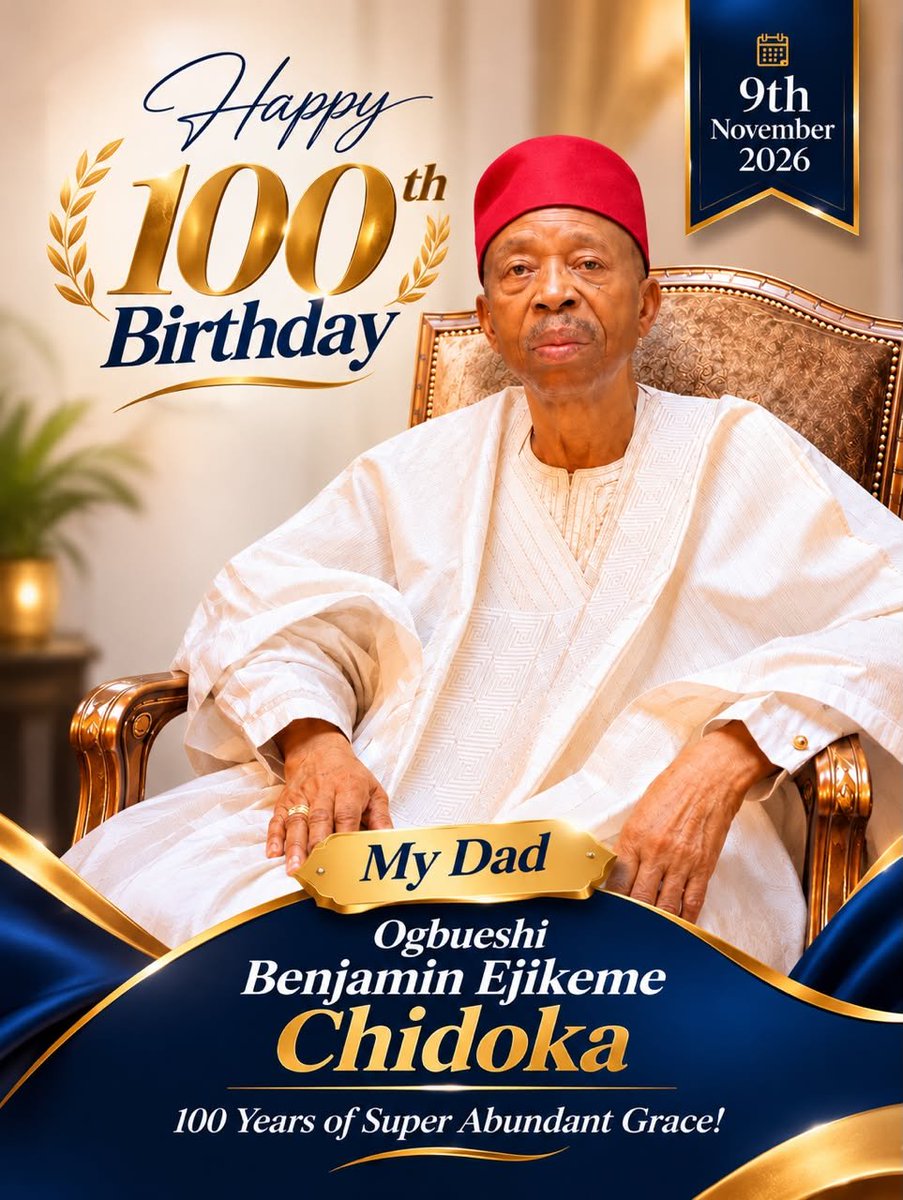
Today, my father, Ogbueshi, is 100 years old.
On November 9, 1926, the world he entered was almost unrecognisable. Queen Elizabeth II was a six-month-old baby. Lufthansa, Mercedes-Benz and McKinsey were newly established. Television had just been publicly demonstrated. In Nigeria, the Union Jack flew over a British colony, and the Daily Times had only begun publication.
He was 33 when Nigeria became independent. He was 39 when the first military coup came in 1966. He lived through the tragedy of Biafra, the return to civilian rule in 1979, and the long years of military government. In 1999, he witnessed the restoration of democracy, and he has now seen 27 unbroken years of it.
He has travelled from handwritten letters to the telephone, and from the telephone to the smartphone. Today, he chats on WhatsApp, transfers money on his banking app, and still reads the news online. A man born under colonial rule now moves with ease through the age of artificial intelligence.
Yet his life has not been made of change alone. He has buried all his siblings and outlived his two wives. He has known the joy of raising a family and the sorrow of saying goodbye to those he loved. Through it all, he has remained steadfast.
His mind is clear. His health, within the limits of age, is remarkable. No terminal illness. No debilitating disease.
As a teenager, I never imagined he would see 70. A hundred was beyond my imagination.
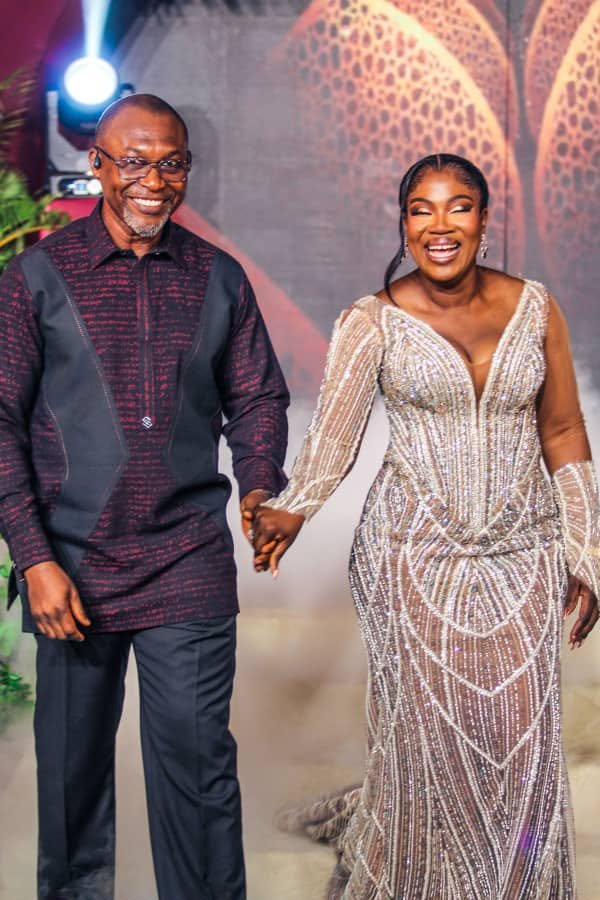
November 9 has always been special to our family. My youngest brother was born on this day, and on this date, I married the love of my life at the Anglican Cathedral of the Advent, Life Camp, Abuja.
This morning, we will gather around him and sing his favourite hymn, How Great Thou Art. On December 27, we will gather at St Andrew's Church, Obosi, where he was baptised, to thank Almighty God for a century of mercy.
A hundred years ago, the world was different. Nations have risen, empires have fallen, and inventions once unimaginable have become ordinary.
Through it all, one thing has remained constant: God's grace.
Happy 100th birthday, Papa.
Your life is our testimony.
#100YearsOfGrace
#chidoka100
Osita Chidoka
9 November 2026