Ghana’s Ministry of Foreign Affairs cautions that the notice in circulation claiming that Ghanaians have been asked to leave Cambodia is FAKE.
Cambodian authorities have confirmed to us that they have issued no such notice. The Cambodian Ministry of Interior has proceeded to issue a press clarification today stating that the purported notice is “completely untrue” (see attached).
I can, however, assure Ghanaians that prior to the publication of this fake notice, a number of Ghanaians in Cambodia had reached out to us requesting to be evacuated, and are already being assisted by the Foreign Ministry and our High Commission in Malaysia.
Between March and May this year, we have evacuated 85 Ghanaians from Cambodia. 76 more are being evacuated to complete the exercise.
The welfare of Ghanaians anywhere in the world remains our priority.
For God and Country 🇬🇭 🙏🏾
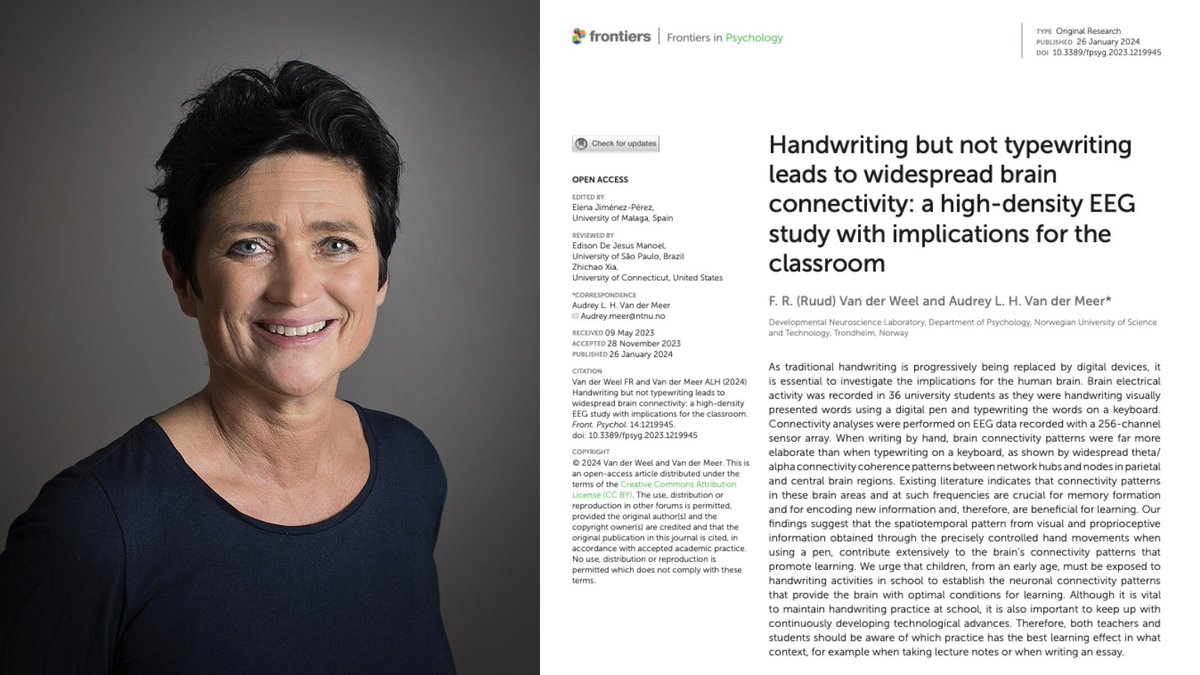
A Norwegian neuroscientist spent 20 years proving that the act of writing by hand changes the human brain in ways typing physically cannot, and almost nobody outside her field has read the paper.
Her name is Audrey van der Meer.
She runs a brain research lab in Trondheim, and the paper that closed the argument was published in 2024 in a journal called Frontiers in Psychology. The finding is brutal enough that it should have changed every classroom on Earth.
The experiment was simple. She recruited 36 university students and put each one in a cap with 256 sensors pressed against their scalp to record brain activity. Words flashed on a screen one at a time.
Sometimes the students wrote the word by hand on a touchscreen using a digital pen, and sometimes they typed the same word on a keyboard. Every neural response was recorded for the full five seconds the word stayed on screen.
Then her team looked at the part of the data most researchers had ignored for years, which is how different parts of the brain were communicating with each other during the task.
When the students wrote by hand, the brain lit up everywhere at once.
The regions responsible for memory, sensory integration, and the encoding of new information were all firing together in a coordinated pattern that spread across the entire cortex. The whole network was awake and connected.
When the same students typed the same word, that pattern collapsed almost completely.
Most of the brain went quiet, and the connections between regions that had been alive seconds earlier were nowhere to be found on the EEG.
Same word, same brain, same person, and two completely different neurological events.
The reason turned out to be something nobody had really paid attention to before her work. Writing by hand is not one motion but a sequence of thousands of tiny micro-movements coordinated with your eyes in real time, where each letter is a different shape that requires the brain to solve a slightly different spatial problem.
Your fingers, wrist, vision, and the parts of your brain that track position in space are all working together to produce one letter, then the next, then the next.
Typing throws all of that away. Every key on a keyboard requires the exact same finger motion regardless of which letter you are pressing, which means the brain has almost nothing to integrate and almost no problem to solve.
Van der Meer said it plainly in her interviews.
Pressing the same key with the same finger over and over does not stimulate the brain in any meaningful way, and she pointed out something that should scare every parent who handed their kid an iPad.
Children who learn to read and write on tablets often cannot tell letters like b and d apart, because they have never physically felt with their bodies what it takes to actually produce those letters on a page.
A decade before her, two researchers at Princeton ran the same fight using a completely different method and ended up at the same answer. Pam Mueller and Daniel Oppenheimer tested 327 students across three experiments, where half took notes on laptops with the internet disabled and half took notes by hand, before testing everyone on what they actually understood from the lectures they had watched.
The handwriting group won by a wide margin on every question that required real understanding rather than surface recall.
The reason was hiding in the transcripts of what the two groups had actually written down.
The laptop students typed almost word for word, capturing more total content but processing almost none of it as they went, while the handwriting students physically could not write fast enough to transcribe a lecture in real time, which forced them to listen carefully, decide what actually mattered, and put it in their own words on the page.
That single act of choosing what to keep was the learning itself, and the keyboard had quietly skipped the choosing and skipped the learning along with it.
Two studies. Two countries. Same answer.
Handwriting makes the brain work. Typing lets it coast.
Every note you have ever typed instead of written went into your brain through a thinner pipe. Every meeting, every book highlight, every idea you captured on your phone instead of on paper was processed at half depth.
You did not forget those things because your memory is bad. You forgot them because typing never woke the part of the brain that would have made them stick.
The fix is the thing your grandmother already knew.
Pick up a pen. Write the thing down. The slower road is the faster one.
Teach your boy child “ Men are not Polygamous in Nature
Teach your boy child that “a Man not cheating isn’t Simp but rare gem
Teach him not to seek Validation from DAMAGED Men on social media
Teach Your boy child how to handle Rejections
Teach your Boy child Consents & No means No
Teach your Boy the beauty of staying faithful with one woman
Teach your boy child respect towards women
Teach Your boy child the gravity of their actions
Lastly :Be a Good examples to your boy child because you can tell them all this things but if you’re not leading by examples then you’re a joker.
Happy INTERNATIONAL BOY CHILD DAY 🩷.
Three young Ghanaian innovators, Kwaw Fletcher Frimpong, Dominic Damoah, and Phelimon Hini, have earned global recognition after winning the People’s Voice Webby Award for Best Responsible AI Implementation at the 30th Annual Webby Awards.
Read here: https://t.co/DLZrh5Lhxw
PCOS will now be called Polyendocrine Metabolic Ovarian Syndrome (PMOS).
Dear Women,
What If PCOS Was Never Really About “Cysts”?
READ. REPOST. SHARE TO EVERYONE YOU KNOW.
Medicine, sometimes, behaves like an old relative who has known you for years and yet keeps calling you by the wrong name. And because the family has repeated it for so long, the name begins to sound true. Familiar. Permanent.
And so for decades, we have called this condition Polycystic Ovarian Syndrome, PCOS. We have said it in clinics and lecture halls and whispered it into frightened consultations. We have printed it on blood request forms and ultrasound reports and fertility referrals. And yet, perhaps, the name has always been telling only half the story. Because many women diagnosed with PCOS do not actually have cysts.
And the condition, as many gynaecologists know too well, is not merely an ovarian affair. It does not politely sit inside the pelvis and mind its business. No. It spills. Quietly. Persistently. Into the entire body.
Into hormones. Into metabolism.
Into insulin resistance and weight regulation and ovulation and fertility. Into the skin that suddenly erupts with acne at twenty-eight. Into the chin that grows hair where softness once lived. Into exhaustion. Into mental health. Into long-term cardiovascular risk.
And so experts have begun asking a difficult but necessary question:
What if we have been naming the condition incorrectly all along?
Which is why there has been growing discussion around renaming PCOS to:
Polyendocrine Metabolic Ovarian Syndrome, PMOS.
And at first glance, it sounds like one of those intimidating medical names that make patients blink twice before pronouncing it. But if you lean closer, if you listen carefully, the name is actually trying to confess something medicine should perhaps have admitted earlier. That this condition is bigger than the ovaries. That multiple hormonal systems are involved. That metabolism matters. That insulin resistance is not a side note but often part of the central plot.
That the ovaries are affected, yes, but they are not the entire story.
And perhaps most importantly, that this syndrome wears different faces in different women.
Because one woman may struggle with irregular periods and infertility. Another may battle acne so stubborn it chips away at confidence one mirror at a time.
Another gains weight despite trying, despite dieting, despite walking past bakery aisles with the discipline of a saint.
And another may look slim, the kind people casually call “healthy”, and yet carry profound insulin abnormalities quietly beneath the skin. That is the thing about this condition. It refuses simplicity.
And names matter more than we sometimes realize.
Because when a patient hears the words polycystic ovary, she may understandably think:
“So… I just have cysts?” And language, once planted wrongly, can narrow understanding. It can delay diagnosis. It can create stigma. It can make a woman feel her symptoms are disconnected accidents instead of chapters from the same book.
But a more accurate name can widen the lens. And widened lenses save people. Now, to be clear, PCOS remains the globally recognized medical term today. PMOS is still part of ongoing scientific discussion and evolving understanding. So this is not a “new disease.” Nobody woke up with a fresh diagnosis because medicine decided to rearrange some words.
It is the same condition.
The same women.
The same struggles.
Only that medicine, perhaps, is finally trying to describe them more honestly. And honesty matters in healthcare.
Because sometimes the difference between suffering silently and seeking help early begins with something as deceptively simple as a name.And perhaps that is the deeper lesson here: That women’s bodies have too often been simplified. Reduced. Misunderstood. And when science finally learns to name a condition more completely, what it is really doing is learning to see women more completely too.
“The good thing about obstacles is that they provide opportunities.” — H.E. Ellen Johnson Sirleaf
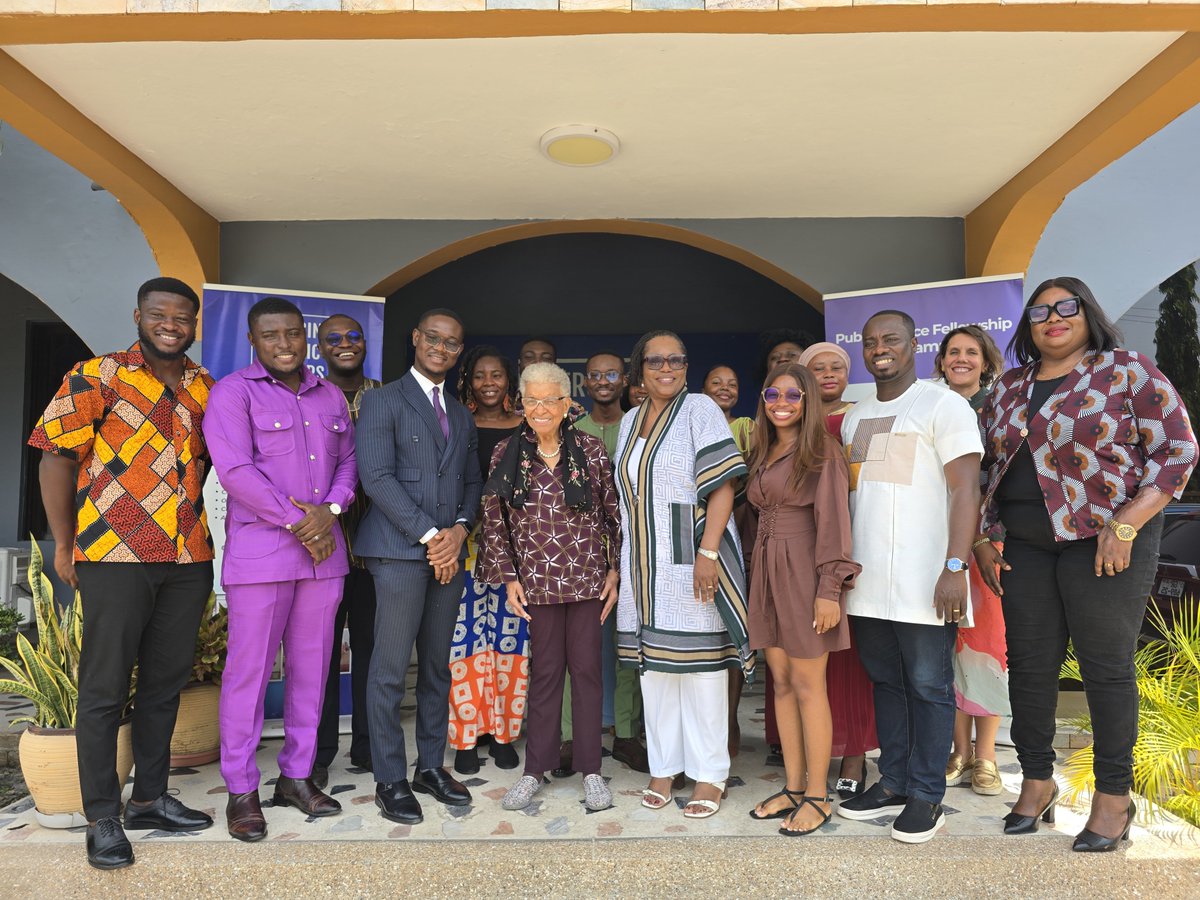
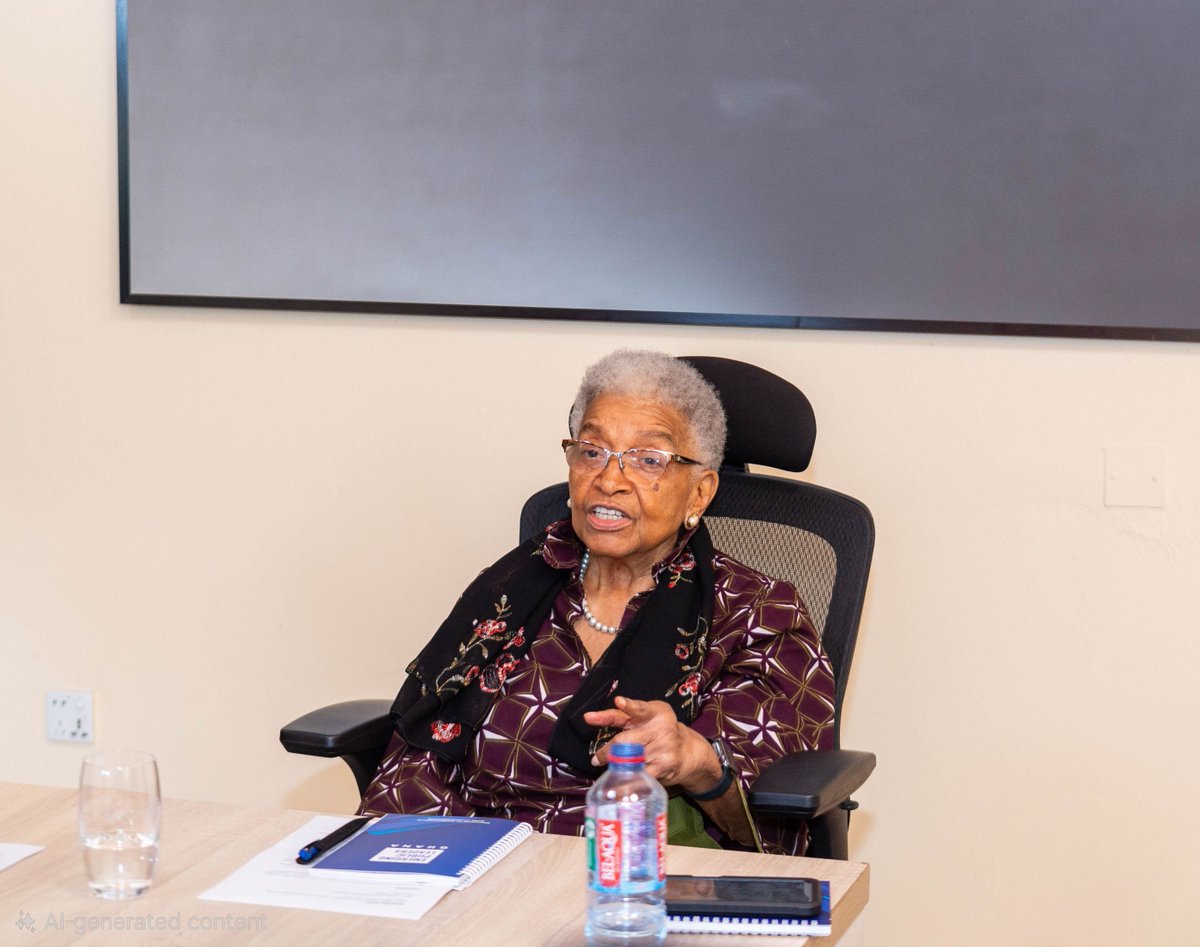
We welcomed our Founder, Her Excellency Madam Ellen Johnson Sirleaf to the Emerging Public Leaders, Ghana Office on Friday last week.
As is her nature, she spent a good half hour listening to how we've grown her vision, working closely with our co-founder Betsy Williams, moving it from strong public service performance led by ethical young people, to include the private sector and civil society.
She said, much as we don't want to change our vision, we also need to be aligned with the shifts in growth paradigms, that is building all sectors together.
Her Excellency also indicated that the new agenda for Africa is the triangular approach. Not just government administrations, not just Civil Society, and not just private sector organisations. To grow Africa, all of the 3 sectors must be improved.
In her final remarks, she said, "I applaud that you've got this right. Keep going. Remember that obstacles and challenges are opportunities. They make you take note of developing trends and help you innovate and that is the way to make a genuine difference."
Our Board Chair, Ag. Country Director, Joyce Agbanavor, our Fellows, Alumni and staff were deeply moved by the endorsement of our work and hearing from someone so inspirational that we have the right approach.
#EmergingPublicLeaders
#EPLGhana
#PublicService
#Leadership
#YouthLeadership
#Governance #AfricaRisingAfricaRising
@EPLeadersgh The holders and corridors of power have proven to us over centuries that when it comes to influencing, which indeed is a matter of power, you are either "in" the room or out.
We’re going live today at 7PM and you should definitely join us.
Can young people influence policy without political power? It’s a question worth unpacking, and we’re opening up the space for a real conversation on it.
If this is something you care about (or have thoughts on), come through and be part of it. Your voice matters.
🔗 Click the link to join the conversation.
https://t.co/qiUi2kzGyj
See you there.🚀📍
#Policy
#Politicalpower
#Eplghana
#younginfluence
#youthvoices
📍📍APPLY NOW
Opportunity for Women in Tech
Wetech is offering fully funded Google Career Certificate scholarships.
Fields: Cybersecurity, Project Management, UX Design, Data Analytics, Digital Marketing etc.
📅Deadline: April 30, 2026
Link:https://t.co/jyPSValrYC
So real talk: Do you actually need political power to change policy? Or is your voice enough?
As young people continue to shape conversations across Ghana, one question just won't go away:
Can we truly influence policy without holding political office?
That's what we're getting into live on our next X Space and this time, our EPL Fellows and Alumni are going head-to-head in a debate.
Two sides.
Real arguments.
No holding back.
We're breaking it down through two lenses that actually hit home:
🎯 Trade & Commerce
🎯 Creative Economy
From ideas to influence, we'll explore how young people are already shaping conversations, driving innovation and pushing boundaries in spaces that matter no title required.
📅 Friday, 24th April
⏰ 7 PM
📍 https://t.co/qiUi2kzGyj
Set a reminder. Bring your perspective. Come watch our Fellow young people debate what really moves the needle.
Let's go. 🚀
#politicalnews
#debate
#Eplghana
#civilengagement
#politicalpower
#youthdebate
You're invited! I'm giving a talk about my research on Monday and it will be accessible via Zoom. Please use the following link for more information about the event. Links for registration and to download my paper are in the comments below. Would love to see you there!
If a pregnant woman is carrying a female fetus, she is literally carrying the eggs that could one day become her own grandchildren.
The female fetus develops all her lifetime supply of eggs while still in the womb. So three generations coexist inside one body at that moment.