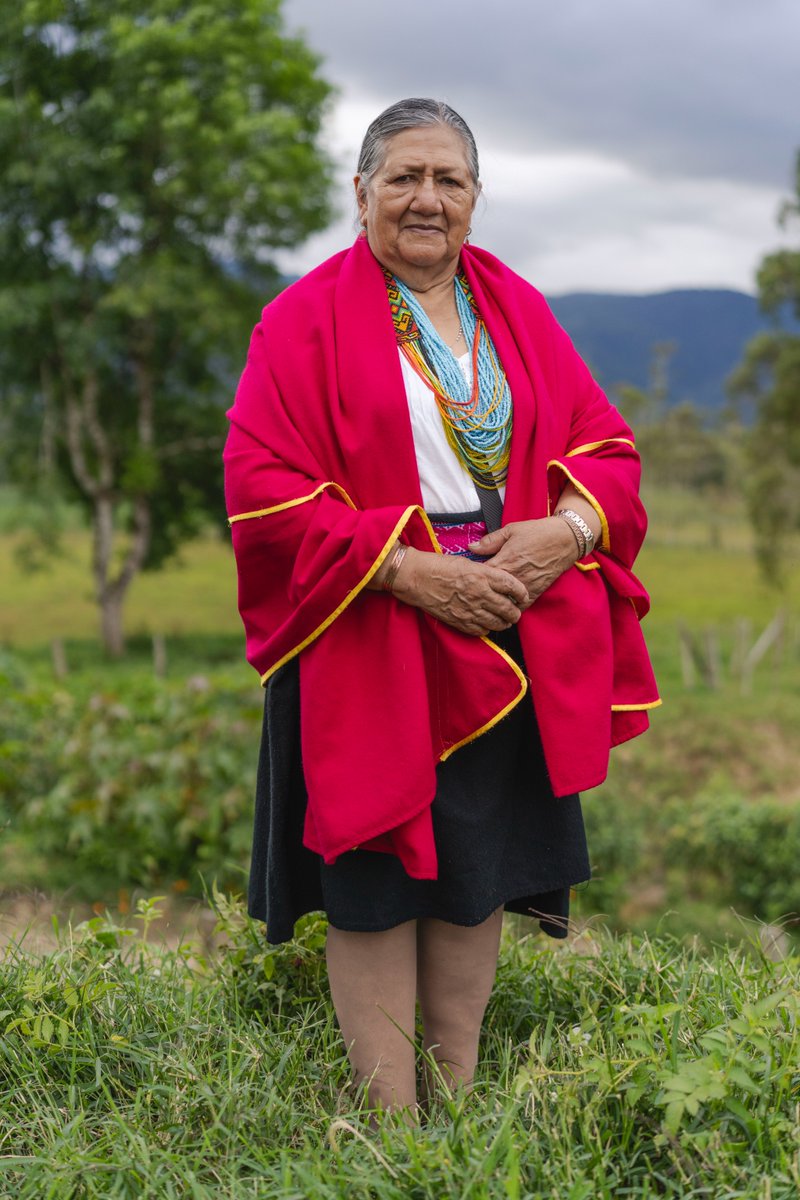
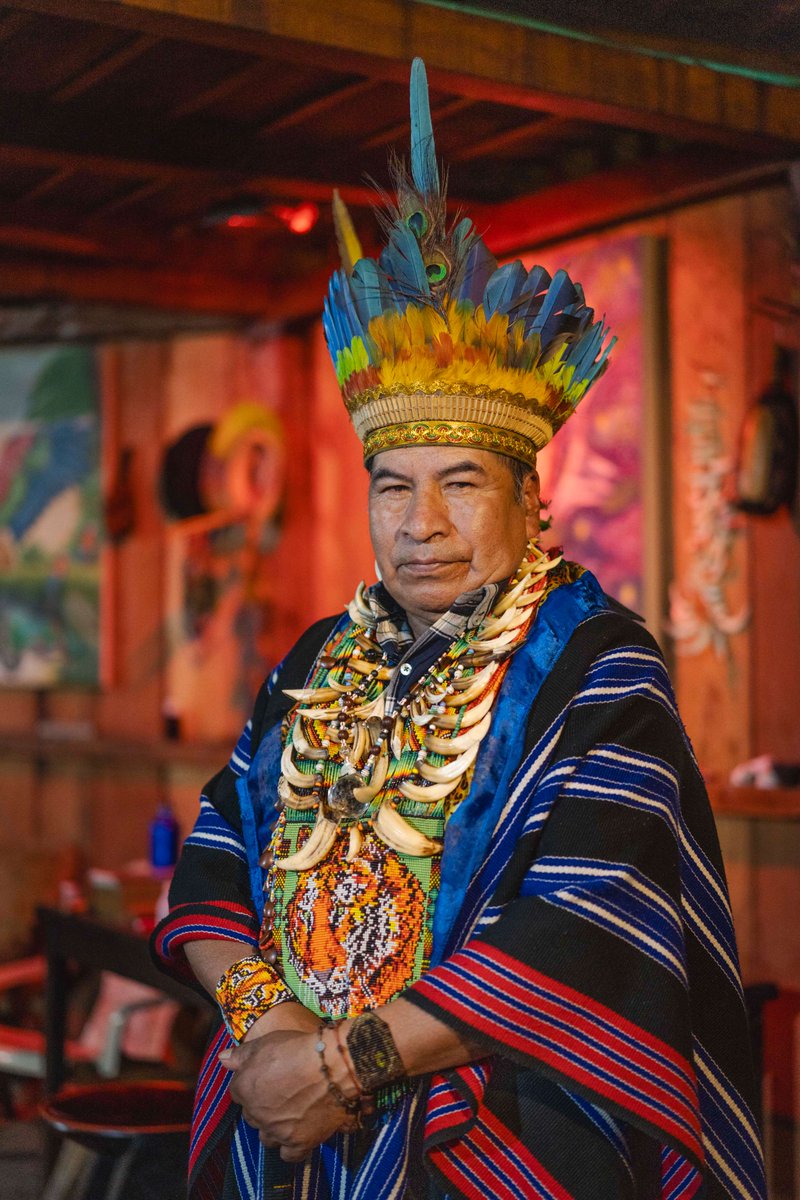
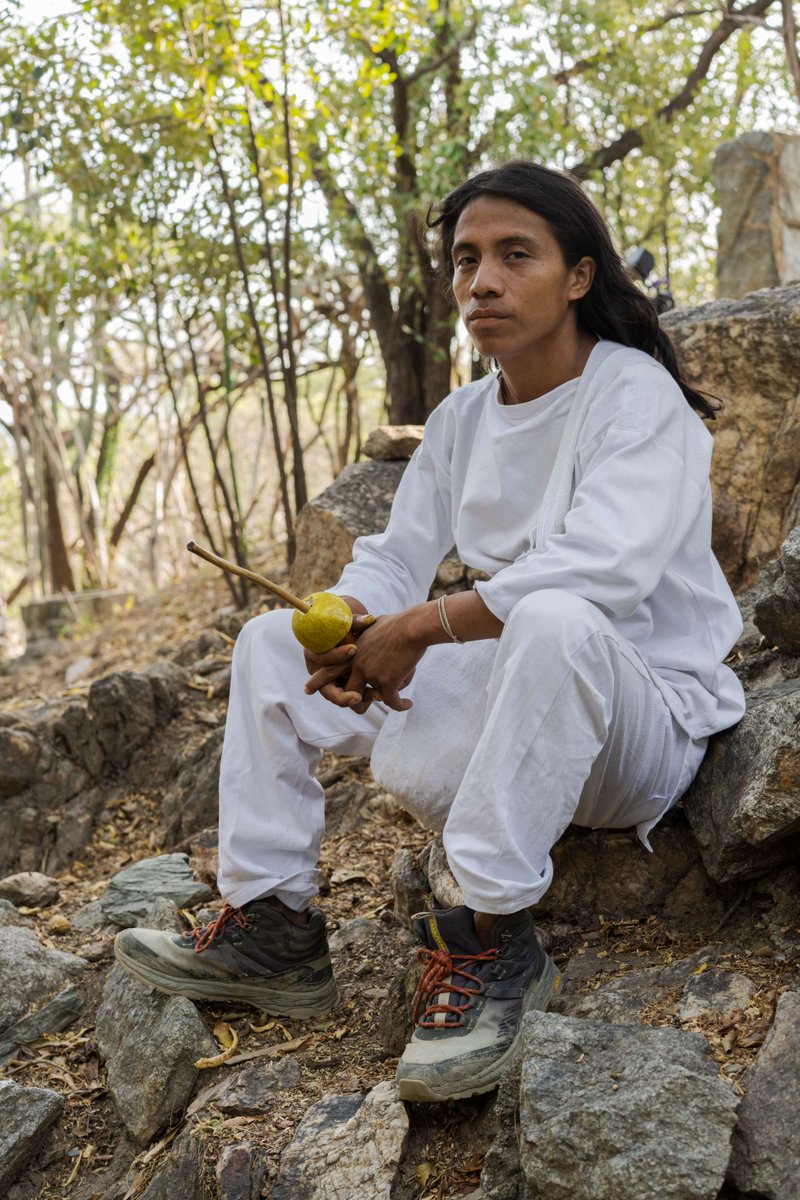
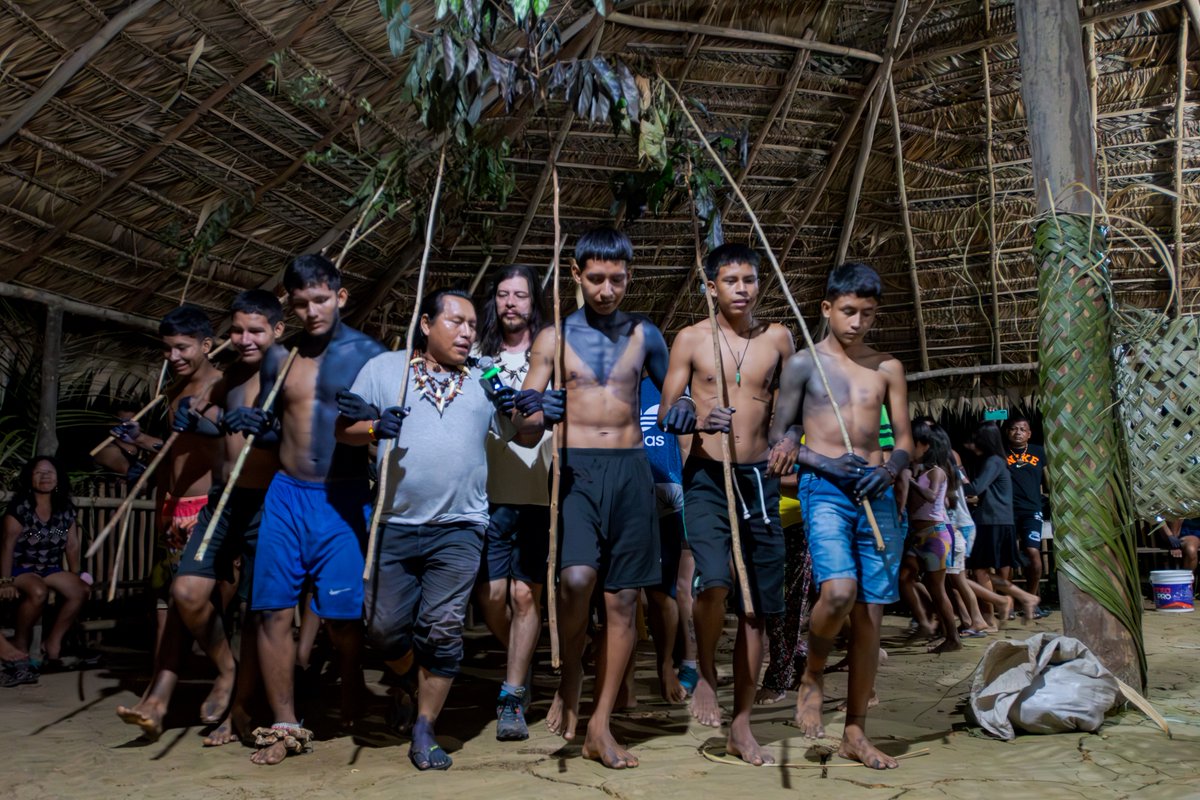
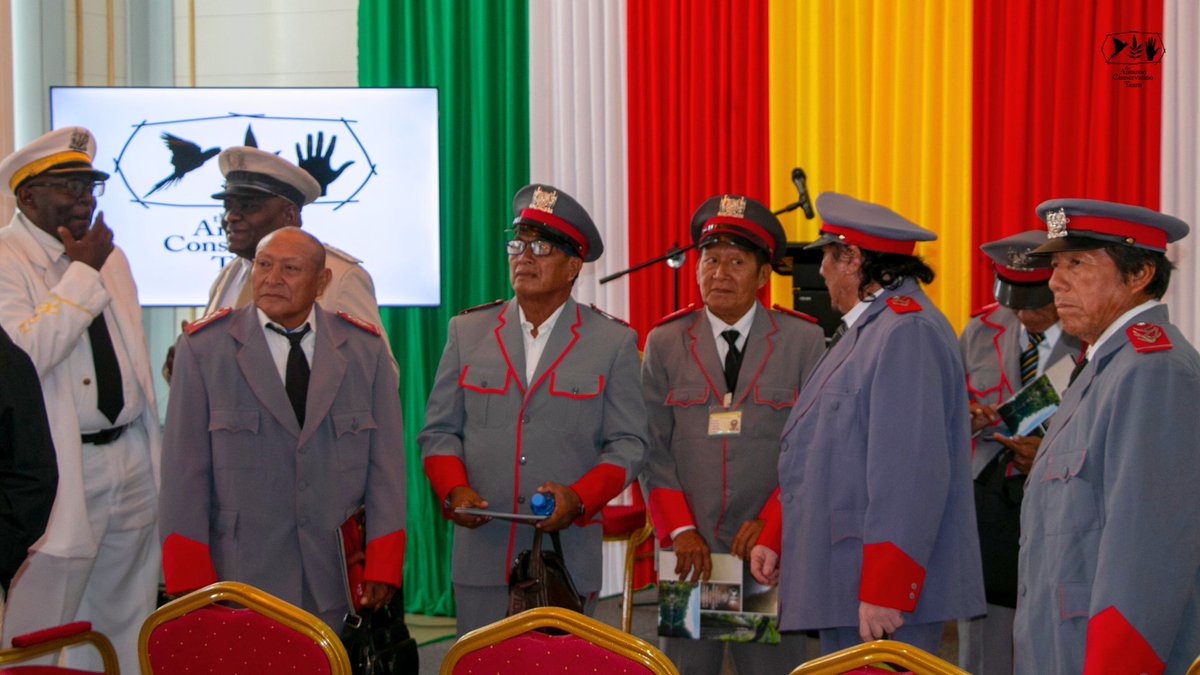
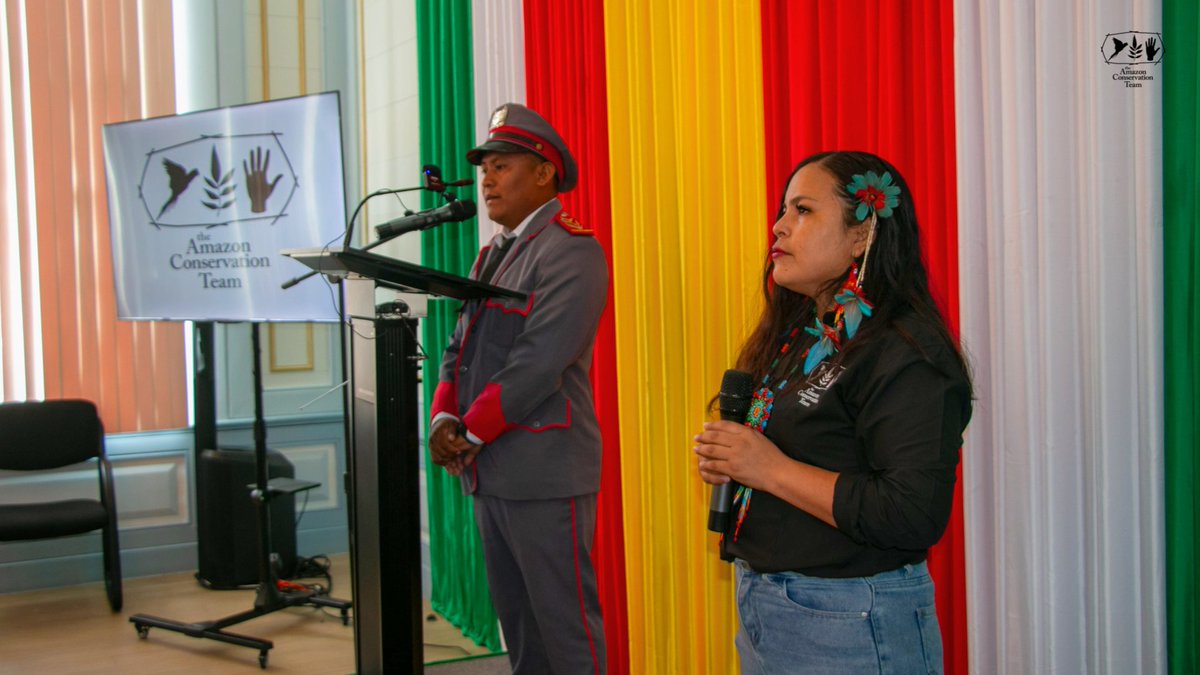
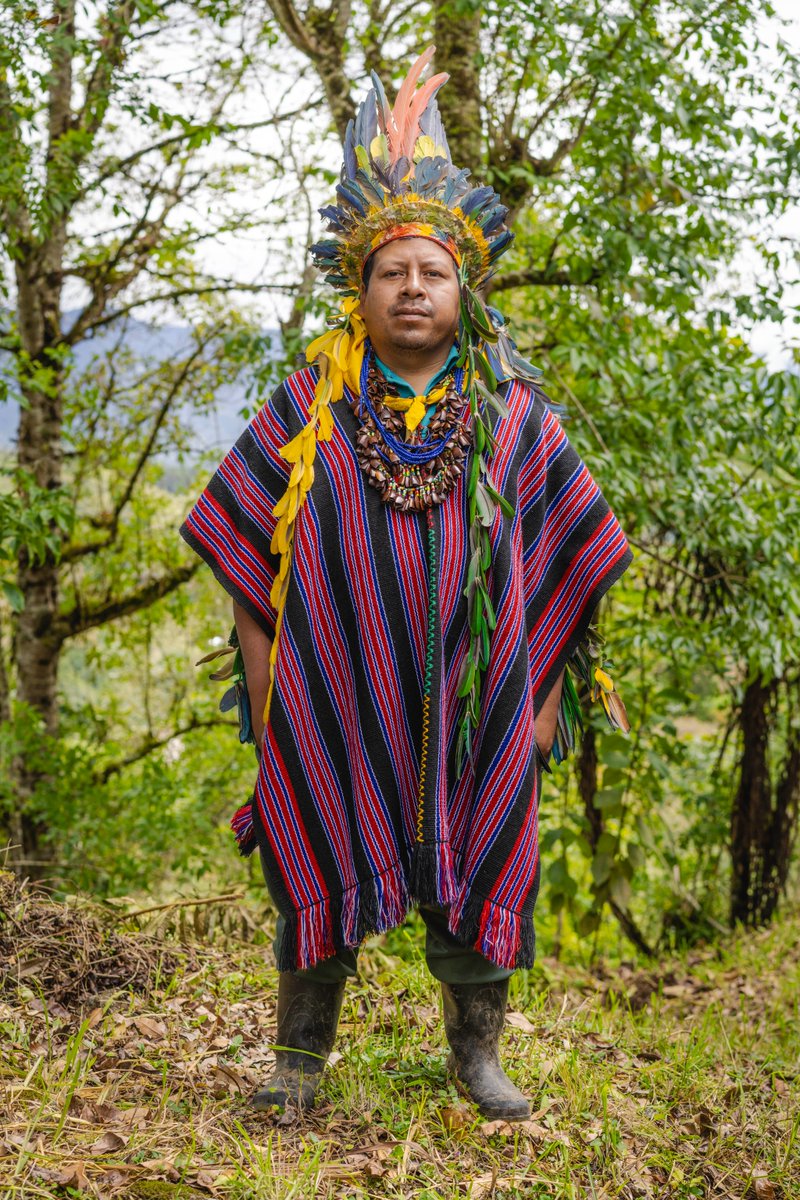
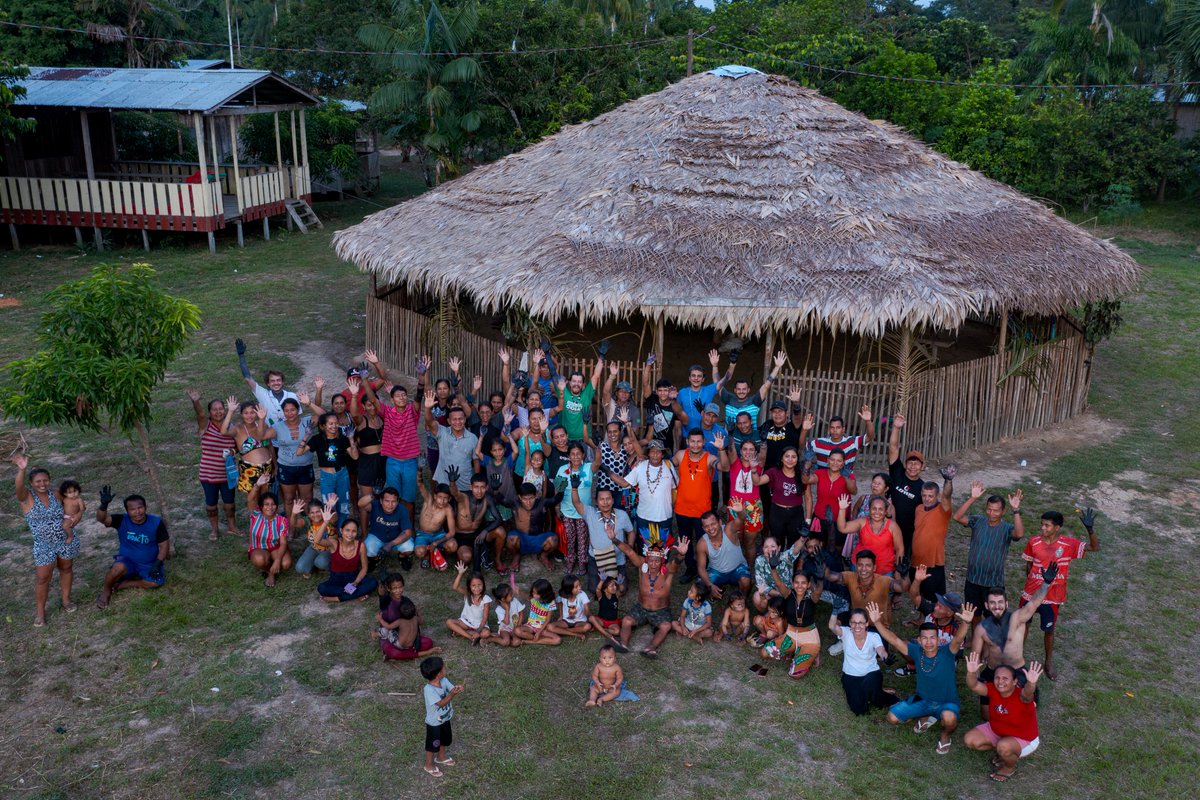
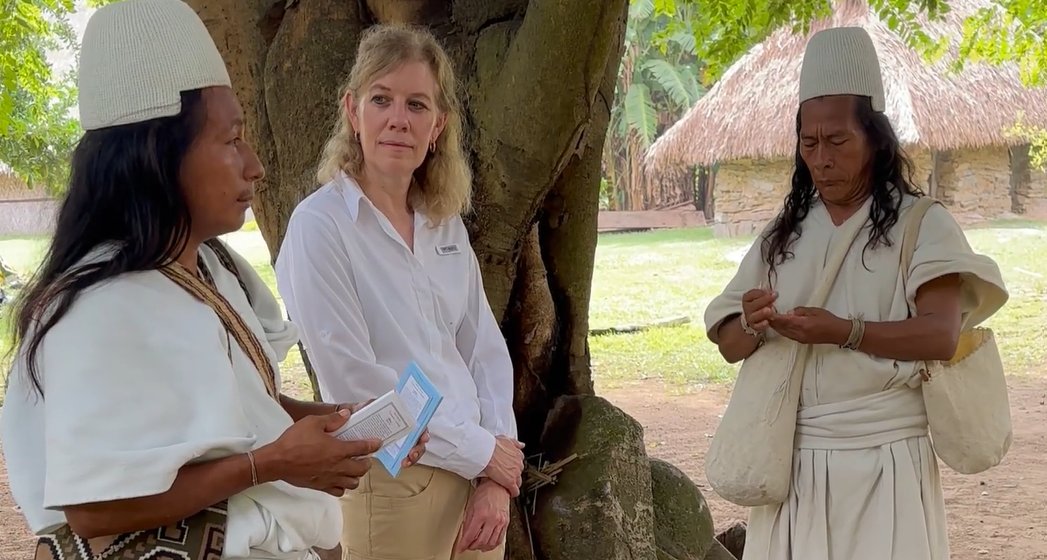
Territorial justice is the reclamation of access to and stewardship and decision-making over ancestral lands, waters, and resources for #indigenouspeoples. Colonization has stolen and decimated #indigenous territory, displacing communities and devastating #ecologies and #biodiversity. 🌿
📢 Today, colonization takes the form of rapidly expanding unsustainable—and often illegal—extractive industries and industrial #agriculture. For communities, being forced off their lands is more than a material loss. It is an erasure of lifeways that steward the environment, and spells disastrous consequences for #nature. 🔥
💚 We work towards territorial justice by empowering communities to advocate for and uphold their #landrights. 🗺
📹 Learn more about our work supporting #territorialjustice in the #amazonrainforest in this short video, and visit https://t.co/BpdRYacEIs
#weareindigenous #indigenouspeoplesday #indigenousrights #worldindigenousday #collectiverights #indigenousday #rainforest #savetheamazon #savetherainforest #climatechange #landback
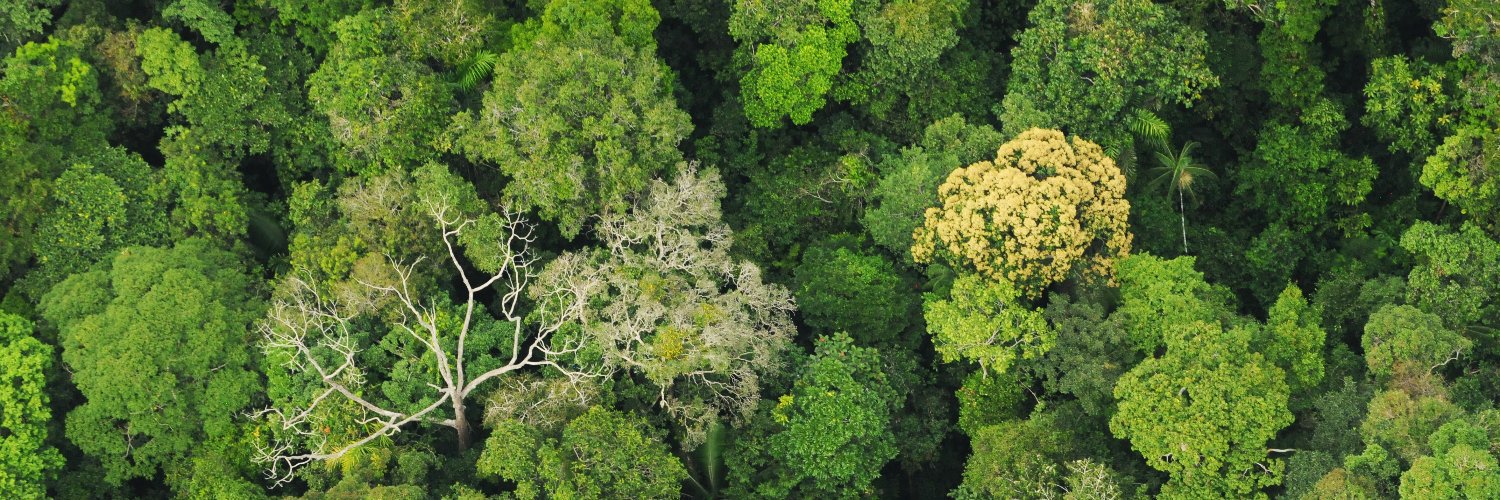
The Amazon stretches across nine countries and sustains more than 40 million people.
It is home to over 350 Indigenous, Maroon, and local communities who continue to keep languages, cultures, and ways of living in balance with the land alive.
Protecting the Amazon is not just an environmental issue — it is a cultural, social, and collective responsibility.
We walk this path together.
Watch the video on YouTube: https://t.co/e8Wws2NM6b
👉 Learn more about our work: https://t.co/maawM3f1yS
💚 Support Indigenous-led conservation: https://t.co/QehAj5pIz4
There is no conservation without autonomy.
Forests endure when communities can govern themselves, care for their territories, and decide their futures on their own terms.
Across Latin America, Indigenous, Afro-descendant, and local communities strengthen their own governance, defend their lands, and shape life plans that guide education, health, and territorial care.
Autonomy also means keeping culture alive — revitalizing languages, traditions, and ancestral knowledge for future generations.
At ACT, we work alongside communities as they protect their territories and shape their futures.
Because lasting conservation does not come from outside solutions.
It grows from self-determination.
It grows from its true guardians.
🌿 Learn more: https://t.co/maawM3f1yS
💚 Support Indigenous-led conservation: https://t.co/QehAj5pIz4
Watch the full video: https://t.co/Xwk9ZJWeVC
From the Amazon to the sea, Indigenous peoples protect life where it begins — and where it flows.
For the communities we work with, the forest and the ocean, land and stories, nature and culture cannot be separated. Everything is connected.
Following their leadership has taken us across the Americas — from Mexico to the Andes, from Colombia to Brazil, from the Guiana Shield to the heart of the Amazon — supporting Indigenous guardians who have defended their territories and knowledge for generations.
Because protecting the Earth begins by listening to those who have always protected it.
We honor and recognize Indigenous Peoples and their role in sustaining life on our planet.
👉 Learn more about our work: https://t.co/maawM3f1yS
💚 Support Indigenous-led conservation: https://t.co/QehAj5pIz4
Watch the full video: https://t.co/oKcWSKfUos
What Is Biocultural Conservation?
Conservation isn’t just about protecting forests—it’s about protecting everything they carry: the stories, the medicines, the memory of the land.
Biocultural conservation means safeguarding what cannot be separated: the territory, and the people who know how to live with it. Languages, identity, healing plants, sacred places—they all grow from the same root.
At ACT, we support what is already alive: territorial defense, food sovereignty, community health, and the deep connection of Indigenous, Afro-descendant, and local communities to their lands.
This work is ecological, cultural, spiritual, and collective. We believe ecosystems thrive when their guardians thrive. Biocultural conservation isn’t just about protecting nature—it’s about protecting a way of being.
👉 https://t.co/bJIXyojEp7
Tchirugüne Indigenous Museum
The Tikuna people celebrated the inauguration of the Tchirugüne Indigenous Museum in the Indigenous Community of Vila Betânia Mecürane, in the Upper Solimões region of Amazonas, Brazil.
Tchirugüne, meaning “swallow’s resting place,” is a museum built by the community over two years and dedicated to preserving the memory, culture, and history of the Tikuna people—one of the largest Indigenous peoples in Brazil.
With two floors, a lookout point, and Indigenous guides, the museum strengthens community-based tourism and serves as a gateway to Tikuna culture, rooted in territory and Indigenous leadership.
The inauguration was marked by traditional dances and songs, and the sharing of Paijuaru, an ancestral cassava-based beverage that symbolizes coexistence and strong community bonds.
The construction and consolidation of the Tchirugüne Indigenous Museum were supported by ACT-Brasil and the Floresta+ Project, a partnership between Brazil’s Ministry of the Environment and Climate Change (MMA) and the United Nations Development Programme (UNDP), with funding from the Green Climate Fund (GCF).
Valuing Tikuna history means strengthening memory, territory, and the future of Indigenous peoples.
🔗 Learn more: https://t.co/JBLNvb6JDm
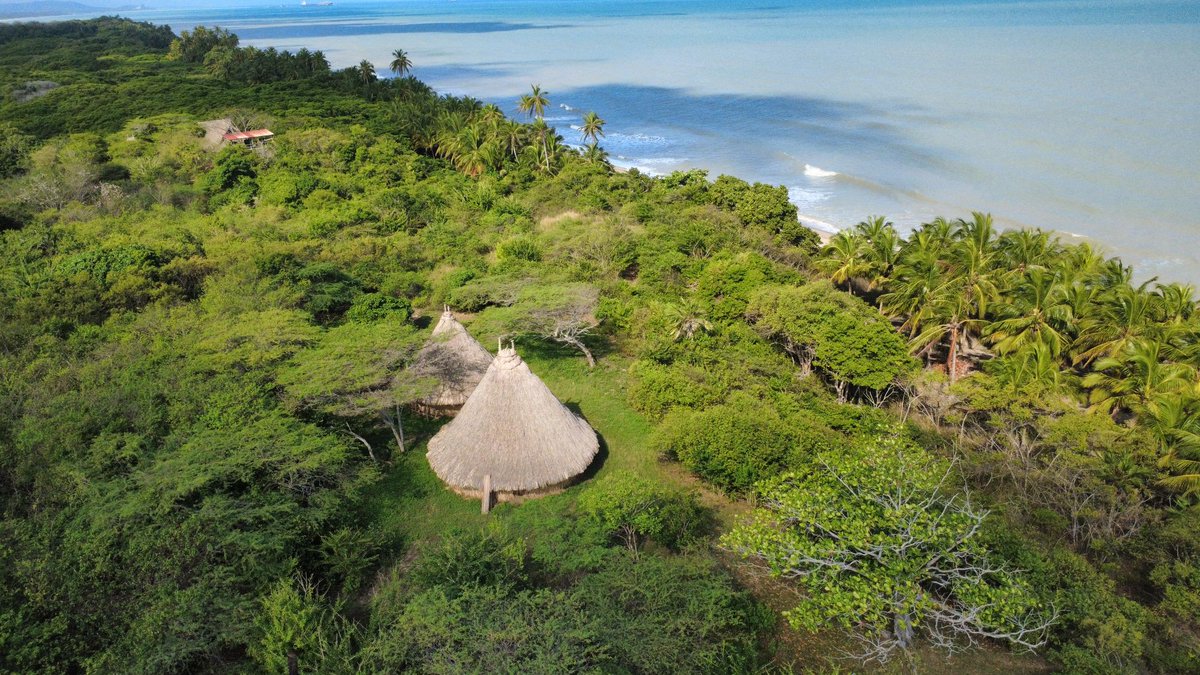
Jaba Tañiwashkaka is a sacred site spanning 528 acres in the department of La Guajira.
For the Kogui peoples, Jaba Tañiwashkaka is the origin of the natural world that forms their territory.
The property contains several sacred sites of the Black Line and also helps protect a fourth site at the river mouth along its edge. The Black Line—a ring of 348 sacred sites surrounding the Sierra Nevada de Santa Marta—holds immense cultural value for the Kogui, Arhuaco, Wiwa, and Kankuamo peoples.
Photo: Brian Hettler
Who we are goes beyond a name.
At Amazon Conservation Team, we walk alongside Indigenous and traditional communities who know that land, life, and culture are deeply connected.
From Mexico to the Andes, the Guiana Shield, and the heart of the Amazon, we listen, learn, and support Indigenous-led efforts to protect territories, knowledge, and life itself.
🌿 True conservation begins with those who have always been the guardians of the Earth.
👉 https://t.co/yL2S9VRste
Portraits from Sibundoy, part of a collaboration with Colombia’s Geographic Institute Agustín Codazzi (IGAC) to reclaim Indigenous place names through memory and oral history.
In the Sierra Nevada, everything is connected—the sea, the glaciers, the people, and life itself.
This territory is alive.
348 sacred sites form the heart of this land, protected by Indigenous guardians since the beginning of time.
Together with Indigenous communities, ACT’s team journeys through these mountains to map sacred sites, document ancestral knowledge, and support local efforts to protect and care for the territory.
We walk alongside their vision—because safeguarding these lands means protecting the balance that sustains us all.
Link: https://t.co/APgcNjMeCZ
Curare shows how Indigenous knowledge shaped modern medicine.
Read the full story → https://t.co/CloageL8i7
Credit: Dr. Mark J. Plotkin, from his book “The Amazon: What Everyone Needs to Know“
For the Kogui people, the Sierra Nevada de Santa Marta region of Colombia is a sacred territory – the spiritual and ecological heart of their existence. With the support of IGAC and ACT, the Kogui recently took part in a native place names project, mapping and documenting 36 sacred sites and 3 community spaces.
These are not just geographic markers on a map, but also linguistic expressions of ancestral knowledge that continue to guide the Kogui worldview. You can take a journey through each location, with stunning photos and stories, on the IGAC website.
Link: https://t.co/4CgrOazDXC
Five reasons to celebrate in 2025 💚🍃
From rainforest headwaters to coastal mangroves, 2025 was a year of quiet victories and powerful partnerships. Together with Indigenous and local communities across Central and South America, we helped safeguard forests, rivers, coastlines, and wildlife—while also strengthening the food systems, livelihoods, and cultural knowledge that make those ecosystems thrive. Because in the Amazon and beyond, nature and people are inseparable.
As we close out our 29th year of biocultural conservation, we wanted to share five (okay, six) highlights from 2025 that were made possible by your support.
Link: https://t.co/JPoguOhMOP
While in Costa Rica, ACT Ambassador Oli joined the Ancestral Tides project to help release baby sea turtles into the ocean — and shared fun facts about these ancient ocean travelers along the way.
Community-led conservation helps protect sea turtles, healthy oceans, and the people who depend on them. This is what hope looks like in motion.
🎥 Take a look at Oli's YouTube channel:
https://t.co/td3dsFXWJq
Some reunions echo long after they happen🌱
After a century, the Miranha people came together again—reclaiming language, memory, and culture.
▶️ From the Forest to the Word of Spirit: The Reunion of the Miranha
Link: https://t.co/Elzr4A71S5
Communities mapping their own future 🌱
In Suriname, Tareno and Matawai communities are leading the way—presenting Indigenous-led development plans rooted in culture, territory, and collective vision.
These plans are not just about development. They are about identity, self-determination, and choosing a future guided by community values and ancestral knowledge.
When communities define who they are and where they’re going, real change becomes possible.
Read the full story: https://t.co/pX2DYbtB7v
Photos: ACT-Guianas
For nearly 30 years, we have worked alongside Indigenous peoples to protect the Amazon through community-led, culturally grounded conservation. The Court’s decision validates the work already underway and provides clearer pathways and coordination mechanisms that will make this work even more effective.
“For us, this is a historic milestone in Colombia and a collective victory that opens the door for us to support the implementation of the decree with even greater strength next year,” said Juana Hofman, ACT’s Technical Director, who led the legal strategy supporting Decree 1275.
Read more: https://t.co/snWrgqLo9t
Protecting a Global Food Staple: Statement on Cassava Disease
“Cassava is the major food crop in these regions imagine what crop failure would mean,” Dr. Mark Plotkin, ethnobotanist and ACT president, said. “For millions of families, it’s the equivalent of corn failing in North America.”
Read it here: https://t.co/jzoDGHce3S
Connections can be drawn between chocolate, ancestral knowledge, and saving sea turtles …
Castronovo Chocolate’s Arhuacos 60% Dark Milk with Sea Salt bar honors the traditions of the Arhuaco people, and sales help protect the rainforest they call home.
The bar is part of ACT’s Gifts That Give Back collection, and a portion of proceeds supports our work with Indigenous communities and conservation.
Watch the full story on YouTube: https://t.co/INI5GBnzQM
The Amazon thrives when its peoples thrive 🌿
Across the region, Indigenous, local, and Afro-descendant communities are strengthening sustainable livelihoods—from agroforestry and craft enterprises to stingless beekeeping and traditional medicine.
These are real, forest-friendly solutions that protect territories, cultures, and the biodiversity we all depend on.
Support community-led solutions. Support a living Amazon.
🔗 Give Today: https://t.co/0RhLl3Oh7W
Gifts that give back🌱
Shop products that directly support ACT’s work with Indigenous and local communities.
Find your gift → https://t.co/BMA7T3YBKt
#CyberMonday#GiftsThatGiveBack