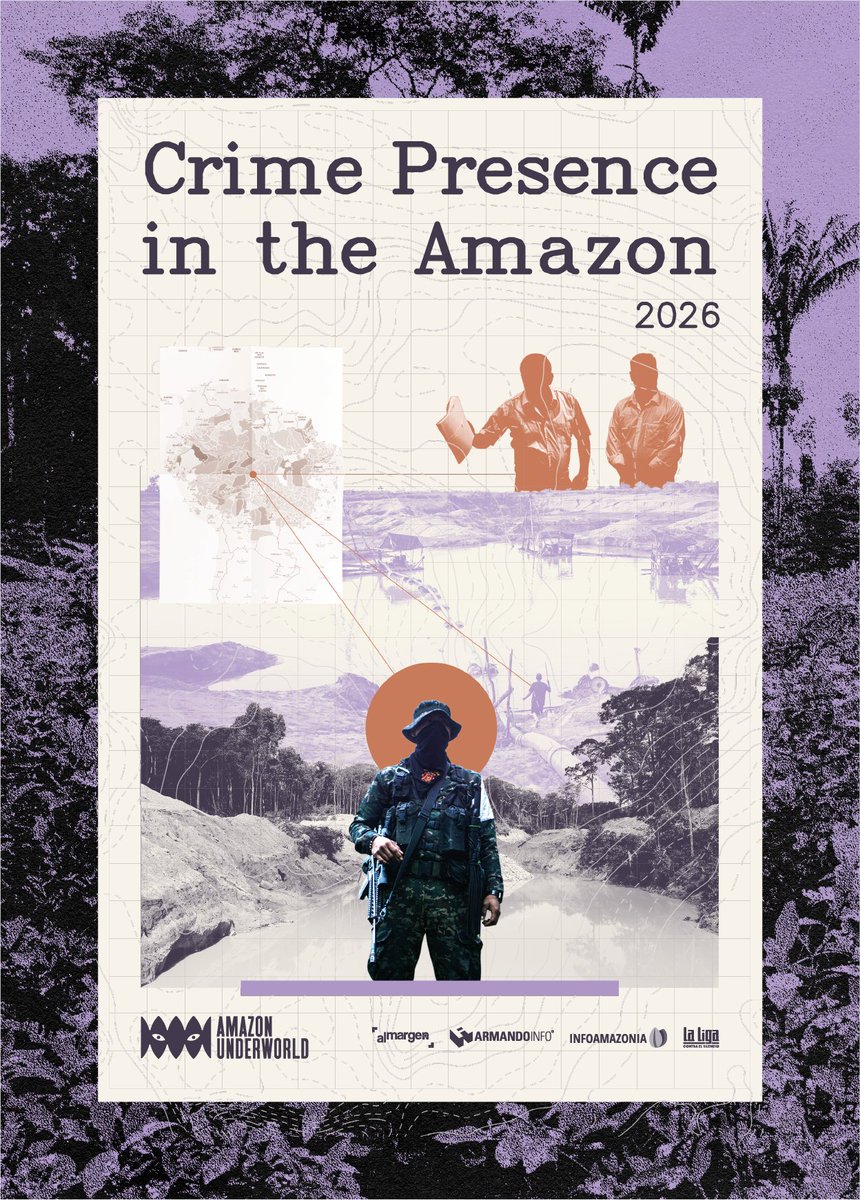
⭕️ Today, we release our 2026 report on the presence of organized crime and armed groups in the Amazon. It is our third annual mapping and comes with an interactive tool. Check it out!
➡️ https://t.co/jzGHQRmR3s
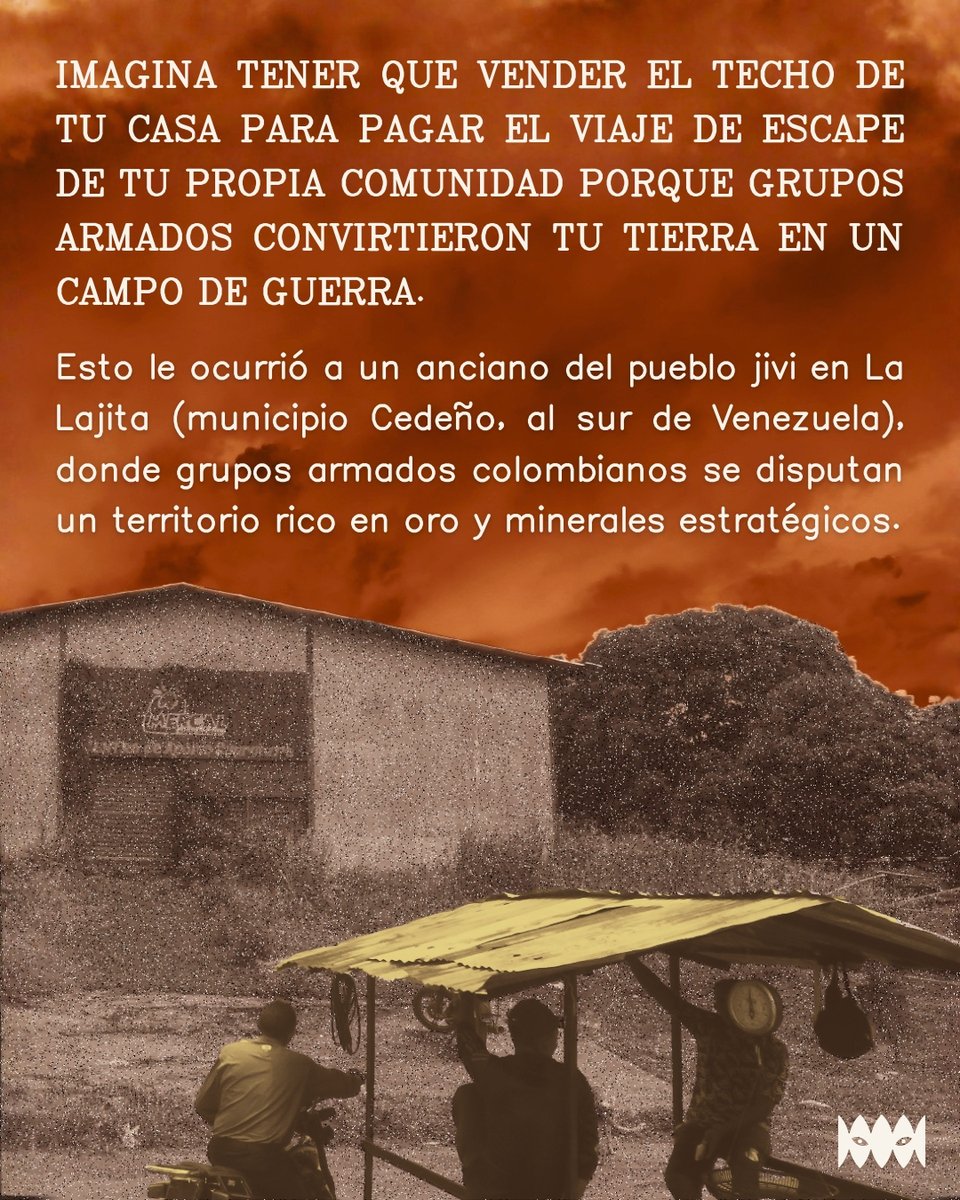
Al sur de Venezuela, el ELN intentó llevarse a un niño de 12 años a plena luz del día y desató un éxodo forzado.
Para costear su huida, un anciano indígena tuvo que vender hasta el techo de su casa.
🔗 Investigación periodística completa en el enlace de nuestro perfil.
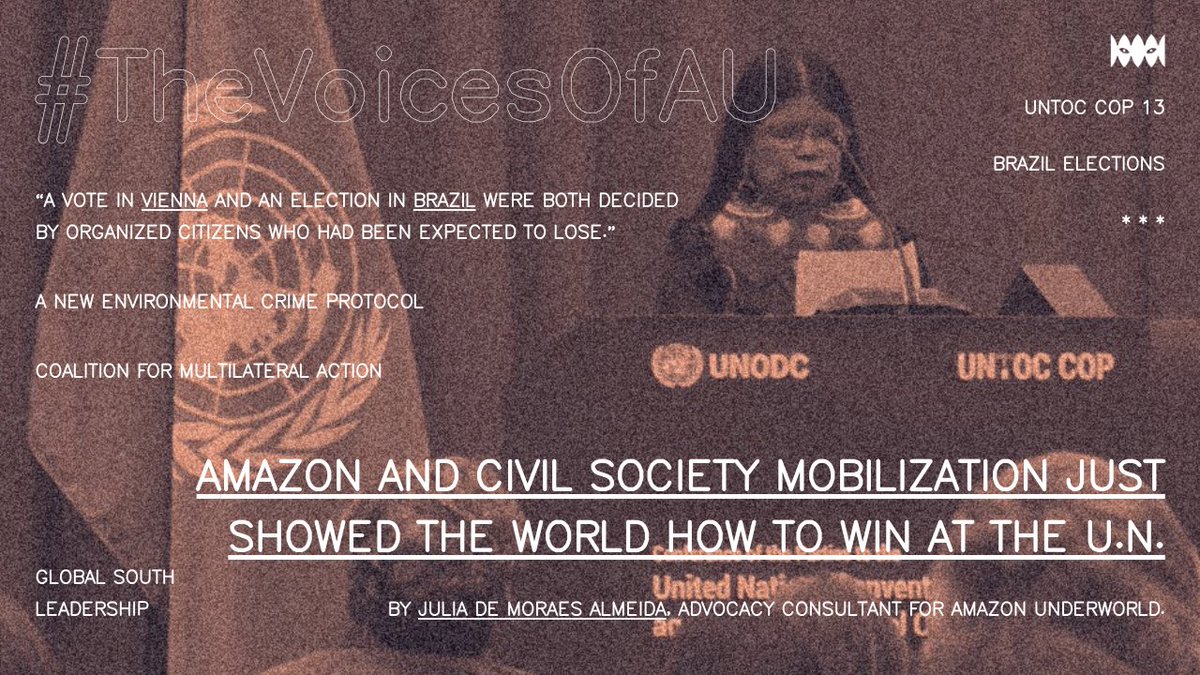
Amazon and civil society mobilization Just Showed the World How to Win at the U.N.
A vote in Vienna and an election in Brazil were both decided by organized citizens who had been expected to lose.
On Friday, October 23, after a week of closed-door bargaining and open resistance from some of the world's most powerful governments, the parties to the U.N. Convention against Transnational Organized Crime voted to begin negotiating a new protocol on crimes that affect the environment. The result was 83 in favor, 12 against and 27 abstentions, or 87.37 percent of votes cast, far above the two-thirds majority required.
The new instrument would target the trafficking of wildlife and timber, illegal mining, the trafficking of minerals and precious metals, and waste trafficking. It would become the fourth protocol to the Palermo Convention, alongside those on human trafficking, migrant smuggling and firearms. Its purpose is to close a legal gap. In many countries environmental offenses are not classified as “serious crimes,” so prosecutors cannot use the convention's provisions on extradition, mutual legal assistance and asset confiscation against those who profit from them. In the Amazon, gold, critical minerals, timber and cash cross borders where definitions and penalties do not match.
Brazil had been working toward this vote for two years. In 2024, it tabled a resolution with France and Peru at the previous conference of the parties, creating an expert group to examine the gaps in international law. In May 2025, a Brazilian resolution adopted by the U.N. Commission on Crime Prevention recognized illegal mining and wildlife trafficking as environmental crimes of the utmost gravity.
In November 2025, in Rio de Janeiro, Environment Minister Marina Silva launched the Coalition for Multilateral Action against Crimes that Affect the Environment, with the explicit goal of a binding framework under the Palermo Convention. Months later, the coalition grew to 16 countries and 10 civil society organizations, including the @GI_TOC, the @TheWCS, the @EIA_News, @igarape_org, and @AmazonUworld.
Governments and nongovernmental organizations rarely share a coalition in U.N. crime negotiations, which have long been the territory of justice ministries and police agencies. Brazil built that alliance into its strategy, relying on the organizations for field evidence and contacts while its diplomats worked to secure the votes.
Much of the argument was made outside the negotiating rooms, by people who had traveled from the places where these crimes happen. The conference drew more than 2,100 participants from 142 countries and representatives of 320 nongovernmental organizations. At its center was a delegation of Indigenous leaders from Brazil, Colombia, Ecuador and Peru, coordinated by @amazonwatch. They addressed the plenary, met diplomatic missions and pressed governments to treat Indigenous territorial governance as a pillar of global security. The delegation included Patricia Gualinga of Ecuador, a member of the U.N. Permanent Forum on Indigenous Issues; Galois Flores of Peru's Wampis Nation; and Francisco Da Silva Piyako, from Brazil's Juruá region. Brayan Mojanasinsoy, an Inga leader from Colombia, put it plainly: “Without us, Indigenous peoples, there is no security in the Amazon.”
Amazon Underworld, the cross-border alliance of investigative journalists founded and co-directed by @BramEbus, attended a UNTOC Conference of the Parties for the first time. In its plenary intervention, it presented findings that in Colombia and Peru the illicit minerals trade now generates more revenue than cocaine trafficking, and that weak traceability lets illegal gold and critical minerals reach international buyers through ports, free trade zones and foreign refineries. The organization took the same evidence to three side events with partners including Amazon Watch, the Wildlife Conservation Society, the Global Initiative against Transnational Organized Crime, Brazil, Peru, the United Kingdom and UNODC, and published a report on gold, critical minerals and organized crime in Colombia and Venezuela.
@MCabreraLeal, Colombia's former vice minister of environment, who works with Amazon Underworld as a consultant on mineral supply chains and the UNTOC process, said its investigations into the Amazon's minerals trade served as input to the discussions.
Before the vote, @PasqualatoAlice of the Wildlife Conservation Society read a statement on behalf of 19 organizations urging states to open negotiations. After it, she called the result “a landmark moment in the global fight against environmental crime.” Brazil's delegation called the decision historic and thanked civil society for pressing the issue.
About a dozen governments opposed the process from the start, and the outcome remained uncertain until the votes appeared on the screen. The United States tabled three amendments that would likely have delayed the negotiations and complicated their funding. At Brazil's request, each was voted down. The United States, Argentina, Israel, Japan, Saudi Arabia and Venezuela were among the 12 countries that then voted against the resolution itself. Brazil kept its co-sponsors on board: Bolivia, Colombia, Costa Rica, Ecuador, Panama, Peru and Uruguay, along with the Democratic Republic of Congo, Mauritania and São Tomé and Príncipe. Mr. Cabrera, who was in the room, credited Itamaraty, Brazil's foreign ministry, with an outstanding diplomatic effort.
Two days later, on Sunday, October 25, President @LulaOficial Luiz Inácio Lula da Silva did something no Brazilian candidate had managed since the return of direct elections in 1989. He lost the first round and won the runoff, and there, too, the outcome depended on mobilization.
Three weeks earlier, Lula had trailed Senator @FlavioBolsonaro by 2.2 million votes. On October 25 he won with 51.79 percent, a margin of more than 4.4 million, after adding more than 10 million votes between rounds. Abstention fell from 21.08 percent to about 19.2 percent, which brought nearly three million more Brazilians to the polls. The Amazon voted differently. In the first round, Flávio Bolsonaro carried Brazil's North region, and none of the nine states of the Legal Amazon elected a governor from Lula's Workers' Party. Across Latin America, conservatives had won seven presidential elections in a row over the previous 18 months, in countries including Chile, Honduras and Bolivia, and Lula's victory ended that run.
Analysts point to his campaign's economic proposals and to his strength in the Northeast, where he carried all nine states. They also describe an unusual degree of mobilization after the first round. Social movements, unions and student groups held rallies in dozens of cities, and young Brazilians organized online without waiting for the party. The race was bitterly contested, and Bolsonaro has rejected the result.
Diplomacy in Vienna and an election in Brazil follow different rules. In both cases, though, the result came from institutions working alongside organized citizens in contests that were far from decided.
Civil society's influence shows in the text of the Vienna resolution. For the first time, it explicitly recognizes the role of Indigenous peoples and local communities in fighting environmental crime and related corruption.
That recognition does not, by itself, give Indigenous representatives a role in the negotiations. The resolution creates no mechanism to guarantee their participation. An ad hoc committee will hold four sessions, aiming to present a draft protocol to the next Conference of the Parties, in 2028.
Much of the work is still ahead. Environmental crime runs through gold refineries, commodity markets and financial systems far from the Amazon, and a treaty written without the people who face these networks every day is likely to miss how they operate.
Over the next two years, Amazon Underworld will push for illegal mining and mineral trafficking to stay within the protocol's scope, and for traceability obligations that extend to refineries, free trade zones and consumer markets. It will keep bringing evidence from the field to the negotiations, working with the Indigenous organizations and partners it met in Vienna.
Vienna showed that countries of the Global South can set the agenda when they act together and give civil society a real role. The negotiations ahead will test whether that arrangement holds until a treaty is signed.
By Julia de Moraes Almeida, advocacy consultant for Amazon Underworld.
¡𝗚𝗮𝗻𝗮𝗺𝗼𝘀 𝗲𝗹 𝗽𝗿𝗶𝗺𝗲𝗿 𝗹𝘂𝗴𝗮𝗿 𝗲𝗻 𝗲𝗹 𝗙𝗲𝘀𝘁𝗶𝘃𝗮𝗹 𝗜𝗻𝘁𝗲𝗿𝗻𝗮𝗰𝗶𝗼𝗻𝗮𝗹 𝗱𝗲 𝗖𝗶𝗻𝗲 𝗩𝗲𝗿𝗱𝗲 𝟮𝟬𝟮𝟲ⵑ
Nuestro corto documental "Árboles saqueados de Bolivia" obtuvo el primer lugar en la categoría Reportaje de la XIII edición del Festival Internacional de Cine Verde, celebrado en Santa Cruz de la Sierra.
Esta investigación transfronteriza en colaboración con @RAIBolivia revela cómo operan las redes de tráfico maderero entre Bolivia y Perú, y expone las rutas clandestinas, la corrupción y los mecanismos utilizados para introducir madera extraída de forma ilícita de los bosques amazónicos de Pando en los mercados internacionales.
Nuestro agradecimiento al Festival Internacional de Cine Verde, al jurado y a todo el equipo involucrado.
Míralo aquí: https://t.co/HJ26SM2OOA
🚨La Amazonía está bajo asedio.
Acabamos de lanzar la última actualización de nuestro mapa interactivo de presencia de crimen organizado en la Amazonía.
Encuéntralo en el enlace de nuestro perfil.
¿Te perdiste el webinar de lanzamiento de nuestro informe y mapa interactivo de presencia del crimen organizado en la Amazonía?
¡Suscríbete para recibir el enlace a tu correo electrónico!
https://t.co/x8J66jLbuW
Este miércoles enviaremos la grabación completa en nuestro newsletter.
@BramEbus
#ELECCIONESBRASIL
Este domingo el balotaje presidencial marcará el rumbo de las políticas ambientales y de seguridad para la Amazonía, una región clave para el mundo.
Lo que está en juego para la Amazonía:
- Manejo de recursos claves en la mira de potencias mundiales como las tierras raras y los minerales estratégicos.
- Control del tráfico ilícito de oro, mercurio, armas y drogas.
- Protección territorial de comunidades indígenas y defensores ambientales.
- Diplomacia transfronteriza e integración de seguridad entre países amazónicos.
Flávio Bolsonaro (PL - Partido Liberal). El senador e hijo del expresidente Jair Bolsonaro ganó la primera vuelta electoral del 4 de octubre con el 47,03 % de los votos válidos.
Lula da Silva (PT - Partido dos Trabalhadores). El actual presidente de Brasil busca asegurar un cuarto mandato. Obtuvo el 45,16 % de los votos válidos en la primera vuelta.
Today, we're co-organizing "Illegal Mining, Trafficking of Minerals and the Case for Stronger International Cooperation", a UNTOC COP13 side event hosted by @TheWCS
MOE07 9h00 AM
We brought the hard data to #UNTOC to show world leaders why fighting environmental crime requires cross-border cooperation, financial intelligence and social investment.
Explore our latest Policy Paper + interactive map: https://t.co/jzGHQRmR3s
Amazon Under Siege: Organised Crime Threatens Indigenous Communities.
Illegal gold mining, drug trafficking and logging are converging across the Amazon, putting Indigenous communities and environmental defenders at risk.
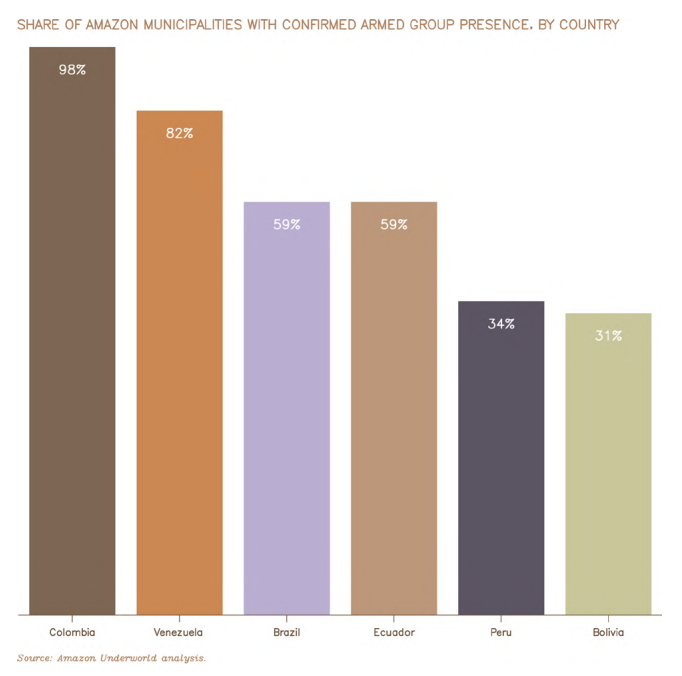
A new 2026 mapping found criminal groups or armed organisations operating in 768 of 1,310 Amazon municipalities across six countries. Indigenous leaders are now urging governments to negotiate an international agreement against environmental crimes at a UN conference in Vienna.
Their message: protecting the Amazon means protecting the people who defend it.
Watch the full video.
@UNODC@UNEP@AmazonWatch@coicaorg@crisisgroup@amazonuworld
#Amazon #IndigenousRights #EnvironmentalCrime #IllegalMining #Deforestation #EnvironmentalDefenders #LatinAmerica #NWS
"For a healthy planet, we need a healthy Amazon. Nevertheless, we see that organized crime is a main obstacle and impediment for climate action and environmental conservation."
At the plenary session of the UNTOC Conference of the Parties in Vienna (United Nations Convention against Transnational Organized Crime), Amazon Underworld founder and co-director @BramEbus took the floor to warn UN member states that the Amazon is under full frontal attack by organized crime, which has expanded from drug trafficking into illegal mining, timber, and land grabbing. With budgets eclipsing state law enforcement, these networks launder profits through environmental crimes and target Indigenous defenders. Fueled by global demand, this crisis demands the same level of cross-border cooperation from governments that criminal structures already use.
Amazon Under Siege: Organised Crime Threatens Indigenous Communities.
Illegal gold mining, drug trafficking and logging are converging across the Amazon, putting Indigenous communities and environmental defenders at risk.
A new 2026 mapping found criminal groups or armed organisations operating in 768 of 1,310 Amazon municipalities across six countries. Indigenous leaders are now urging governments to negotiate an international agreement against environmental crimes at a UN conference in Vienna.
Their message: protecting the Amazon means protecting the people who defend it.
Watch the full video.
@UNODC@UNEP@AmazonWatch@coicaorg@crisisgroup@amazonuworld
#Amazon #IndigenousRights #EnvironmentalCrime #IllegalMining #Deforestation #EnvironmentalDefenders #LatinAmerica #NWS
Today we are hosting "The Energy Transition and Organized Crime in the Amazon: Illegal Mining, Illicit Economies and the Governance Challenge for UNTOC," an official UNTOC COP13 side event in Vienna.
Organized by Amazon Underworld with the support of @amazonwatch and the @GI_TOC, this session addresses how the global push for clean energy is unintentionally opening a new illegal mining frontier across the Amazon.
While demand for critical minerals surges worldwide to power green technology, weak local governance allows criminal networks to control and tax illicit extraction. These activities converge with drug trafficking, land and timber trafficking, and money laundering—endangering Indigenous Peoples and connecting remote forest territories to global supply chains.
1. The Energy Transition Paradox: How surging demand for strategic minerals fuels illicit economies and deforestation.
2. Transnational Convergence: Concrete evidence linking illegal mining to drug smuggling, land trafficking, and international supply chains.
3. Actionable Governance & Protocols: Positioning traceable supply chains, territorial security, and international cooperation as core strategies under the proposed UNTOC protocol on environmental crimes.
Join field investigators, state representatives, and indigenous rights advocates as we bridge field-based evidence with global anti-crime policy.
Amazon Underworld’s participation as an observer at the United Nations Convention against Transnational Organized Crime (UNTOC) Conference of the Parties is strategically important because it creates a bridge between evidence from the ground in the Amazon and international policymaking on organized crime.
Organized crime in the Amazon is not limited by national borders. Criminal networks operate across countries, exploiting gaps in governance, environmental regulation, and law enforcement. Activities such as illegal gold mining, mineral trafficking, drug trafficking, and illicit economies are increasingly interconnected, with serious consequences for Indigenous peoples, local communities, ecosystems, and territorial governance.
Our role as observers goes beyond sharing research findings. We seek to transform evidence into advocacy, advocacy into political engagement, and political engagement into concrete policy commitments.
Our advocacy work focuses on four interconnected priorities:
1. Influencing international policy agendas: Bringing evidence from the Amazon into UNTOC discussions, particularly regarding environmental crimes, illegal mining, mineral trafficking, and the connections between criminal economies and transnational organized crime. We aim to ensure that these issues are adequately reflected in international priorities and emerging legal frameworks.
2. Engaging directly with governments: Through bilateral meetings and diplomatic dialogue, we seek to understand national positions, identify opportunities for convergence, and encourage States to support stronger international cooperation, including discussions on a potential additional protocol on crimes that affect the environment.
3. Building coalitions and strategic partnerships: Connecting governments, civil society organizations, Indigenous representatives, and international institutions to strengthen collective advocacy efforts and develop coordinated positions that can influence negotiations and future implementation.
4. Connecting international commitments to territorial realities: Using our investigations and engagement with affected communities to advocate for policies that respond to the actual dynamics of organized crime in the Amazon, while promoting human rights, environmental protection, and meaningful community participation.
Our objective is not simply to participate in international discussions, but to influence how governments understand, prioritize, and respond to organized crime in the Amazon.
¡AMAZON UNDERWORLD EN LA #COP13 DE LA #UNTOC!
Recibimos la invitación oficial para participar como organización observadora en la 13.ª Conferencia de las Partes de la UNTOC, que se celebra en Viena del 19 al 23 de octubre. 🇦🇹
Es una oportunidad clave para llevar la evidencia de nuestras investigaciones de campo directamente ante delegaciones diplomáticas y responsables de políticas públicas a nivel global.
En Viena buscaremos posicionar la trazabilidad en las cadenas de suministro, la gobernanza territorial e indígena y la urgencia de un nuevo protocolo sobre delitos ambientales en la agenda de seguridad internacional.
¡Mira las imágenes para conocer la agenda completa!
Hoy @AmazonUworld publica sus mapas anuales de presencia criminal en la Amazonía.
Los grupos criminales operan en casi todos los municipios de la Amazonía colombiana y en más de la mitad de los de Venezuela, Brasil y Ecuador.
Lea el informe aquí 👇
https://t.co/tuBPoVvTWb