Wife|Mother|Dog Mom|Writer. Diploma from The Institute of Children's Literature. Poetry @femininecollect. Vocal & Medium. FB: Amber R. Dulaney: Poetry and Prose
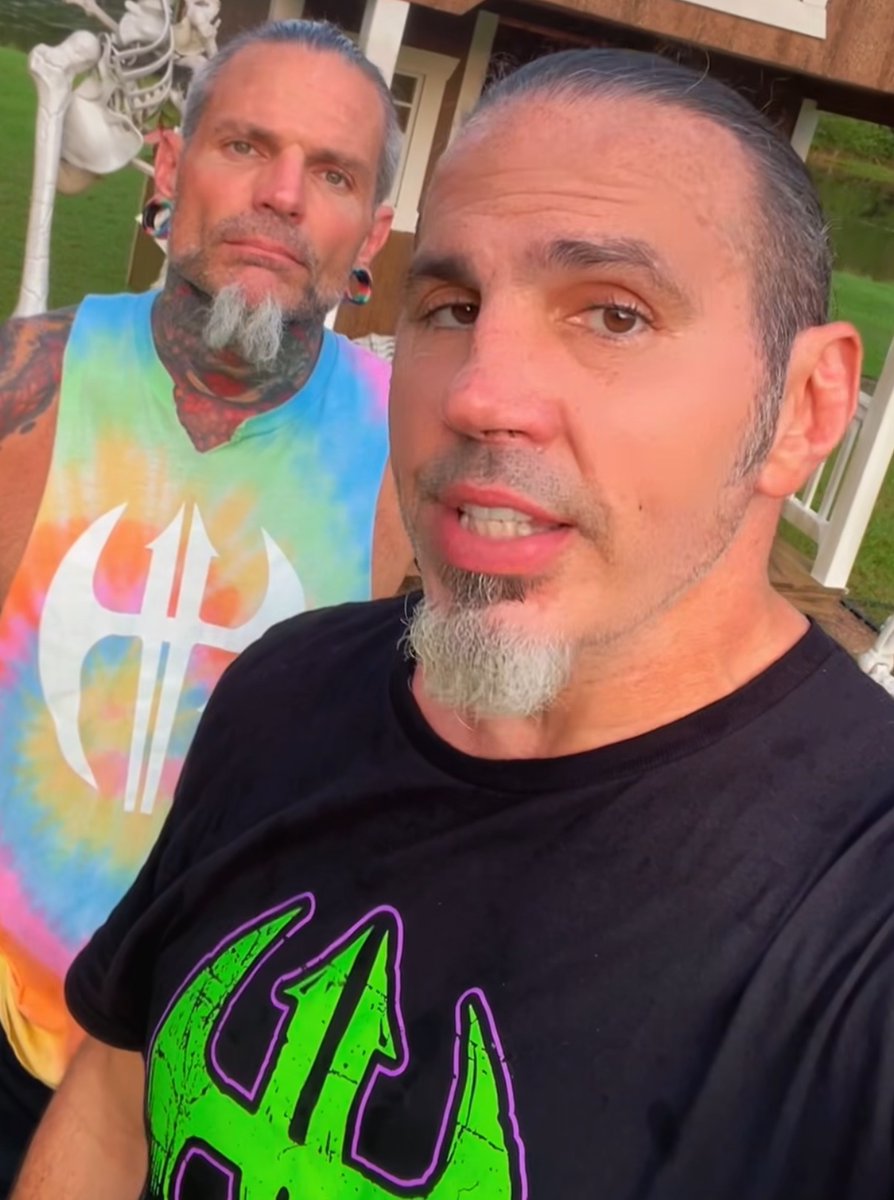
Matt Hardy reveals Jeff Hardy is trying to fully pursue a career in music as his wrestling career settles down 🎵
“Jeff is working on that transition a little bit too.”
Actress, singer-songwriter, and comedienne Hattie McDaniel was the first African American to ever win an Oscar for her role in 1939’s Gone with the Wind. A trailblazer in every sense, she left an undeniable legacy for her work; including receiving two stars on the Hollywood Walk of Fame and credited as the first black artist to sing on radio....
She became the first African-American actress to win an Oscar. Still, on the night she was honored, she was not allowed to sit with her co-stars from the same film.
When Hattie McDaniel played the role of Mammy in Gone with the Wind, she created an unforgettable character that captured the attention of audiences everywhere.
Her performance was so strong that she won the Academy Award for Best Supporting Actress in 1940. It was a landmark achievement that no Black artist had ever reached before.
Yet that amazing success happened during a time when talent alone could not wipe away racial discrimination.
While filming Gone with the Wind, Hattie formed a genuine friendship with her co-star Clark Gable. Between takes, they shared jokes, laughter, and mutual respect.
Outside the studio, however, the real world was very different. When the movie held its grand premiere in Atlanta, Georgia, in December 1939, local segregation laws banned Hattie and other Black cast members from attending the event.
Clark Gable was deeply outraged by the ban and threatened to boycott the premiere completely.
Hattie personally convinced him to go anyway, placing the success of the film and the team above her own disappointment.
"You have to go," she told him, insisting that the cast deserved to celebrate their hard work together.
A few months later, the night of the Academy Awards arrived.
Even on her night of triumph, Hattie faced bitter inequality. The ceremony was held at the Ambassador Hotel in Los Angeles, California, a venue that enforced strict segregation rules.
Producer David O. Selznick had to ask for a special favor just to get Hattie into the building.
Even then, she was not permitted to sit at the main table alongside Clark Gable, Vivien Leigh, or the rest of the cast.
Instead, she was placed at a small table pushed against a far wall, separated from her fellow actors.
When her name was announced as the winner, she walked up to the stage to claim her trophy. "I sincerely hope I shall always be a credit to my race and to the motion picture industry," she said in her heartfelt acceptance speech.
Winning the Oscar made history, but it did not immediately shatter the racial barriers in Hollywood.
The film industry continued to offer her limited roles, mostly as domestic servants. When critics questioned her career choices, Hattie answered with unforgettable honesty.
"I would rather make seven hundred dollars a week playing a maid than seven dollars a week being one," she explained.
Hattie McDaniel passed away in 1952, leaving behind a legacy of strength and grace. Her journey stands as a lasting symbol of courage in the face of deep injustice.
Despite every obstacle put in her path, Hattie opened a door that could never be closed again.
Her dignity on that stage proved that talent and spirit will always shine brighter than hate, paving a smoother road for every artist who walked in her footsteps.
Hattie's story reminds us that true progress often comes with painful sacrifices. Her courage in a room that tried to hide her showed the world that a person's worth is defined by their character, not by where society forces them to sit.
#archaeohistories
Thank you @Saraya for always being your beautiful, authentic, most vulnerable self! And thank you for sharing so many hard lessons 🙏 the most important: no matter how low we might feel, we are never alone. #whatsyourstory@WWE@Fanatics@EGxo
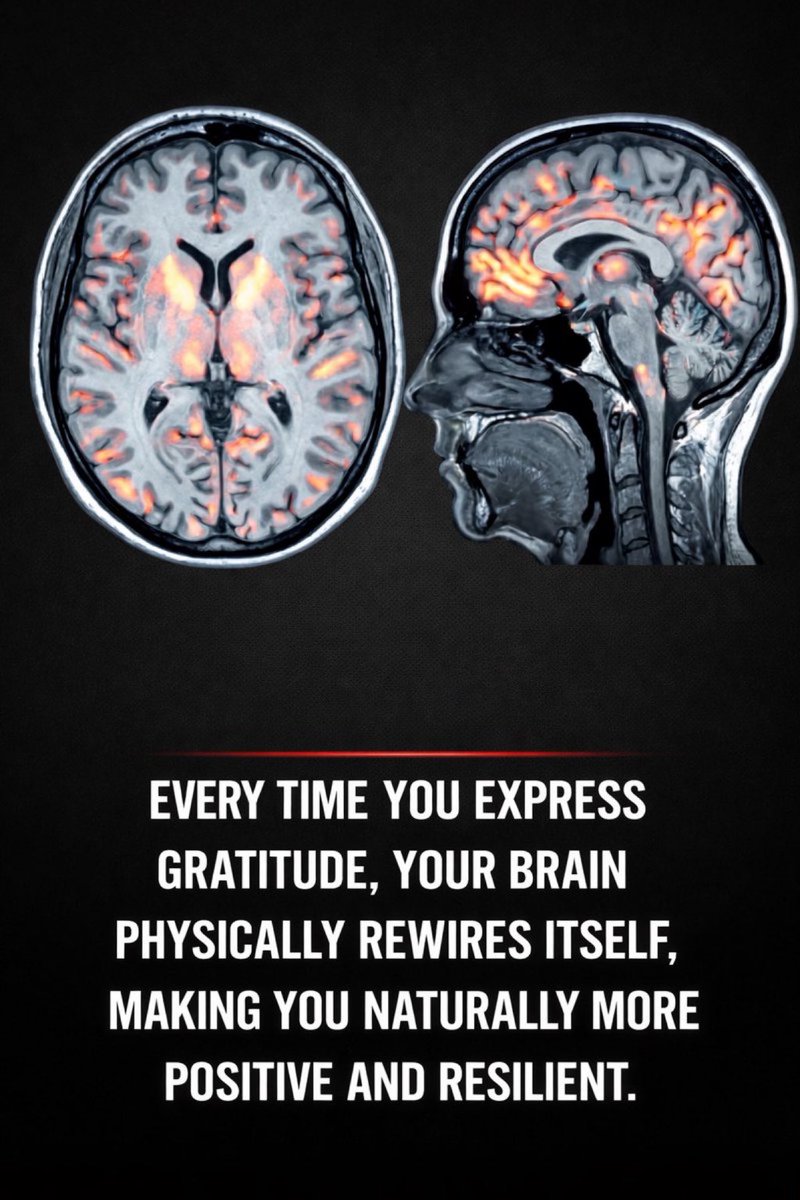
Research shows that regularly practicing gratitude can lead to measurable changes in the brain. This effect is driven by neuroplasticity, the brain’s ability to reorganize itself based on repeated thoughts and behaviors. When people intentionally focus on appreciation, neural pathways involved in emotional control and coping become stronger.
Grateful thinking also stimulates the release of dopamine and serotonin, chemicals linked to pleasure and motivation, while helping reduce cortisol, the hormone associated with stress. Brain regions such as the prefrontal cortex and hypothalamus become more active, supporting improved mood regulation and overall mental health.
Over time, gratitude does more than provide short-term emotional relief. It gradually shifts the brain away from its natural bias toward threat detection and toward noticing positive experiences instead. Simple habits like writing down what you’re thankful for or expressing appreciation aloud reinforce these patterns, making optimistic thinking more automatic.
Studies indicate that this repeated practice builds lasting neural connections, promoting emotional balance, resilience, and well-being. In essence, regularly acknowledging what’s going well can retrain the brain showing that small daily moments of gratitude can produce meaningful, long-term psychological benefits.
MARCH DECLARATION.. we are starting out STRONG!!
Say this out loud:
“I guard my mind like I guard my destiny.
Only truth gets a seat at my table.
Every voice that contradicts God is dismissed.
I think with power.
I think with peace.
I think with purpose.
My mind is mature. My spirit is steady.
And I will not host what God has already defeated.”
Fear…. your seat is revoked.
Offense…. your seat is revoked.
Comparison….your seat is revoked.
Shame…. your seat is revoked.
Only faith gets a vote in this season.
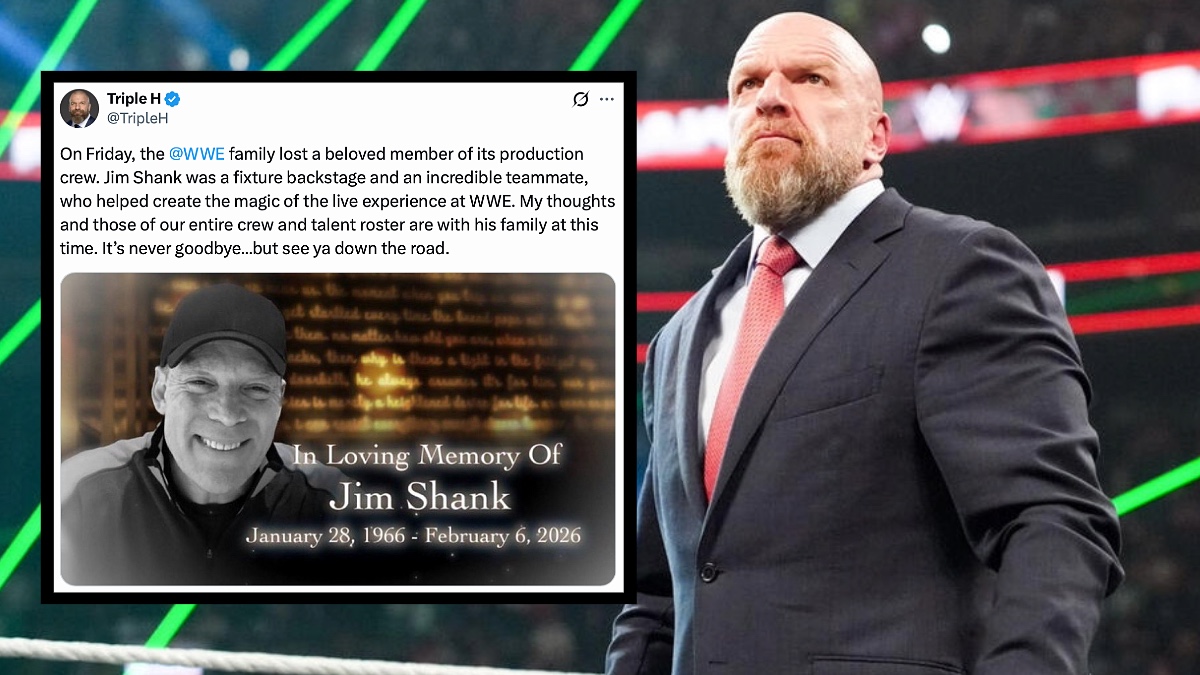
Triple H pays tribute to WWE production staff member Jim Shank following his passing on Friday:
"On Friday, the WWE family lost a beloved member of its production crew.
"Jim Shank was a fixture backstage and an incredible teammate, who helped create the magic of the live experience at WWE.
"My thoughts and those of our entire crew and talent roster are with his family at this time.
"It’s never goodbye…but see ya down the road."
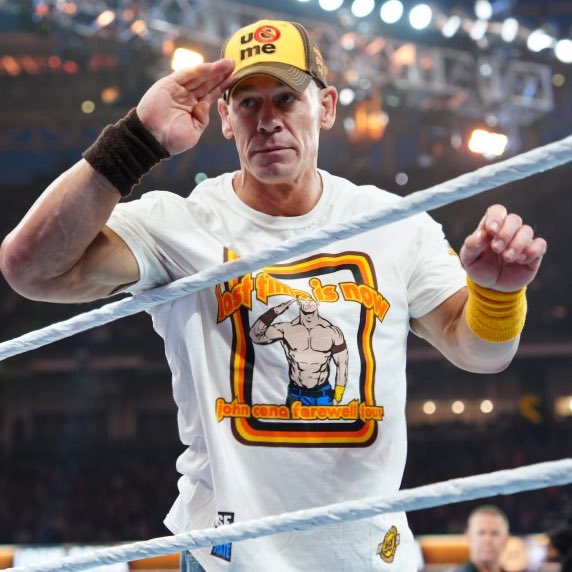
John Cena says he called Triple H to tell him he didn’t want a tribute show for his retirement, and pitched to have NXT talent featured vs Main Roster stars on his retirement show:
“I called Triple H and I said ‘I have an idea, you’ll know how to do this because I don’t know how to write Television. But I think if we do a tribute show. 1 of 2 things are gonna happen. It’s either gonna be too much or too little. Which means it’s not gonna be good.
Why don’t we take SNME, everyone knows it’s John Cena’s last match. The video packages you wanna trickle in, no problem. Then we go to the match, have the match, that’s the night.
But beforehand, on a night I know people are gonna be tuning in, sold out, and the last piece of relevant energy I can get an audience member to tune in to. Show the future of your business, have top name WWE Superstars, CM Punk, Charlotte Flair, you put it together however you want, have them have non-canon exhibition matches with the future of the business.
Bring kids up from NXT, get em in a building with real noise. Real energy. Let em get under the bright lights. Maybe, just maybe like ‘I wanna be here’. And they get to wrestle people with experience, wisdom and in non-canon, exhibition matches with nothing on the line. It’s a chance to hear the music of your favourite Superstars against somebody you have no idea.
And he said that a great idea. They’re gonna do it. I have no clue what the plan is, but I know thats how I wanna go out”
(@ringer)
Triple H has praised the future of WWE, noting that the 'field is deep' underneath the top stars of the company:
"The thing about it this year is, and I think you see it in the WrestleMania commercials, the field is wide open between a Brock Lesnar, between Roman, Punk, Cody, Seth is on the shelf right now but he factors into that.
"That's not even counting the new generations of the Bron Breakkers, the Bronson Reeds, the younger guys that are up and coming.
"When people talk about the business now, and they talk about where our talent are at, the top players are all in top positions and they're a bit older but the thickness and the depth of what is underneath them is what I'm most excited about because the field is deep, this business is going to be in good shape for a long time."
(Complex)
AJ Lee says she was genuinely "stunned" by the crowd chanting "therapy" during her WWE return promo, revealing that several fans have told her that they've sought therapy of their own since then:
"That was a genuine reaction of like being stunned. I heard one person start to chant it and then a few people around him started chanting “therapy”. And I thought it was so funny.
"...I heard it and I was like I have to respond to this, three guys were chanting therapy and then everyone started to do it and my mind exploded.
"I think if you have a judgmental idea of what you think wrestling crowds could be, you don’t think that they’re in touch with their emotions or open-minded and empathetic like that.
"It was just like my worlds came together and now I did a signing and people had ‘Therapy is cool’ merch, they made themselves. And I’ve had so many people from that moment say they decided to get therapy themselves because of that segment. It’s like what did we do you guys? This is the coolest thing in the world to combine these two things that mean everything to me. But I hope those fans know that they are the reason I came back."
(What's Your Story? With Stephanie McMahon)
God will put you in situations, on purpose, where the odds are against you, so He can show out in your life. It’s not there to stop you; it’s a setup for God to make you an example of His goodness. He will never let you get into a problem that He can’t bring you out of.
Brain Scans Reveal How Bullying Sparks Instant Alarm and Distress
Researchers studying the impact of bullying found that it instantly triggers distress pathways in the brain.
When tweens and adults viewed bullying scenarios, their emotional and social brain networks became highly active, alongside the body’s threat-response systems.
Eye-tracking confirmed heightened attention and emotional arousal.
People with personal histories of being bullied showed even stronger reactions.
These findings highlight how bullying primes the brain for stress and can increase vulnerability to mental and physical health problems over time.