Since expecting FSSAI to do its job is pointless, here’s how you can check for yourself whether your milk is safe.
1. To check for starch: Boil and cool a few ml of milk. Add a few drops of iodine solution (₹200–250) and mix well. If the milk turns blue, it contains starch.
2. To check for detergent: Take 1/3 test tube of milk (a set of 3–6 test tubes with a stand costs ₹250–300). Add 1/3 water and shake vigorously. If you see unusual froth on top, the milk is adulterated.
3. To check for neutralizers (caustic soda, sodium carbonate, bicarbonate): Take 5 ml of milk in a test tube and dip red litmus paper (₹150–250). If it turns blue, it most likely contains adulterants.
4. To check for urea: Take half a test tube of milk. Add one teaspoon of arhar dal powder, mix, and wait for 5 minutes. Dip red litmus paper (₹150–250). If it turns blue, the milk contains urea.
These are crude tests that can give you a basic idea. If you find something suspicious, search for milk testing labs around you and get your doubt confirmed there.
If confirmed, report the matter to FSSAI so that they can blackmail the supplier into increasing their cut in exchange for not cancelling the licence.
Dear @PuneCityTraffic, Thank you for posting 2-3 traffic officers near Magarpatta South Gate T- junction since last few weeks. It helps to reduce traffic violations & subsequently smooth traffic flow, less congestion compared to earlier. Thank you 👍🏻
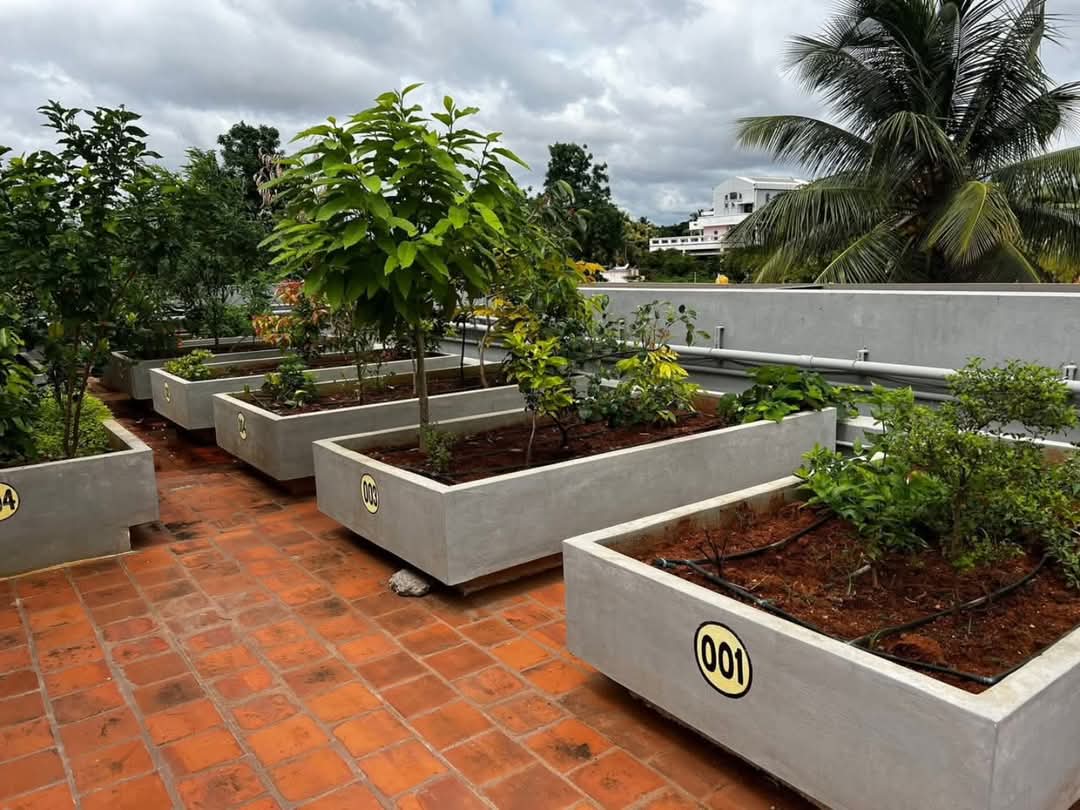
An apartment complex in Mysuru has given rooftop terrace garden spaces for each flat. You can grow your own small terrace garden there.
Like numbered parking space for each flat, this type of garden space for each flat will help!
#Innovative#FB
CONGRATULATIONS TO GUKESH, THE NEW WORLD CHAMPION 🏆
The 18-year-old Indian star has defeated the reigning champion, Ding Liren, to become the youngest-ever undisputed classical chess world champion. Wow! 🇮🇳