In the 1840s, the cunning East India Company levied a tax on the river trade routes along the Hooghly, targeting thousands of poor fishermen. The Company claimed the small fishing boats disrupted the uninterrupted flow of commercial ships sailing from the Kolkata port. Distressed, the fishermen traveled to Kolkata in droves to plead with their landlords to champion their cause, but the elites offered no firm support.
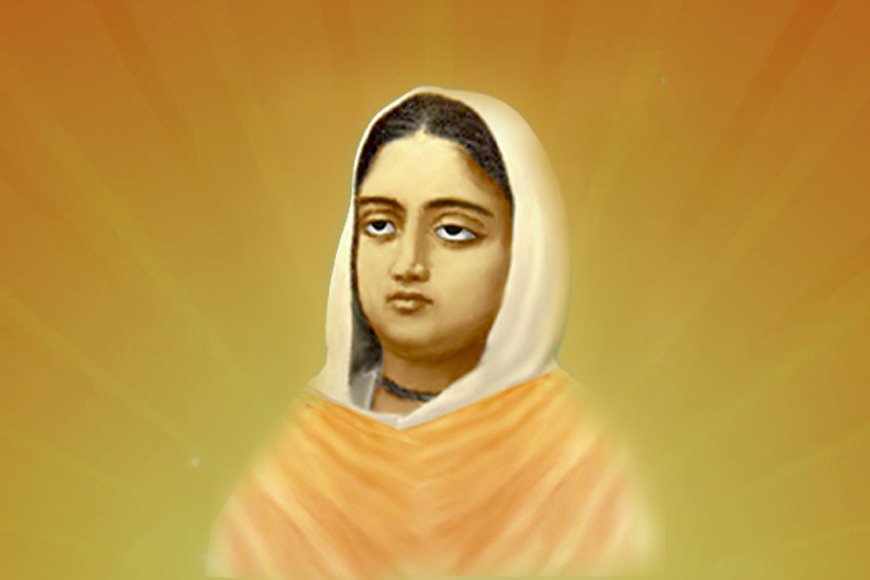
Then, one feisty lady stepped in - the widowed wife of Babu Raj Chandra Das. She did what even the most influential rajas of the era dared not imagine.
She leased a 10 Km stretch of the Hooghly River from the East India Company for 10,000 rupees. Once the agreement was signed, she barricaded her leased territory by stringing two massive iron chains across the river completely halting the Company's commercial vessels. She then invited the local fisherfolk to fish freely within her waters.
When the stunned Company authorities demanded an explanation, she replied that she was simply protecting her business interest in her leased property, as commercial steamships were harming her yield. Quoting British law back to them, she declared herself ready to face them in a British court.
With commercial vessels piling up on both sides of the barricade, an embarrassed East India Company was forced to negotiate. Ultimately, they abolished the tax on fishing, and she unlocked the river. That was the steely resolve of a lady who received no honorific titles from the British, but whom millions of common people crowned "Rani" in their hearts. She was Rani Rashmoni.
Her courage did not end on the riverbanks. When she established the iconic Dakshineswar Kali Temple, most conservative Brahmin priests refused to serve there because she belonged to the Shudra caste. Only one priest stood by her: Ramkumar Chattopadhyay, the elder brother of Ramakrishna Paramahamsa, who would later turn the temple into a site of global renown.
In an era plagued by superstition and societal regressiveness, Rani Rashmoni was centuries ahead of her time. She championed the social reforms of Ishwar Chandra Bidyasagar and even submitted a draft bill against polygamy to the East India Company.
On her birth anniversary today, we remember this extraordinary woman who outwitted the British Raj and fought tirelessly for her people.
🙏🙏
Bhagat Singh’s fellow comrade Shiv Verma recalled what Bhagat Singh told him during their final meeting. Bhagat Singh was martyred at the age of 23.
This video was recorded in 1986, when the then CPIM leader Shiv Verma was 81 years old.
#BhagatSingh#ShivVerma
It is said that Ghazal maestro Mehdi Hassan had deep respect for the Bengali singer Manabendra Mukhopadhyay. Once, while performing in Kolkata, he learned that Manabendra was sitting in the audience. Mehdi Hassan paused his performance mid-way and called out from the stage, asking Manabendra to stand up so he could see him.
Here is Manabendra singing "Jalte Hain Jiske Liye," which he recorded privately.
Take a moment to listen to this , what an effortless performance..
Umberto Eco, qui possédait 50 000 livres, disait ceci à propos des bibliothèques personnelles :
"Il est insensé de penser qu'il faut lire tous les livres qu'on achète, tout comme il est insensé de critiquer ceux qui achètent plus de livres qu'ils ne pourront jamais en lire. Ce serait comme dire qu'il faut utiliser tous les couverts ou les lunettes, les tournevis ou les forets que vous avez achetés avant d'en acheter de nouveaux.
Il y a des choses dans la vie pour lesquelles nous avons besoin de toujours avoir suffisamment de provisions, même si nous n'en utilisons qu'une petite partie.
Si, par exemple, nous considérons les livres comme des médicaments, nous comprenons qu'il est bon d'en avoir plusieurs à la maison plutôt que quelques-uns : quand on veut se sentir mieux, alors on va au « placard à pharmacie » et on choisit un livre. un livre aléatoire, mais le bon livre pour le moment. C'est pourquoi vous devriez toujours avoir un choix nutritionnel !
Ceux qui n'achètent qu'un seul livre, ne lisent que celui-là et s'en débarrassent ensuite. Ils appliquent simplement la mentalité de consommateur aux livres, c'est-à-dire qu'ils les considèrent comme un produit de consommation, un bien. Ceux qui aiment les livres savent qu'un livre est tout sauf une marchandise."
3 of the biggest academic publishers in the world sued a photocopy shop.
The shop charged 50 paise a page. It sat inside a university campus in Delhi and had 1 owner.
The case ran for 4 years. The shop won, and the law changed.
His name is Dharampal Singh.
He set up Rameshwari Photocopy Service in 1998, in a small licensed space inside the Delhi School of Economics at the University of Delhi.
The work was simple. Professors would prepare a reading list. For a course like Agrarian Sociology, that might mean 33 different readings, scattered across 33 different books, most of which cost more than a student's monthly budget and some of which the library had 1 copy of.
Singh photocopied the relevant chapters, bound them together, and sold the bundle. It was called a course pack. The price was 50 paise per page.
That is less than 1 American cent.
He explained it in 1 sentence. If a student needs 33 readings for a course, he said, it could take months to collect them from different books. I make life easier for students by giving them all the material in 1 pack.
In August 2012, Oxford University Press, Cambridge University Press and Taylor and Francis filed suit in the Delhi High Court against the shop and against the University of Delhi. They wanted a permanent injunction.
By the end of 2012 the court had granted a temporary one. A commissioner was sent to the shop without warning, made an inventory, and seized copies.
Then something unusual happened.
Students organised. 2 groups, one of students and one for educational access, formally applied to join the case as defendants, on the side of the photocopy shop. The court allowed it.
In March 2013, 309 authors and academics from around the world wrote an open letter to the publishers asking them to withdraw the case.
33 of those 309 had written the very books whose copyright was allegedly being infringed.
The authors were siding with the shop copying their books.
On 16th September 2016, Justice Rajiv Sahai Endlaw dismissed the suit entirely. He wrote that copyright in literary works is not an inevitable, divine or natural right conferring absolute ownership on authors.
The publishers appealed. On 9th December 2016, a 2 judge bench of the Delhi High Court delivered the final ruling.
It held that reproducing copyrighted material for the purpose of educational instruction is not infringement under Indian law, and that no licence or permission from the publisher is required for a course pack, however much of the book is copied, as long as it is justified by teaching.
Then the publishers withdrew from the case entirely.
The shop is still there.
The next time you are told that intellectual property law always favours whoever has the most expensive lawyers, remember that 3 of the largest publishers on Earth spent 4 years trying to shut down a photocopy shop charging half a rupee a page.
And lost.
Indian parents have somehow turned sleep into a character flaw and waking up early into an achievement.
Parents see their child sleeping till 9 AM and immediately conclude - lazy, no discipline, no focus, no ambition, etc. Life mein kuch nahi karega.
But if the same person wakes up at 5 AM after sleeping for five hours, suddenly everyone is impressed. Why? What exactly did he achieve by waking up at 5 AM? Nothing.
Waking up early is not an achievement. Sleeping properly is more important than waking up early.
For decades, two groups have ruined Indians relationship with sleep. Parents and teachers.
Since childhood we have heard nonsense like “Jo sota hai, woh khota hai” Curtains opened. Doors banged. Lights switched on. Someone deliberately making noise because apparently seeing a child sleeping peacefully is unbearable for Indian parents.
Nobody asks what time the person slept. Nobody asks whether they got enough sleep. Nobody cares about the quality of sleep. Bas subah jaldi uthna chahiye.
This obsession is stupid. Your body does not care about your parents' definition of discipline, it needs adequate sleep. Sleep affects your concentration, memory, mood, recovery, metabolism and overall health.
Please understand this - Your body has its own sleep clock. Once it has had enough sleep, you naturally wake up. You cannot just keep sleeping because nobody disturbed you.
Yet in Indian households, disturbing someone's sleep is treated as completely normal. Even today, millions of Indian kids face this every single day.
And then we carry the same stupidity into adulthood. Indian parents need to stop treating sleep like a crime.
THESE TRICKS CAN SAVE YOUR LIFE ONE DAY
1. Sudden panic attack – Touch something cold (water, phone, metal). Your brain switches from fear to safety mode.
2. Heart beating too fast – Cough 2–3 times forcefully. It resets your heart rhythm.
3. Can’t breathe properly – Put your hands on top of your head. Your lungs open up instantly.
4. Feeling dizzy – Focus on one spot and tense your legs. Blood rushes back to your brain.
5. Stuffy nose – Hold your breath and nod your head up & down slowly. Open blocked airways.
6. Sudden anxiety – Splash water on your face – it activates the calm reflex.
7. Can’t sleep – Exhale longer than you inhale (4–7 breathing). Your brain goes into sleep mode.
If you want to learn more life-saving tips, turn on notifications.
Got this on Whatsapp. One of the beautiful post from Insta. (If u know the creator and he is on Twitter, tag him). The background score, the lines. Absolute gems. Cheers
Yesterday I had shared a version of 'inhi logo ne' from the 1943 movie Aabroo . But the first version was from the 1941 movie Himmat sung by Shamshad Begum. On the request of @GoutamGhosal3 , I am sharing the original version.
Music Pandit Gobindram.
The song is picturised on Manorama.
Directed by Roop. K. Shorey.
Here is another true Gem "Ae mere dile nadaan tu gham se na ghabraana" from the film "Tower House" (1962).
This song is different from the usual songs. It may look like a sad song, because it contains words like “gham”, Zakhm” etc, and also because it is sung in a slow tempo, like sad songs. But in reality, this song is one where the lady puts up a brave face and resolves to fight on, despite facing heavy odds in life.
One of the great songs of early 1960s, it has got more popular with time among discerning audience. Of course, it was not all that popular among ordinary listeners during its days. This song never made it to Binaca geetmala finals. Whenever I come across good philosophical songs like this, I almost second guess that such songs may not have done well at the popularity contests like Binaca geetmala.
Ravi was one of those music directors who would give his best however rubbish the movie itself may be. And now, no one recalls this movie, but the song is regarded as a classic by everyone. And the lyrics were penned by that lesser known lyricist Asad Bhopali, who was so underestimated during his days that he got much fewer assignments that he deserved. Just go through the lyrics. One may not be fully able to understand what he is trying to say, but one can realise that it is some high philosophical poetry.
Sung by Lata Mangeshkar this song conveys a profound message about facing life's struggles. The song serves as a means of comforting a broken heart and inspiring it to not succumb to circumstances. It can be seen as a symbol of the inner courage and bravery of the heroine, who resolves to move forward in life despite the overwhelming external challenges. The song beautifully expresses that sad, yet strong-willed feeling, where the heart is assured that after every night there is a beautiful dawn.
The song delivers a strong message against avoiding the harsh realities of life. It encourages people to face their grief, making it a highly inspiring song for those struggling with loneliness and betrayal. The song gives courage to the brokenhearted and advocates keeping a brave face in the face of adversity.
This song is a two version song. So, here is this timeless inspirational composition for your listening pleasure.
@AfricanShiva@VinodSharmaView@yashoazad@slakhina@RockEnnRolla
A wife decided to put her child to bed at 8:00 pm every day for 60 days.
No "Just 10 more minutes." no exceptions for weekends or guests. Bath at 19:30, lights out at 20:00.
Then her teachers noticed something (the result shocked even doctors): 🧵
14-15 अगस्त 1947 की दरमियानी रात जब भारत आज़ाद हो रहा था तब पंडित जवाहरलाल नेहरू ने संविधान सभा को हिन्दी में संबोधित किया था। अंग्रेज़ी वाला भाषण इसके बाद दिया गया था।
नेहरू और हिंदुस्तान में आज़ादी को लेकर ख़ुशी थी तो सांप्रदायिक हिंसा को लेकर रंज था।
सुनिए पूरा भाषण...
There are days when life doesn’t break you all at once. It simply becomes a little heavier than yesterday. You smile because the world expects you to, you answer every question with “I’m fine,” and you continue walking while carrying storms no one else can see. But somehow, the sun still rises, the birds still sing, and your heart; despite everything keeps choosing another morning. Perhaps that is what courage truly is: not the absence of pain, but the quiet decision to keep going even when no one applauds your strength.The strongest people are often not those who never broke, but those who learned to walk while carrying broken pieces inside them. Their compassion was carved from suffering. Their patience was shaped by loss. They became gentle because life had once been merciless to them. Pain has many languages, but kindness is the one that every wounded soul understands. Some wounds never bleed. They simply become a quiet room inside your chest where every memory comes to die. People see you smiling, speaking, surviving… but they never hear the funeral that has been happening inside you every single day.Sometimes I wonder if I ever healed, or if I just became skilled at carrying broken pieces without letting anyone hear them shake.
"The bitterest pill to swallow isn’t physical pain. It’s the sudden absence of someone who genuinely wants to listen to you." 💔
At 96, Clint Eastwood shattered our comfortable illusions about growing old, refusing to sugarcoat the harsh truth. He brought his trademark grit to a topic most people prefer to avoid, painting a stark, unflinching picture of what happens when a human being approaches a century of existence.
"The light hurts your eyes, and even breathing can feel like hard work," Eastwood shared. "Your body just doesn't cooperate the way it used to, and every step requires a strategy."
But the structural decline of the body is merely the surface. The real weight of extreme old age is emotional.
Once you cross into your nineties, your social landscape undergoes a profound transformation:
The people who shared your youth, your inside jokes, and your struggles have vanished.
The circle of familiar faces shrinks to almost nothing.
The phone stops ringing, and the pace of the days slows to a crawl.
When the present becomes isolated, the mind seeks refuge in the past. Eastwood explained that navigating through old memories isn't mental weakness—it's a vital search for continuity.
"You find yourself repeating stories, adding details, not to convince anyone, but just to feel like you’re still connected to something," Eastwood admitted. "You try to pass things down to the younger generation, even when you can see the boredom in their eyes."
We live in a culture that treats longevity like a trophy, while totally ignoring the crushing loneliness that accompanies that survival. We praise the shiny, the fast, and the hyper-connected, leaving no space for the slow rhythm of the very old.
Clint Eastwood may be a cinematic giant, but his words speak for every anonymous 90-year-old sitting at our family dinner tables. They are the living libraries of our history.
The wrinkles on their faces aren't just signs of aging—they are a beautiful roadmap of a life fully lived. Slow down. Put away the distractions. It is a privilege to sit by their side and just listen. 🕊️✨
#ClintEastwood #PerspectiveShift #GrowingOld #WisdomOfAge #HumanConnection #DeepThoughts #LifeLessons #EmpathyMatters #Loneliness #InspirationalQuotes