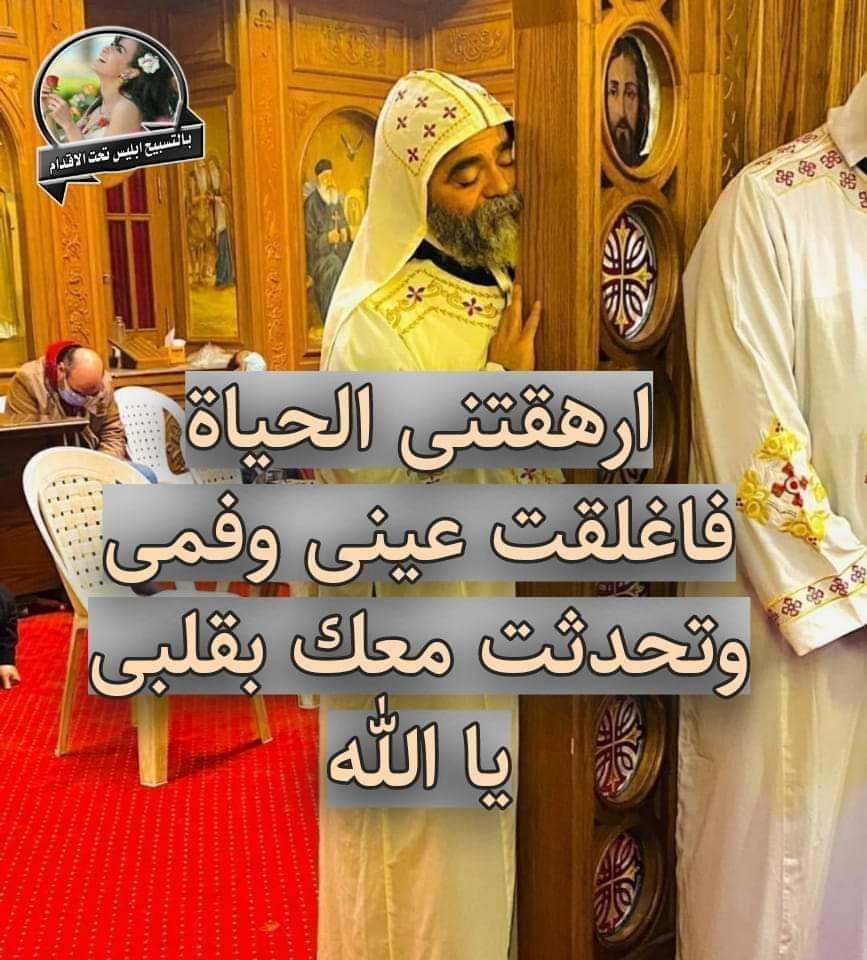
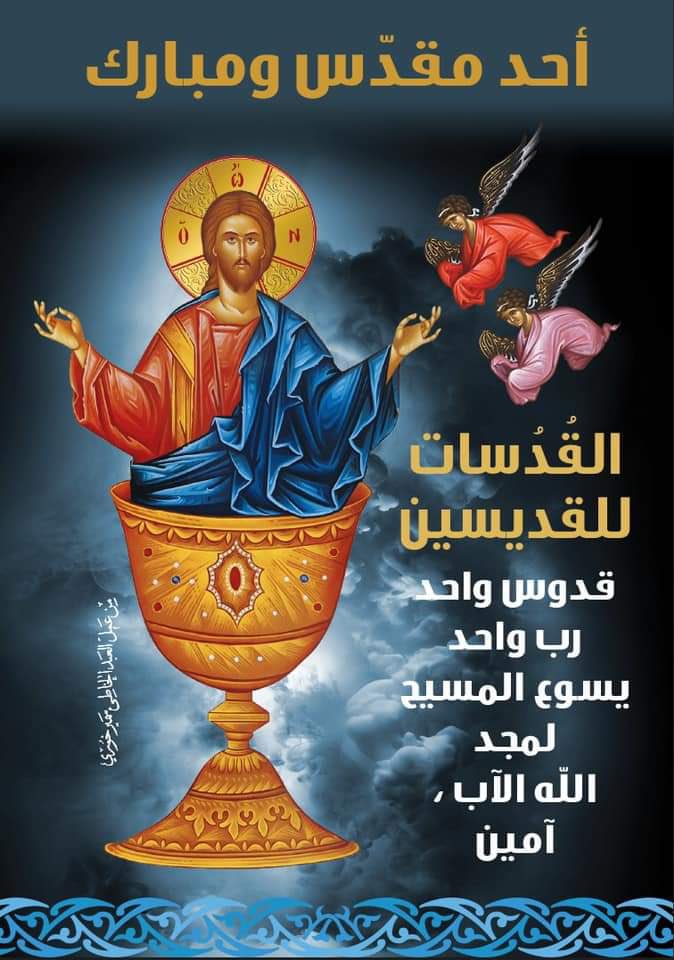
معطي المتوكلين عليه من كل قلوبهم الأشياء التي تشتهي الملائكة أن تراها، الذي أصعدنا من العمق إلى النور الذي أعطانا الحياة من الموت الذي أنعم علينا بالعتق من العبودية الذي جعل ظلمة الضلال التي فينا تضيء من قبل إتيان ابنك الوحيد بالجسد، أنت الآن أيضًا يا سيدنا أنر عيون قلوبنا وطهرنا
When your priest holds up the Eucharist at Mass today, remember exactly what is happening as he says, “This is my body, which will be given up for you”.
Have a blessed Sunday.
A video of a Catholic priest breaking down in tears and struggling to raise the chalice above his head while saying the consecration prayers during Mass spread across social media this week, prompting the priest to issue a statement through his diocese.
“Take this all of you and drink from it: For this is the chalice…” Father Brent Bowman prayed at the altar, followed by a six-second pause while celebrating Mass for the feast of the Exaltation of the Holy Cross at St. Gabriel the Archangel Catholic Church in Hopkins, Minnesota, on Sept. 14.
He continued the consecration prayer through tears and then sobbed for nearly one minute at the altar, struggling to raise the chalice. He continued to cry as he raised the chalice and was weeping as he knelt before the blood of Christ after the consecration.
Bowman’s emotional response to the consecration was captured on video because the parish livestreams its daily Masses on YouTube and it spread across social media platforms, with many viewers wondering what prompted the reaction.
In his statement, he explained that he did not witness what the Church considers a “Eucharistic miracle,” such as when the accidents of the bread and wine apparently change in some way along with the substance. Rather, he said, “I had a private spiritual experience” during the Mass.
“During the consecration prayer over the wine at the altar, as I spoke the words, I was given what I believe to be internal knowledge of the power of these words being spoken and the reality of their effect to the point that I had difficulty speaking,” Bowman said in his statement.
“With each word, I became more physically overwhelmed as seen in the video,” he said. “At the same time, I was given sensory knowledge of the weight of God’s power coming down upon the altar, and I felt the heaviness of Jesus’s substantial presence in the chalice in my hands.”
“The chalice became too heavy to hold as I felt it pulled down to rest upon the altar,” Bowman said. “I felt my hands fixed to the chalice of the Precious Blood, and I could not physically move it. Attempting to elevate the Precious Blood, which I was not able to do for a period of time, I believe I was given grace to understand more deeply the bittersweetness of Our Lord’s Passion and how much blood Christ shed for the immense weight of all our sins.”
“I believe I experienced this weight in the chalice,” he said. “This spiritual experience emotionally and physically overwhelmed me as evident in the Mass recording.”
Bowman noted that spiritual experiences are “completely unmerited gifts and signs of God’s abundant love for all his people” but “not necessarily signs of any person’s holiness.”
“I pray this brief testimony moves all our hearts to contemplate more deeply the mysteries of the Real Presence of Jesus Christ in the Eucharist and the Precious Blood,” he said.
Although Bowman did not experience a “Eucharistic miracle” in the sense of the bread or the wine altering its appearance, God does perform a miracle at every Mass during consecration, known as transubstantiation.
When the priest consecrates the Eucharist, the “substance” of bread and wine does not remain, but instead the bread and wine are transubstantiated into the true body, blood, soul, and divinity of Jesus Christ even though it maintains the physical appearance and chemical structure of bread and wine.
“The presence of Christʼs true body and blood in this sacrament cannot be detected by sense, nor understanding, but by faith alone, which rests upon Divine authority,” St. Thomas Aquinas wrote in the “Summa Theologica.”
More: https://t.co/4BkCWwnRUc
On Sept. 20, 1918, 108 years ago, St. Pio of Pietrelcina received the stigmata while praying after Mass in the chapel of the Capuchin friars at San Giovanni Rotondo, Italy.
The stigmata are physical marks associated with Christ’s Passion, traditionally corresponding to the wounds in his hands, feet and side during the Crucifixion. Some individuals have received these bleeding wounds as a spiritual gift and a participation in Christ’s sacrificial suffering.
Padre Pio’s wounds bled daily for 50 years and remained visible for the rest of his life. They healed completely, leaving no scars, shortly before his death on Sept. 23, 1968. Accounts also describe the blood from his wounds as having a floral, perfume-like scent—not a foul odor.
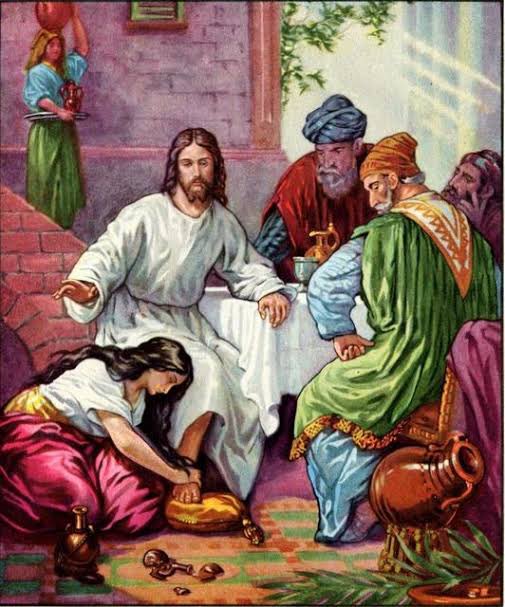
انجيل لوقا٧(٣٦-٥٠) لذلك، أقول لك: إنما غفرت لها خطاياها الكثيرة، لأنها أظهرت حبا كثيرا. وأما الذي يغفر له القليل، فإنه يظهر حبا قليلا". ثم قال لها: "غفرت لك خطاياك". فأخذ جلساؤه على الطعام يقولون في أنفسهم: "من هذا حتى يغفر الخطايا؟"؛ فقال للمرأة: "إيمانك خلصك، فاذهبي بسلام".
القديسة فيرينا 🙏فتاه من الصعيد في مصر أصبحت رمز للنظافه في أوروبا
علمتهم أسس العلاج من الأمراض باستعمال الأعشاب الطبية و النظافة الجسدية بالأغتسال بالماء لذلك ترسم ايقونتها وهي تمسك إبريق ماء ومشط في ايديها
وهي تعتبر أم الراهبات في أوروبا ويوجد كنائس باسمها كتير في سويسرا




![maher_ayob's tweet photo. مَرَاثِي إِرْمِيَا 3:22-23
إنَّهُ مِنْ إحساناتِ الرَّبِّ أنَّنا لم نَفنَ، لأنَّ مَراحِمَهُ لا تزولُ. [23] هي جديدَةٌ في كُلِّ صباحٍ. كثيرَةٌ أمانَتُكَ. ✝️✝️✝️
✝️✝️✝️ https://t.co/1l4n4oEYPM](https://pbs.twimg.com/media/HSOwOsRWwAAaZIv.jpg)