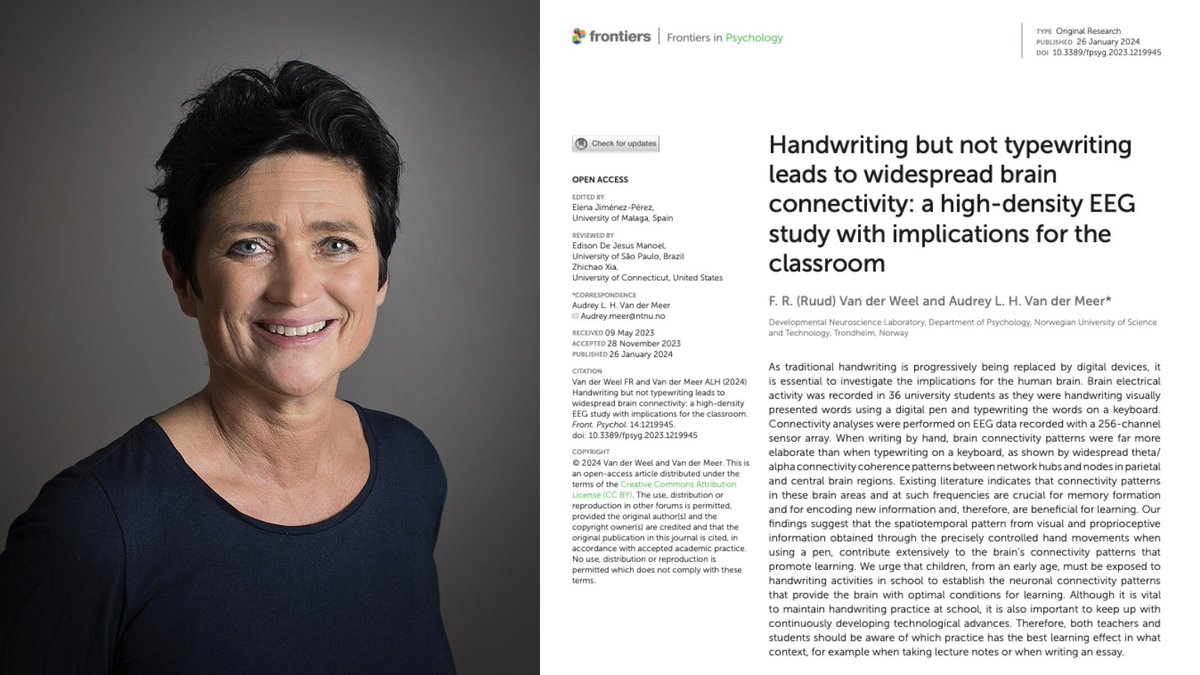
A Norwegian neuroscientist spent 20 years proving that the act of writing by hand changes the human brain in ways typing physically cannot, and almost nobody outside her field has read the paper.
Her name is Audrey van der Meer.
She runs a brain research lab in Trondheim, and the paper that closed the argument was published in 2024 in a journal called Frontiers in Psychology. The finding is brutal enough that it should have changed every classroom on Earth.
The experiment was simple. She recruited 36 university students and put each one in a cap with 256 sensors pressed against their scalp to record brain activity. Words flashed on a screen one at a time.
Sometimes the students wrote the word by hand on a touchscreen using a digital pen, and sometimes they typed the same word on a keyboard. Every neural response was recorded for the full five seconds the word stayed on screen.
Then her team looked at the part of the data most researchers had ignored for years, which is how different parts of the brain were communicating with each other during the task.
When the students wrote by hand, the brain lit up everywhere at once.
The regions responsible for memory, sensory integration, and the encoding of new information were all firing together in a coordinated pattern that spread across the entire cortex. The whole network was awake and connected.
When the same students typed the same word, that pattern collapsed almost completely.
Most of the brain went quiet, and the connections between regions that had been alive seconds earlier were nowhere to be found on the EEG.
Same word, same brain, same person, and two completely different neurological events.
The reason turned out to be something nobody had really paid attention to before her work. Writing by hand is not one motion but a sequence of thousands of tiny micro-movements coordinated with your eyes in real time, where each letter is a different shape that requires the brain to solve a slightly different spatial problem.
Your fingers, wrist, vision, and the parts of your brain that track position in space are all working together to produce one letter, then the next, then the next.
Typing throws all of that away. Every key on a keyboard requires the exact same finger motion regardless of which letter you are pressing, which means the brain has almost nothing to integrate and almost no problem to solve.
Van der Meer said it plainly in her interviews.
Pressing the same key with the same finger over and over does not stimulate the brain in any meaningful way, and she pointed out something that should scare every parent who handed their kid an iPad.
Children who learn to read and write on tablets often cannot tell letters like b and d apart, because they have never physically felt with their bodies what it takes to actually produce those letters on a page.
A decade before her, two researchers at Princeton ran the same fight using a completely different method and ended up at the same answer. Pam Mueller and Daniel Oppenheimer tested 327 students across three experiments, where half took notes on laptops with the internet disabled and half took notes by hand, before testing everyone on what they actually understood from the lectures they had watched.
The handwriting group won by a wide margin on every question that required real understanding rather than surface recall.
The reason was hiding in the transcripts of what the two groups had actually written down.
The laptop students typed almost word for word, capturing more total content but processing almost none of it as they went, while the handwriting students physically could not write fast enough to transcribe a lecture in real time, which forced them to listen carefully, decide what actually mattered, and put it in their own words on the page.
That single act of choosing what to keep was the learning itself, and the keyboard had quietly skipped the choosing and skipped the learning along with it.
Two studies. Two countries. Same answer.
Handwriting makes the brain work. Typing lets it coast.
Every note you have ever typed instead of written went into your brain through a thinner pipe. Every meeting, every book highlight, every idea you captured on your phone instead of on paper was processed at half depth.
You did not forget those things because your memory is bad. You forgot them because typing never woke the part of the brain that would have made them stick.
The fix is the thing your grandmother already knew.
Pick up a pen. Write the thing down. The slower road is the faster one.
Mark Zuckerberg just described the death of human connection on the internet and no one flinched.
One sentence. Fifteen years of erosion in twelve words.
Mark Zuckerberg: “Social media started out as people primarily interacting with their friends. And now… at least half of the content is basically people interacting with creators.”
You used to open your phone to see what your friends were doing.
Now you open it to watch strangers.
You did not choose this. The algorithm chose it for you.
It tested your friends against optimized strangers.
Your friends lost. Every time.
A stranger with better lighting, better timing, and a better hook held your attention three seconds longer than someone who loves you.
So the algorithm buried your best friend’s wedding photos under a cooking video from someone in Dubai you have never met.
And you watched the cooking video.
That was the first replacement. Friends for strangers. You barely noticed.
The second one is already underway.
If the algorithm already proved strangers outperform your real relationships, and AI can now build a stranger more engaging than any human alive, the math finishes itself.
The AI does not have a bad week. It does not post something careless and lose the algorithm’s favor. It does not burn out.
Every word calibrated.
Every frame tuned.
Every pause placed at the exact interval that keeps your thumb from moving.
A human creator competing against that is carving stone tablets in a world that just built the printing press.
The economics are not even close.
A person needs rent, sleep, and motivation.
The machine needs electricity.
When the cost of generating perfect content hits zero, the feed fills with faces that do not exist.
Voices that feel familiar.
Opinions that mirror yours just enough to feel like trust.
Personalities built from scratch to feel like someone you have known for years.
You will not know when the switch happens.
That is the point.
The feed does not care whether the thing holding your attention has a pulse. It cares whether you stay.
And a machine that knows your patterns better than you know yourself will always keep you longer than a person ever could.
This is not a warning. Half of it already happened.
You lost your friends to strangers and did not notice.
You will lose the strangers to machines and call them friends.
Somewhere in a different app, in a different tab, in a room you are sitting in right now, someone who actually knows you is living a moment you will never see.
Not because they stopped sharing it.
Because you stopped being where it was.
El viernes llamaron "Puto viejo de mierda" al padre de un amigo en el Restaurante Frida de Tarragona. Lo conozco y es un tipo totalmente normal. Así que he borrado el vídeo y la entrada en el blog porque ahora, el Frida es un puto restaurante de mierda que no recomendaré jamás.
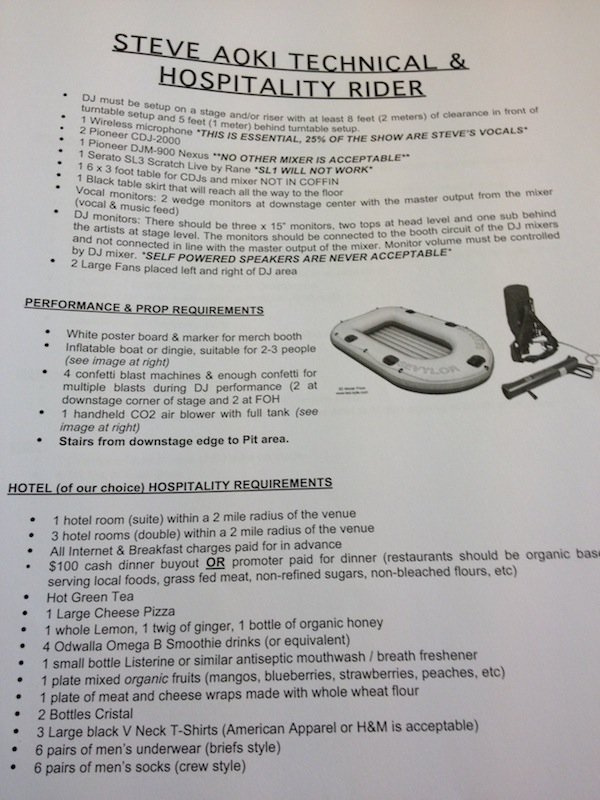
Muchas cosas a comentar sobre este excelente hilo pero me voy a ceñir a Aoki: esto es el rider de Aoki de 2012 (para que veáis qué pedía para su "show" a parte del caché, claro). Lo de "DJ" en este señor es lo de menos. No me voy a poner ahora a explicar qué es un DJ y en qué se diferencia de un señor que tira tartas y se tira al público en lancha mientras de fondo suena la peor EDM. Este señor lleva las sesiones gravadas y previamente coordinada con los visuales. Como empresario sí que puede dar charlas: es una de las grandes fortunas de la electrónica comercial para grandes masas pero como artista ni tiene el talento, ni la técnica y mucho menos la artisticidad de un Skrillex (por poner un ejemplo que entienda el personal sobre EDM). Evidentemente que Aoki no tuvo la culpa, pero yo ni invitaría (ni asistiría como oyente) a la charla de alguien que estaba haciendo su show mientras morían personas en el Madrid Arena. El caché (para mi) es lo de menos: la elección y decisión para que este señor sea ponente de cualquier cosa es de las peores cosas que he visto en mis 30 años trabajando para esta indústria. 30 años de Sónar y de Sónar+D no han servido para nada. Patético.
🇮🇷 | URGENTE — Las mujeres iraníes se quitan los velos en pleno centro de Teherán, rebelándose ante la policía de la moral islámica.
Estamos viviendo en Irán quizás la mayor revolución femenina del siglo XXI y no hay ni un medio cubriendo esto.
Un honor haver-hi format part. Història de la electrònica i la cultura contemporània. Gràcies per acabar amb dignitat.
S'ha acabat el Sónar encara que quedi el nom. https://t.co/7pgZMzXUKJ
Vaya huevazos los del @diaridtarragona Cogen mi artículo https://t.co/Lhpf6fzmcW los pasan por una AI y lo publican con su nombre https://t.co/zTQefeVc5c
Si crees que borrar el historial de Internet es suficiente, te equivocas.
Tu actividad en Internet sigue almacenada.
Aquí tienes un método para borrar completamente tu historial de Internet y convertirte en un Fantasma Digital ↓
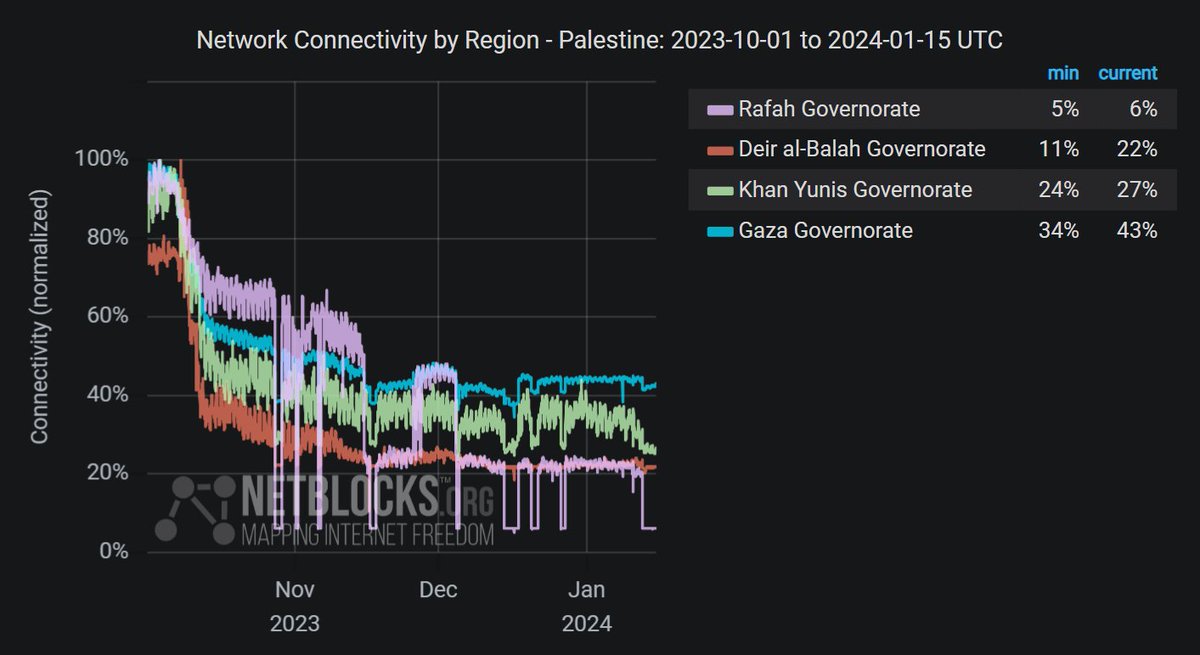
⚠ Update: Metrics show the #Gaza Strip has now been largely offline for over 72 hours; the disruption is the longest sustained telecoms blackout on record since the onset of the Hamas-Israel war, and is likely to significantly limit visibility into events on the ground ⏲
Wael Dahdouh has left Gaza to receive medical treatment in Egypt. He has seen his wife, daughter, sons, grandchild and colleague killed in three separate Israeli strikes. And yet he kept reporting. He stands head and shoulders above others in this profession. Solidarity always.
🔴🇮🇱 @jcabasesvega , periodista "El bombardeo continúa a gran escala. No están seguros ni dentro del hospital. Sigue sin haber nadie al volante. Por ahora el mundo no hace nada al respecto".
#EnJakeETB
➡ https://t.co/OY83zEh0fK
@Xlapitz