💥🇷🇺 Moscú sufrió una ofensiva aérea masiva que dejó al menos dos víctimas fatales, heridos y graves daños materiales en la infraestructura de la región.
🔥 La agresión provocó un gran incendio en la Refinería Petrolera de Moscú en el distrito de Kapotnya y la evacuación de más de 400 personas en un edificio residencial tras el impacto de un vehículo no tripulado. Las defensas rusas informaron la intercepción de 338 drones durante el operativo.
🗣️ Tras el ataque, Volodímir Zelenski confirmó la autoría de la ofensiva: "Nuestras respuestas de largo alcance tuvieron un impacto muy significativo en la región de Moscú anoche. Una de las instalaciones clave de la industria petrolera de Rusia y la instalación logística del agresor fueron alcanzadas", declaró el presidente ucraniano.
📲 Mantenete informado en https://t.co/XdKWrdy7Wm
🌱 Biocombustibles: las comisiones del Senado emitieron dictamen favorable al nuevo marco regulatorio. El proyecto se tratará este jueves y propone un régimen de 15 años, con aumentos graduales en los cortes: biodiésel del 7,5% al 10% y bioetanol del 12% al 15%.
🇷🇺 🚢Russian freight is exploding !
Today, the grain freight rate from Russia to Egypt has reached $71/t, a new all-time high and far above 2022 levels.
After the repeated strikes on Novorossiysk, there are now very few vessels willing to load there, pushing freight rates sharply higher.
Insurance costs are also soaring: around 2% of the vessel's value, compared with just 0.25–0.5% under normal conditions.
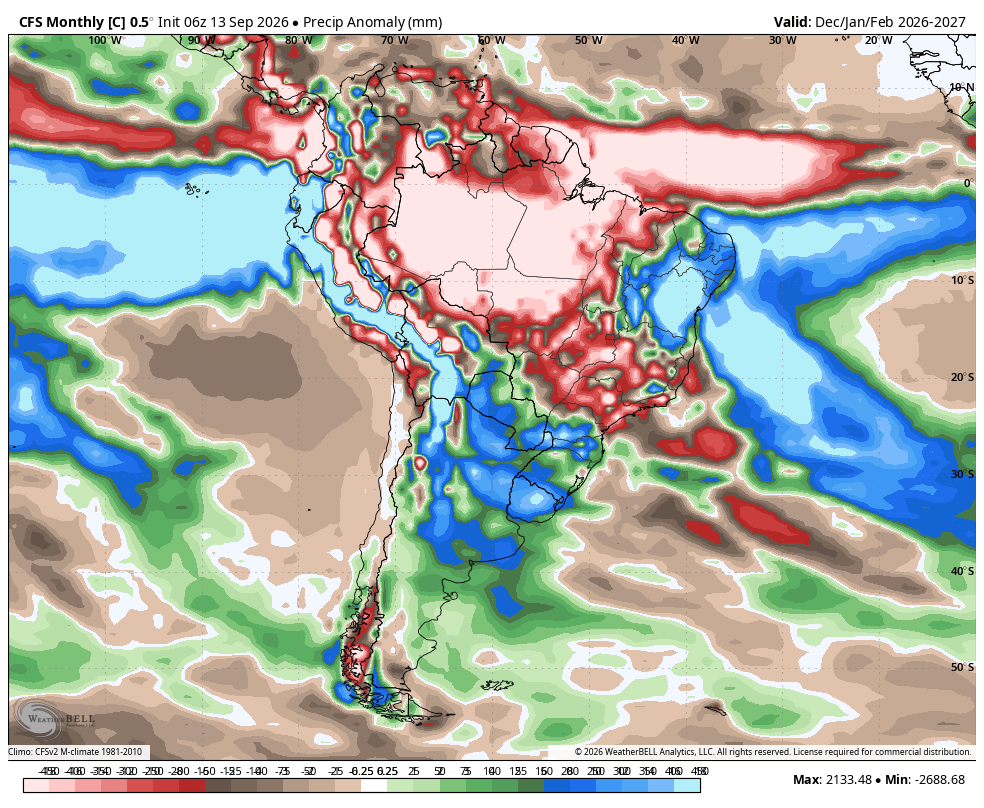
CFS Climate Model Update: Drought Signal Intensifies for Central & Northern Brazil
1/3
Latest CFS long-range runs (DJF 2026-27 precip anomaly) keep a clear drought signal over northern and central Brazil. Large negative anomalies cover the Amazon, Cerrado and much of the agricultural belt.
The 13 Sep runs had reduced the overall dry footprint across South America versus the run from three days earlier. The dry area looked smaller and more broken. See below
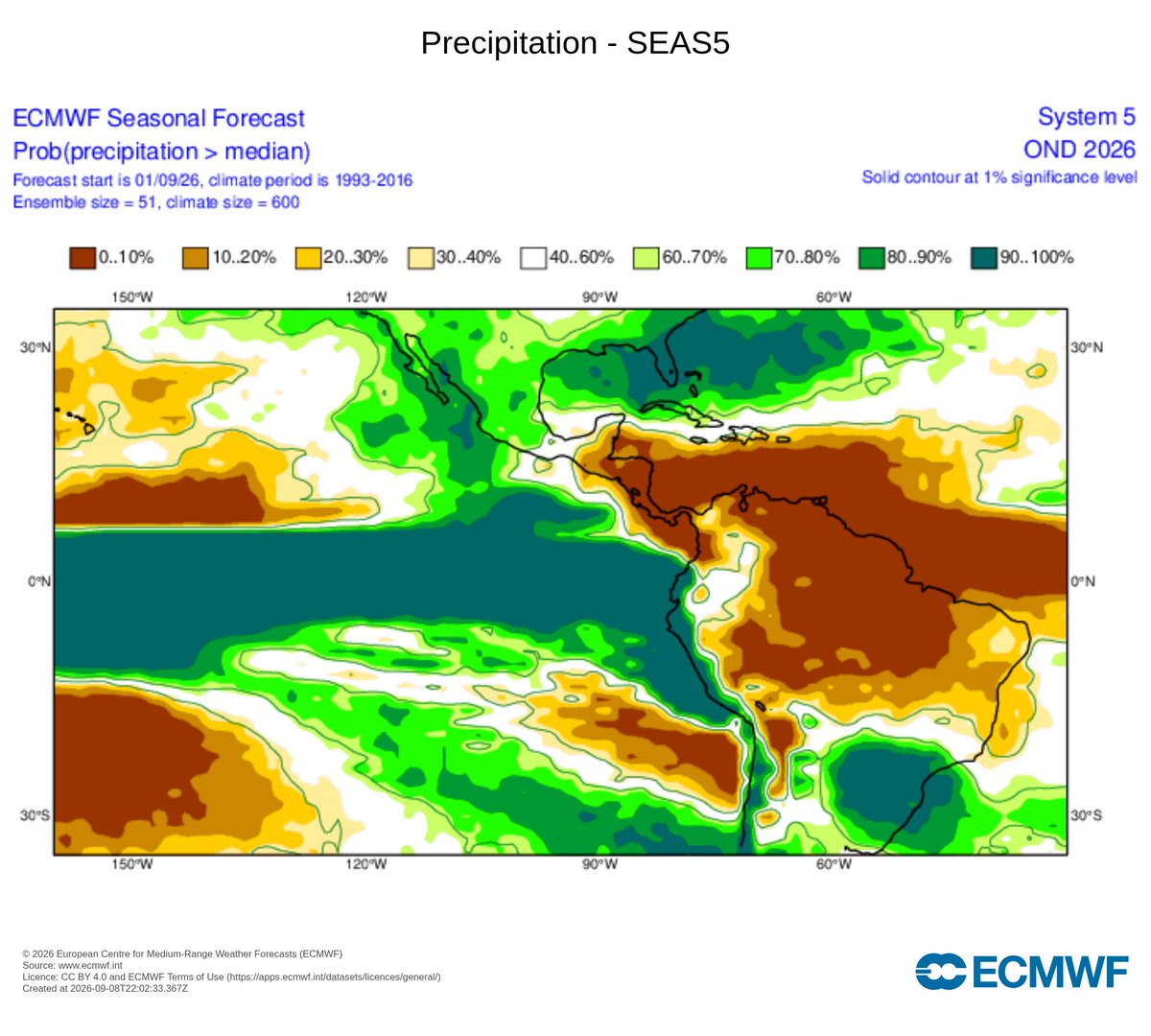
El @ECMWF actualizó sus perspectivas climáticas. Para OND26 sobre Sudamérica alto % de lluvias por encima de mediana: costa Pacífica #Perú y #Ecuador, sobre Sur y SE #Brasil, NE #Uruguay, NE #Argentina y R.O. #Paraguay. Cuenca amazónica y Norte SA por debajo normal.
🇨🇳 #China is shifting its #soybean purchases to #Argentina and #Uruguay as tightening supplies increase the cost of #Brazilian exports. Although record imports from #Brazil will maintain adequate
https://t.co/txVv3OQFgI
What's about to come is WILD over brazilian crops
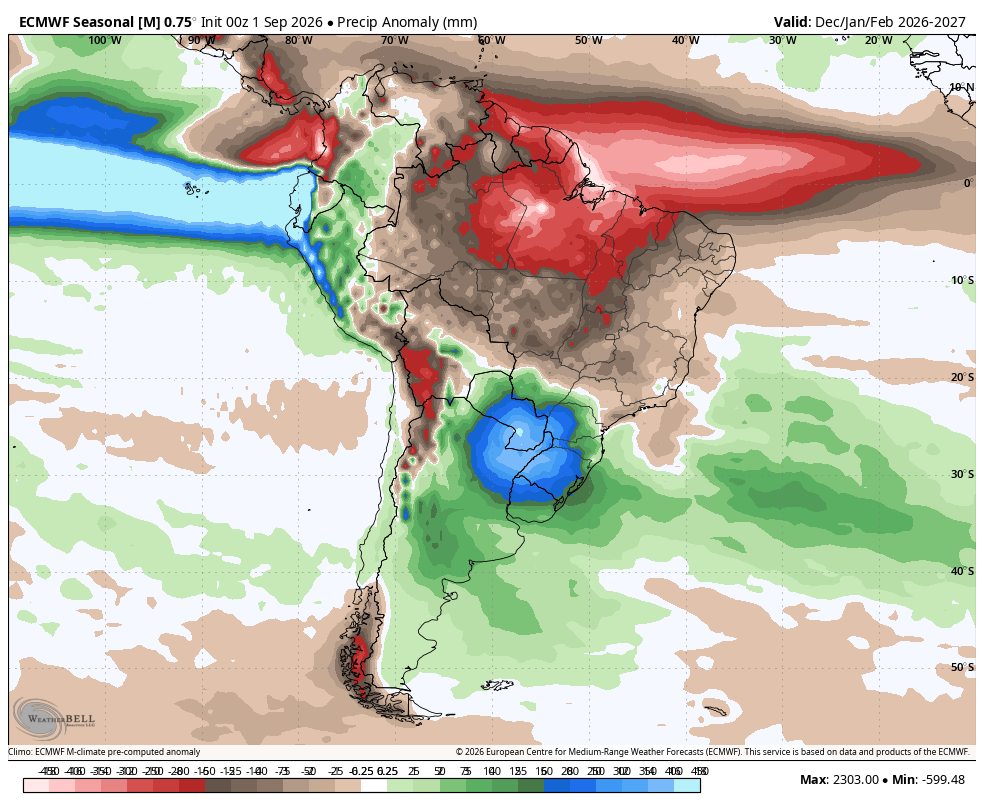
Below I bring the ECMWF seasonal outlook for Brazilian summer (DJF 2026–27)
Brazilian summer is when solar radiation peaks across the country. Crops cannot go long without rain.
The latest ECMWF seasonal forecast (widely regarded as the most skillful climate model for precipitation over this region) shows a widespread rainfall deficit through Dec–Feb for nearly every state north of São Paulo. That includes the MATOPIBA soybean frontier and the core production belt of Goiás and Mato Grosso.
The rain that would normally fall over equatorial and tropical Brazil is instead projected to concentrate on the opposite side of the equatorial Andes (look at the blueish area over the pacific ocean) and over southern Brazil, which receive the compensating surplus.
Espírito Santo and Minas Gerais, two of Brazil’s premier coffee regions, are equally exposed to the severe drought signal
#Wheat is down hard after Putin's statement that there is "a minimal prospect for peaceful and constructive negotiations on Ukraine."
Just a reminder: Putin has been talking about potential negotiations with Kyiv for years, on terms clearly unacceptable to Zelensky (think "come to Moscow").
So is there a minimal chance for negotiations? Yes.
Has it increased meaningfully? Our view: https://t.co/eXVZ0VSoZG
#oatt #Russia #Ukraine #blacksea #sizovreport
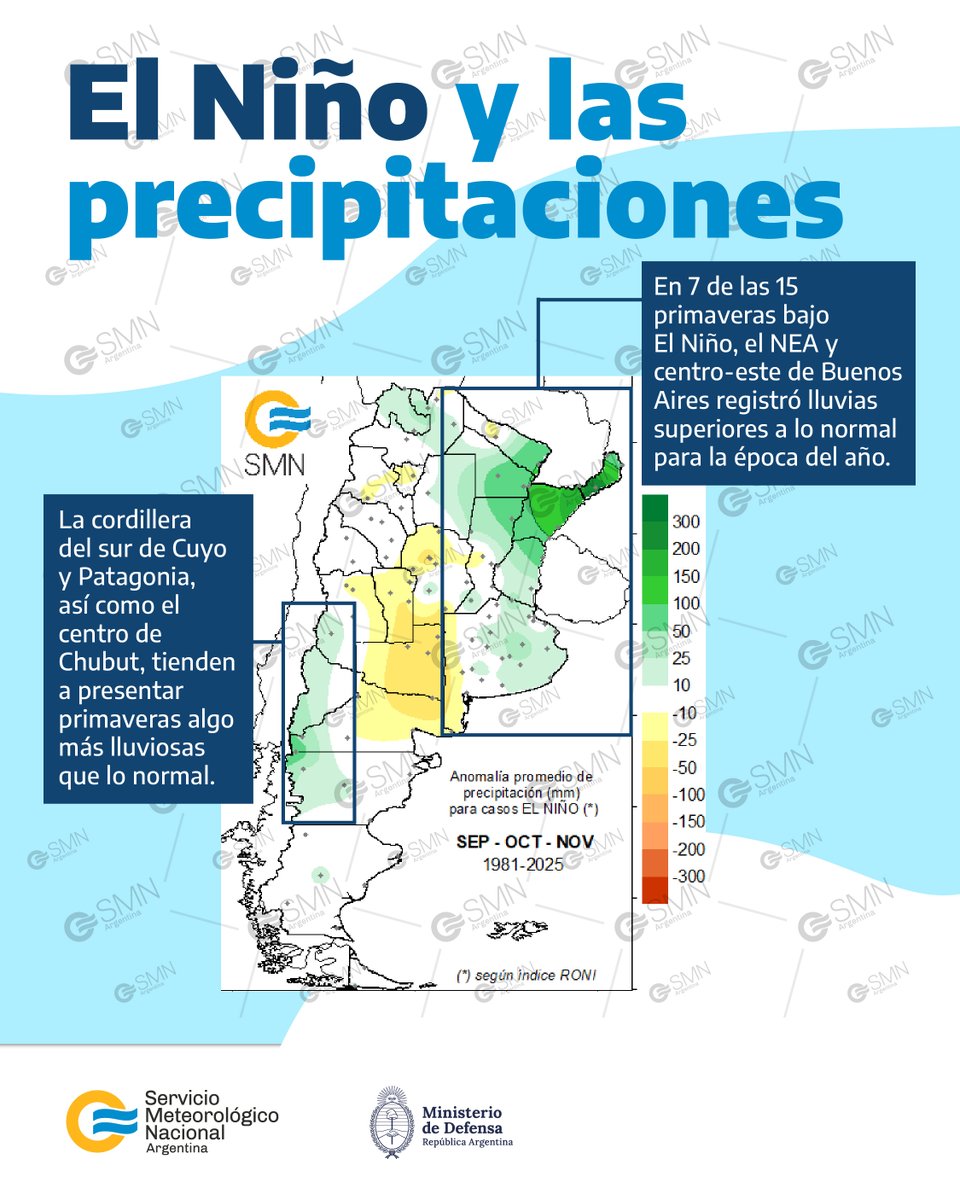
¿Querés saber cómo puede influir El Niño durante la primavera en Argentina? 🤔
👉 Deslizá y descubrí cuáles fueron los principales impactos que este fenómeno generó en nuestra región durante esta época, a lo largo de los años 🧵➡️
The Black Sea disruption has gone physical.
Asian buyers have booked at least 500kt of Australian and Argentine #wheat to replace delayed cargoes - Reuters.
Alternatives cost $310–330/t C&F versus $260–280 for Black Sea wheat.
Asian processors had booked 2.0–2.5 Mt of Black Sea wheat for July–September, covering roughly 30–50% of regional import demand. Some millers are now using containers to bridge immediate shortages while delayed bulk cargoes remain uncertain.
#oatt #blacksea
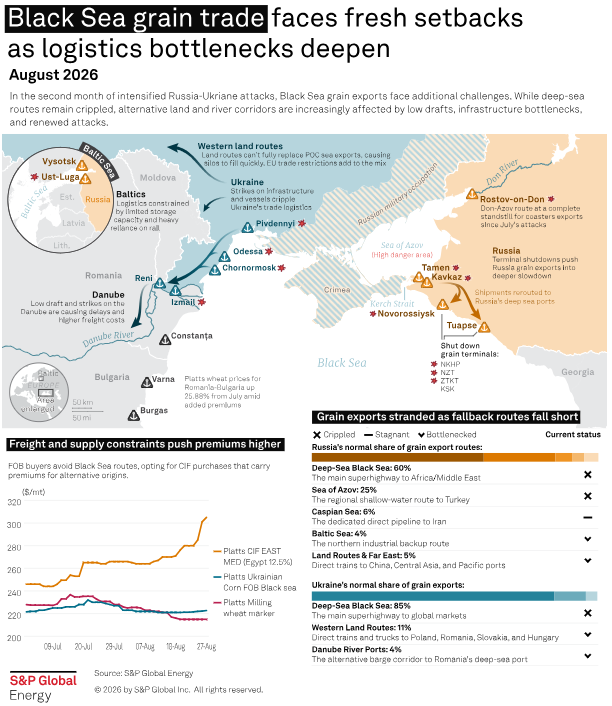
🌾 #BlackSea deep-sea routes remain largely inaccessible, alternative land and river corridors are increasingly hampered by low water levels, infrastructure bottlenecks, and constant attacks. #Wheat traders turned to alternative ports, such as the #Baltic for #Russian wheat and #Constanta for #Ukrainian #grain, to move newly harvested wheat
https://t.co/4WTU4ddTB4
Black Sea grain exports are encountering new obstacles. Alternative land and river corridors are increasingly hampered by low water levels, infrastructure bottlenecks, and renewed attacks.
Check out the infographic below for a deeper look:
https://t.co/wvF5AoFFgc
🇨🇳 China: high temperatures and heavy rain have battered key #corn#maize, #soybean and #cotton-growing regions, threatening #crop quality and yield losses. #China imported 1.36MMT of corn from Jan to Jul 2026, up 61.3% annually. Sorghum and #barley imports rose 86.2% and 53.4%, respectively. China bought no #US corn but imported 2.98MMT of #sorghum, almost 4 times its full-year 2025 purchases. Details:
https://t.co/8bTB0E2u2Z
💥 One of #Russia’s largest #grain#terminals may take up to four months to restore after attack
The August 12 strike damaged export loading equipment at NKHP, which handled more than 2.43 mln tons of grain in the first half of 2026.
Read more 👉https://t.co/b6kEaSpVDW