As poverty causes ill-health, reducing levels of poverty will also have a positive impact on health outcomes. Exposure to poverty in childhood is associated with worse health outcomes in adolescence and into adulthood.
Without specific policies aimed at improving public health through prevention, intervention and the treatment of health conditions and other causes of ill-health such as overcrowding and poor housing, further decreases in life- and healthy life expectancy must be expected.
It is not unreasonable to suggest these increases were caused by ongoing medical issues linked to Covid-19, and several other factors. These include the ongoing cost-of-living crisis and the UK’s increasing levels of very deep poverty, which exacerbate poor mental health.
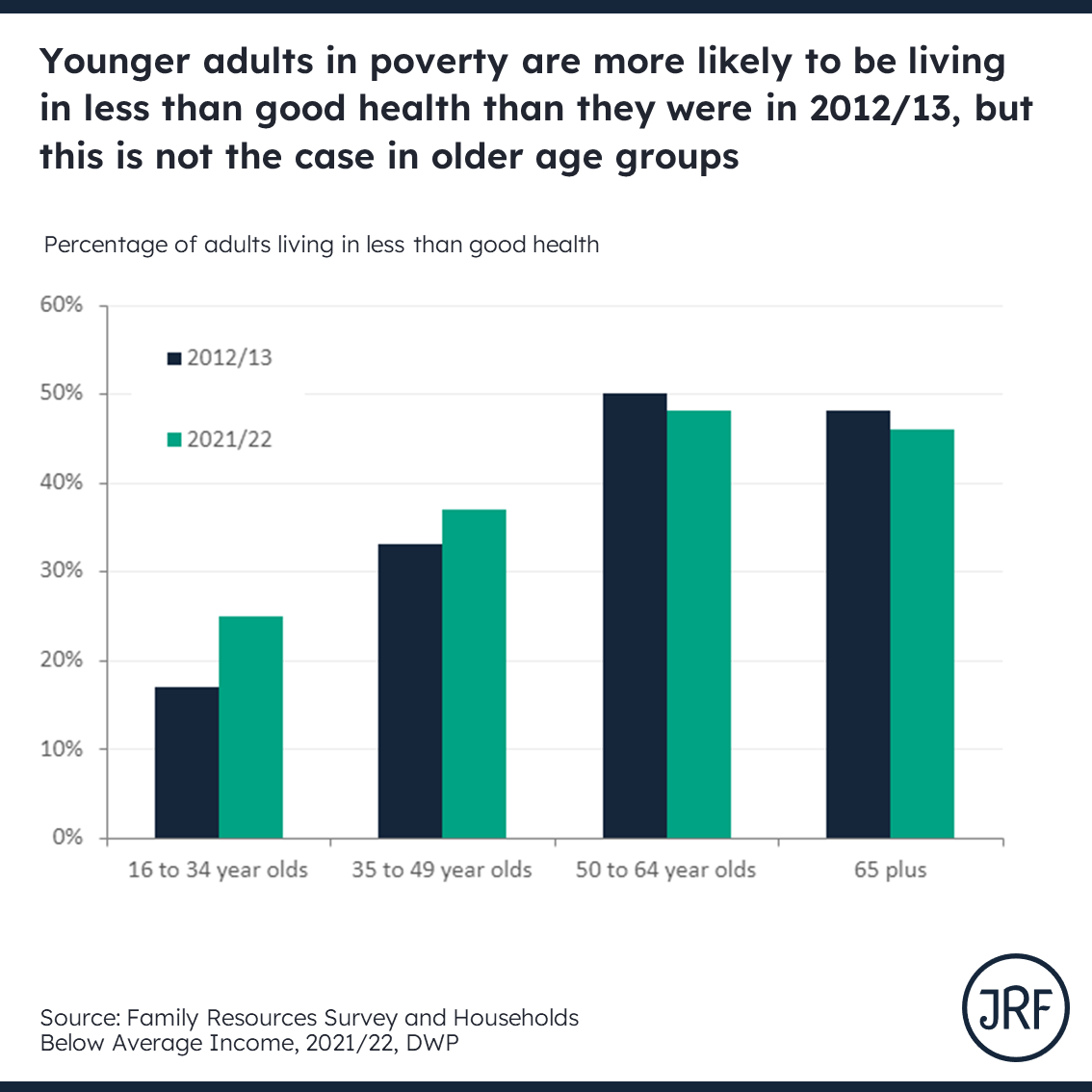
Compared with 2020/21, all age groups in poverty have experienced an increase in their likelihood of living with less than good health. 16–34-year-olds have their highest level since records began (25%). Since 2012/13, their levels of less than good health have increased by 47%.
In addition to what this says about the health of people in poverty, it also highlights how poverty is putting pressure on the UK’s services and institutions, such as the NHS.
There is evidence to suggest that these health inequalities mean that people in poverty require additional support from the medical services provided by the NHS. For example, people in poverty are 11% more likely to need to visit their GP more frequently than those not in poverty
In Northern Ireland, the female life expectancy gap between the least and most deprived 20% of areas is 5.1 years and the male life expectancy gap is 7.3 years.
In Wales, female life expectancy (measured in 2018–20) in the least deprived 20% of areas was 6.3 years longer than in the most deprived areas, and male life expectancy was 7.5 years longer.
In Scotland, these differences are more pronounced: male life expectancy in the most deprived areas is 13.7 years less than in the least deprived areas, while the gap in female life expectancy is 10.5 years shorter.
Health inequalities exist from birth and continue through an individual’s life. Female life expectancy for those living in the least deprived areas in England in 2018/20 was eight years more than that for those in the most deprived areas. The male life expectancy gap was 10 years
For example, 30% of people in the poorest fifth of households reported lacking energy compared with 17% in the richest quintile, 6% reported feelings of depression compared with 2% in the richest quintile and 4% reported losing sleep compared with 2% in the richest quintile.
These patterns are also seen in mental health outcomes. Individuals in the lowest household income quintile (calculated before housing costs) were more likely to experience symptoms of anxiety than those with higher household incomes.
Among working-age adults, people living in poverty are more likely to suffer from poor health. In 2021/22, 16–34, 35–49 and 50–64-year-olds in poverty were all around one-and-a-half times more likely to be in poor health than those not in poverty in the same age group.