It happened during my internship at the Teaching Hospital, inside the NICU (Neonatal Intensive Care Unit).
We had a premature baby in Incubator 3. Baby Farouq. He was a fighter. He was hooked up to a mechanical ventilator because his tiny lungs couldn't work on their own yet.
His father, Mr. Ahmed, was always there. He was a tall, strong man, but in that ward, he looked small. Every evening, he would stand by the window, watching his son, whispering prayers.
That night, I was doing my rounds, calibrating the oxygen sensors on the ventilators to make sure the flow was perfect. Mr. Ahmed was standing right beside me, asking, "Engineer, the machine is sounding smooth today, abi?"
I smiled and said, "Yes sir, Farouq is doing well."
Then, it happened.
NEPA took the light.
The hum of the ventilators died instantly. The room went pitch black.
Usually, the big industrial inverter kicks in within 5 seconds. We waited. One second. Five seconds. Ten seconds.
Silence.
The batteries were old and hadn't been replaced despite three memos written by the HOD.
Chaos broke out.
The Doctor, Dr. Yusuf, screamed, "Ambu-bag! Everyone, manual ventilation!"
I didn't wait. I switched on my phone torch and dove behind the ventilator. I thought maybe it was a fuse. Maybe I could bypass the inverter and connect it to a portable UPS we kept for emergencies.
Mr. Ahmed grabbed my shoulder. His grip was shaking.
"Engineer! Fix it! Why did the machine stop? Fix it!"
I was sweating. I ripped the back panel open. I was checking the terminals with my screwdriver in the dark. I was praying to a God I hadn't spoken to in years. Please, let there be a residual charge. Please.
But the battery indicator was flat. 0%.
Dr. Yusuf was manually pumping air into the baby’s lungs with the hand-pump, but it wasn't enough. The baby needed the specific pressure only the machine could give.
Mr. Ahmed saw his son turning blue. The strong man broke. He fell to his knees, holding the leg of the incubator.
"NEPA, bring light! Oh God, bring light! My son is going!"
For 15 minutes, we fought in that darkness.
I was trying to swap the power cord to a different socket, hoping maybe one line had power. My hands were trembling. I felt useless. All my engineering knowledge, all my circuit theory, useless because of diesel and batteries.
Then, Dr. Yusuf stopped pumping. He lowered his head.
Mr. Ahmed screamed. "Doctor, why did you stop? Pump him! Engineer, put on the machine now!"
I stood up, holding my screwdriver, tears running down my face. I couldn't look at him.
"Flash."
The bulbs flickered. The AC hummed. NEPA brought the light back.
The ventilator screen lit up. Beep. Beep. Beep.
But it was pumping air into a corpse.
Mr. Ahmed didn't cry immediately. He just stared at the machine that came back to life two minutes too late. Then he looked at me.
"You fixed it?" he asked, his voice broken.
I couldn't tell him I didn't fix anything. I couldn't tell him that his son died because someone in the administrative block didn't sign a check for batteries.
That night, listening to a grown man wail for his son in the corridor, Nigeria broke me. It taught me that in this country, your technical skill means nothing if the system wants to kill you. 💔🇳🇬
Top 2 Ogun Digital Summit
5th in Lagis6 RoboCode 1.0 2023 as a @Cms_gramz student with @koladeafolabi20 I need 1,000 likes before Nov 30th to win FULL Grazac scholarship worth 1.2million Naira .pls kindl→ LIKE + COMMENT @grazacng + REPOST right now!! 9 days left @grazacng
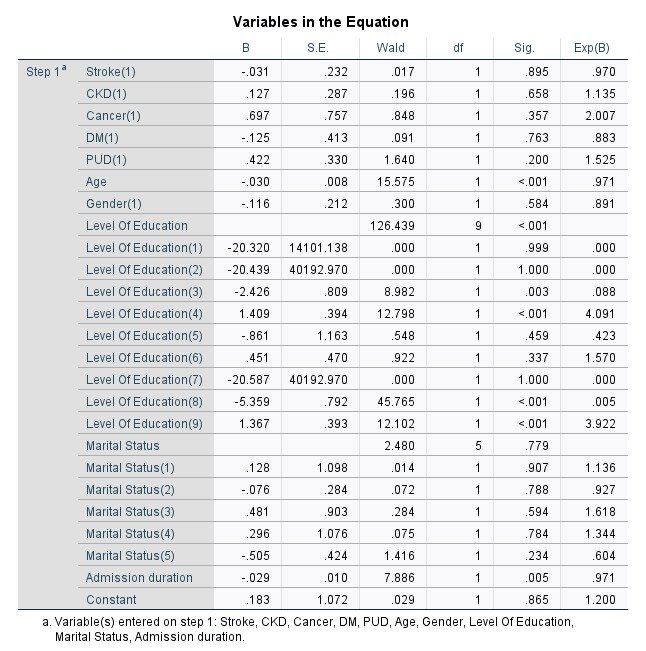
Not statistically significant.
2️⃣ So What?
📌 Actionable Insight(We use this phrase a lot🤓):
- Hospitals should improve communication and support for younger patients with short stays.
low or unrecorded education levels could reduce DAMA cases.
💡 Stats aren’t just numbers—they can shape better healthcare.
#30DaysTDIDataChallengeWithAnnie#30Days
🗓️ Day 8 of #30DaysOfDataWithAnnie
Theme: Rest. Reflect. Re-Strategize.
✅ Learned: Data cleaning is underrated but 🔑
🧠 Mindset: Less perfectionism, more consistency
🎯 Fav Task: Choosing a data partner—accountability wins!
We keep pushing o!
#30DaysOfDataWithAnnie
unavoidable).
We solely used Excel for these cleaning tasks. The experience underscored the need for meticulousness and shared understanding of data.
I enjoyed this cleaning exercise with @Thiwarrh and look forward to the analysis 💪!
#30DaysOfDataWithAnnie
For Day 7 of the #30DaysOfDataWithAnnie challenge, @Thiwarrh and I collaborated on cleaning the Hospital Patient Records dataset, emphasizing the importance of teamwork in real-world data analysis. In the Patients table,
we entered ‘N/A’ in the 'reason for DAMA’ column for non-DAMA cases. (To mention a few)
This cleaning process debunked two data cleaning myths: first, that it's a quick, initial step (it's iterative), and second, that perfectly clean data is achievable (some inaccuracies are