On October 9 in 768, Charlemagne was crowned king of the Franks at Noyon, and his brother Carloman at Soissons. Pepin the Short had died on September 24. Fifteen days later the realm had two anointed kings, two palaces, and one unfinished war.
The Royal Frankish Annals split the inheritance in the open. Charlemagne took Austrasia. Carloman took Burgundy, Provence, Aquitaine, and Alamannia. Neustria is the gap the annals do not close. They were joint kings of one Frankish kingdom, not rulers of two states — and they did not act like it.
Aquitaine was the first test. Dukes Hunald and Waiofar had kept that land in revolt through Pepin’s reign. The brothers marched together. Carloman turned back into Francia. Charlemagne finished the campaign alone and took Hunald, ending a war their father had fought for a decade. Einhard records the feat and leaves the brothers’ quarrel half-told.
Carloman died on December 4, 771. His widow and sons fled to the Lombard king Desiderius. Charlemagne took the whole inheritance. The double coronation of October 9 lasted three years.
Do you consider Charlemagne the father of Europe?
#OnThisDay #MedievalHistory #Charlemagne #FrankishKingdom #Carolingian
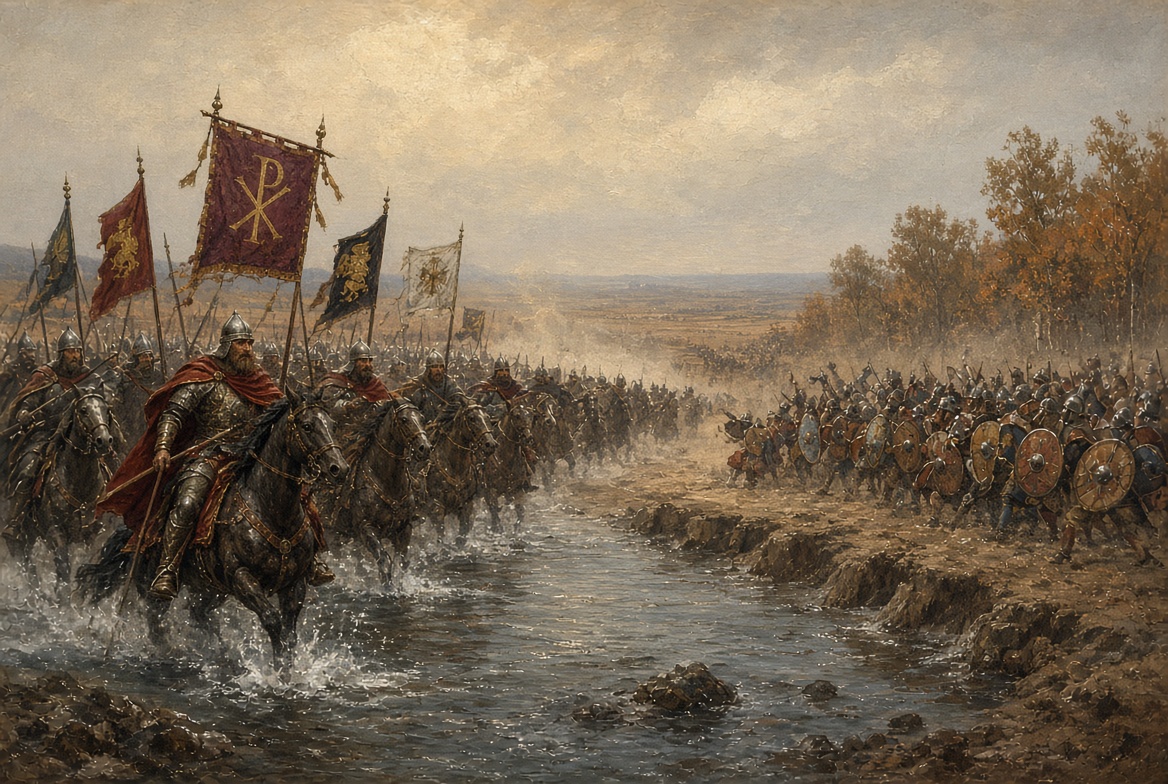
On October 8 in 316, Constantine’s army met Licinius at Cibalae in Pannonia. Zosimus says Constantine struck at dawn with cavalry; the fight ran until evening, then his right wing broke the line. Licinius fled by night toward Sirmium, burning bridges behind him. Two emperors, one empire, no room left for both.
#OnThisDay #AncientHistory #RomanEmpire #Cibalae #Constantine
On October 7 in 1571, Christian oarsmen and knights met the Ottoman fleet at Lepanto. The League was sworn to defend the coasts and pilgrims’ sea road after a century of Ottoman advance from the Aegean toward Italy.
Don John kept the papal and Spanish center. Venice held the left. The right was Genoese and Spanish under Andrea Doria. Ali Pasha commanded the Ottoman center. Contemporary reports put both fleets near 200 galleys.
The fight was boarding, not cannon duels. The League flagship Real closed with Ali Pasha’s Sultana. When that ship was taken, the Ottoman line broke. Miguel de Cervantes, wounded in the left hand, later called it the greatest day’s work of the age.
#OnThisDay #MedievalHistory #Lepanto #HolyLeague #NavalHistory
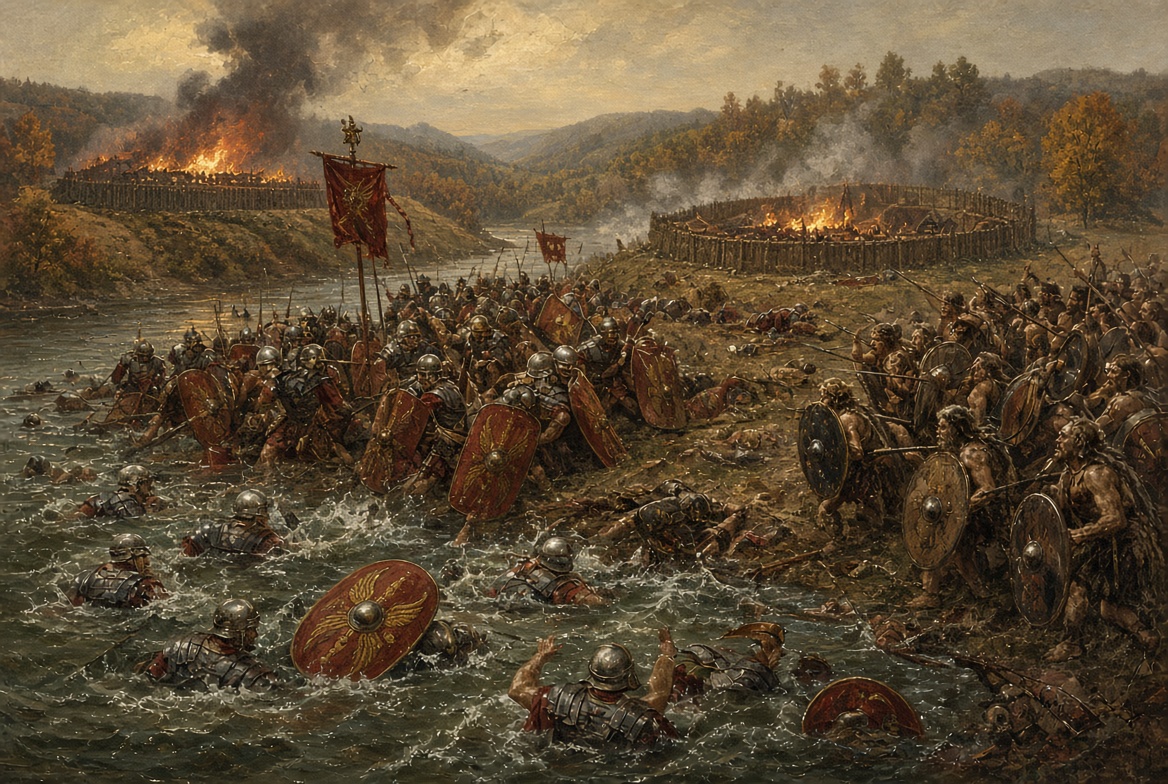
On October 6 in 105 BC, two Roman armies died on the left bank of the Rhône at Arausio, today’s Orange. Proconsul Quintus Servilius Caepio would not share the field with consul Gnaeus Mallius Maximus. The Cimbri took both camps. Rome ranked the scar with Cannae.
The date is fixed. Granius Licinianus puts the fight on the day before the Nones of October. Plutarch later has Lucullus’ officers call that same date a black day, because Caepio and his army had perished against the Cimbri then.
The split was political before it was tactical. Mallius was a new man, sent from Italy to finish the war. Caepio, a patrician already in Transalpine Gaul, refused a joint camp and refused his orders. While Mallius still treated, Caepio attacked alone so the consul would not take the credit. Ex-consul Marcus Aurelius Scaurus had already been taken on reconnaissance. Brought before a Cimbric council, he would not beg and, Licinianus says, refused an offer to lead their host. They killed him. The next day the host struck. Caepio’s camp fell first. Then the Cimbri turned on Mallius, pinned against the river.
Ancient counts are round and terrible. Livy’s epitome, citing Valerius Antias, gives 80,000 soldiers and 40,000 servants and camp followers dead. Mallius lost two sons. Young Sertorius got across the Rhône by swimming. No continuous battle narrative survives — only the wreck of two camps and a command that would not unite.
The victors did not march on Italy. That pause let Gaius Marius, elected consul for 104 in his absence, rebuild the levy and break the Teutones at Aquae Sextiae in 102 and the Cimbri at Vercellae in 101. Caepio was stripped of command and exiled. Pride lost the field. One imperium might have saved it.
#OnThisDay #AncientHistory #BattleOfArausio #RomanRepublic #CimbrianWar
On October 5 in 456, Gothic king Theodoric II, sent by the western emperor Avitus, broke King Rechiarius and the Sueves on the river Urbicus, twelve miles from Astorga. Bishop Hydatius dates the fight to the third day before the Nones — a Friday — and writes that Suevic columns were cut down, captives taken, and the wounded king fled into the far edge of Gallaecia.
#OnThisDay #AncientHistory #BattleOfUrbicus #Visigoths #RomanEmpire
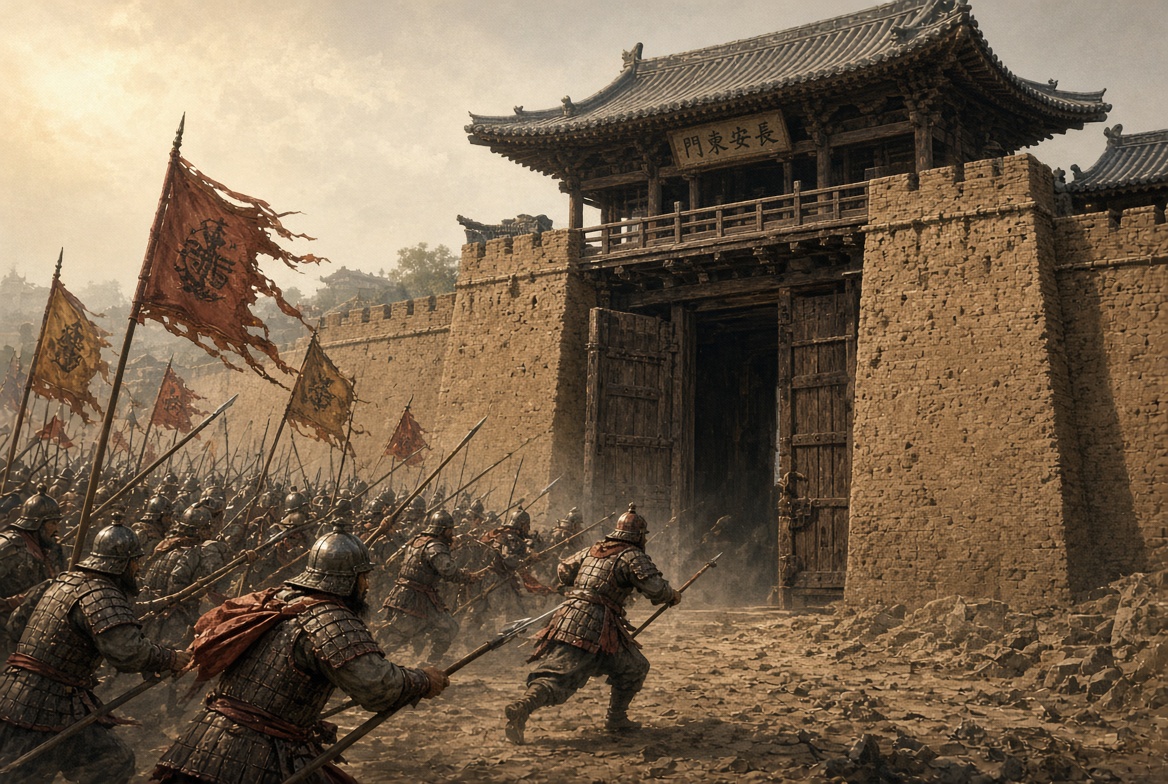
On October 4 in AD 23, Han soldiers entered Chang’an by the Xuanping Gate, the people’s “Capital Gate,” on the east wall. Wang Mang’s Xin dynasty had already lost the field. At Kunyang that summer his great relief army had been broken. What fell on this day was the capital.
He had taken the throne in AD 9 from a child of the Liu house and tried to remake the empire by decree: land “returned” to a well-field ideal, new coin, renamed offices. The great clans balked. The Yellow River had shifted. Famine filled the roads. Lulin bands in the south and the Red Eyebrows in the east were already armies. Chang’an did not wait for either.
Mang distrusted the gate troops, easterners, and posted 600 Yue cavalry under a colonel at each gate. It was not enough. Zhang Han, out inspecting the walls, was cut down as the column came through. Wang Yi, Wang Lin, Wang Xun, and Que Yun formed at the northern palace gate. The Hanshu says more than 700 of Mang’s hardest fighters died there. By sundown the offices and great houses were empty. Officials had run.
That is the day. The next morning city youths, Zhu Di and Zhang Yu among them, fired the workshop doors and axed the Gate of Reverence for Law, shouting for the “rebel” Wang Mang to come out. Flame reached the harem. Mang sat in dark purple, seals at his belt, the dagger called Yu the Great’s in his hand, an astronomer turning the diviner’s board before him. He shifted his mat with the handle of the Dipper and said Heaven had set virtue in him, so what could Han soldiers do? He had not eaten. His breath was already short.
At dawn on October 6 his last thousand were taken to the Terrace Bathed by Water. Crossbows failed, then swords. A merchant, Du Wu, killed him and took the ribbon. Gongbin Jiu cut off the head for the Gengshi court. The body was torn apart in the crowd. The Xin dynasty ended in a palace pool, not in a pitched battle.
The lesson is older than the slogan. A capital falls when the gates are no longer trusted, and a reform that the clans will not man has no second army.
Did Chang’an fall to the Han loyalists, or to its own empty offices?
#OnThisDay #AncientHistory #HanDynasty #ChangAn #WangMang
On October 3 in 42 BC, the first battle of Philippi opened on the plain east of the city, in the gap between an impassable marsh and the hills. It was not a clean victory. It was two battles fought at once, and the man who misread his own won the day for the other side.
Brutus and Cassius had held the high ground for weeks. After Caesar’s murder they had raised the last great Republican army in the East: legions from Syria and Asia, client kings, and the war chest of the provinces. Antony and Octavian came east along the Via Egnatia with the veterans of Caesar’s civil wars. Lepidus stayed in Italy. Ancient counts put both hosts near or above 100,000, horse included. Appian’s figures are large and should be treated as campaign totals, not a parade-ground roll.
Antony tried to lure the Liberators down. They would not leave the ridge. So he cut a causeway through the southern marsh to turn Cassius’s flank. Cassius saw it and threw a cross-wall into the wetlands to block the road. That collision became the battle.
Antony struck the rampart where Cassius’s line met the marsh, broke it, and took the camp. At the same moment Brutus’s men, without waiting for the watchword “Liberty,” rushed Octavian’s wing and overran his camp. Octavian was not in it. Plutarch says a dream had sent him out; he was found later in the marsh, ill and unhurt. The triumviral left had been beaten. The triumviral right had won.
Cassius, short-sighted and badly served by his scouts, saw smoke over his own camp and heard that Brutus had failed. He had a freedman, Pindarus, kill him. Brutus reached the body too late. He called Cassius the last of the Romans, covered the face, and had him buried on Thasos so the army would not see a state funeral in front of the enemy. The Liberators had taken a camp and lost the only general who matched Antony in the field.
The armies sat for twenty days. On October 23 the second battle finished it. Brutus’s line broke. He died on his own sword. Antony covered the body with his own purple cloak and sent the ashes to Servilia. The men who had killed Caesar in the name of the Republic no longer had an army.
Philippi did not found the Empire that afternoon. It removed the last commanders who could still fight for the old constitution in the open field. After that the war was between Antony and Octavian.
#OnThisDay #AncientHistory #Philippi #RomanRepublic #RomanEmpire
On October 2 in 48 BC, Julius Caesar landed at Alexandria still chasing Pompey — and was handed his rival’s head and signet. Plutarch says he wept. The civil war did not end. The Alexandrian War was about to begin.
#OnThisDay#AncientHistory#JuliusCaesar#RomanRepublic #PtolemaicEgypt
October is the 10th month.
‘October’ means “8th month.”
In the first calendar used in ancient Rome, the year had only ten months, starting in March and ending in December.
The extra period between December and March was not considered part of the series of months.
On October 1 in 331 BC, Alexander of Macedon met Darius III on the plain of Gaugamela. A Babylonian astronomical diary dates the fight to the month of the lunar eclipse of September 20.
4/ The Persian line broke. Darius fled. Babylon, Susa, and Persepolis followed. The Achaemenid field army did not recover. Sources: Arrian 3.8–15; Plutarch, Alexander 31.
3/ Primary trail: Anonymus Valesianus, Ennodius’s Panegyric, the Fasti. Two Germanic kings, one late-Roman Italy, one river, one day. Theodoric would keep Roman law, Senate, and grain—while ruling as king.
#OnThisDay#AncientHistory#Ostrogoths#LateRome#Theodoric
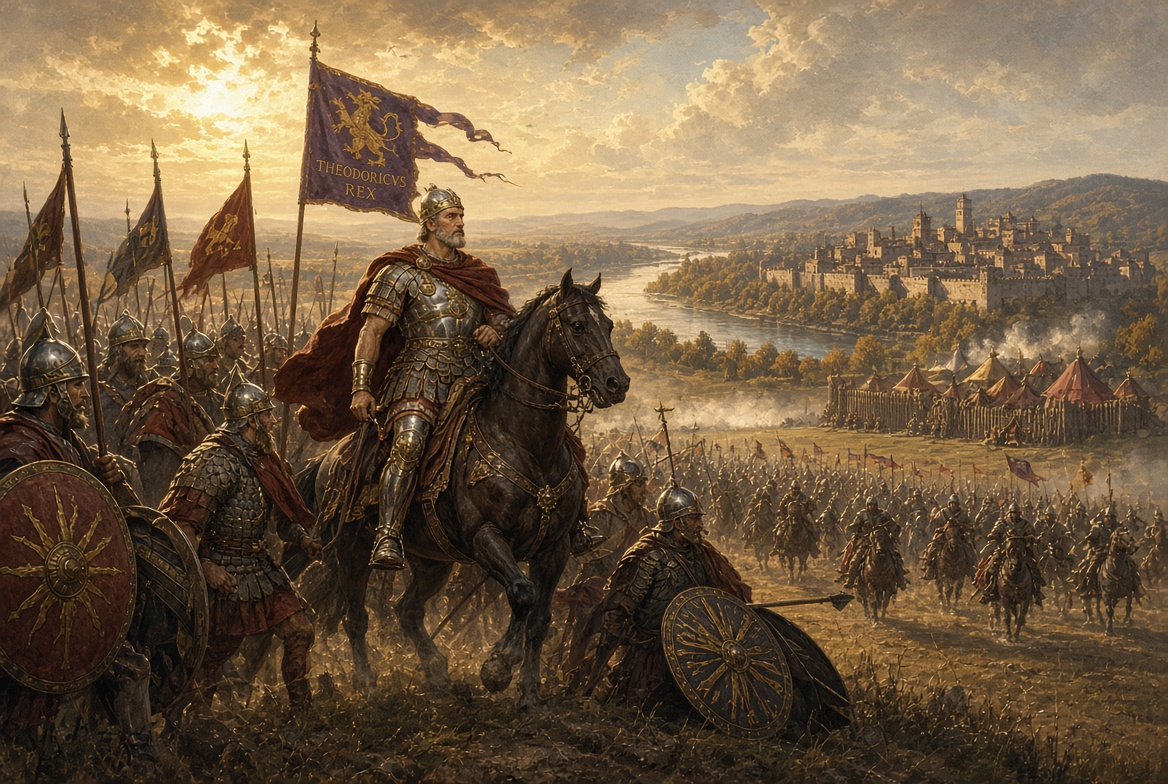
On September 30 in 489, Theodoric the Great’s Ostrogoths smashed Odoacer’s army on the plain before Verona. After Isonzo in August, Odoacer had dug a fossatum by the Adige. At dawn the lines closed. Ennodius says Theodoric buckled on the sword his panegyrist called “the champion of freedom,” then led the charge that broke the Herul-Scirian host.
2/ Survivors drowned in the Adige or fled. Odoacer rode for the marshes of Ravenna. Theodoric took Verona, then Milan; much of the Italian field army submitted. The war would last until 493, but Verona decided who would rule the old heart of the West.
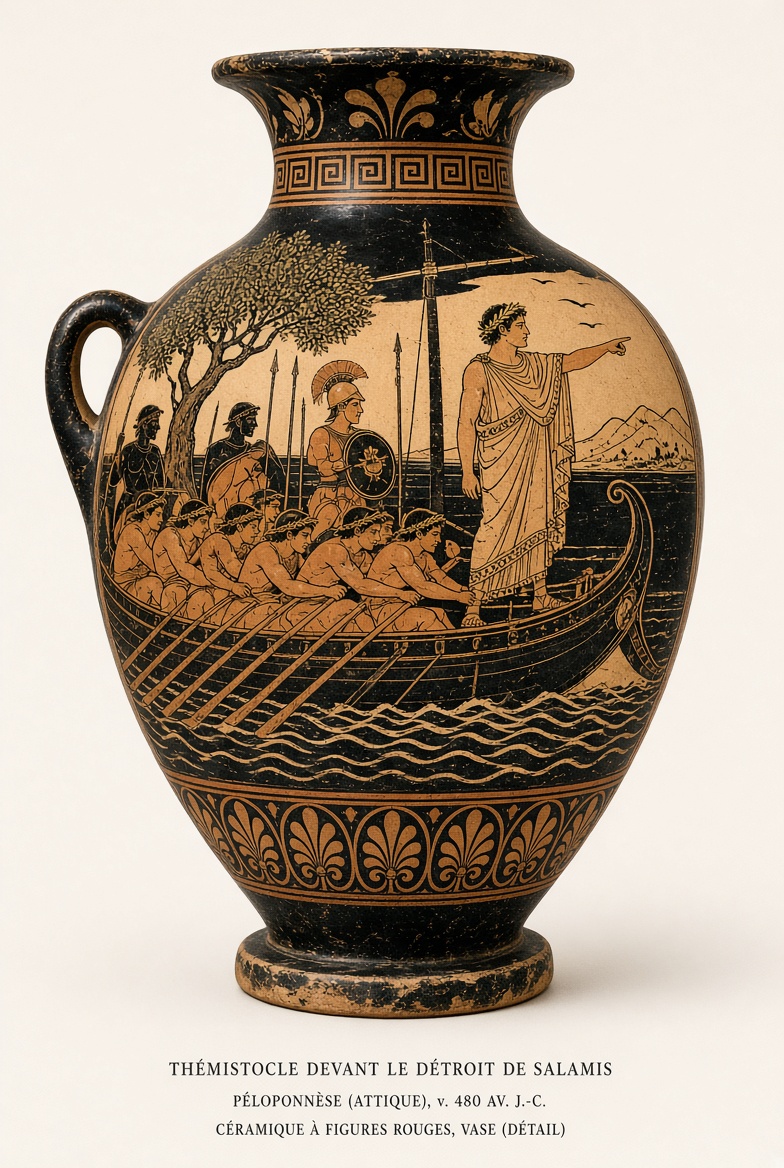
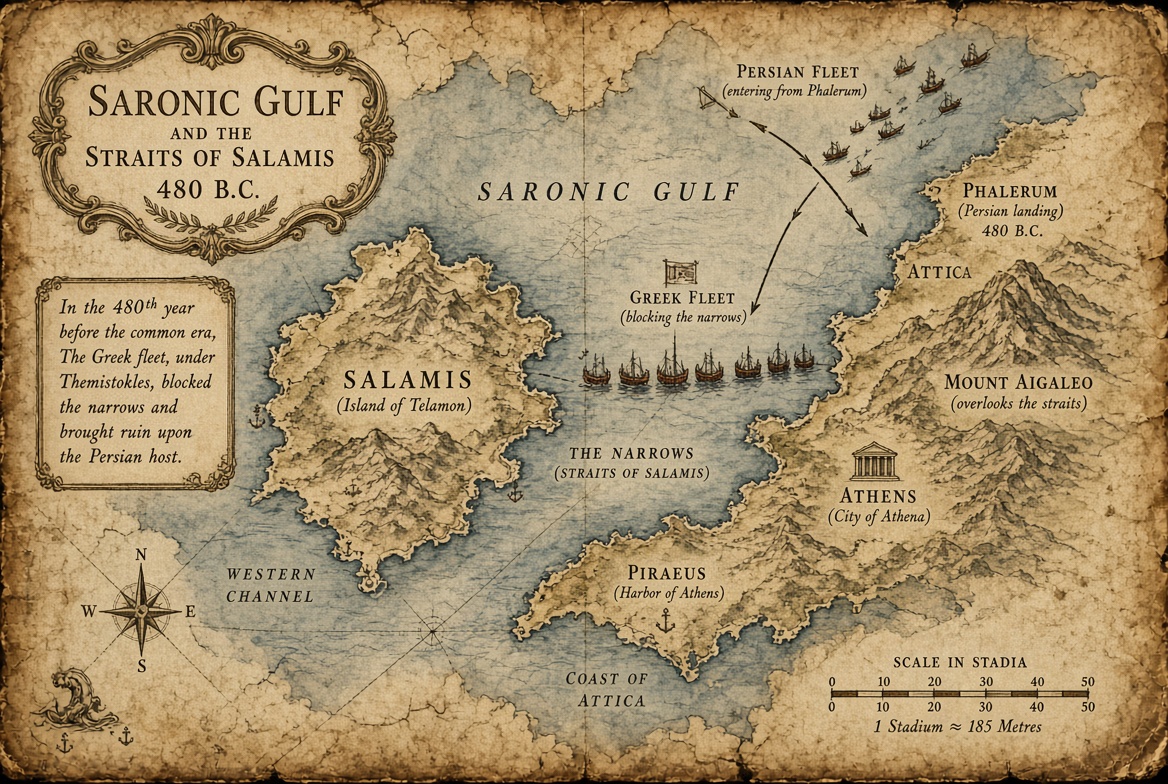
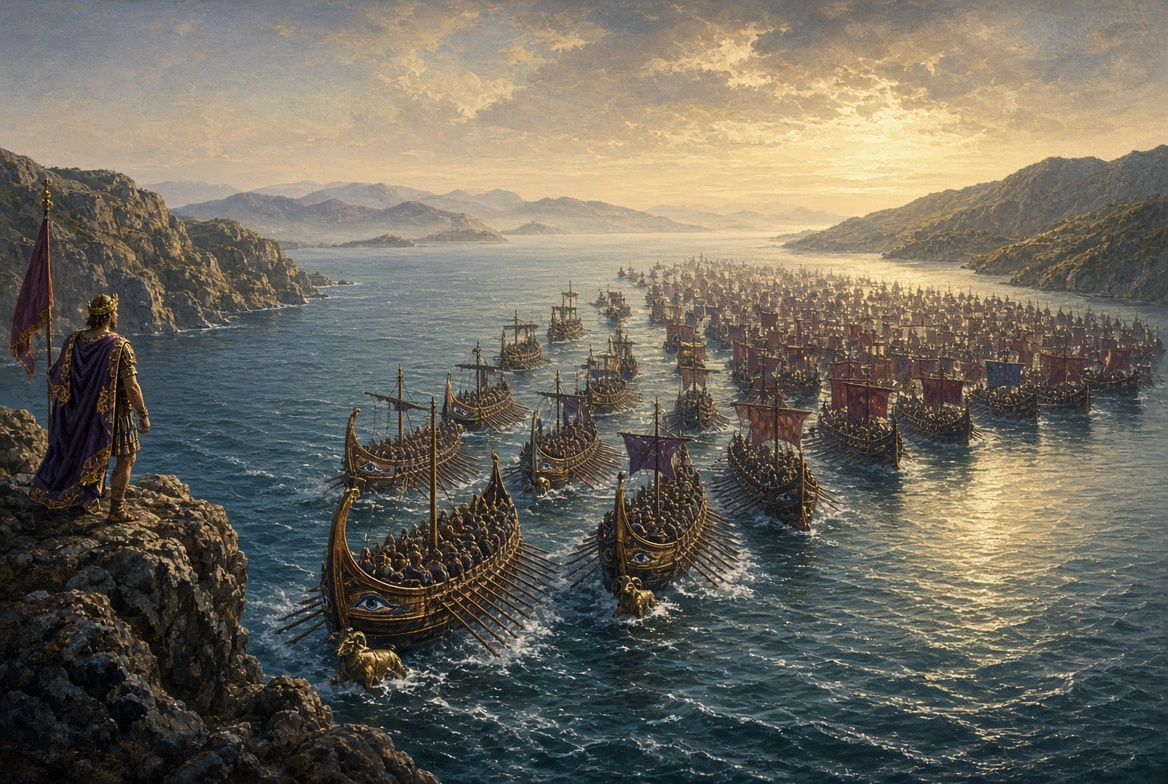
On September 29 in 480 BC, in the narrow straits of Salamis, the Greek allied fleet under Themistocles smashed the far larger Persian armada of Xerxes. Outnumbered triremes used the confined waters to ram and board, breaking Persian sea power after Thermopylae and the fall of Athens. Xerxes watched from the heights as his ships burned and fled. This victory forced the Great King to withdraw most of his forces and preserved the independence of the Greek city-states.
What if the Persians had won that day—how different would the classical world look?
#OnThisDay #AncientHistory #BattleOfSalamis #GrecoPersianWars #AncientGreece