Though some people will continue to show their writing prowess, This is with huge difference the best I'm coming through. I first thought these things were impossible for me until I tried myself. Kudos @toluogunlesi
Hold my beer.
It’s not very difficult to do, if you’re determined to show off your English skill, or need to justify the school fees spent getting this skill. Could go further to note you didn’t specify it must be written in English, but I’d be overdoing things...
Continue with your banking school
Access Bank is one of FUGAZ banks and a place every serious professional wants to start from.
Leave Fire Service for others with no option.
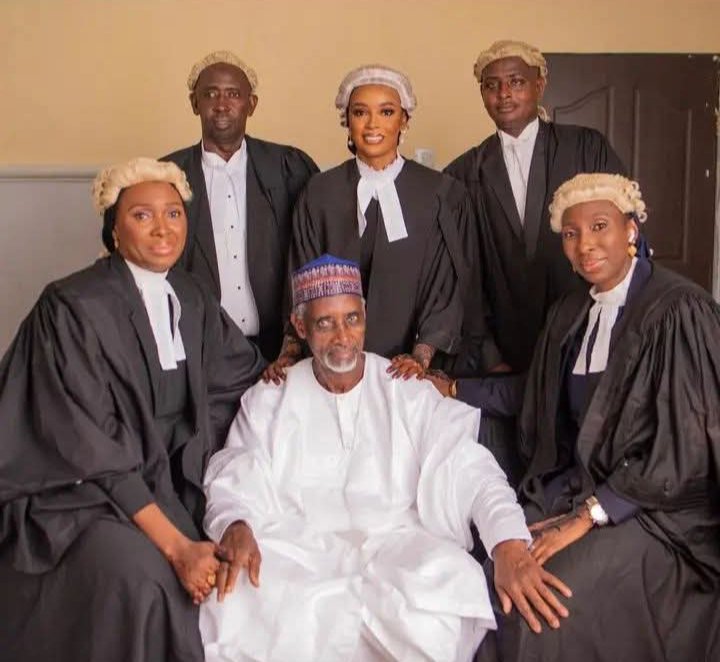
Happy Father's Day to my late Dad, and to the many uncles, his friends, my siblings, neighbors, and teachers who helped fill the void he left behind and ensured I never lacked anything. I am forever grateful for your love, guidance, and kindness.
If your husband can fill 12.5kg cooking gas.,buy crates of eggs... subscribe cable TV, buy data and fuel generator in this present condition of Nigeria...
Madam please give that man some REAL PEACE OF MIND.
Respect. Appreciation. Unity. Peace. Purpose. Hygiene. Culinary prowess. Class. Intelligence. Loyalty.
Nobody wants her money, speaking from this part of the country.
People are somehow unfair to Gimba by attributing only the mastery of English to his posts. This particular tweet is wisdom, enlightenment, and breaking down of things; all captured in a single tweet. 🙏🙏 @gimbakakanda
The rush to own a house in Nigeria has never been driven strictly by investment logic. Historically, it has been driven by uncertainty, by the fear that once the breadwinner’s income dips, or once he dies, his dependants may be left exposed. That is the context in which Nigerians rush to own property. Those who can afford more even go as far as building houses for rent, because even when it is not the most profitable economic venture, it is the only form of hedging most Nigerians know or trust.
At the heart of this mindset is also the awareness that there is no welfare system strong enough to protect one’s dependants. So breadwinners do what they feel they must do.
This same instinct plays out across the country, even in public service. Officeholders rush to divert public resources entrusted to them in order to acquire property for themselves, aware that the “opportunity” may not return, and that there is no reliable welfare system to cushion them when the income stops. In fact, their families and friends are often the first to remind them of this. In the end, personal financial security is prioritised over public welfare, and this is partly why we are where we are: a country with one of the widest inequality gaps on the planet.
Those who argue against the wisdom of spending one’s savings to build a house are often speaking from a different reality. Some have lived abroad, where the desperation of the struggling class to own property is not always considered a smart move. Others are financially informed enough to know there are better investment options than dumping all one’s money into property while denying oneself a decent life. But Nigeria is a breadwinner’s nightmare. Every day, you live with the fear that your dependants may not be able to afford the next rent if your income, or your existence, stops.
Where I draw the line is in building a mansion that nobody in your family can maintain after you are gone. I have seen this happen in Abuja, where families had to sell a large family house just to buy a smaller, more manageable one to live in.
So, perhaps both sides of the argument can agree on where to draw the line. Owning a house in Nigeria is not a black-and-white matter. It is not always the smartest investment, but it is often the most emotionally and socially understandable one.
The rush to own a house in Nigeria has never been driven strictly by investment logic. Historically, it has been driven by uncertainty, by the fear that once the breadwinner’s income dips, or once he dies, his dependants may be left exposed. That is the context in which Nigerians rush to own property. Those who can afford more even go as far as building houses for rent, because even when it is not the most profitable economic venture, it is the only form of hedging most Nigerians know or trust.
At the heart of this mindset is also the awareness that there is no welfare system strong enough to protect one’s dependants. So breadwinners do what they feel they must do.
This same instinct plays out across the country, even in public service. Officeholders rush to divert public resources entrusted to them in order to acquire property for themselves, aware that the “opportunity” may not return, and that there is no reliable welfare system to cushion them when the income stops. In fact, their families and friends are often the first to remind them of this. In the end, personal financial security is prioritised over public welfare, and this is partly why we are where we are: a country with one of the widest inequality gaps on the planet.
Those who argue against the wisdom of spending one’s savings to build a house are often speaking from a different reality. Some have lived abroad, where the desperation of the struggling class to own property is not always considered a smart move. Others are financially informed enough to know there are better investment options than dumping all one’s money into property while denying oneself a decent life. But Nigeria is a breadwinner’s nightmare. Every day, you live with the fear that your dependants may not be able to afford the next rent if your income, or your existence, stops.
Where I draw the line is in building a mansion that nobody in your family can maintain after you are gone. I have seen this happen in Abuja, where families had to sell a large family house just to buy a smaller, more manageable one to live in.
So, perhaps both sides of the argument can agree on where to draw the line. Owning a house in Nigeria is not a black-and-white matter. It is not always the smartest investment, but it is often the most emotionally and socially understandable one.
Emir Sanusi II is the 59th emir of Kano NOT 16th
Emir Sanusi II should be referred to as the 59th Emir of Kano not 16th – unless the history of Kano started after Danfodio Jihad and imposition of Emir Sulaimanu in 1807. From King Bagauda in the 10th Century to Muhammadu Alwali II in 1805, there were at least 42 Haɓe/Hausa rulers documented by history that ruled Kano. Hundreds of years before Jihad, Kano maintained its primacy as a cosmopolitan society and a leading hub of trade and industry in the Central Soudan.
The most important symbol of authority of Kano emir – the twin-spear staff – dates back to 12th century pegan rulership. With the exception of Dabo’s Hat and the Sword of Authority (Wuƙar Yanka), most of the symbols of authority used by the present emirs were introduced by the Haɓe kings. King Rumfa (1463–1499), on the advice of Al-Maghili, intoduced the use of turban, mobile parasol, the ostrich plume sandals, etiquette of court sitting (zaman harɗe), salutations, etc.
Attempts to erase this history is not only being scornful of the Haɓe rulers but of the long history of Kano spanning over a millinium.
"If anything happens to Mallam Nasir El Rufai we will hold you the ICPC Chairman responsible.
You are a Northerner and they are using you to fight Northerners.
This job will finish and you will come back home.
Even your boss that brought you, Tinubu has removed him"
By the time your baby says "dada," they've been studying your voice for over a year.
A researcher at the University of Michigan tracked the first words of more than 900 babies in English, Mandarin, and Cantonese homes. Same winner in all three languages: Dada. The reason is wired into the baby's brain.
In 2008, Italian researchers scanned the brains of 22 newborns while they listened to different sounds. When the babies heard repeated patterns like "mubaba," the language part of their brain lit up. When they heard random patterns like "mubage," the brain barely reacted. The newborn brain is wired to spot repetition. Anything that doubles up, like ma-ma, da-da, or ba-ba, gets flagged as "this might be a word."
Hearing kicks in way before birth. Around month seven of pregnancy, your baby's hearing turns on. Researchers at Queen's University in Canada played voice recordings to 60 unborn babies near their due date. The babies' heart rates sped up for their own mother's voice and slowed down for a stranger reading the same poem. The recognition was already there, before they had ever seen her face.
The womb works like a sound dampener. Picture trying to listen through a wall. High-pitched noise gets muffled to a whisper, while low rumbles pass through clearly. What gets through is rhythm, melody, and the rise and fall of their mother's voice for months before birth.
By birth, they already know which language is yours. Newborns can pick out their native language from a foreign one within hours of being born.
Then the brain takes over. In the first few years of life, more than a million brain connections form every second. By age two, a child's brain has 50% more wiring than an adult's.
So when a 9-month-old finally says "dada," they've landed on the easiest sound that gets the biggest reaction, layered on top of a brain that's been tracking your language since before they were born.
A linguist at McGill University, Heather Goad, points out that "d" is harder to say than "m" because of the tongue work it takes. So when the baby finally produces it, you're watching a brain that's been listening for over a year finally match sound to pattern.
That's the "oh my god" moment in the comic. The small person you're holding has been quietly learning your language since before they took their first breath.
Today, April 28, 2026, at the @HouseNGR Plenary, I moved a motion for the consideration of the Report of the Committee on FCT Judiciary in respect of a Bill for an Act to Amend the High Court of the Federal Capital Territory, Abuja (Number of Judges) CAP H6,…
A senior delegation of the NDIC led by the ED/OPs, Dr. Kabir Katata recently undertook a benchmarking visit to Indonesia Deposit Insurance Corporation to engage on strengthening Deposit Insurance practices and response to financial distress.
Kids want more dad time. Wife wants more husband time. Parents want more son time. Work wants more of your time. And you still show up. Shoutout to the men doing it all. 🙌