𝗦𝗼𝗺𝗲𝘁𝗶𝗺𝗲𝘀, 𝗧𝗵𝗲 𝗡𝗲𝘅𝘁 𝗕𝗶𝗴 𝗢𝗽𝗽𝗼𝗿𝘁𝘂𝗻𝗶𝘁𝘆 𝗦𝘁𝗮𝗿𝘁𝘀 𝗪𝗶𝘁𝗵 𝗔 𝗣𝗿𝗼𝗷𝗲𝗰𝘁 𝗙𝗲𝘄 𝗣𝗲𝗼𝗽𝗹𝗲 𝗔𝗿𝗲 𝗪𝗮𝘁𝗰𝗵𝗶𝗻𝗴.
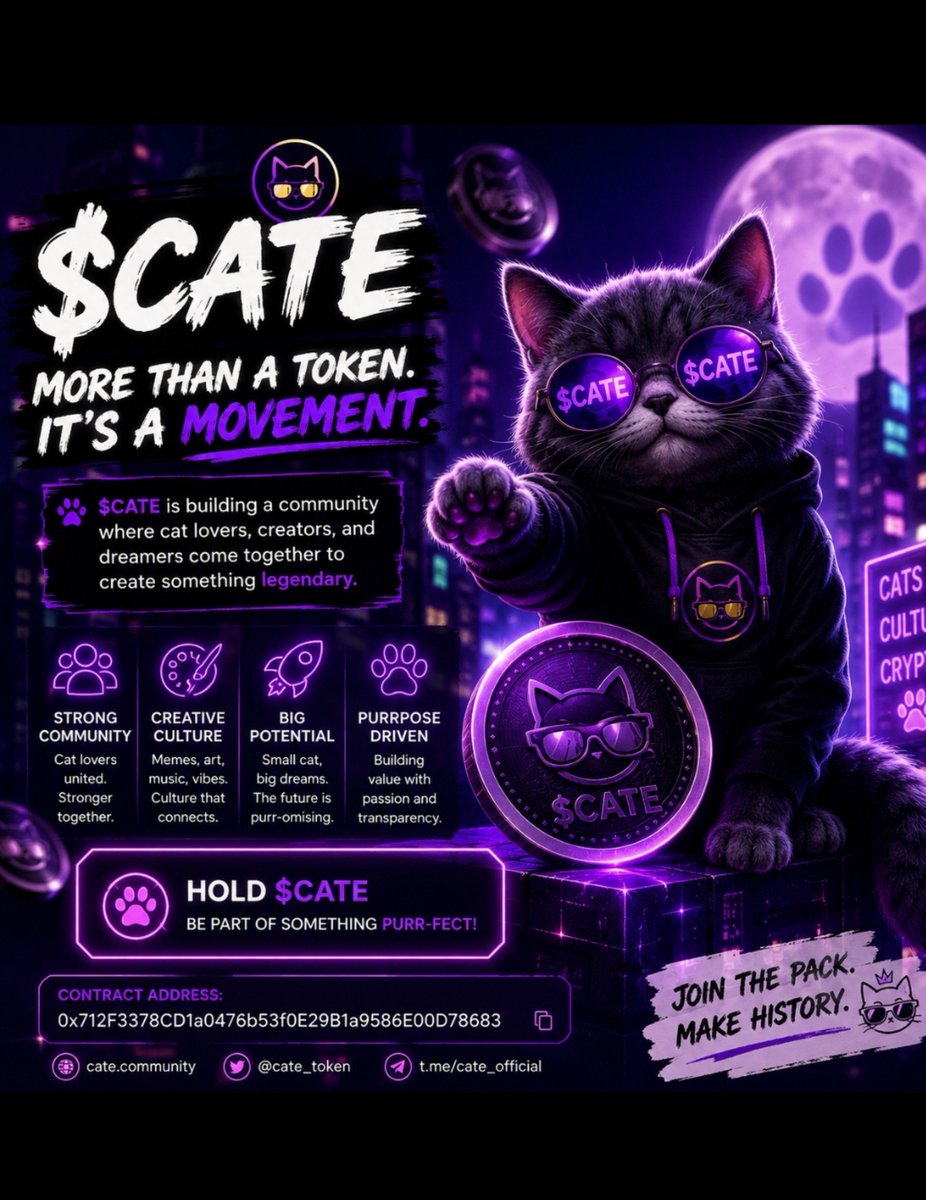
Been seeing $CATE pop up more and more on CT lately, so I had to check it out myself 👀
The project seems to be gaining attention and building a community around its story. It’s still early, so I’m interested to see how the momentum plays out over time.
For now, $CATE has earned a spot on my watchlist. 👁️
Watching closely to see what comes next.
CA:
0x712F3378CD1a0476b53f0E29B1a9586E00D78683
#CATE #Crypto #Web3
🚀 WEEX Welcome Bonus is live
From Sep. 2 to Sep. 20, 23:59 UTC, you can invite friends to register and trade on WEEX and earn up to 100 USDT in bonuses.
Here’s how it works:
✅ Complete a trade above 1,000 USDT
✅ Deposit 100+ USDT → 10 USDT bonus
✅ Deposit 500+ USDT → 30 USDT bonus
✅ Deposit 1,000+ USDT → 70 USDT bonus
✅ Deposit 1,500+ USDT → 100 USDT bonus
The bonus can be used once the account has sufficient assets, subject to the campaign rules.
If you’ve been looking for a reason to try WEEX, this could be a good time to check it out.
🗣️ Join through my link: https://t.co/9Wue0IXyxu
Join WEEX
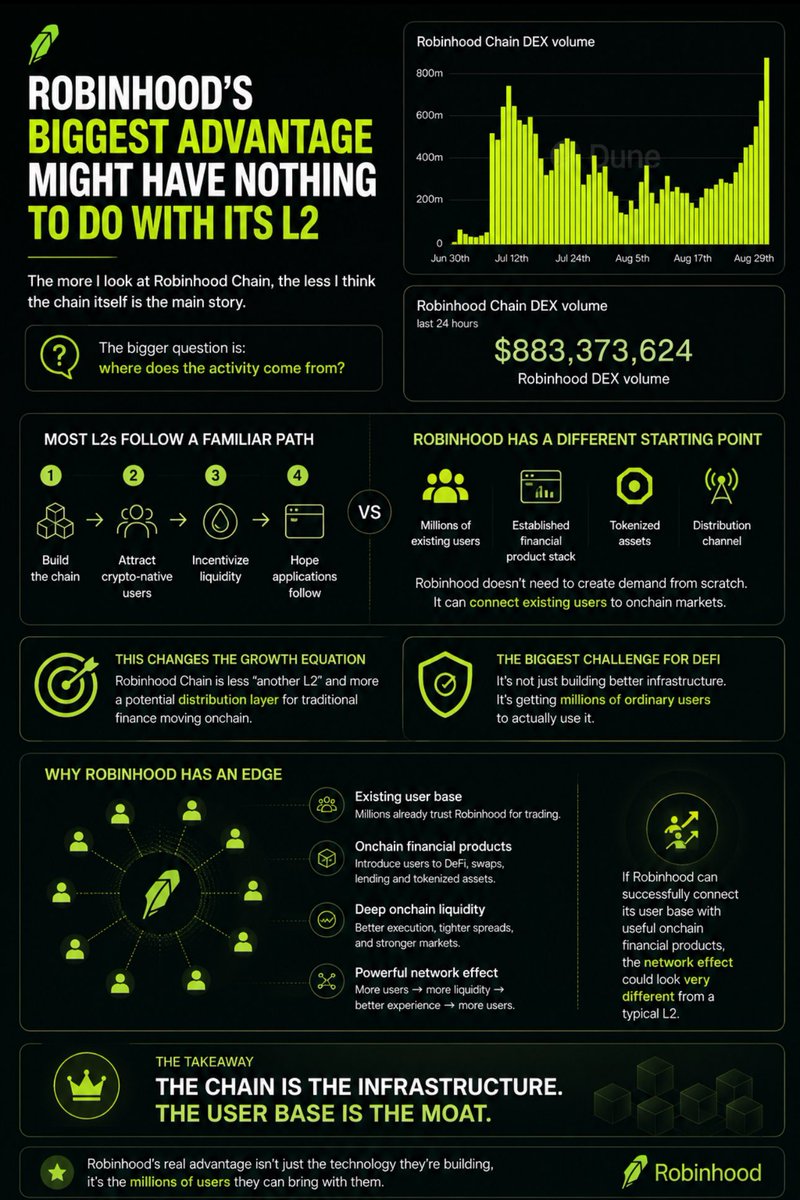
Robinhood’s Biggest Advantage Might Have Nothing to Do With Its L2
The more I look at Robinhood Chain, the less I think the chain itself is the main story.
The bigger question is where the activity comes from.
Most L2s follow a familiar path:
→ Build the chain
→ Attract crypto-native users
→ Incentivize liquidity
→ Hope applications follow
Robinhood has a very different starting point.
It already has millions of users, an established financial product stack, tokenized assets and a distribution channel that can connect all of these pieces onchain.
That changes the growth equation.
Robinhood doesn’t need to create demand entirely from scratch.
It can take users who already trade stocks, crypto and other financial products and gradually introduce them to onchain markets, lending, swaps and tokenized assets.
That makes Robinhood Chain less interesting as “another L2” and more interesting as a potential distribution layer for traditional finance moving onchain.
And that’s where I think the real opportunity sits.
The biggest challenge for DeFi has never simply been building better infrastructure.
It’s getting millions of ordinary users to actually use it.
Robinhood already solved the hardest part: distribution.
If they can successfully connect that existing user base with deep onchain liquidity and useful financial products, the network effect could look very different from a typical L2.
The chain is the infrastructure.
The user base is the moat.
If you only look at gross APR, inflation rates, total stake, or the latest MEV numbers when staking SOL or other tokens, you’re missing an important part of the equation.
The validator you choose takes a commission from your staking rewards, and that small % can make a difference over time.
A comparison of validator commissions across major PoS networks shows just how wide the gap can be.
On SOL, HashKey Cloud sits at 3% commission, compared with a market level around 6%.
SOL: HashKey Cloud 3% vs market 6%
NEAR: 3% vs market 5.8%
ETH: 5% vs market 7%
ATOM: 5% vs market 7.9%
APT: 5% vs market 7.8%
This comparison shows that @HashKeyCloud positioning isn’t limited to Solana. Its commissions are also below the reference market levels on several other major networks.
There is also a current SOL staking incentive tied to the HashKey validator.
Until August 31, users who stake at least 1 SOL with the HashKey validator have a chance to win 1 SOL, with 10 winners selected to receive 1 SOL each.
When choosing where to stake, don’t stop at the headline APR.
Because over time, the validator you choose can have a meaningful impact on your actual staking returns.