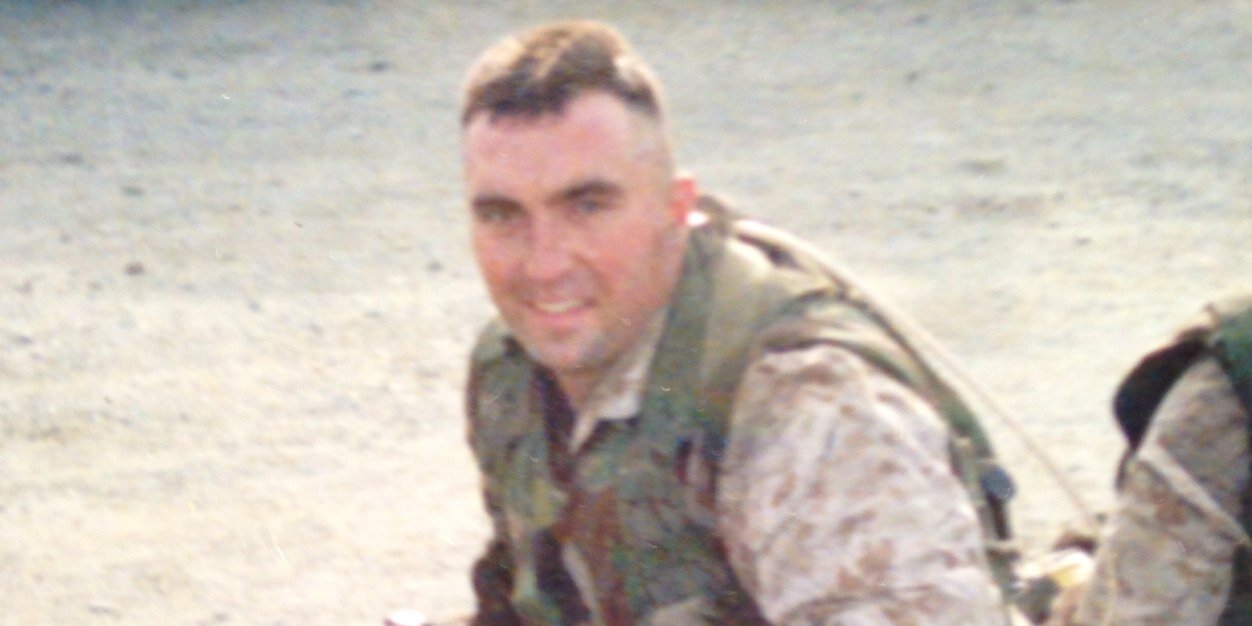
Stanley Kubrick demanded 70 takes from actors. He let this medically discharged Marine improvise.
In 1985, R. Lee Ermey stood on a film set in England with nothing but memories and a voice that could cut through steel. He was not supposed to be there. Not as an actor, anyway.
Stanley Kubrick had hired him as a technical advisor for Full Metal Jacket. The role of Gunnery Sergeant Hartman was already cast with a trained professional. Ermey's job was to teach actors how drill instructors actually behaved.
But Ermey had spent years watching Hollywood get it wrong. He approached Kubrick with a request that bordered on audacity.
"Let me show you what a real drill instructor sounds like."
Kubrick was skeptical. This was a director who shot scenes 40, 50, sometimes 70 times until they were perfect. He controlled every word. Every gesture. Every breath.
But he agreed to watch.
Ermey positioned actors in formation. The cameras rolled. And he began screaming.
For two hours, he unleashed a torrent of creative, devastating verbal assault. Stagehands pelted him with tennis balls and oranges to simulate chaos. He never flinched. Never broke rhythm. Never repeated himself.
Because he wasn't acting.
He was remembering.
Ronald Lee Ermey had enlisted in the Marines at seventeen after a Kansas judge gave him a choice: jail or the military. He chose the Corps. From 1965 to 1967, he served as a drill instructor at Marine Corps Recruit Depot San Diego, breaking down civilians and rebuilding them as Marines.
In 1968, he deployed to Vietnam for fourteen months.
Then injuries ended his career. Medical discharge. Twenty-seven years old. No college degree. No plan.
He drifted to the Philippines, enrolled in university using his GI Bill, and stumbled into film work as a technical advisor. Small roles followed. A helicopter pilot in Apocalypse Now. A drill instructor in The Boys in Company C.
But nothing that changed his life.
Until Kubrick watched those tapes.
The director saw something no acting class could manufacture: authenticity so complete it became art. Ermey had produced 150 pages of original insults. His intensity never wavered. His knowledge was absolute.
Kubrick made a decision almost unheard of in his career.
He fired the original actor. He gave Ermey the role. And he allowed him to improvise more than half of his own dialogue.
Stanley Kubrick, the perfectionist who demanded endless takes from every performer, needed only two or three takes from a former drill instructor with no formal training.
Because you cannot fake what is real.
When Full Metal Jacket premiered in 1987, Ermey's performance became instantly iconic. Real drill instructors said it was the most accurate portrayal ever filmed. Veterans said it triggered memories they had buried for decades.
Ermey earned a Golden Globe nomination. He went on to appear in over sixty films. He voiced Sarge in Toy Story. He hosted military programs on the History Channel.
But he never forgot his brothers and sisters in uniform.
In 2002, the Marine Corps awarded him an honorary promotion to Gunnery Sergeant, making him the only retiree in Corps history to receive that recognition. He spent years visiting troops overseas, supporting veterans, and keeping the military spirit alive.
R. Lee Ermey passed away on April 15, 2018. The Marine Corps called him a great American and an even greater Marine.
Think about that journey.
A troubled teenager from Kansas. A drill instructor. A combat veteran. A medical discharge. Odd jobs in foreign countries. And then, at forty-three, convincing one of cinema's most demanding directors to trust him with creative freedom.
He did not succeed because he pretended to be something he wasn't.
He succeeded because he refused to be anything else.
That is not a Hollywood story.
That is a Marine who improvised, adapted, and overcame, all the way to immortality.
Today in Rock History
June 11, 1981
During the Fair Warning tour, Van Halen performed three sold-out nights (June 11–13) at Oakland Coliseum. The June 11 show yielded some of their most celebrated audio bootlegs and footage — later used in promotional videos for Fair Warning — capturing classics like “Unchained” and “So This is Love?” The June 11 performance, in particular, has circulated widely as one of the best-sounding bootlegs from the Fair Warning era, showcasing the band at a creative and commercial peak with David Lee Roth on vocals.
“If you think the world is selfish and rotten, go to the cemetery at Colleville-sur-Mer overlooking Omaha Beach. See what one group of men did for another on D-Day, June 6th, 1944.” — Andy Rooney
R. Lee Ermey enlisted in the Marine Corps in 1961. He served as a drill instructor at Marine Corps Recruit Depot in San Diego from 1965 to 1967.
Along with serving as a drill instructor, Ermey was also a rifleman and repair shop mechanic throughout his time in the Corps.
In 1968, he arrived in Vietnam where he served 14 months attached to Marine Wing Support Group 17. He then served in Okinawa and he rose to the rank of Staff Sergeant.
In 1972 he was medically discharged for various injuries sustained during his service.
On May 17, 2002 Ermey received an honorary promotion to Gunnery Sergeant, thus becoming the first retiree in the history of the Marine Corps to be promoted.
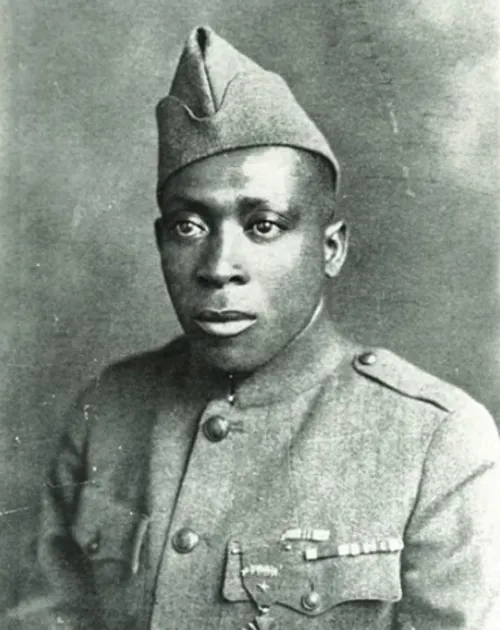
WW1 Medal of Honor recipient who is well worth remembering today.
U.S. Army Sergeant Henry Johnson, aka "Black Death" of the 369th Infantry Regiment, known as the Harlem Hellfighters.
His actions stopped the German raid, prevented the enemy from breaking through the lines, and saved his comrade.
The French awarded him the Croix de Guerre avec Palme (their highest valor award) almost immediately — one of the first Americans to receive it.
This single fight earned him the enduring nickname “Black Death.”
While on sentry duty with Private Needham Roberts, Johnson and Roberts came under surprise attack by a German raiding party of at least 12–24 soldiers.
Despite being badly outnumbered and wounded multiple times:
Johnson fought back with his rifle, then used it as a club when it jammed.
He threw grenades.
In brutal hand-to-hand combat, he used a bolo knife (machete-like weapon) to kill several Germans.
He rescued the wounded Roberts from being captured.
He continued fighting even after being shot and stabbed 21 times.
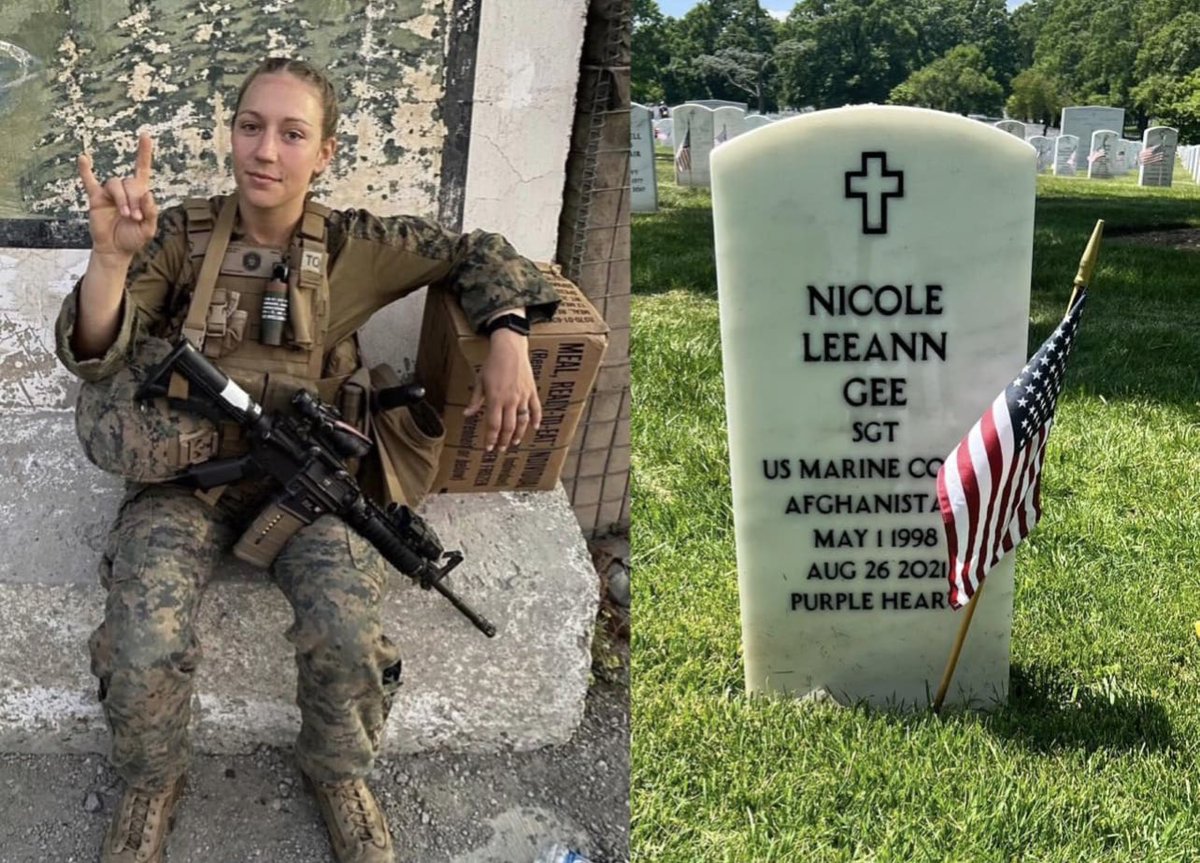
Remember: Sgt. Nicole Gee, USMC
At just 23, this Roseville, CA Marine served on the Female Engagement Team in Kabul, helping evacuate Afghan women & children during the chaotic withdrawal. Days before her death, she cradled an infant and wrote: “I love my job.”
On Aug 26, 2021, she gave her life at Abbey Gate in the ISIS-K bombing.
Semper Fi, Sergeant. Your sacrifice secured freedom for thousands. 🇺🇸🪦
On this day, #MemorialDay I would like to take a minute to remember Pat Tillman and everyone who lost their lives serving their country.
Thank you for your service.
A WWII veteran returns to Utah Beach, the Normandy shore where D-Day unfolded. This Memorial Day, we remember the Americans who never came home, the heroes who gave everything so we could be free.