Los cambios llegan con la acción.
La acción necesita decisión.
Las decisiones, muchas veces representan sacrificios.
No todos estan dispuestos a esos sacrificios, por ende, nunca van a llegar esos cambios.
El resto, son pajazos mentales.
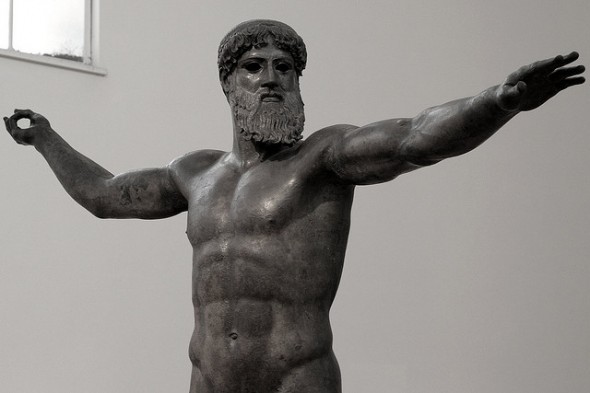
"Ningún ciudadano tiene derecho a ser un aficionado en materia de entrenamiento físico… qué vergüenza es que un hombre envejezca sin ver nunca la belleza y la fuerza de las que es capaz su cuerpo."
Sócrates
Ante la culpa por no haber aprendido inglés antes:
1. quizá no era el momento adecuado; falta de motivación, ausencia de una razón de peso, etc
2. algún trauma con el idioma no había sanado antes y era imposible aprenderlo
3. no tenías el tiempo o el dinero
La mejor forma de erradicar esa culpa es tomando acción.
Comienza con un podcast, un video en YouTube, alguna canción. Da un paso por día. No te compares y no te sigas culpando
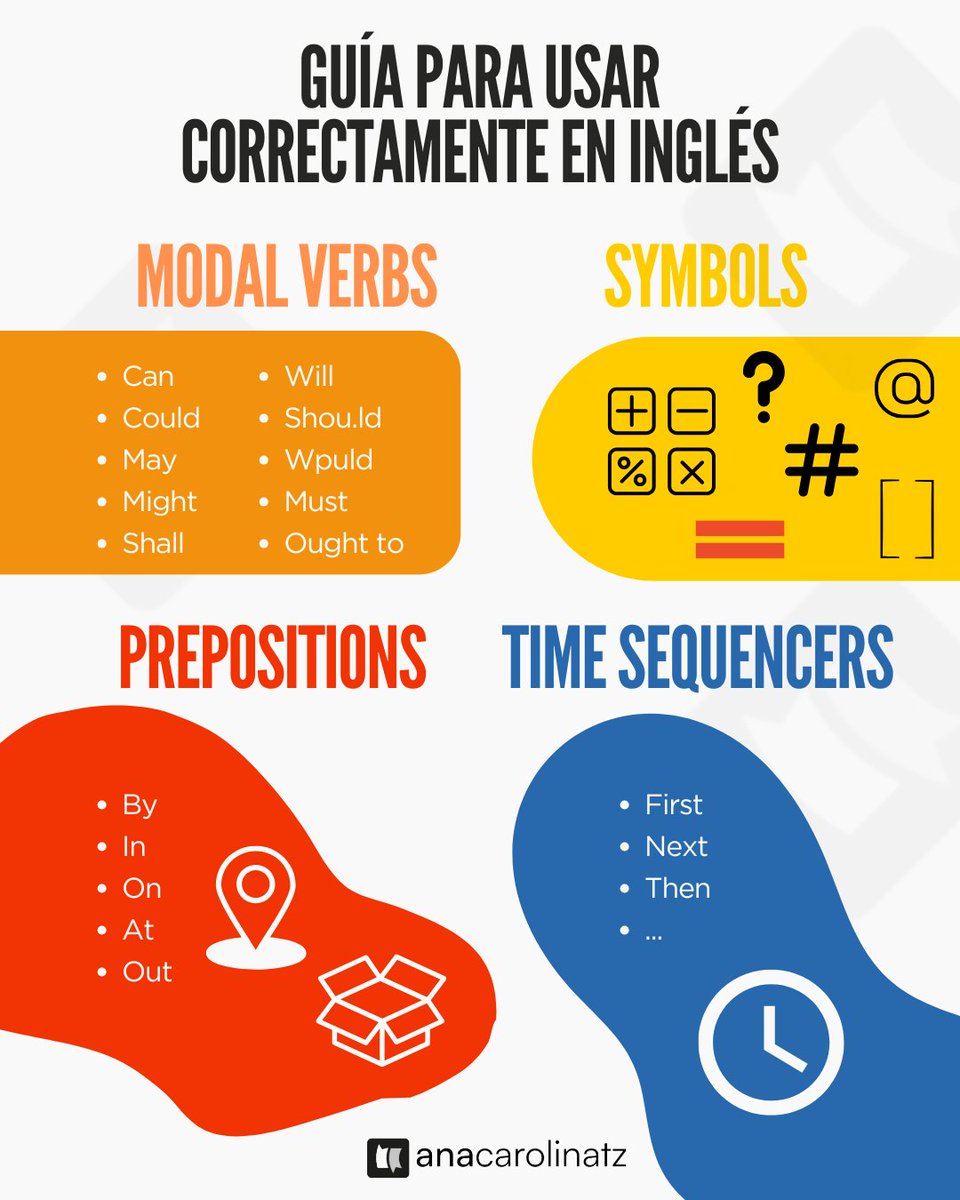
Amigos, pasé el finde armando esta guía para quienes estén aprendiendo inglés, puedan usar correctamente:
✔️ Modal verbs
✔️ Symbols
✔️ Prepositions
✔️ Time sequencers
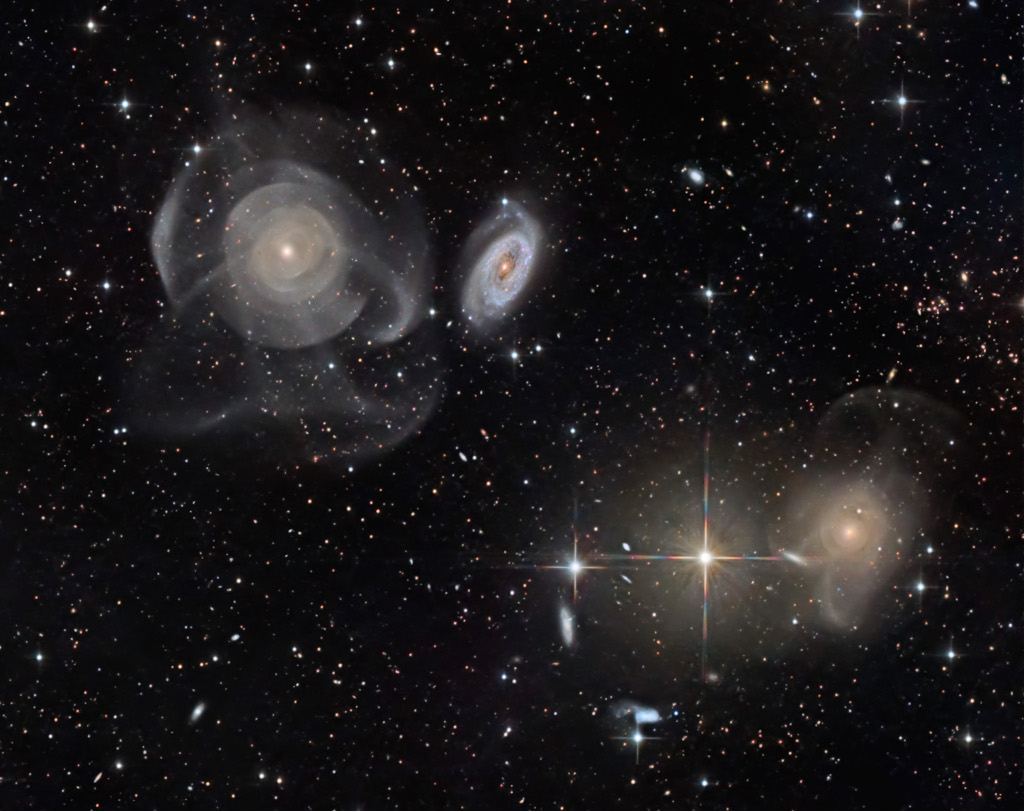
This spectacular intergalactic skyscape features Arp 227, a curious system of galaxies from the 1966 Atlas of Peculiar Galaxies. Some 100 million light-years distant within the boundaries of the constellation Pisces, Arp 227 consists of the two galaxies prominent above and left of center, the shell galaxy NGC 474 and its blue, spiral-armed neighbor NGC 470. The readily apparent shells and star streams of NGC 474 are likely tidal features originating from the accretion of another smaller galaxy during close gravitational encounters that began over a billion years ago. The large galaxy on the bottom righthand side of the deep image, NGC 467, appears to be surrounded by faint shells and streams too, evidence of another merging galaxy system. Intriguing background galaxies are scattered around the field that also includes spiky foreground stars. Of course, those stars lie well within our own Milky Way Galaxy. The telescopic field of view spans 25 arc minutes or just under 1/2 degree on the sky.
Image Credit & Copyright: George Williams
Ice giant Neptune is faint in Earth's night sky. Some 30 times farther from the Sun than our fair planet, telescopes are needed to catch a glimpse of the dim and distant world. This dramatic view of Neptune's night just isn't possible for telescopes in the vicinity of planet Earth though. Peering out from the inner Solar System they can only bring Neptune's day side into view. In fact this night side image with Neptune's slender crescent next to the crescent of its large moon Triton was captured by Voyager 2. Launched from planet Earth in 1977 the Voyager 2 spacecraft made a close fly by of the Solar System's outermost planet in 1989, looking back on Neptune at night as the robotic spacecraft continued its voyage to interstellar space.
Image Credit & Copyright: Voyager 2, NASA
Saturn has 146 moons. Some moons are confirmed and named, but many others are awaiting confirmation of discovery and official naming. This is their dynamic visualization while they travel with Saturn through space
[📹 Cosmoknowledge]
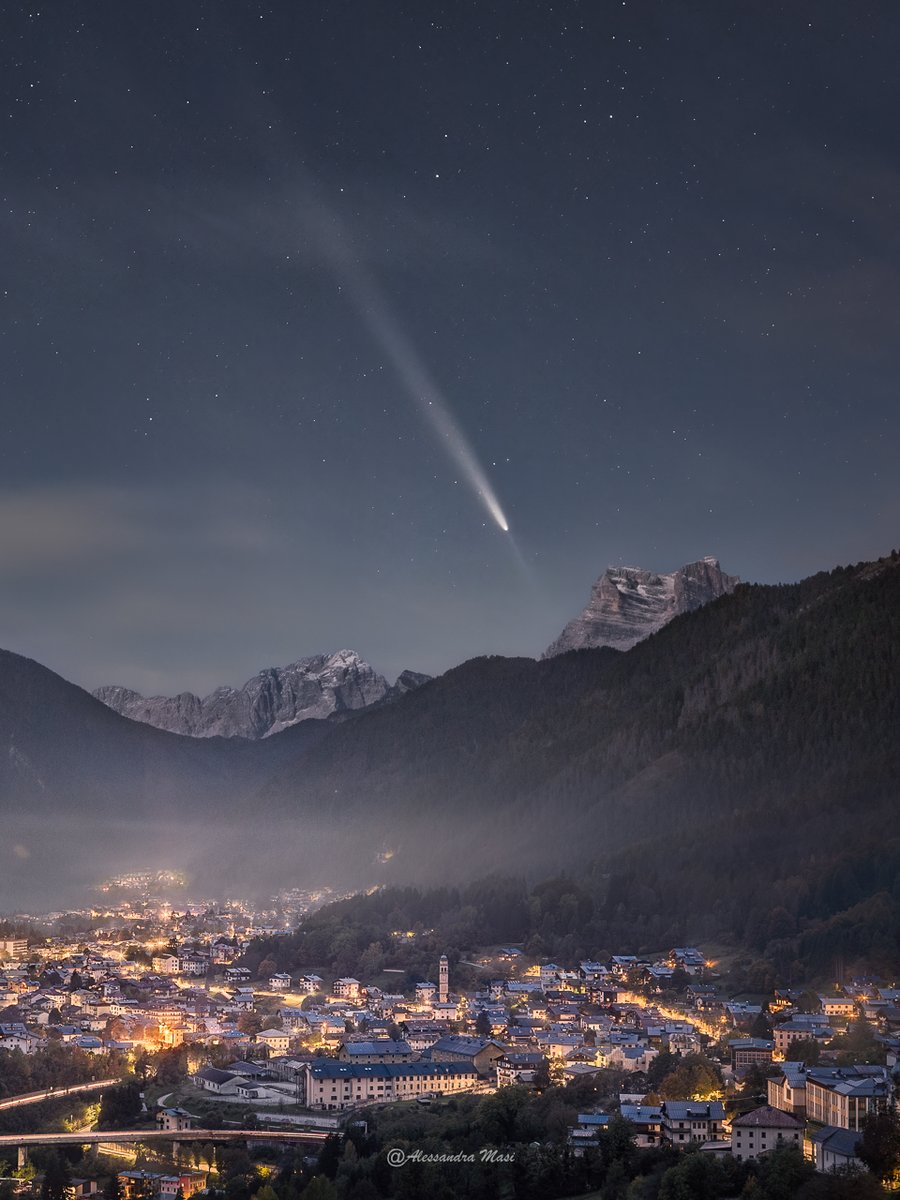
Comet Tsuchinshan-Atlas is now headed back to the outer Solar System. The massive dusty snowball put on quite a show during its trip near the Sun, resulting in many impressive pictures from planet Earth during October. The featured image was taken in mid-October and shows a defining visual feature of the comet -- its impressive anti-tail. The image captures Comet C/2023 A3 (Tsuchinshan–ATLAS) with impressively long dust and ion tails pointing up and away from the Sun, while the strong anti-tail -- composed of more massive dust particles -- trails the comet and points down and (nearly) toward the recently-set Sun. In the foreground is village of Tai di Cadore, Italy, with the tremendous Dolomite Mountains in the background. Another comet, C/2024 S1 (ATLAS), once a candidate to rival Comet Tsuchinshan-Atlas in brightness, broke up last week during its close approach to our Sun.
Credit & Copyright: Alessandra Masi